- Sports
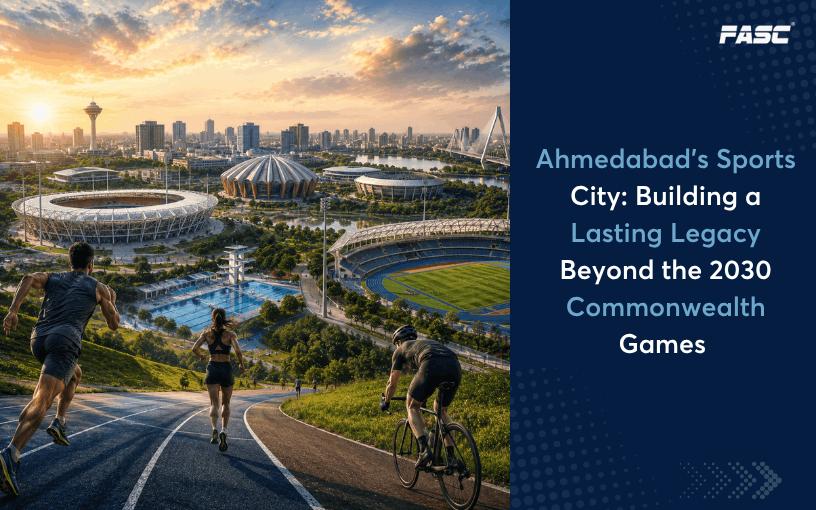
Ahmedabad's Sports City: Building a Lasting Legacy Beyond the 2030 Commonwealth Games
- Jul 28, 2026
- 6 min
Key Takeaways
- Ahmedabad plans to develop a 350-acre integrated Sports City.
- The project prioritises long-term community use over temporary event infrastructure.
- Sports science, athlete development, and sustainability are central to the vision.
- The Sports City could strengthen Gujarat's position as a leading sports destination.
- It may serve as a model for future sports infrastructure projects across India.
Hosting the Commonwealth Games is about more than organising a successful sporting event. It presents an opportunity to create infrastructure that supports athletes, encourages public participation, generates economic activity, and leaves a lasting impact on the host city.
Many cities around the world have built world-class stadiums for mega sporting events, only to see them remain underutilised after the tournament concludes. The real success of such projects lies not in the opening ceremony but in how effectively the facilities serve people for years to come.
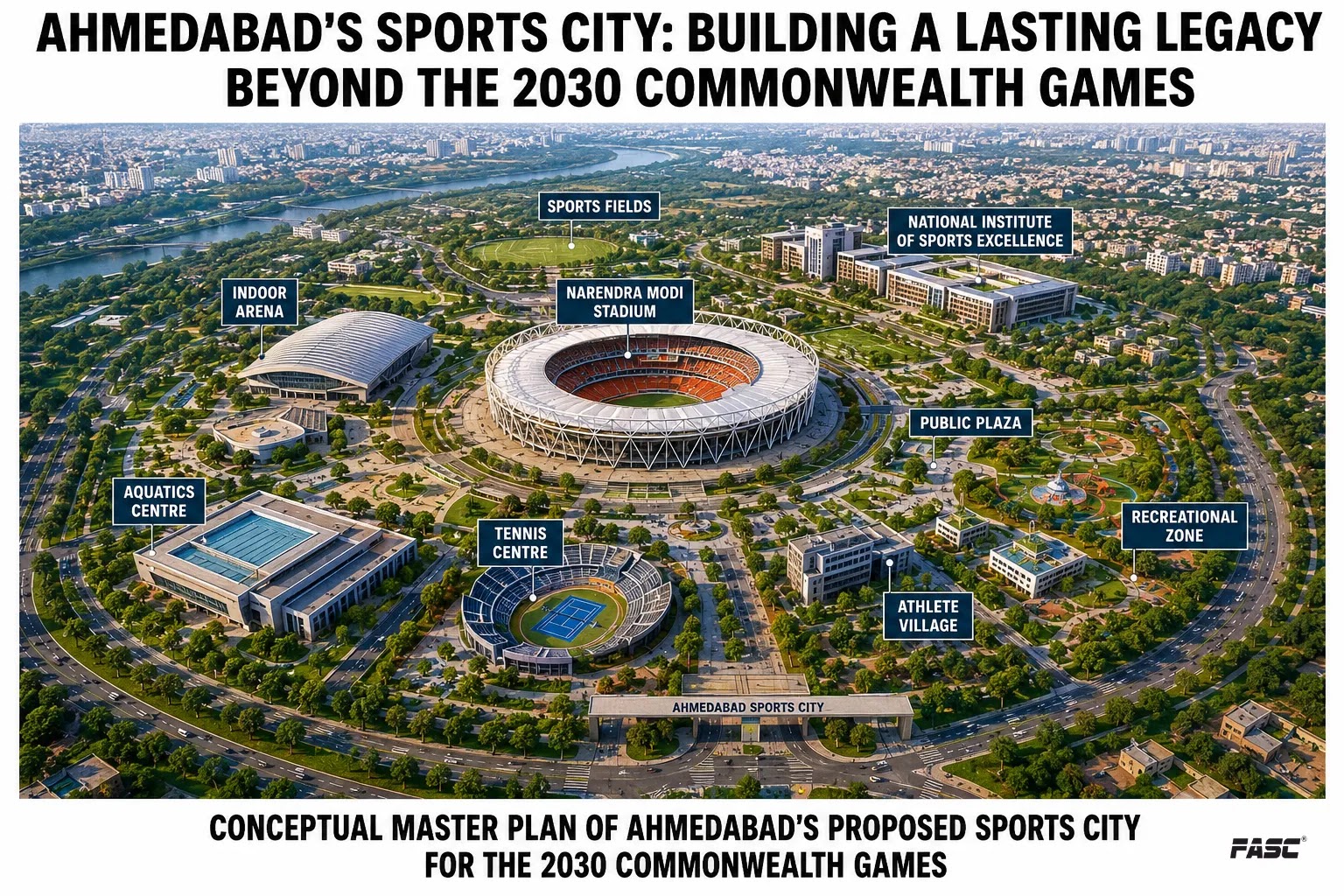
Ahmedabad's proposed Sports City reflects a different approach. Planned around the Narendra Modi Stadium, the 350-acre development is designed as a permanent sports ecosystem rather than a temporary event venue. With modern sporting facilities, athlete development centres, public spaces, and sustainable urban planning, the project has the potential to redefine how India develops sports infrastructure.
If executed successfully, Ahmedabad's Sports City could become one of the country's most important sporting legacies.
Why Sporting Legacy Matters Beyond the Event
Hosting an international sporting event requires significant investment. However, the true value of that investment depends on how well the infrastructure continues to serve the city after the event is over.
Learning from Previous Mega Sporting Events
Several cities across the world have experienced challenges after hosting major sporting events. While the tournaments were successful, some stadiums and specialised venues struggled to attract regular users once the competitions ended.
India also gained valuable experience during the 2010 Commonwealth Games in Delhi. The event improved sports infrastructure and showcased India's organisational capabilities, but it also highlighted the importance of long-term planning and efficient utilisation of sporting venues.
These experiences have influenced how future sports infrastructure is being planned. Today, the focus has shifted from building venues for a single event to creating facilities that remain active throughout the year.
A successful sports city should support athletes, schools, local communities, and sporting organisations long after international competitions have concluded.
Building Infrastructure for Communities
Modern sports infrastructure should be designed with people at its centre.
Instead of creating venues that remain active only during international tournaments, sports complexes should host school competitions, state championships, community fitness programmes, recreational activities, and corporate sporting events throughout the year.
This approach improves public participation in sports while ensuring better utilisation of public investment.
Ahmedabad's Sports City appears to embrace this philosophy by combining elite sporting facilities with public spaces, training centres, and community-focused infrastructure. Such planning not only benefits athletes but also encourages healthier lifestyles and strengthens the city's sporting culture.
Ahmedabad's Sports City Sets a New Benchmark
The proposed Sports City is more than a collection of stadiums. It represents a vision of creating an integrated sports ecosystem where competition, training, education, recreation, and public engagement exist together.
A 350-Acre Integrated Sports Ecosystem
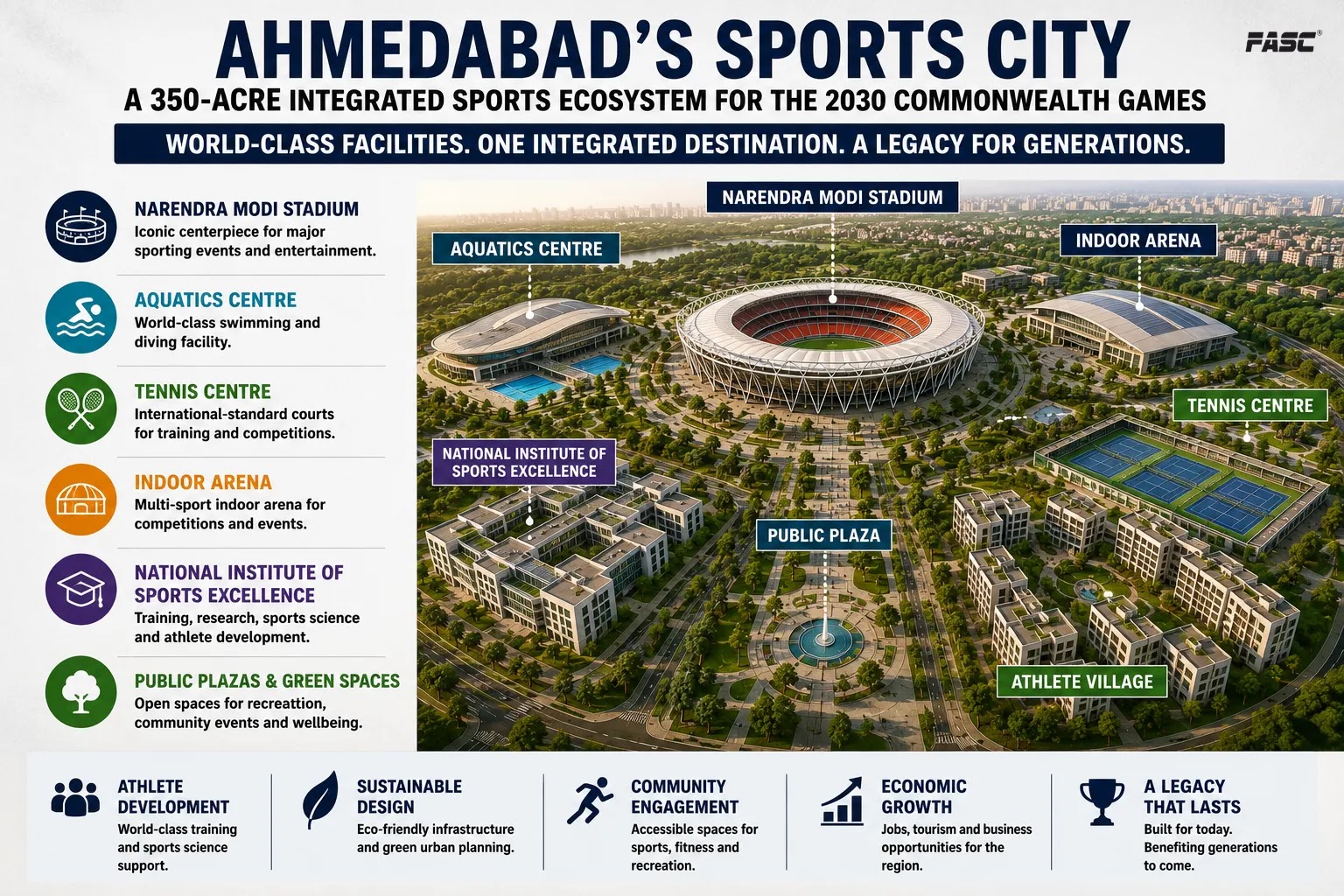
Spread across nearly 350 acres around the Narendra Modi Stadium, the Sports City is expected to include an aquatics centre, tennis centre, indoor arena, training facilities, public plazas, and the proposed National Institute of Sports Excellence.
Bringing these facilities together within a single district creates several long-term advantages. Athletes gain access to multiple world-class venues in one location, operational resources can be shared efficiently, and visitors enjoy a seamless sporting experience.
Beyond international competitions, the district can host national championships, school tournaments, sports academies, coaching programmes, and community events throughout the year.
This integrated planning transforms the Sports City from an event venue into a permanent destination for sports and recreation.
Sustainability and Gujarat-Inspired Design
One of the most distinctive aspects of the proposed Sports City is its emphasis on sustainable urban planning.
Ahmedabad experiences high summer temperatures, making climate-responsive architecture an important consideration. The proposed master plan includes landscaped public spaces, shaded walkways, tree-lined boulevards, and pedestrian-friendly areas that improve comfort while reducing environmental impact.
The design also draws inspiration from Gujarat's architectural heritage, incorporating elements that reflect the city's cultural identity rather than creating generic sporting venues.
This combination of sustainability and local character has the potential to make the Sports City both environmentally responsible and architecturally distinctive.
A Stronger Future for Indian Sports
Large-scale sports infrastructure should contribute not only to hosting international events but also to strengthening the country's sporting ecosystem.
Ahmedabad's Sports City has the potential to support this vision in multiple ways.
Supporting Athlete Development and Grassroots Sports
World-class infrastructure plays a vital role in developing future champions.
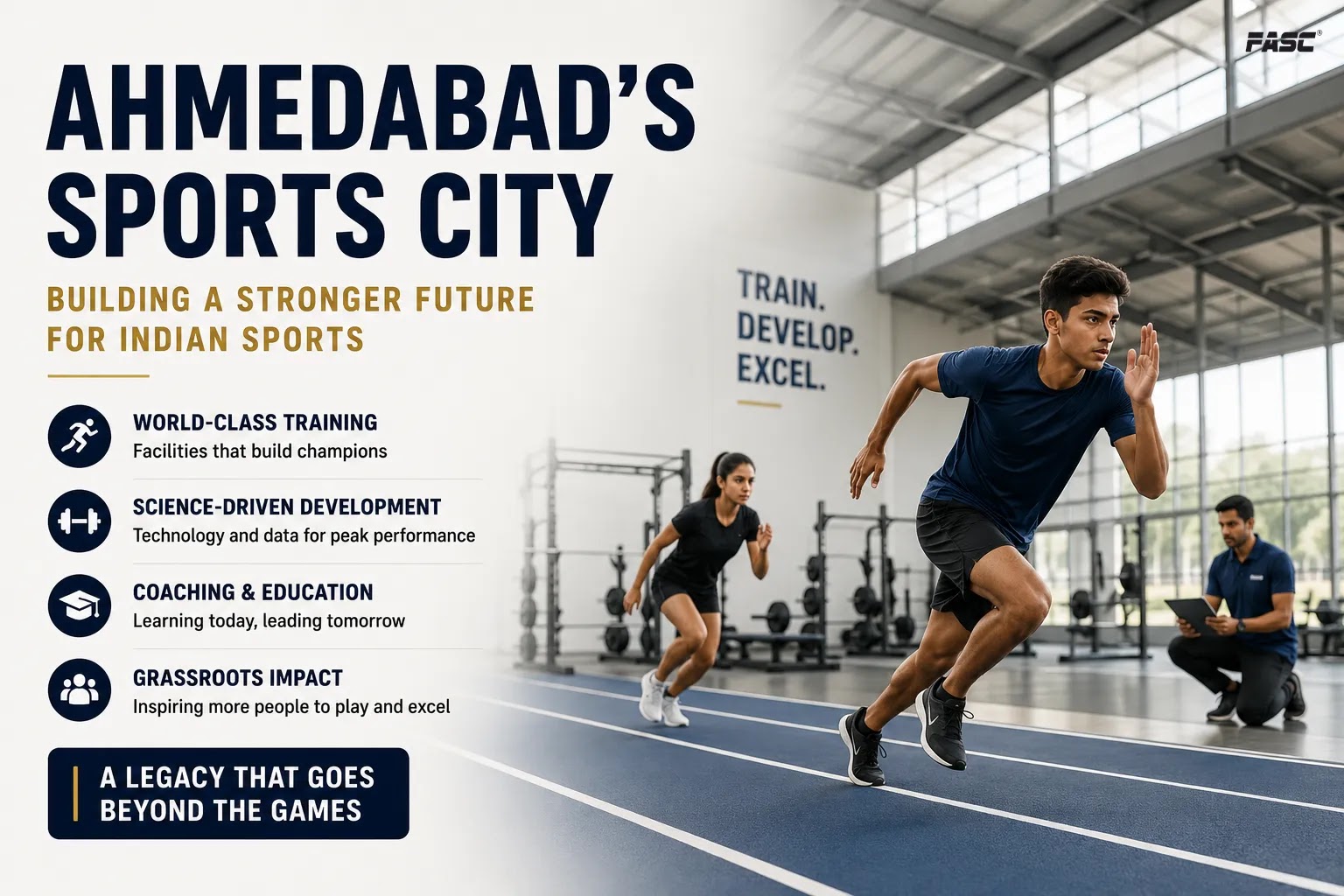
The proposed National Institute of Sports Excellence could provide facilities for coaching, sports science, physiotherapy, nutrition, biomechanics, and performance analysis. Such integrated support systems help athletes perform at higher levels while creating opportunities for coaches, researchers, and sports professionals.
Equally important is the impact on grassroots sports.
By making quality sporting facilities more accessible, the Sports City can encourage schools, colleges, academies, and local clubs to organise regular competitions and training programmes. Increased participation at the grassroots level creates a stronger pipeline of talent for the future.
Driving Economic Growth and Sports Tourism
Major sports infrastructure projects also create significant economic opportunities.
International tournaments attract visitors, generate tourism, and increase demand for hotels, restaurants, transportation, and local businesses. Even after the Commonwealth Games, the Sports City can continue hosting national competitions, sports expos, fitness events, and corporate tournaments that contribute to the local economy.
The project also strengthens Ahmedabad's position as a destination for sports tourism and reinforces India's ambitions of hosting larger international events in the future, including the Olympic Games.
By combining sporting excellence with economic development, the Sports City can create value that extends far beyond competition.
Recommended products from FASC Coach
Conclusion
Ahmedabad's proposed Sports City represents a shift in how India approaches sports infrastructure. Rather than focusing solely on hosting the 2030 Commonwealth Games, the project aims to create a long-term sporting ecosystem that supports athletes, communities, tourism, education, and economic growth.
Its integrated planning, sustainable design, and emphasis on year-round utilisation reflect a modern approach to sports development. If successfully implemented, the Sports City could become a benchmark for future infrastructure projects across India while establishing Ahmedabad as one of the country's leading sporting destinations.
The true legacy of the Commonwealth Games will not be measured by medals or ceremonies, but by how effectively this infrastructure continues to inspire participation, develop talent, and strengthen Indian sports for generations to come.
Frequently Asked Questions (FAQs)
1. What is Ahmedabad's proposed Sports City?
It is a planned 350-acre integrated sports district around the Narendra Modi Stadium, featuring world-class sporting venues, training facilities, public spaces, and sports science infrastructure.
2. Why is the Sports City important for the 2030 Commonwealth Games?
It will provide modern infrastructure for hosting the Games while creating facilities that remain useful for athletes and communities long after the event.
3. How will the Sports City benefit local communities?
The project is expected to support school competitions, community sports, fitness programmes, recreational activities, and public access to quality sporting infrastructure.
4. Can the Sports City contribute to India's Olympic ambitions?
Yes. By strengthening sports infrastructure, athlete development, and sports science facilities, it can support India's long-term goal of becoming a stronger sporting nation and hosting future international events.
Share :