- Fitness
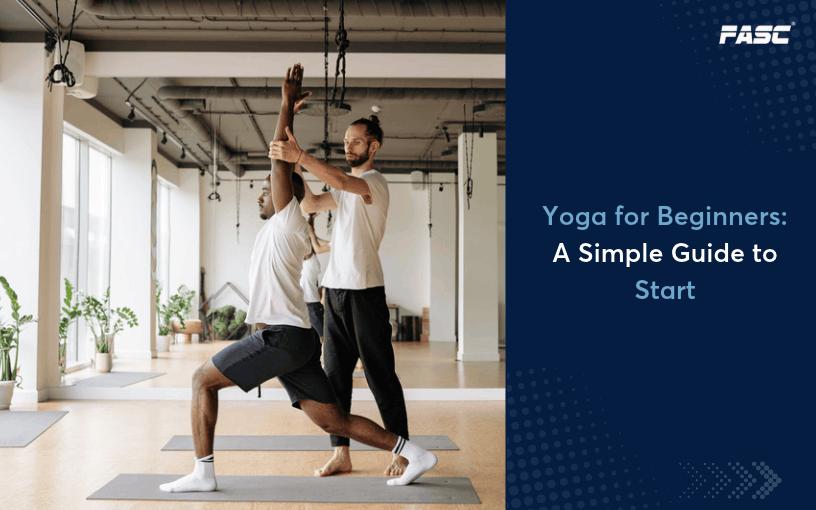
Yoga for Beginners: A Simple Guide to Start
- Nov 06, 2026
- 4 min
Key Takeaways
- Yoga is good for beginners and can be tailored to suit people of all fitness levels.
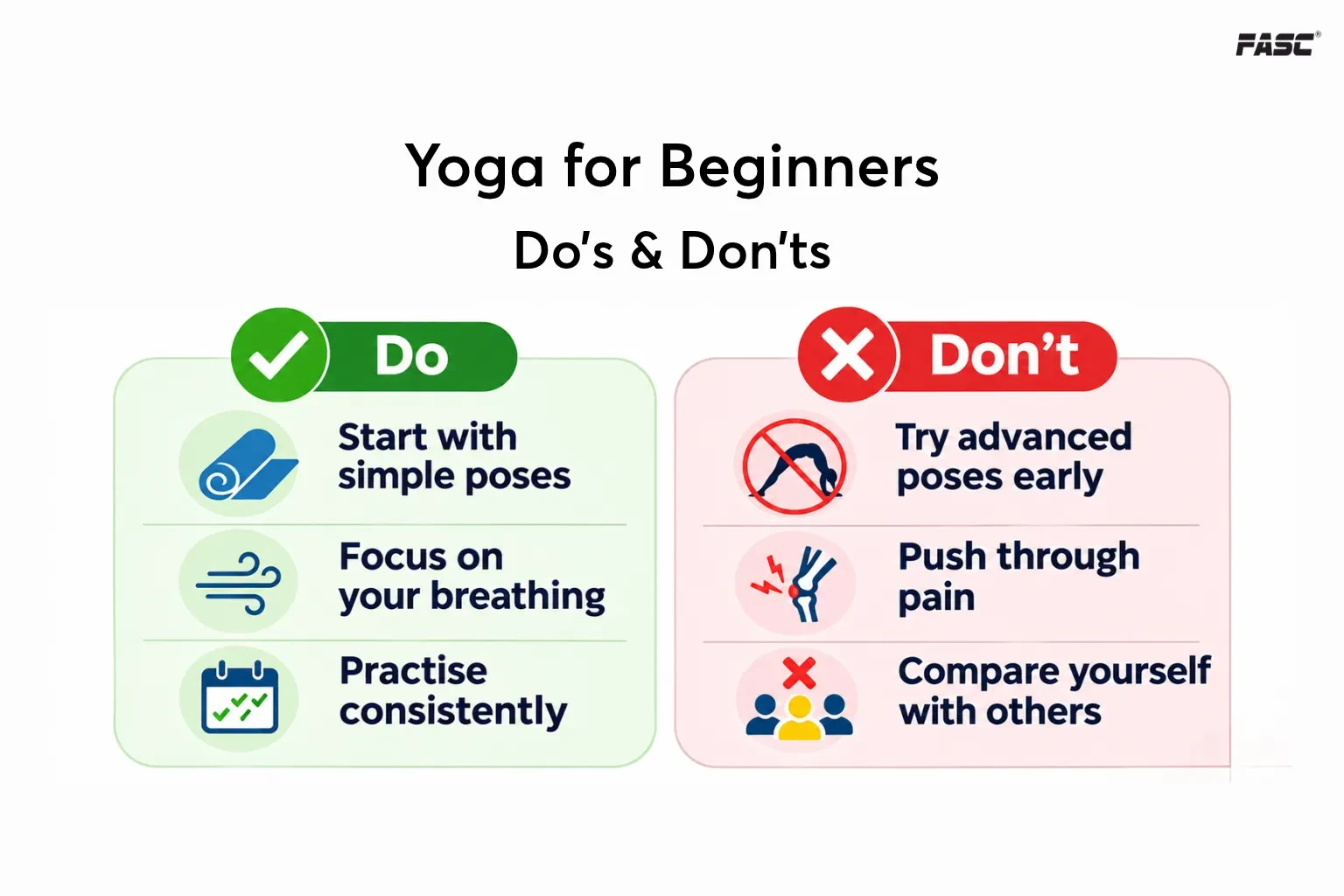
- Start with simple poses and short sessions.
- Focus on breathing, alignment and consistency rather than perfection.
- Use modifications or support as required.
- Regular comfortable practice will help to develop flexibility, balance and body awareness.
What Is Yoga?
Yoga is a practice that combines physical postures, breathing techniques and meditation to support the connection between the body and mind. It can be adapted to different fitness levels, making it accessible to people who are just getting started.
According to the National Center for Complementary and Integrative Health (NCCIH), research suggests that yoga may support general wellness, balance, sleep and mental well-being.
Benefits of Yoga for Beginners
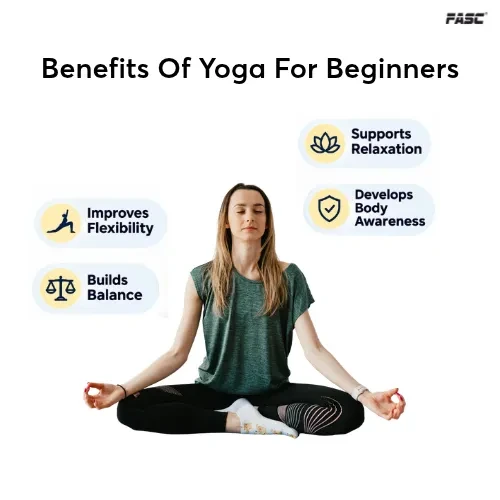
Starting with a simple routine can offer several benefits:
- Improves flexibility: gentle movement will help you to work on your range of motion over time.
- Builds balance and strength: many of the poses will work your core and your supporting muscles.
- Supports relaxation: breathing and mindful movement can be a very effective way of managing the day to day stress.
- Improves body awareness: yoga gets you to be aware of your posture, your movement and your breathing.
- Develops consistency: a manageable routine will help you build the habit of fitness.
Yoga can also be a useful component of a wider approach to stress and anxiety management, as part of a range of healthy habits and appropriate support.
6 Easy Yoga Poses for Beginners
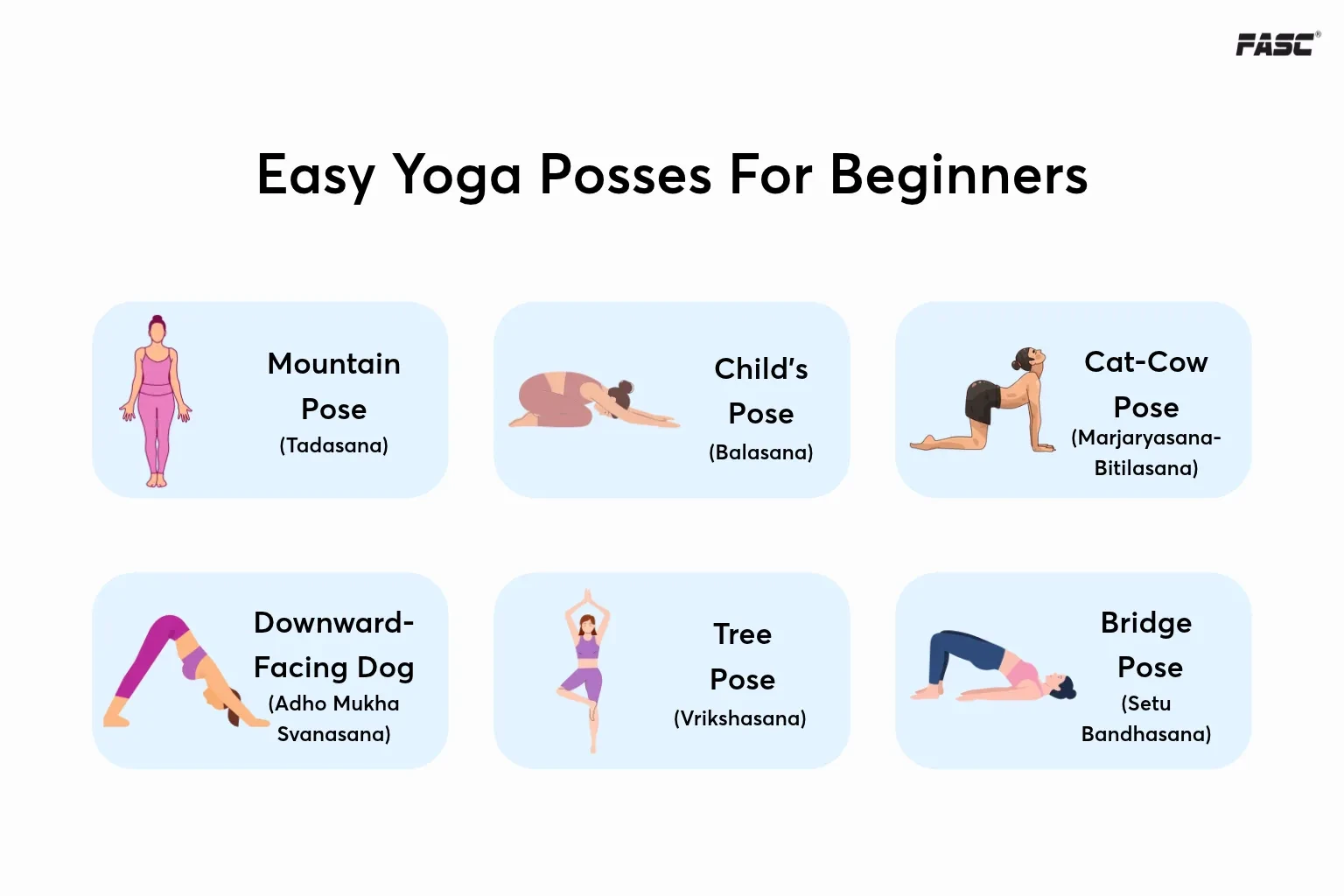
You don't need to get into any complicated poses at all when you're just starting out. Just start with these simple movements and concentrate on good alignment.
1. Mountain Pose (Tadasana)
Stand up straight with your feet comfortably apart, arms at your sides, shoulders back and relaxed. Keep your weight evenly distributed and breathe normally. It's a pose to help you develop good posture and body awareness.
2. Child's Pose (Balasana)
Kneel on the mat, bring your hips towards your heels and gently fold your upper body forward. Rest your forehead on the mat or a cushion. That's a very gentle resting posture.
3. Cat-Cow Pose (Marjaryasana-Bitilasana)
Start on your hands and knees. Gently round your back as you exhale and then lift your chest and tailbone as you inhale. Just move smoothly, don't force your spine.
4. Downward-Facing Dog (Adho Mukha Svanasana)
From a hands and knees position, lift your hips up to form an inverted V. Keep your knees slightly bent if necessary and don't force your heels towards the floor.
5. Tree Pose (Vrikshasana)
Stand on one leg and place the sole of your other foot against your inner calf or thigh (don't touch the knee). Keep your hands together in front of your chest and use a wall for support if you need to.
6. Bridge Pose (Setu Bandhasana)
Lie on your back with your knees bent and your feet flat on the floor. Gently lift your hips, keeping your shoulders very relaxed. Lower down slowly and repeat.
How to Start a Yoga Routine at Home
You can start off with a short routine rather than attempting to do everything at once.
- Choose a comfortable space: find a quiet, uncluttered area with plenty of room to move.
- Use a yoga mat: it provides a far more stable and comfortable surface
- Start with 10–15 minutes: some basic poses and simple breathing exercises.
- Focus on technique: move slowly and don't force your body into a position.
- Practise consistently: start with two or three sessions per week and work up from there.
Yoga and stretching are closely related, but they are not identical. Yoga combines postures with breathing and mindful movement, while stretching generally focuses on improving muscle flexibility and range of motion.
Common Mistakes Beginners Should Avoid
- Trying advanced poses too early.
- Comparing your flexibility with others.
- Holding your breath during movements.
- Ignoring discomfort or pushing through pain.
- Practising without learning proper alignment.
Yoga should feel controlled and comfortable. Consider learning from a qualified instructor, especially when you are new. People who are pregnant, have existing injuries or have health conditions should seek appropriate professional advice and ask about pose modifications.
Recommended Products From Yoga Coach
Conclusion
Yoga is a very simple way of beginning to pay more attention to your body, your movement and your breathing. Just start with a few simple poses, do it regularly and give yourself time to get better. You don't have to be perfect on day one at all. Consistency is the key.
Frequently Asked Questions (FAQs)
1. Can a beginner start yoga at home?
Yes, you can start off with the basic poses and fairly short sessions at home. Having a qualified instructor to learn from will go a long way to developing safe technique.
2. How many days a week should beginners practise yoga?
Start with two or three sessions per week. You can then adjust the frequency up or down depending on how you feel and what your schedule allows.
3. Do I need to be flexible to start yoga?
No. Flexibility isn't a requirement. You can adapt yoga to your current level of ability and flexibility will come with practice.
4. What equipment do I need for yoga?
A yoga mat, some comfortable clothes and plenty of space to move about are normally all that is required. Blocks and cushions can be used if extra support is required.
5. Is yoga enough for overall fitness?
Yoga can be of benefit in terms of flexibility, balance and some aspects of strength and fitness. For a truly rounded programme you'd want to combine it with other appropriate activities such as walking, strength training and cycling.
Share :
Recent Blog
- Nov 06, 2026

- Oct 30, 2026