- Sports
Cricket Kit Buying Guide for Beginners (2026): Everything You Need to Get Started
-Everything-You-Need-to-Get-Started.png)
- Jul 31, 2026
- 5 min
Key Takeaways
- Know which cricket equipment is essential before making a purchase.
- Prioritise safety gear over expensive accessories.
- Buy equipment based on your playing level, age, and budget.
- Avoid common mistakes that lead to unnecessary spending.
- Invest in quality gear that can grow with your game.
Starting cricket is exciting, but buying your first cricket kit can become confusing. Walk into any sports store or browse online, and you will find dozens of bats, gloves, helmets, pads, and accessories, in different sizes, brands, and price ranges.
Many beginners end up buying equipment they don’t need, choosing the wrong bat size, or spending too much on premium gear before they have even developed their technique.
The good news is that you don’t need the most expensive cricket kit to start playing. What matters is selecting equipment that is safe, comfortable, and suitable for your skill level.
In this guide, we will break down every essential item in a beginner’s cricket kit, explain what to look for before buying, and help you avoid costly mistakes.
What Does a Beginner Cricket Kit Include?
Before shopping, it's important to know what actually belongs in a cricket kit.
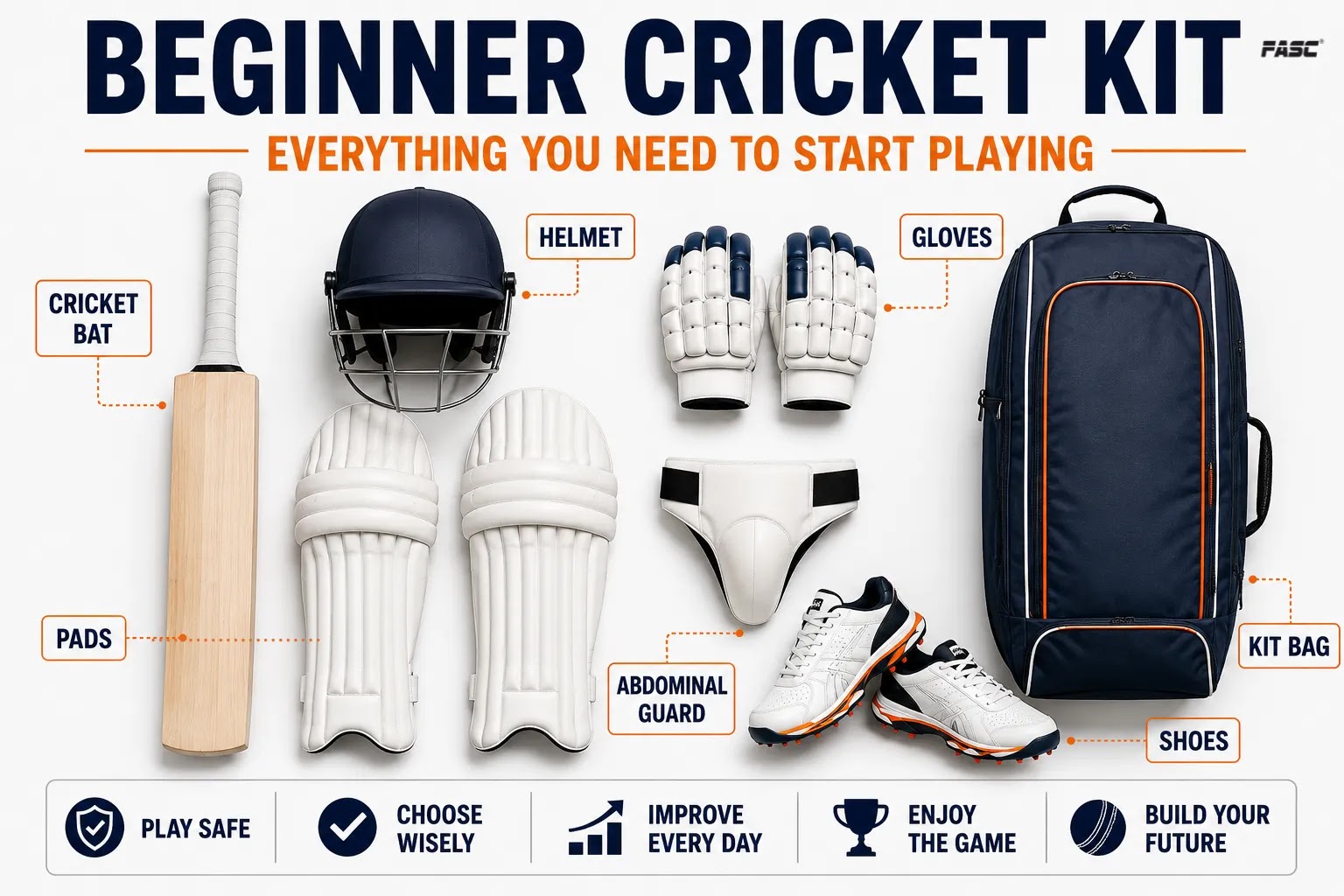
A standard beginner's cricket kit includes:
- Cricket bat
- Batting gloves
- Batting pads
- Cricket helmet
- Cricket shoes
- Abdominal guard
- Kit bag
- Cricket clothing
These items provide the protection and comfort needed for both practice sessions and matches.
Start with the Right Cricket Bat
The bat is the most important piece of equipment in your cricket kit. Before finalizing your purchase, it’s worth understanding which cricket bat suits your budget and playing style, especially if you are comparing Kashmir Willow and English Willow options.
When choosing one, consider:
Bat Size
Always choose a bat according to your height and age rather than buying an adult-size bat immediately.
Weight
A lighter bat helps beginners develop proper timing and shot control, while an overly heavy bat can affect technique and increase fatigue.
Willow Type
-
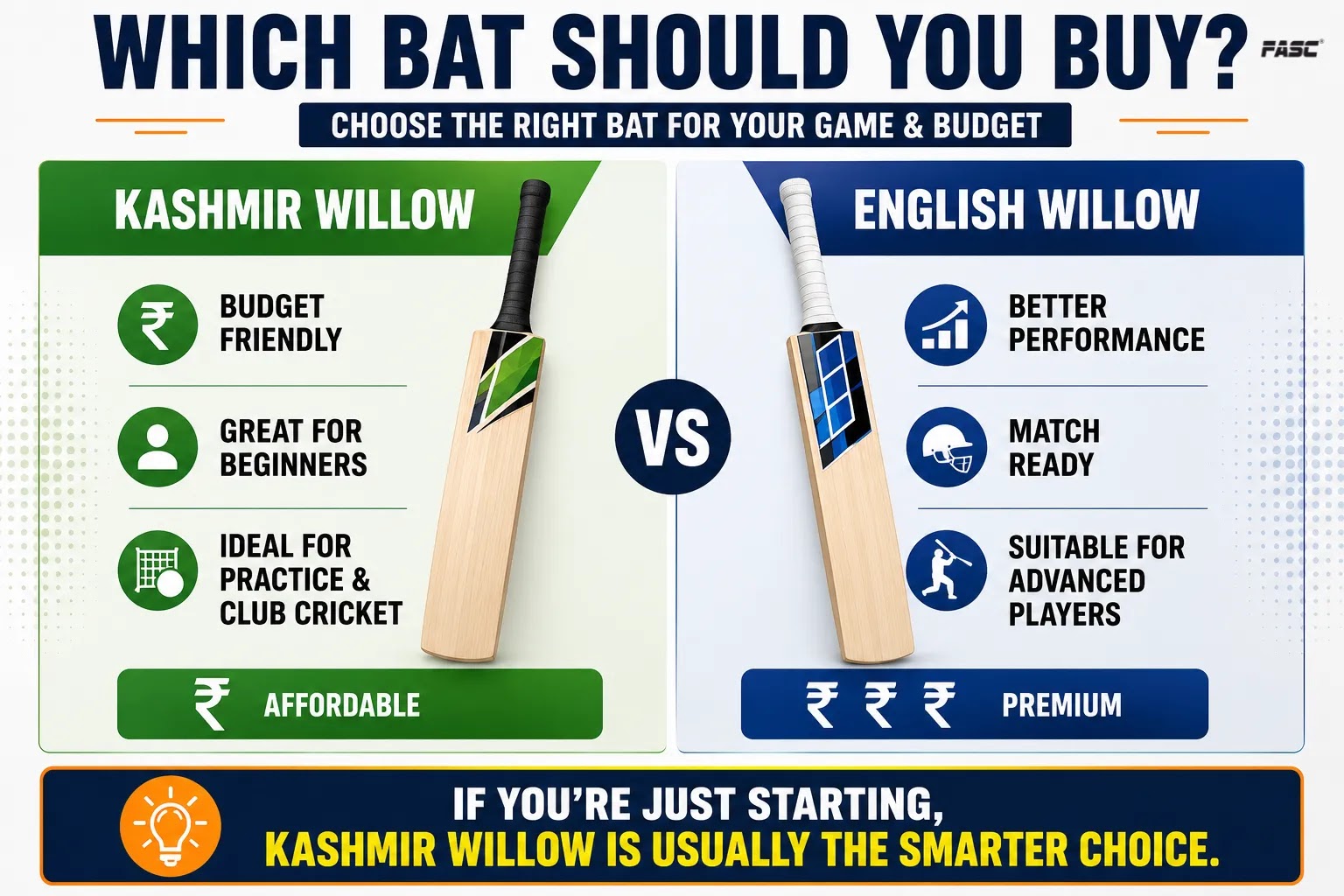
Kashmir Willow – Ideal for beginners due to its affordability.
-
English Willow – Better suited for advanced and competitive players.
Never Compromise on Safety Equipment
One of the biggest mistakes beginners make is spending most of their budgets on the bat while neglecting protective gear.
Always prioritise:
Cricket Helmet
A certified helmet protects against serious head injuries, especially when playing with a leather ball.
Batting Gloves
Choose gloves with good finger protection and a comfortable grip.
Batting Pads
Pads should fit properly without restricting movement.
Abdominal Guard
This is a small investment that offers essential protection.
Remember, protective equipment isn't optional, it's part of playing the game safely.
Choose Comfortable Cricket Shoes
Regular running shoes are not designed for cricket.
Cricket shoes provide:
- Better grip
- Improved balance
- Enhanced stability while batting and bowling
- Reduced risk of slipping
If you're just starting out, a quality entry-level pair is more than enough.
Buy a Practical Cricket Kit Bag
Your kit bag should comfortably fit all your equipment while remaining easy to carry.
Look for:
- Multiple compartments
- Durable stitching
- Water-resistant material
- Comfortable shoulder straps or wheels
A good kit bag keeps your equipment organised and extends the life of your gear.
Common Mistakes Beginners Make
Avoid these common buying mistakes:
Buying the most expensive bat: A premium bat won’t automatically improve your game
Ignoring Bat Size: Using the wrong size affects technique and comfort.
Choosing Equipment Based Only on Brand: Focus on fit, quality, and usability rather than logos.
Buying Everything Online Without Research: Whenever possible, visit a sports store and feel the bat's balance and weight before purchasing. Community discussions from experienced players consistently emphasise that pickup and feel are often more important than brand alone.
Skipping Protective Gear: Safety equipment should never be treated as optional.
Where Should Beginners Buy Their Cricket Kit?
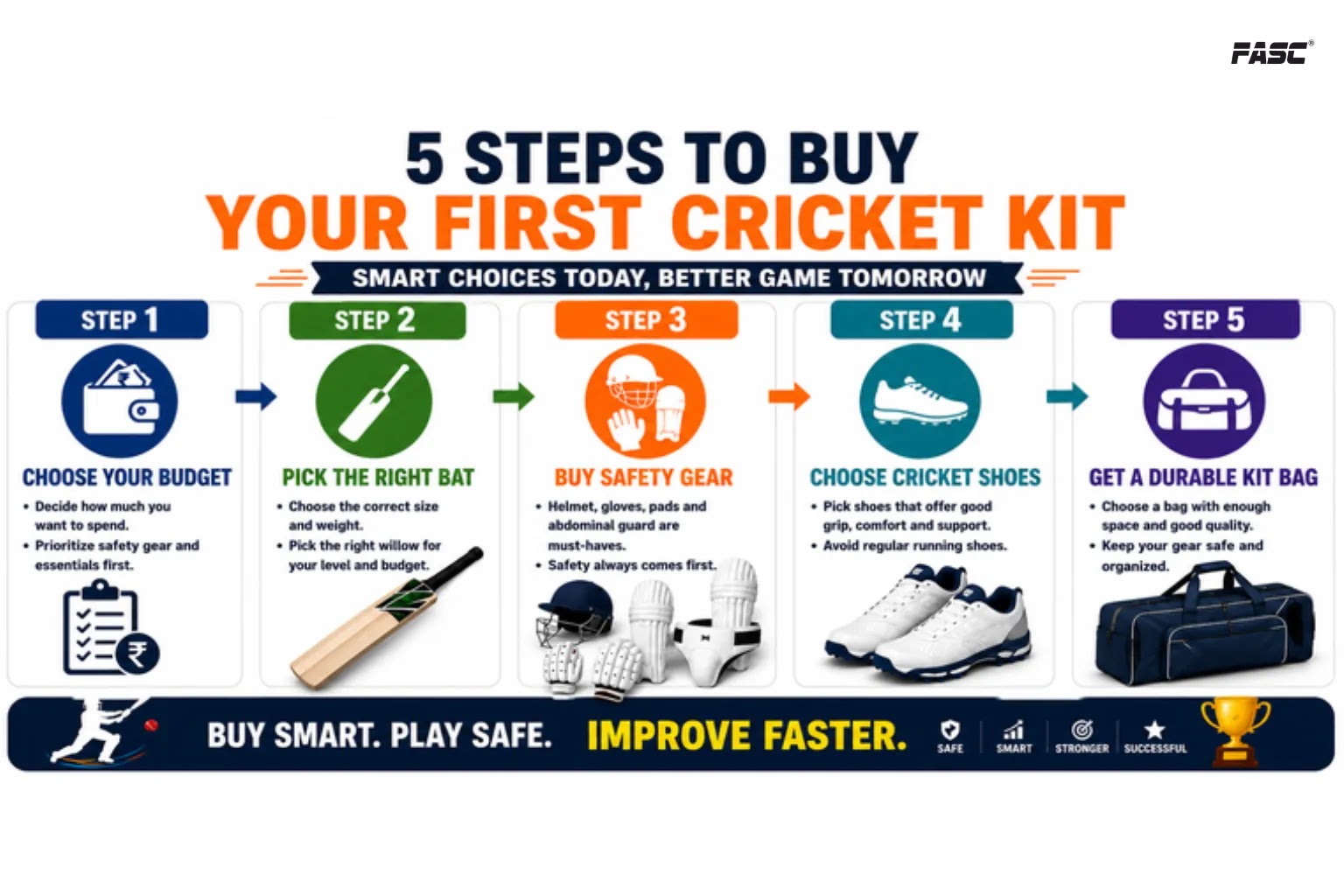
Whether you buy online or from a sports store, make sure the equipment is genuine and suits your playing requirement.
If possible:
- Hold different bats before purchasing.
- Try on helmets and pads for the correct fit.
- Compare multiple brands.
- Ask experienced coaches or players for recommendations.
Buying from a trusted sports equipment supplier also ensures better product quality and after sales support.
Ready to Take Cricket Seriously?
Buying the right cricket kit is just the first step.
If you are serious about progressing in the game, learning how young players can start their cricket journey will help you understand what comes after purchasing your equipment.
Conclusion
A beginner cricket kit doesn't have to be expensive, it just needs to be practical, safe, and suited to your needs.
Start with the essentials, prioritise protective equipment, choose the right bat for your size and playing level, and upgrade your gear as your skills improve.
Making informed buying decisions today will help you enjoy the game more and avoid unnecessary expenses in the future.
Recommended Products From Cricket Coach
FAQs
1. How much does a beginner cricket kit cost?
A good beginner cricket kit in India typically ranges from 5000/- to 15000/-, depending on the quality of the equipment and the brands you choose.
2. What is the most important item in a cricket kit?
The cricket bat is the primary piece of equipment, but protective gear such as the helmet, gloves, and pads is equally important for safety.
3. Should beginners buy an English Willow bat?
Not necessarily. Kashmir Willow bats are more affordable and are ideal for beginners learning the game.
4. Can I use running shoes for cricket?
Running shoes can be used for casual practice, but proper cricket shoes provide better grip, stability, and comfort during matches,
5. How often should cricket equipment be replaced?
Replace equipment if it gets damaged, loses its protective qualities, or no longer fits properly. Well maintained gear can last several seasons.
Share :