- Sports
English Willow Bat Grades: Does Higher Grade Mean Better?
- Sep 18, 2026
- 4 min
Key Takeaways
- English willow bat grades mainly describe the appearance and quality of the willow.
- Higher grades generally have straighter grains and fewer blemishes.
- A higher grade does not automatically mean more runs or better performance.
- Bat shape, weight, balance and pickup can matter more than the grade.
- Choose a grade according to your playing level, budget and preferences.
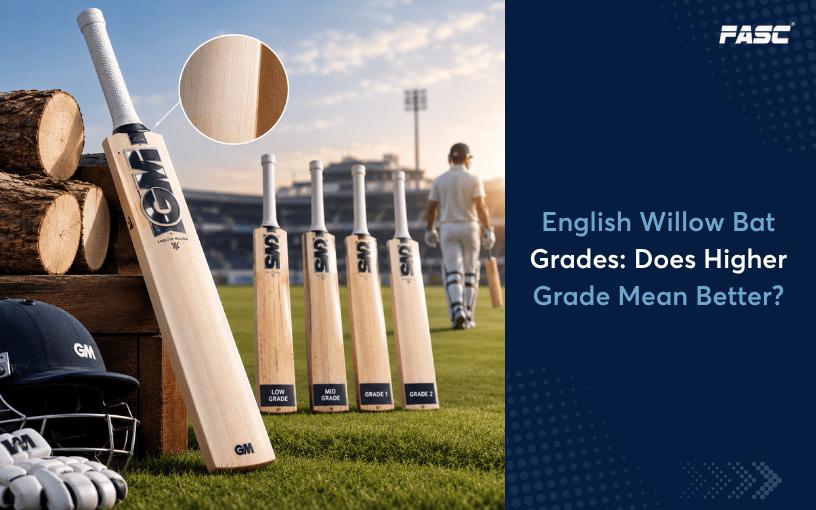
Walk into a cricket shop and you’ll quickly hear terms such as Grade 1, Grade 2 or Grade 3 English willow. It is easy to assume that Grade 1 must always be the best bat.
But cricket bat grading is a little more complicated. Grades primarily describe the quality and appearance of the willow, and grading systems can vary between manufacturers.
So, before paying extra for a higher grade, it helps to understand what you are actually buying.
What Does English Willow Bat Grade Mean?
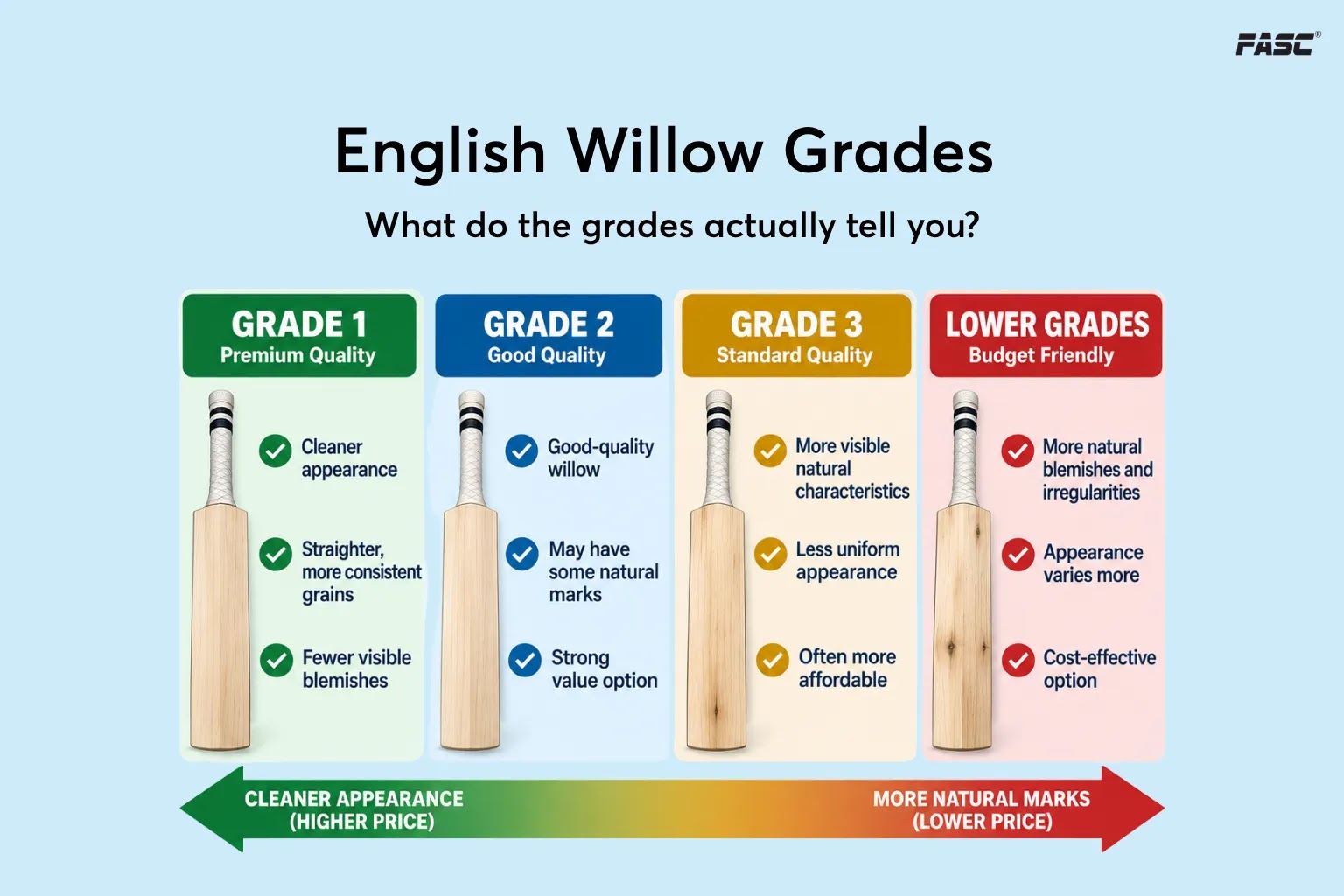
English willow bat grades are broadly used to classify willow based on characteristics such as:
- Straightness and number of grains
- Grain spacing
- Knots or blemishes
- Colour and overall appearance
- Presence of natural marks or irregularities
Generally, higher grades have cleaner-looking willow with straighter, more consistent grains, while lower grades may contain more natural marks, fewer visible grains or less uniform grain patterns.
However, there is no single universal grading standard followed identically by every bat manufacturer. One brand's Grade 1 may not be directly comparable with another brand's Grade 1.
That is why the label should be treated as a useful indicator, not the complete definition of bat quality.
Is Grade 1 English Willow Bat Always Better?
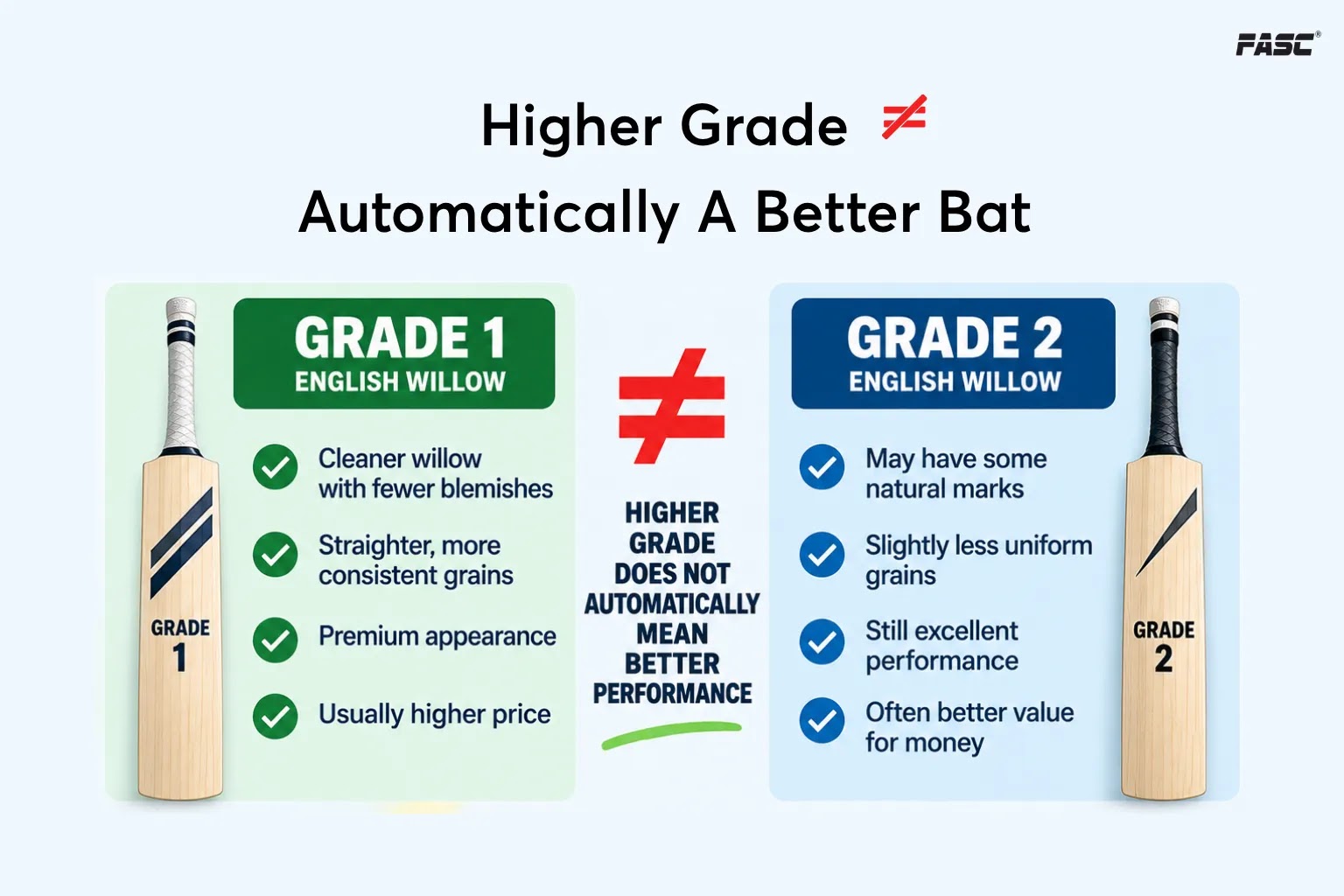
Not necessarily.
Grade 1 English willow bats are usually more expensive because the willow has desirable visual characteristics and is considered premium quality. But that does not mean a Grade 1 bat will automatically produce better shots than a well-made Grade 2 or Grade 3 bat.
A player's experience of a bat depends on several other factors.
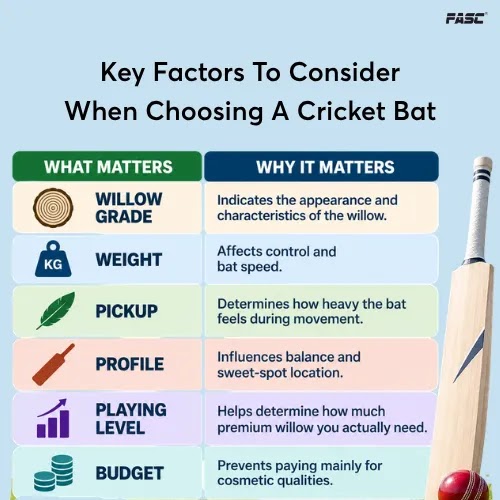
1. Bat Shape and Profile
The profile determines where the bulk of the wood sits and how the bat responds when you strike the ball.
A well-designed Grade 2 bat with a profile suited to your technique can feel considerably better than a Grade 1 bat that does not match your playing style.
2. Weight and Pickup
A bat's listed weight is only part of the story. Balance and pickup can make two bats of the same weight feel completely different.
For a player who relies on quick hands, a slightly lighter or better-balanced bat may be more useful than simply choosing the highest willow grade.
3. Playing Level and Frequency
A professional or highly competitive player may have good reasons to invest in premium willow and a carefully selected profile.
For a developing player who plays mainly on weekends, spending significantly more for a visually cleaner blade may not provide a meaningful advantage.
If you're still deciding what specifications suit you, factors such as weight, size, profile and playing level are covered in this cricket bat buying guide.
Does a Lower Grade Mean a Bad Bat?
Absolutely not.
A lower grade English willow bat can still produce an excellent cricket bat. It may simply have more visible natural characteristics or less uniform grain appearance.
For many recreational and developing players, a lower-grade bat can offer a sensible balance between performance, durability and price.
This is also why it is useful to understand how English willow compares with Kashmir willow before deciding what type of bat makes sense for your needs. The differences are explained in our guide to Kashmir willow Vs English willow bats.
Conclusion
A higher English willow bat grade usually means a cleaner and more attractive piece of willow, but it does not automatically mean a better cricket bat for you.
Before focusing on the grade printed on the sticker, consider the bat's weight, balance, profile, pickup, handle and suitability for your playing style.
A well-selected Grade 2 bat can be a far better purchase for one player than an expensive Grade 1 bat that simply does not feel right.
In cricket, the best bat is not necessarily the one with the highest grade. It is the one that works best for the player holding it.
Recommended Products From Cricket Coach
FAQs
1. Is Grade 1 English willow bat worth the extra money?
It can be, particularly for advanced players who value premium willow and specific bat characteristics. For many players, however, a lower grade can provide better value.
2. Does Grade 1 willow have more grains?
Not necessarily. Grain count varies naturally between pieces of willow, and a higher grade should not be judged by grain count alone.
3. Is Grade 2 English willow good for club cricket?
Yes. A good Grade 2 bat can be an excellent option for regular club players, particularly when its weight, profile and pickup suit the player.
4. Can you judge a bat only by its appearance?
No. Visual appearance tells you about the willow, but not everything about how the bat will feel or perform.
5. What matters more: grade or bat selection?
For most players, overall bat selection matters more. The right weight, balance, profile and pickup can make a bigger practical difference than moving from one willow grade to another.
Share :