- Sports
Lessons Every Young Footballer Can Learn From The FIFA World Cup

- Jul 21, 2026
- 5 min
Key Takeaways
- Talent creates opportunities, but consistent hard work builds successful football careers.
- Teamwork, discipline, and respect are the foundation of every great football team.
- Mistakes are part of the game, and learning from them leads to growth.
- Staying calm under pressure helps players make better decisions in crucial moments.
- Continuous learning and daily improvement are the keys to long-term success in football.
Every four years, the FIFA World Cup captures the attention of billions of people around the globe. Fans celebrate spectacular goals, incredible saves, dramatic comebacks, and unforgettable moments that become part of football history.
But for young footballers, the tournament offers something even more valuable. It offers lessons.
Every match showcases years of preparation, sacrifice, teamwork, and determination. Behind every successful player lies countless hours of training, setbacks, and continuous learning. The World Cup reminds us that becoming a great footballer is about much more than technical ability.
It is about building the right mindset. For every child dreaming of representing their country one day, the FIFA World Cup provides a blueprint worth studying.

Talent Opens The Door, Hard Work Keeps It Open
Many World Cup stars were recognised for their talent at a young age.But talent alone never guaranteed success.
Behind every brilliant pass, goal, or tackle are years of disciplined practice, fitness training, and relentless repetition. Young footballers often admire the final performance without seeing the thousands of training sessions that made it possible.
The biggest lesson is simple. Natural ability may create opportunities.
Consistent hard work turns those opportunities into careers.
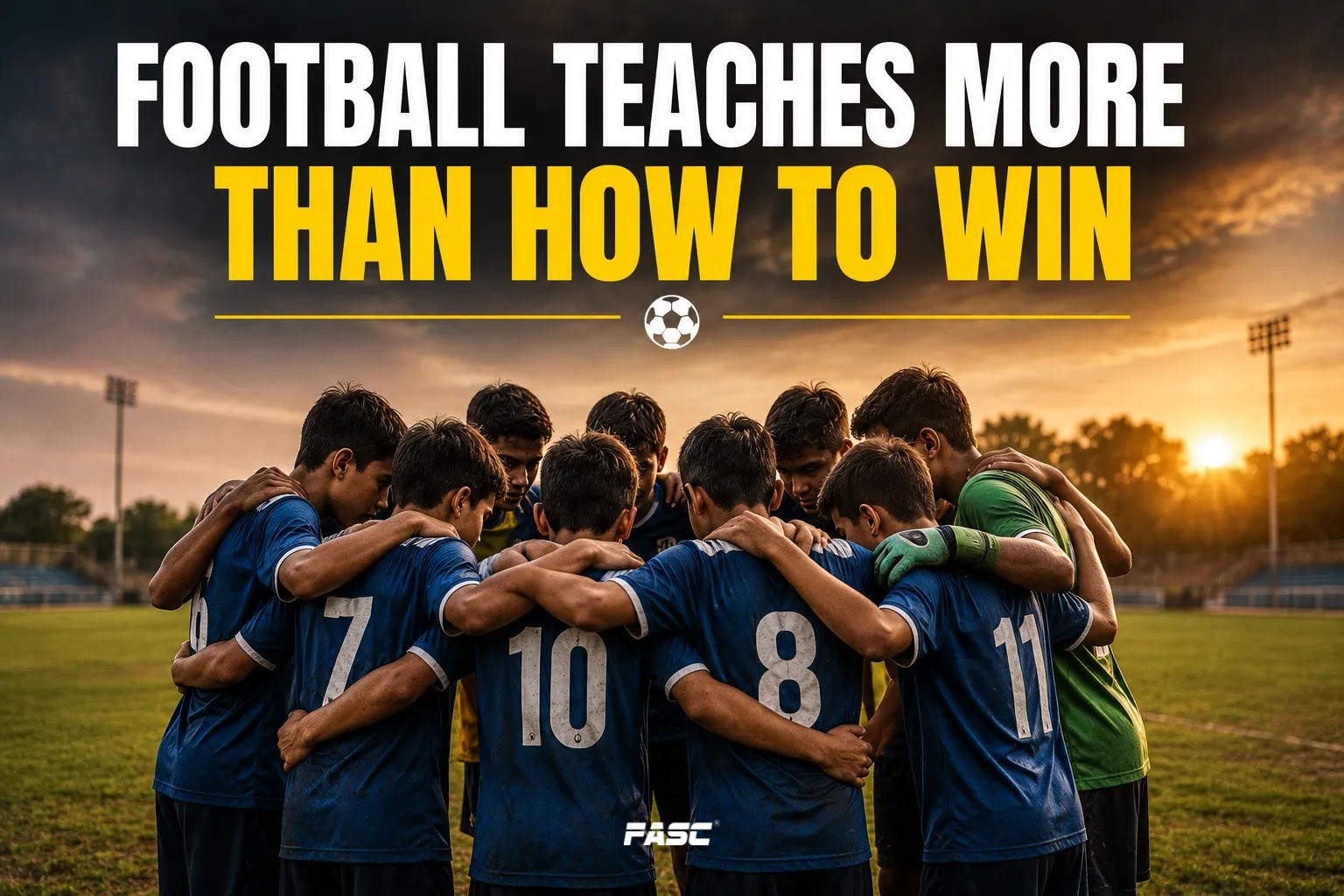
Football Is Always A Team Game
The World Cup repeatedly reminds us that even the greatest players cannot win tournaments alone. Every successful team depends on trust, communication, and collective effort.
- Defenders protect.
- Midfielders create.
- Forwards finish.
- Goalkeepers inspire confidence.
- Every role matters.
Young footballers sometimes focus only on scoring goals, but the best teams understand that success belongs to everyone on the pitch.
Learning to support teammates, celebrate their achievements, and work together is just as important as developing individual skills.
Winning Begins Long Before Kick-Off
The ninety minutes fans watch are only a small part of the story. Professional footballers prepare months and often years in advance.
- They follow structured training plans.
- Maintain disciplined nutrition.
- Prioritise recovery.
- Study opponents.
- Improve fitness.
- Build mental resilience.
Success on match day is usually the result of hundreds of small decisions made long before the referee blows the whistle. Young players who build good habits early often develop faster than those who rely only on natural talent.

Mistakes Are Part Of The Journey
Every FIFA World Cup has moments where even the world's best players make mistakes.
- Missed penalties.
- Poor passes.
- Defensive errors.
- Missed chances.
These moments remind us that perfection does not exist in sport.
The difference is how players respond. Great footballers recover quickly. They stay focused.
They continue believing in themselves. Young athletes should never allow one mistake to define an entire match or season. Growth begins when mistakes become lessons instead of excuses.
Staying Calm Under Pressure Is A Skill
Very few sporting stages carry more pressure than the FIFA World Cup. Millions watch every decision.
Every touch matters. Yet the best players remain composed when everything is at stake. Pressure cannot always be avoided.
It can, however, be managed. Young footballers can learn the importance of controlling emotions, making smart decisions, and trusting their preparation even during the biggest moments.
Composure often separates good players from great ones.
Respect Is One Of Football's Greatest Values
The FIFA World Cup brings together players from different cultures, languages, and backgrounds. Despite fierce competition, moments of mutual respect continue to define the tournament.
Players exchange jerseys. Support injured opponents. Congratulations to the winners. Acknowledge referees. Football teaches that competition and respect can exist together.
Young athletes should remember that character is measured not only by how someone wins, but also by how they lose.
Leadership Is Not Limited To The Captain
While captains wear the armband, leadership often comes from many players across the team.
Some encourage teammates after mistakes. Others motivate themselves through hard work. Some lead through communication.
Others inspire simply by setting high standards every day. Leadership is about taking responsibility.
Young footballers do not need a title to become leaders. They simply need the willingness to positively influence those around them.
Never Stop Learning
Football continues to evolve. Every World Cup introduces new tactics, technologies, training methods, and styles of play.
The best players never assume they know everything. They continue learning.
They adapt. They improve. Young footballers should develop the same mindset. Every coach. Every match. Every training session. Every defeat. Every victory.
Each offers an opportunity to become a better player. Curiosity and continuous improvement often define long-term success.
Dreams Begin With Small Steps
Every World Cup player was once a child kicking a football in a local park, school ground, or neighbourhood street.
Few started with world-class facilities or international recognition. They started with a dream.
Then they committed to improving every day. For young footballers, the path to success does not begin in a packed stadium. It begins at today's training session.
The next pass. The next sprint. The next opportunity to learn. Great careers are rarely built overnight.
They are built one practice at a time.
Conclusion
The FIFA World Cup is much more than a tournament that crowns world champions.
It is a celebration of everything football represents discipline, teamwork, perseverance, respect, and passion. Young footballers may never play in a World Cup.
But they can still adopt the habits that define those who do. Because the greatest lesson the tournament teaches is not how to win a trophy.
It is how to become a better player and a better teammate every single day.
Recommended products from Football Coach
FAQs
1. What can young footballers learn from the FIFA World Cup?
Young footballers can learn valuable lessons about teamwork, discipline, resilience, leadership, preparation, sportsmanship, and the importance of continuous improvement.
2. Why is teamwork important in football?
Football is a team sport where success depends on communication, trust, and players working together toward a common objective rather than individual achievements.
3. How does the FIFA World Cup inspire young players?
The tournament showcases the dedication, sacrifices, and determination required to compete at the highest level, motivating young athletes to pursue their own football dreams.
4. Is talent enough to become a successful footballer?
No. Talent provides a strong foundation, but consistent training, discipline, physical fitness, and the willingness to keep learning are what help players reach their full potential.
5. Why is mental strength important in football?
Football often involves high-pressure situations where players must remain calm, make quick decisions, recover from mistakes, and stay confident despite challenges.
Share :