- Gym
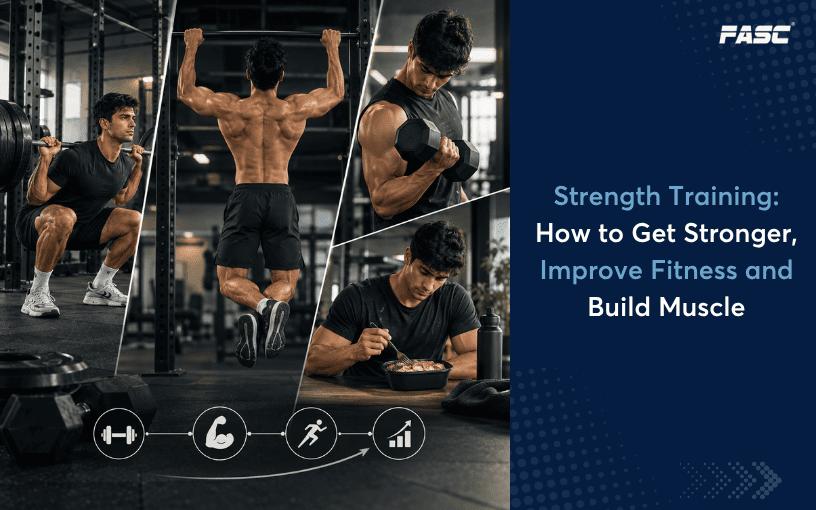
Strength Training: How to Get Stronger, Improve Fitness and Build Muscle
- Sep 29, 2026
- 4 min
Key Takeaways
- Strength training improves muscular strength and supports muscle growth.
- Compound exercises can train several muscle groups at once.
- Progress should be gradual rather than based only on adding more weight.
- Recovery, nutrition and consistency are essential for results.
- Strength training works best when matched to your individual goals.
Strength training can serve very different purposes. One person may want to lift heavier, another may want to build muscle, while someone else may simply want to become fitter and stronger for everyday life.
The good news is that the same basic training principles can support all three goals. Research published in Sports Medicine found that resistance training improves both muscle strength and hypertrophy compared with no resistance training.
The World Health Organization's physical activity guidelines also recommend muscle-strengthening activities involving the major muscle groups on at least two days per week for adults.
What Is Strength Training?
Strength training is exercise that makes your muscles work against resistance. That resistance may come from free weights, machines, resistance bands, body weight or other equipment.
The goal can vary. Training for maximum strength is not exactly the same as training primarily for muscle growth. Understanding the difference between strength training vs hypertrophy can help you choose exercises, loads and training volume that match what you actually want to achieve.
For general fitness, however, a balanced programme can develop strength while also supporting muscle, movement quality and physical capacity.
Best Strength Training Exercises
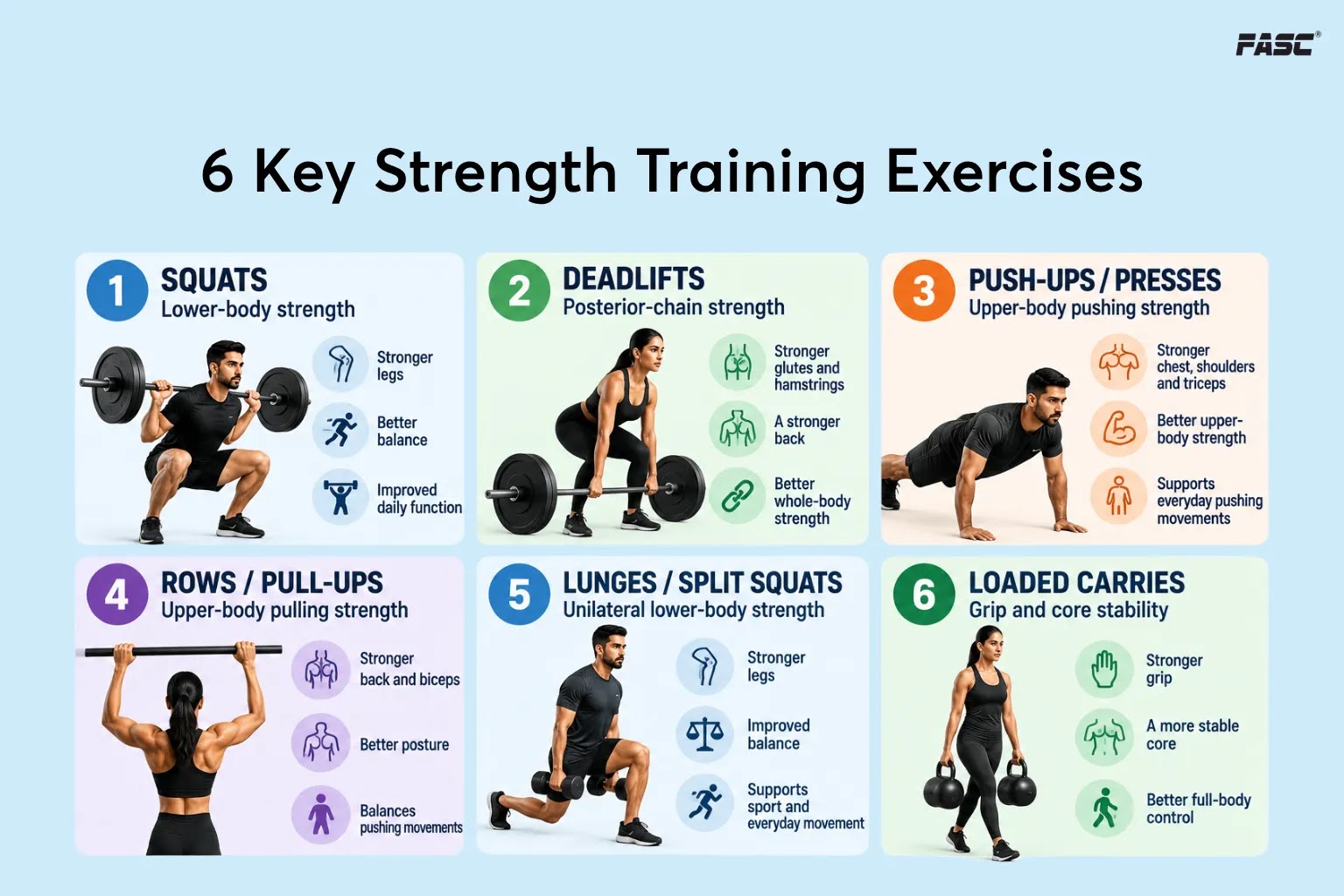
A good programme does not need dozens of exercises. Start with movements that train the major muscle groups and can be performed with controlled technique.
-
Squats: Build lower-body strength while training the hips, thighs and core.
-
Deadlifts and hip hinges: Develop the muscles of the posterior chain, including the glutes and hamstrings.
-
Push-ups and presses: Train the chest, shoulders and triceps while requiring upper-body control.
-
Rows and pull-ups: Strengthen the back and improve pulling strength.
-
Lunges and split squats: Challenge the legs individually while developing balance and stability.
-
Loaded carries: Combine grip, trunk stability, posture and whole-body strength.
These movements can be adapted for beginners and progressed as strength and technique improve.
How to Get Stronger Through Strength Training
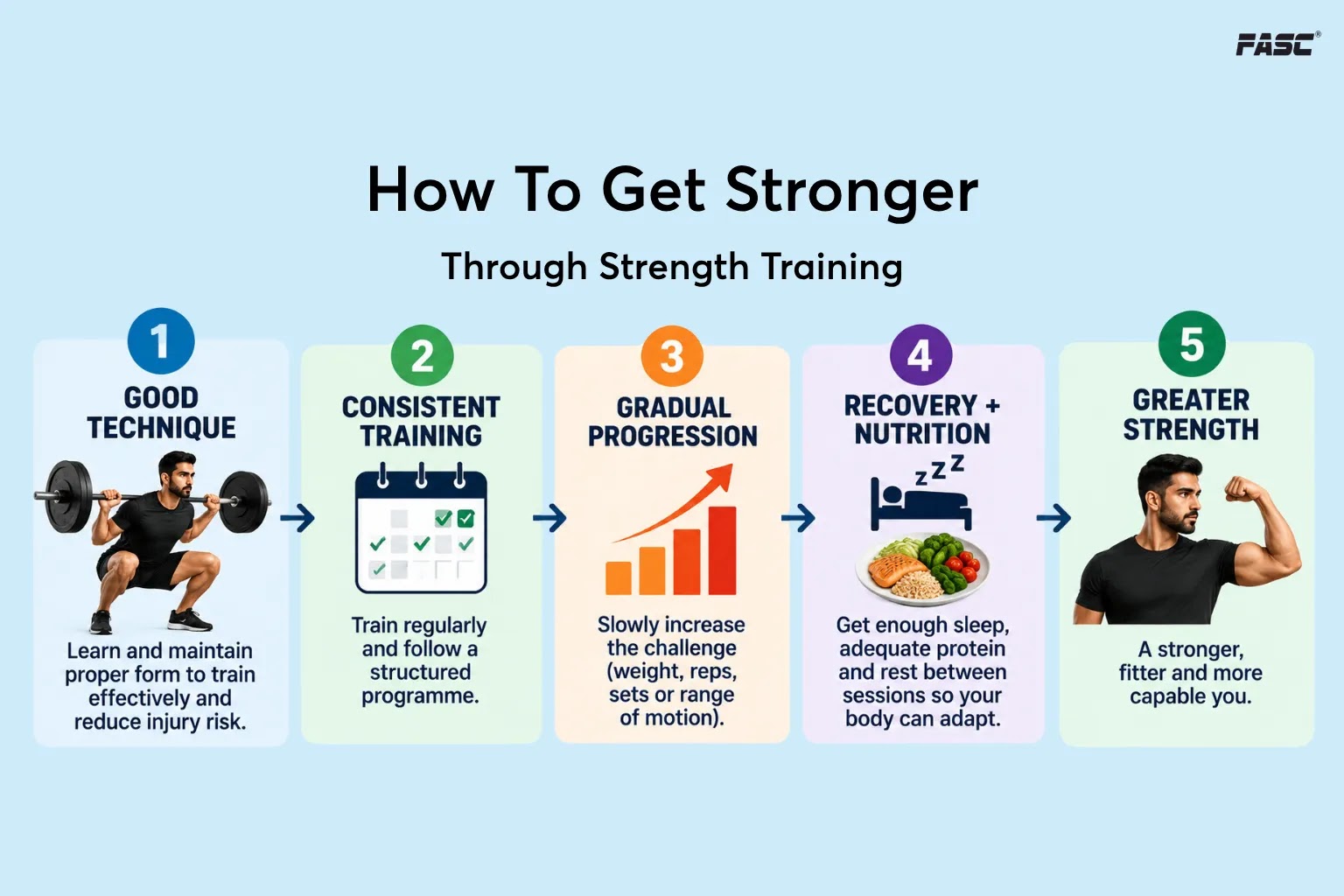
Getting stronger is not simply about lifting the heaviest weight possible. Your body needs an appropriate training stimulus, repeated consistently over time.
Start with a manageable resistance that allows you to maintain good technique. As the exercise becomes easier, progression can come through additional repetitions, increased resistance, improved technique, greater range of motion or other appropriate changes.
This is where training becomes individual. A beginner may progress quickly, while an experienced lifter may need more careful adjustments to volume, intensity and exercise selection.
Keep a simple training record so you can see whether your performance is actually improving rather than relying on how a workout feels.
Strength Training for Better Fitness
Strength is one part of overall fitness. A well-rounded approach also considers cardiovascular endurance, mobility, balance and other physical qualities.
This broader view is important because understanding fitness, its meaning and importance means looking beyond strength or appearance alone. Combining resistance training with aerobic activity and regular movement can create a more complete fitness routine.
A strong athlete also needs appropriate strength and conditioning to improve physical capacity and resilience. For beginners, strength training at home can be a practical way to build a consistent foundation before progressing to more advanced training.
Strength Training for Muscle Growth
Muscle growth occurs when training provides a sufficient stimulus and the body has the resources and recovery time needed to adapt.
Training volume, exercise selection, effort and consistency all matter. You do not need to train until complete exhaustion every session, and adding more exercises is not automatically better.
Nutrition also plays a role. Adequate protein and overall energy intake can support the adaptation process, while sleep and rest help you recover between sessions.
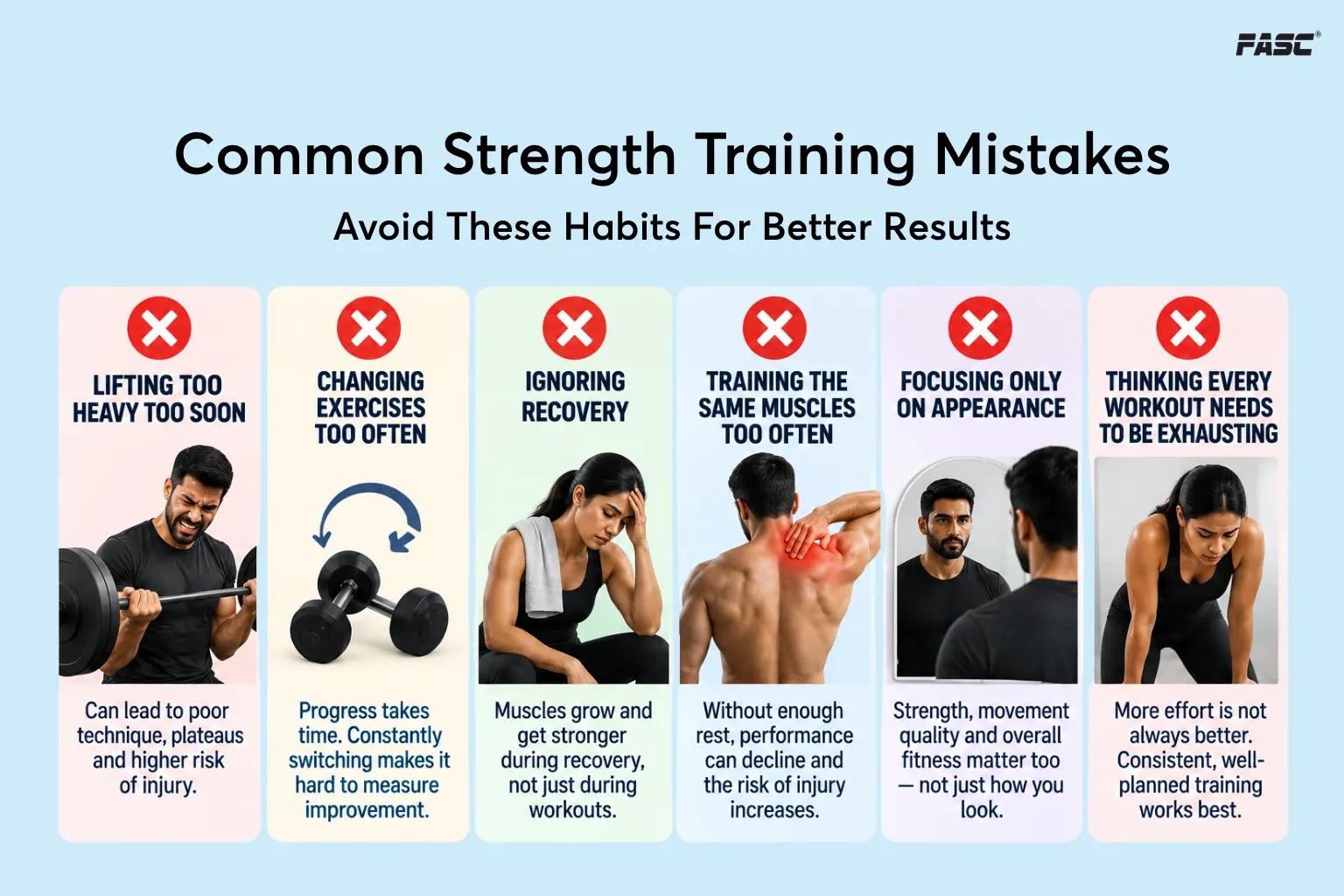
Common Strength Training Mistakes
A few habits can make progress harder than it needs to be:
- Increasing weight before mastering technique
- Changing exercises too frequently
- Ignoring recovery
- Training the same muscles hard without enough rest
- Focusing only on appearance instead of performance
- Assuming every workout needs to be exhausting
Consistency usually matters more than constantly searching for a new programme.
Recommended Products From Strength and Conditioning Coach
Conclusion
Strength training can help you become stronger, build muscle and improve important aspects of physical fitness. The most effective approach is not necessarily the most complicated one.
Choose appropriate exercises, learn good technique, progress gradually and give your body enough recovery. Over time, these simple habits can turn individual workouts into measurable improvements in strength and physical capacity.
FAQs
1. Can beginners start strength training?
Yes. Beginners can start with bodyweight exercises, resistance bands, machines or light free weights and gradually increase the challenge.
2. Does strength training make you bulky?
Not necessarily. Muscle growth depends on factors including training, nutrition, genetics and overall energy intake. Training can be adjusted according to the desired outcome.
3. Is strength training good for weight loss?
It can support a weight-management programme by helping maintain or develop muscle while combined with appropriate nutrition and overall physical activity.
4. Should I do cardio and strength training together?
Yes. Combining both can support broader fitness. The balance should depend on your goals, training experience and recovery capacity.
Share :