- Fitness
Regular Exercise: A Simple Guide to Building a Healthy Lifestyle

- Oct 13, 2026
- 5 min
Key Takeaways
- Regular exercise supports physical and mental well-being.
- Different forms of exercise provide different benefits.
- Consistency matters more than occasional intense workouts.
- Exercise routines should match your age, fitness level and lifestyle.
- Small, sustainable habits can make staying active easier.
A healthy lifestyle is not built around one perfect workout or a short-term fitness challenge. It develops through everyday habits that can be maintained over time. Regular exercise is one of those habits.
According to the World Health Organization (WHO), regular physical activity can support physical and mental health while helping prevent and manage several chronic health conditions. The goal, therefore, is not simply to exercise occasionally, but to make movement a sustainable part of everyday life.
What Is Regular Exercise?
Regular exercise means engaging in planned or structured physical activity consistently rather than only occasionally. It can include walking, cycling, swimming, strength training, yoga, running, sports or mobility exercises.
The right routine depends on individual factors such as age, fitness level, health status, available time and personal goals. For older adults, for example, activities focused on strength, balance and mobility can be particularly useful; exercises such as walking, chair-based movements and resistance training can form part of a well-rounded routine. There are 7 best exercises for older adults which one should be aware of for themselves and their older parents as well.
Benefits of Regular Exercise
Regular movement can support several aspects of health and fitness.
1. Supports Physical Fitness
Consistent exercise can help develop cardiovascular endurance, muscular strength, flexibility and mobility. Combining different forms of exercise can create a more balanced fitness routine.
2. Helps Manage Everyday Stress
Physical activity can provide a break from work and daily responsibilities while encouraging movement and relaxation. Exercise can therefore become part of a broader approach to managing stress and maintaining mental well-being.
3. Supports Healthy Weight Management
Regular physical activity increases energy expenditure and can complement balanced nutrition as part of a healthy approach to weight management.
4. Improves Functional Fitness
Being physically active can make everyday movements, such as climbing stairs, carrying groceries or getting up from a chair, easier. Building functional strength and mobility is particularly valuable as people get older.
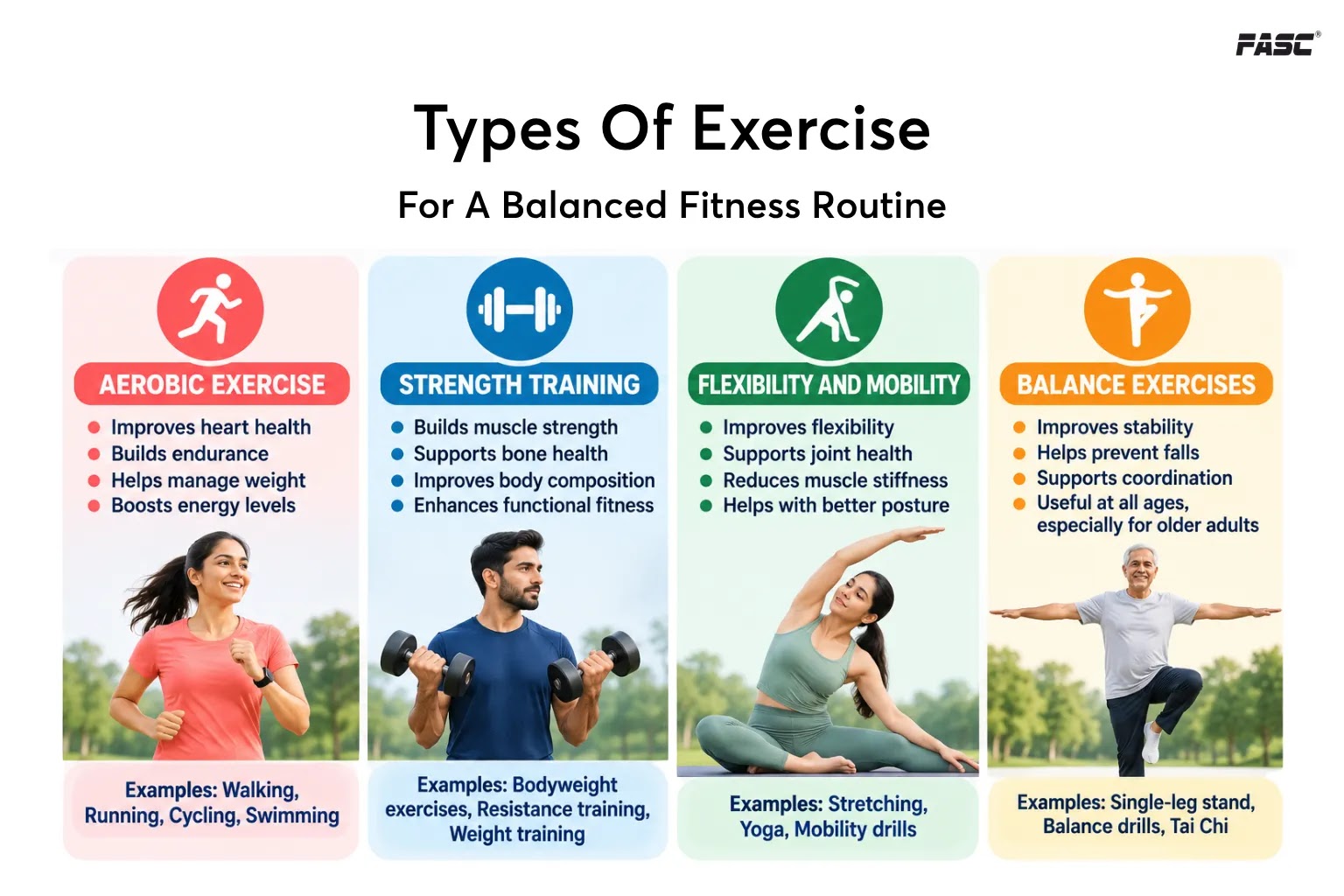
Types of Exercise to Include
A balanced routine does not have to contain every type of exercise every day. Instead, different activities can complement one another.
- Aerobic exercise: Walking, cycling, swimming and jogging can improve cardiovascular endurance.
- Strength training: Resistance exercises help develop and maintain muscular strength.
- Flexibility and mobility: Stretching, mobility drills and yoga can support comfortable movement.
- Balance exercises: Balance-focused activities can be especially useful for older adults and can complement strength and mobility work.
The best routine is one that can realistically fit into your lifestyle.
How to Make Exercise a Daily Habit
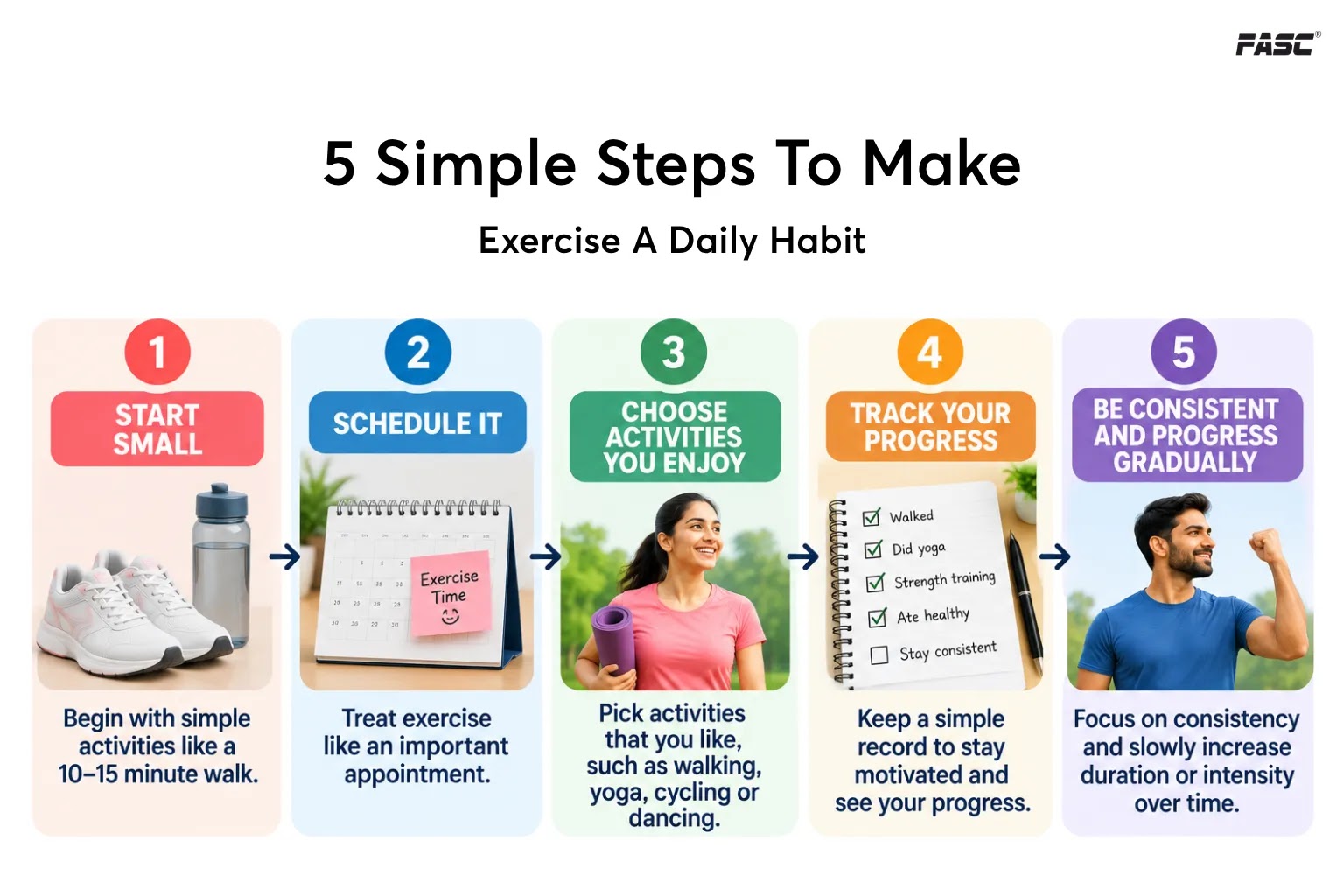
Starting small can make regular exercise easier to maintain. Instead of immediately committing to long workouts, begin with a manageable amount of activity and gradually build your routine.
Try these simple strategies:
- Schedule it: Treat exercise like an important appointment.
- Start small: A short walk is better than repeatedly waiting for the “perfect” workout.
- Choose activities you enjoy: Enjoyment can make consistency easier.
- Mix your workouts: Alternate cardio, strength, mobility and recreational activities.
- Track consistency: Focus on building a pattern rather than chasing perfection.
This becomes particularly important for people with demanding work schedules. Long working hours and sedentary routines can make physical activity easy to postpone, which is why fitness for working professionals increasingly needs to be practical, flexible and integrated into everyday life.
How Much Exercise Is Enough?
There is no single routine that works for everyone. Exercise volume should depend on individual goals, fitness level, age and health considerations.
For beginners, consistency should come before intensity. A gradual increase in duration, frequency or resistance allows the body to adapt while making the routine easier to sustain.
If you have been inactive for a long period or have a health condition, consider speaking with a qualified healthcare professional before starting a demanding exercise programme.
Common Mistakes to Avoid
Trying to do too much too soon is one of the easiest ways to make exercise difficult to sustain. Other common mistakes include skipping recovery, ignoring pain, doing only one type of exercise and comparing your routine with someone else's.
A sustainable approach focuses on progress, recovery and consistency rather than perfection.
Recommended Products From Fitness Coach
Conclusion
Regular exercise does not have to mean spending hours in a gym. Walking, strength training, yoga, cycling, swimming and other forms of movement can all contribute to a healthier lifestyle.
The goal is simple: move consistently, choose activities that suit you and build a routine you can maintain.
Small actions repeated over time can become powerful health habits.
FAQs
1. Is 30 minutes of exercise every day enough?
For many people, 30 minutes can be a practical starting point, but the ideal amount varies according to individual goals, fitness and health.
2. Can walking count as regular exercise?
Yes. Brisk walking is an accessible form of aerobic activity and can be an effective starting point for people who are new to exercise.
3. Should beginners exercise every day?
Beginners can stay active regularly, but not every day needs to be a demanding workout. Light movement, mobility work and recovery days can complement harder sessions.
4. Is regular exercise important for older adults?
Yes. Appropriate physical activity can support strength, mobility, balance and independence as people age.
5. What matters more: exercise intensity or consistency?
Both have a role, but for someone building a long-term routine, consistency is an important foundation. A sustainable routine is easier to maintain than occasional extreme workouts.
Share :