- Sports
Benefits Of Sports: Physical and Mental Benefits Explained
- Oct 09, 2026
- 5 min
Key Takeaways
- Sports can strengthen the heart, muscles and overall physical capacity.
- Regular activity can support healthy body weight and movement.
- Playing sports can be a useful way to manage everyday stress.
- Sports can build confidence, discipline and social skills.
- Enjoyment and consistency matter more than choosing a particular sport.
Sports are often associated with competition, fitness and athletic performance, but their value goes much further. Regular participation in sports can help people stay active, support physical health and contribute to mental well-being. The World Health Organization (WHO) recognises sports as one of the ways people can be physically active and notes that regular physical activity can help prevent and manage conditions such as cardiovascular disease, diabetes and hypertension while also supporting mental health and overall well-being. World Health Organization
Whether it is football, swimming, badminton, cricket, running or another activity, the benefits can extend beyond the time spent on the field. Sports can improve physical capacity, create opportunities to socialise, build confidence and provide a healthy outlet from everyday stress.
For people looking to make sports part of a healthier lifestyle, the important thing is not necessarily choosing the most demanding activity. Consistency, enjoyment and an appropriate level of challenge are what make regular participation easier to maintain.
Physical Benefits Of Playing Sports
Sports make the body work in ways that everyday routines often do not. Depending on the activity, that can mean running, jumping, lifting, balancing, changing direction or simply staying active for an extended period. Sports are one part of an active lifestyle, alongside exercise, recovery, nutrition and everyday movement. Understanding fitness, its meaning, importance and benefits provides a broader picture of how these elements contribute to overall health.
1. Better Cardiovascular Fitness
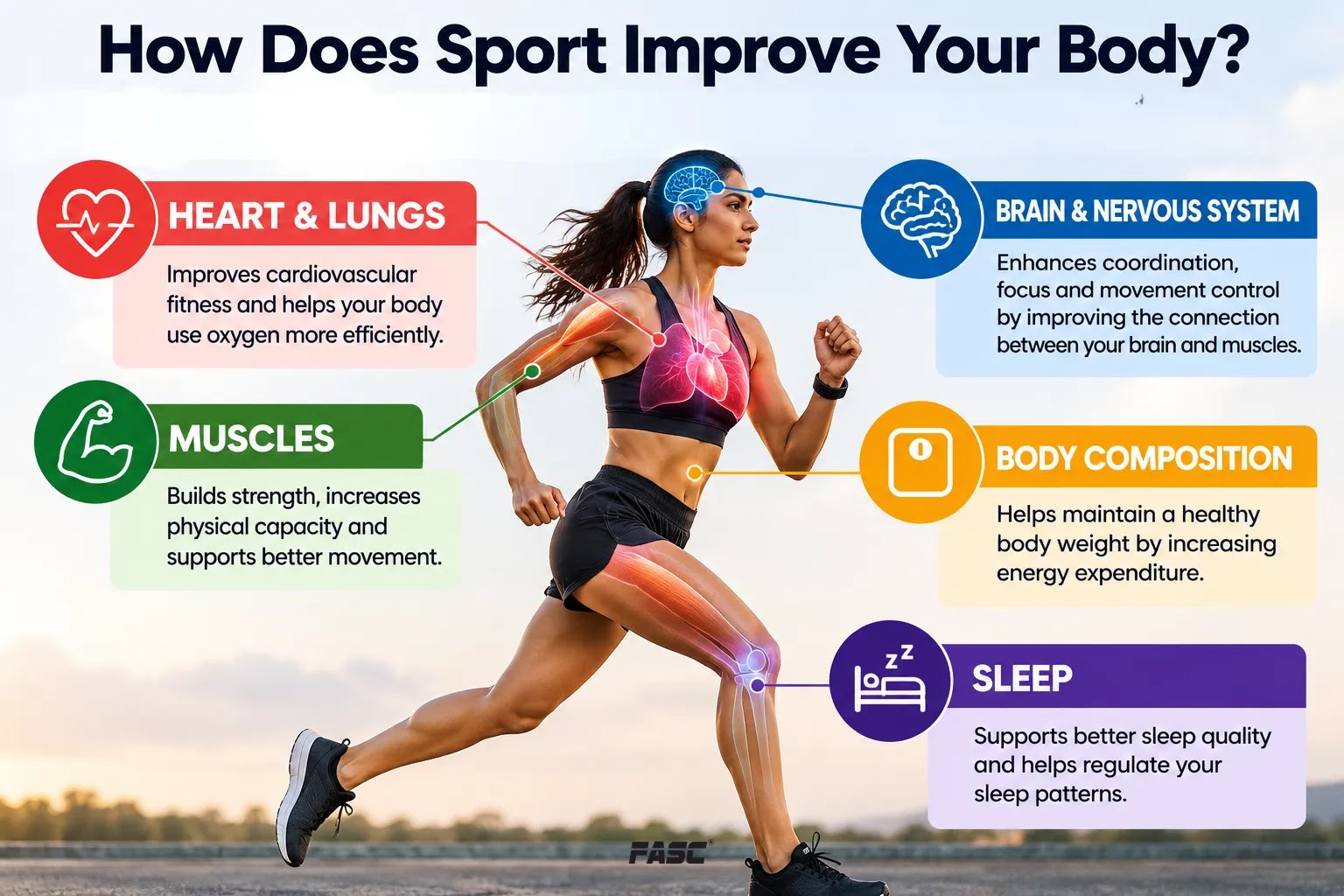
Activities such as running, swimming and cycling make the heart and lungs work harder. With regular practice, the body can become better at delivering and using oxygen during physical activity.
This does not mean every sport needs to be intense. Even moderate, consistent activity can contribute to a more active lifestyle.
2. Greater Strength And Physical Capacity
Many sports involve movements that require force and control. A footballer accelerates and changes direction, a swimmer repeatedly works against water resistance, while a badminton player relies on quick movement and balance.
Over time, these demands can help develop strength, coordination and overall physical capacity.
3. Support For Healthy Body Weight
Sports increase energy expenditure, which can help with maintaining a healthy body weight when combined with balanced eating habits.
The amount of energy used will differ from person to person and depends on factors such as body size, duration and exercise intensity. The important point is regular movement rather than trying to “burn” a specific number of calories.
4. Better Coordination And Movement
Sport teaches the body to work as a coordinated unit. Catching a ball, changing direction quickly or maintaining balance all require the brain and muscles to communicate effectively.
These skills can carry over into everyday activities too.
5. Healthier Sleep Habits
Being physically active during the day may also support better sleep. For many people, regular activity makes it easier to establish a consistent sleep routine and feel physically ready for rest.
Mental Benefits Of Sports
The mental side of sport is sometimes overlooked because the physical results are easier to see. Yet anyone who has played regularly knows that sport can influence how we handle pressure, setbacks and challenges.
1. A Healthy Outlet For Stress
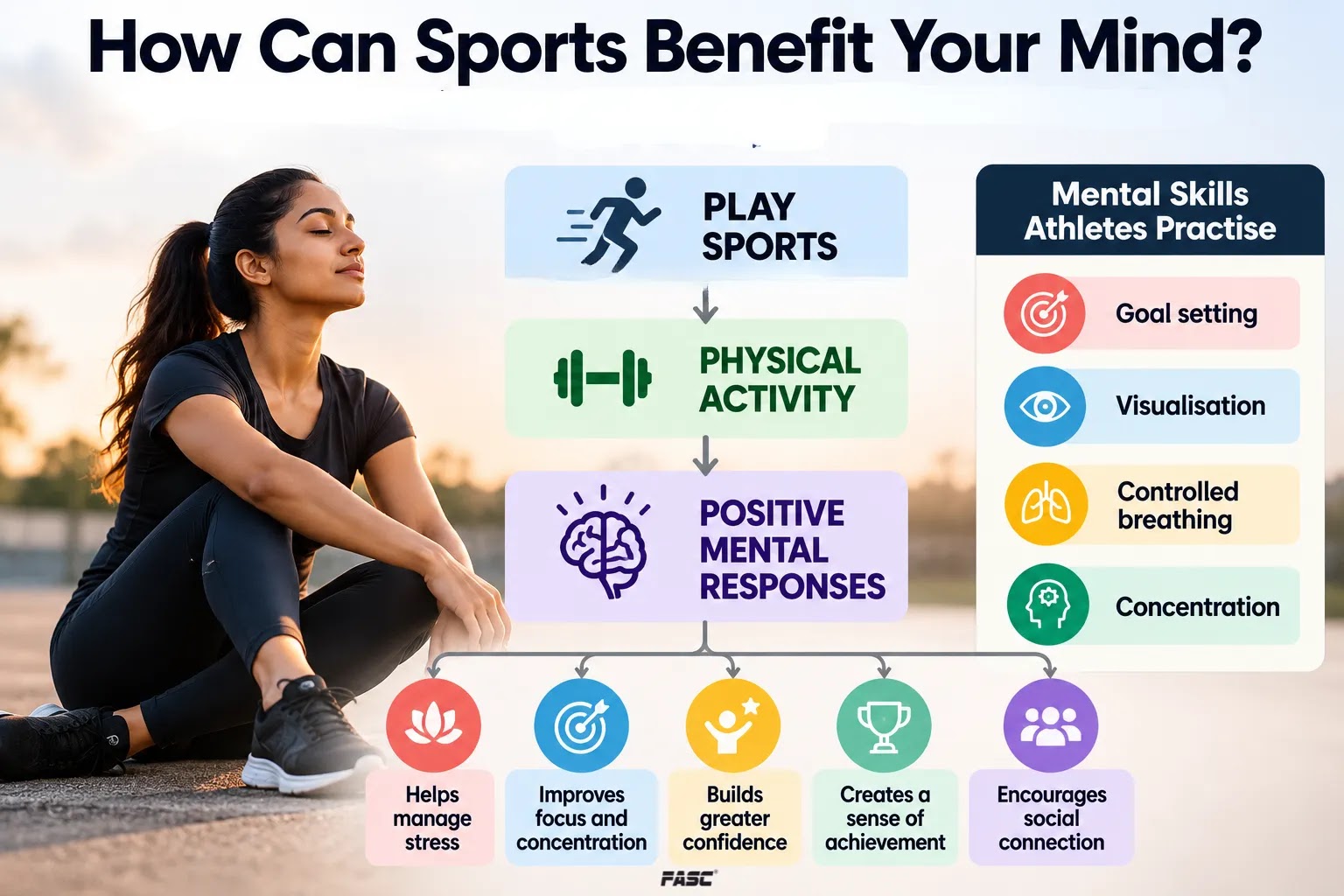
A training session can provide a useful break from work, studies or daily responsibilities. Concentrating on a game or movement gives the mind something immediate to focus on.
For athletes, this can be taken further through structured mental preparation. Goal setting, visualisation, breathing techniques and other approaches are part of sports psychology and mental training, helping athletes prepare for the demands of competition.
2. More Confidence Through Progress
Confidence does not necessarily appear after winning. It can come from smaller moments, earning a difficult skill, completing a challenging session or noticing that something which once felt difficult has become easier.
That sense of progress can be valuable both on and off the field.
3. Focus And Discipline
Sport rarely improves without practice. Turning up regularly, following instructions and working through difficult sessions can teach athletes to stay committed to a goal.
Competitive sports also require quick decisions and concentration, particularly when situations change unexpectedly.
4. Social Connection
A team environment creates opportunities to communicate, cooperate and work towards a shared objective. Players learn that individual effort can affect the whole group.
Even individual sports can offer a sense of community through clubs, training partners and competitions.
How To Make Sports Part Of Everyday Life
There is no need to start with an ambitious training plan. In fact, doing too much too soon can make it harder to stay consistent.
Choose an activity you genuinely enjoy. Start at a manageable level and gradually increase the amount of activity as your fitness improves. A person who enjoys playing badminton twice a week may be more consistent than someone forcing themselves through an activity they dislike.
Recovery matters too. Rest, adequate nutrition and good sleep allow the body to adapt to training. Anyone returning to exercise after a long break should give the body time to adjust.

Recommended Products From FASC Coach
Conclusion
The benefits of sports are not limited to becoming faster, stronger or better at a particular game. Regular participation can support cardiovascular fitness, strength, coordination, healthy body weight, sleep and everyday movement.
There are mental benefits as well. Sport can provide a way to manage stress, build confidence, practise discipline and connect with other people.
Ultimately, the best sport is one that fits your interests, abilities and lifestyle—and one you can keep coming back to.
FAQs
1. What are the main benefits of playing sports?
Sports can support cardiovascular fitness, strength, coordination, mobility and healthy body weight while also contributing to mental and social well-being.
2. Can playing sports reduce stress?
Yes. Physical activity can provide a healthy outlet for everyday stress, while the focus required during sport can offer a break from routine concerns.
3. Is one sport better for health than another?
Not necessarily. Different sports develop different physical qualities. The most suitable choice depends on a person's interests, fitness level, goals and health needs.
4. Are sports useful for children?
Age appropriate sports can help children develop movement skills, coordination, confidence and teamwork while encouraging an active lifestyle.
5. Is playing sports enough for complete fitness?
It depends on the sport and the individual. Some people may benefit from adding strength training, mobility work or conditioning to address areas that their chosen sport does not fully develop.
Share :