Sports Psychology: What is it and How it Helps?
- Oct 28, 2025
- 4 min
Key Takeaways
- Sports psychology strengthens the mind to handle pressure.
- Sharpening concentration helps stay focused and avoid distractions.
- Just 5 minutes of mindfulness can improve calmness and decision-making.
- Techniques like visualization and breathing.
- Coaching accelerates performance growth.
What is Sports Psychology?
Sports psychology helps athletes understand how their mindset can affect every part of their performance from how they train, to how they compete, and even how they recover after a loss or injury. This field also works on mental endurance with proper mental training, athletes learn to control nervousness and stay focused.
Sports psychologists work with:
- Professional athletes
- Young players
- Coaches
- Sports teams
- And even fitness enthusiasts
Their goal is simple: Help athletes play with a clear mind, steady emotions, and strong confidence.

Sports psychology also teaches players how to keep their attention on the game, avoid distractions, and recover quickly even after making mistakes or losing a point. In short, it helps athletes think better, feel better, and perform better.
Why Mental Endurance Matters
Mental endurance is the ability to stay mentally strong over time. Sports often involve long training hours and tough match situations. When tired or stressed, the mind is the first to give up even before the body.
Mental endurance helps athletes:
- Push through fatigue
- Stay confident in high-pressure moments
- Bounce back after errors
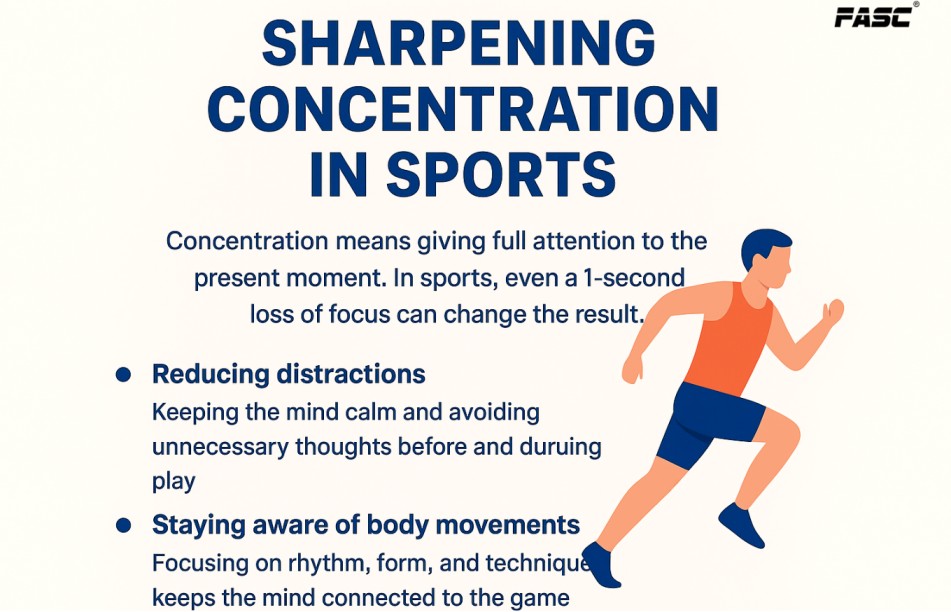
In sports psychology, sharpening concentration means learning to focus fully on the present moment. In many sports, even a 1-second loss of attention can change the entire outcome of a match.
How Sports Psychology Helps in Building Mental Endurance and Concentration
Sports psychology helps athletes strengthen the mind, just like physical training strengthens the body. Through mental training for athletes, techniques such as visualization, breathing exercises, and positive self-talk help players stay calm and confident under pressure.

Sports psychology also improves concentration by teaching athletes how to stay focused on the present moment, reduce distractions, and control emotional reactions. This combination helps make better decisions and deliver consistent performance, especially in high-pressure situations.
1. Improves Focus and Concentration
In sports psychology, athletes learn how to stay fully present during practice and competitions. By using focus drills and breathing routine, it helps strengthen concentration in sports and to stay confident.
2. Builds Strong Mental Endurance
Mental endurance means staying mentally strong even when tired or under pressure. Through mental training for athletes, such as visualization and positive self-talk, athletes learn to manage stress.
3. Helps Overcome Mental Blocks
Sometimes athletes feel stuck, they lose confidence or overthink under pressure. Sports psychology helps athletes break these mental blocks in sports by teaching emotional control, belief-building, and relaxation techniques.
4. Improves Performance Psychology
Confidence is a key part of performance psychology. When athletes trust their abilities, they play with freedom and clarity. Sports psychology helps them believe in their preparation and skills.
5. Helps the Mind for High-Pressure Moments
Sports psychology trains athletes to stay calm, focused, and confident under pressure, helping them develop strong mental endurance and sharper concentration during high-stress game situations.
Recommended Gears
1. Yoga/ Exercise Mat
A good mat provides a comfortable space for meditation, visualization, and breathing routines.
2. Skipping Rope
Great for rhythm and coordination drills, skipping can sharpen focus, clear the mind and build mental endurance during tougher cardio work.
3. Foam Roller
Recovery tools like foam rollers reduce muscle fatigue and stress, so your brain isn’t distracted by soreness and you can stay mentally sharp.
Conclusion
Sports psychology helps athletes stay calm, focused, and confident under pressure. By practicing techniques like visualization, deep breathing, and positive self-talk, players build mental endurance and sharpen concentration. With the right mindset, athletes can perform consistently and handle tough moments more effectively. A strong mind can be the winning edge.
FAQs
1. What is sports psychology in simple terms?
Sports psychology is the study of how thoughts, emotions, and mindset influence athletic performance.
2. How does mental endurance help athletes?
Mental endurance helps athletes stay strong when they feel tired, pressured, or discouraged.
3. Can concentration be trained?
Yes! Focus can be improved through breathing exercises, visualization and consistent routines.
4. Who should consult a sports psychologist?
Any athlete facing stress, confidence issues, performance anxiety, or motivation dips can benefit.
5. What is the difference between a sports psychologist and a mental trainer?
A sports psychologist will have a formal clinical training, while a mental performance trainer/coach focuses on techniques for mindset and focus.
Share :