- Fitness
Why Fitness for Working Professionals Is No Longer Optional (And What It’s Costing You Today)
.png)
- Apr 17, 2026
- 5 min
Key Takeaways
- Fitness directly impacts productivity, focus, and work performance
- A sedentary lifestyle leads to long-term physical and mental issues
- Energy levels, not time, determine how effectively you work
- Managing stress requires both activity and proper recovery
- Consistency in fitness matters more than intensity
Work culture has changed dramatically over the past few years. Long sitting hours, constant screen exposure, back to back meetings and mental pressure have become a daily routine for most professionals. While this lifestyle may not seem physically exhausting, it slowly takes a toll on your body and mind.
Many people feel tired even without doing physically demanding work.They struggle with low energy, poor posture, weight gain, and constant fatigue. The biggest mistake professionals make is thinking that fitness can be delayed until “things settle down”
The truth is, the busier your schedule gets, the more important fitness for working professionals becomes.
The Sedentary Lifestyle Problem
Most professionals today spend a majority of their day sitting, which leads to serious sedentary lifestyle effects such as reduced metabolism, poor posture, and low energy levels.. Even if you manage to work out a few times a week, prolonged inactivity during the day can still create long term issues.
Over time, this leads to stiffness, poor mobility, back pain, and reduces endurance. It’s not just about physical discomfort, your overall energy levels start dropping. You feel tired more often, even when you haven’t done much physically.
To truly address this, it’s important to first have a clear understanding of fitness and how it impacts your body beyond just exercise. Fitness is not limited to gym sessions, it’s about how your body functions throughout the day.

Fitness and Work Performance Go Hand in Hand
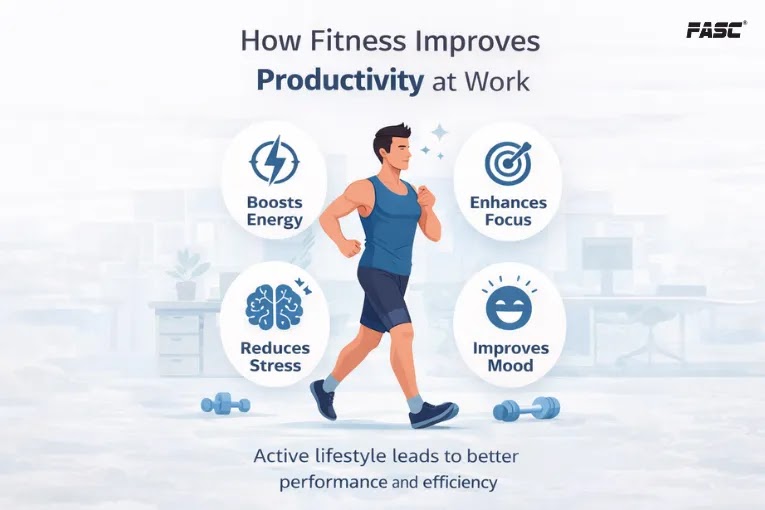
Fitness has a direct impact on how you perform at work. When your body is active and healthy, your mind functions better. You are able to focus longer, think clearly, and handle complex tasks more efficiently.
Physical activity improves blood circulation, which enhances oxygen flow to the brain. This leads to better concentration, faster decision making,and improved productivity. Professionals who maintain a consistent fitness routine often experience higher energy levels throughout the day.
On the other hand, a lack of fitness leads to sluggishness, reduced focus, and mental fatigue. You may be putting in the same number of hours,but your efficiency drops significantly.
This clearly shows how fitness improves productivity, as better physical health directly supports mental performance and efficiency.Fitness is not separate from your work, it directly supports it.
Stress, Burnout, and Mental Health
One of the biggest challenges in today’s work environment is stress. Tight deadlines, high expectations, and constant pressure can easily lead to burnout if not managed properly.
Fitness plays a major role in managing stress. Physical activity helps in releasing endorphins, which naturally improves mood and reduces anxiety. It gives your mind a break from constant work related thinking and helps reset your mental state.
Without any form of physical activity, stress keeps building up. Over time, this affects sleep, mood, and overall mental health. This is where recovery becomes just as important as activity. Many professionals ignore the importance of sleep and rest, even though sleep and recovery are critical for maintaining both physical and mental performance.
Why Energy Levels Matter More Than You Think
Most professionals measure productivity in terms of time spent working, but the real factor is energy. Two people can work the same number of hours but produce completely different results based on their energy levels.
Fitness helps regulate your energy throughout the day. When your body is active, your stamina improves, and you don’t feel drained after a few hours of work. You’re able to stay consistent without depending on caffeine or breaks to recover.
Low fitness levels, on the other hand, lead to constant tiredness. You may start your day strong but struggle to maintain performance as the day progresses.
Energy is your biggest asset and fitness is what sustains it.
The Long Term Cost of Ignoring Fitness
Ignoring fitness doesn’t show immediate consequences, which is why many professionals overlook it. However, over time, the effects become very clear.
Weight gain, posture issues, chronic fatigue, and lifestyle related health problems start becoming more common. More importantly, your ability to perform consistently declines. Tasks that once felt easy start feeling exhausting.
The cost is not just physical, it affects your confidence, productivity, and overall quality of life.
Taking care of your fitness early prevents these issues and helps you maintain long term performance.
Making Fitness Practical (Not Complicated)
One of the biggest misconceptions about fitness is that it requires a lot of time. In reality, consistency matters more than duration. Even short, structured workouts can deliver strong results if done regularly.
Simple and consistent routines make fitness for office workers practical and achievable, even with a busy schedule.You don’t need perfection, you need consistency.
This is exactly why fitness for working professionals is not a luxury anymore, but a necessity for long term performance and well being. Fitness should fit into your lifestyle, not disrupt it.

Conclusion
Fitness is no longer optional for working professionals, it’s a necessity. It directly affects how you think, how you perform, and how you feel every day.
Ignoring fitness may not seem like a big deal today, but over time, it impacts your energy, productivity, and overall health. On the other hand, even small consistent efforts can completely change how you function.
In a world where performance matters, taking care of your body is one of the smartest investments you can make.
Recommended products from FASC Store
FAQs
1. Why is fitness important for working professionals?
It improves energy, focus, and productivity while reducing stress and health risks.
2. Can I stay fit without going to the gym?
Yes, consistent movement, home workouts, and active habits are enough.
3. How much time should I dedicate to fitness daily?
Even 20–30 minutes of structured activity is effective if done consistently.
4. Does fitness really improve work performance?
Yes, it enhances focus, reduces fatigue, and improves mental clarity.
5. What is the biggest mistake professionals make?
Ignoring fitness due to lack of time, which eventually affects performance and health.
Share :