- Gym
Deload Week Explained: When, Why and How to Deload

- Sep 04, 2026
- 5 min
Key Takeaways
- A deload week is a planned reduction in training stress, not a complete stop to exercise.
- Training less for a short period can help manage accumulated physical and mental fatigue.
- Persistent fatigue or stalled performance may signal a need to deload.
- The need for a deload depends on your training and recovery.
- You can reduce volume, intensity or overall workload.
Training progress is often associated with doing more, lifting more, running longer or increasing workout frequency.
But training creates fatigue as well as adaptation. If training stress continues to accumulate without enough recovery, performance can eventually stagnate or decline.
This is where a deload week can be useful.
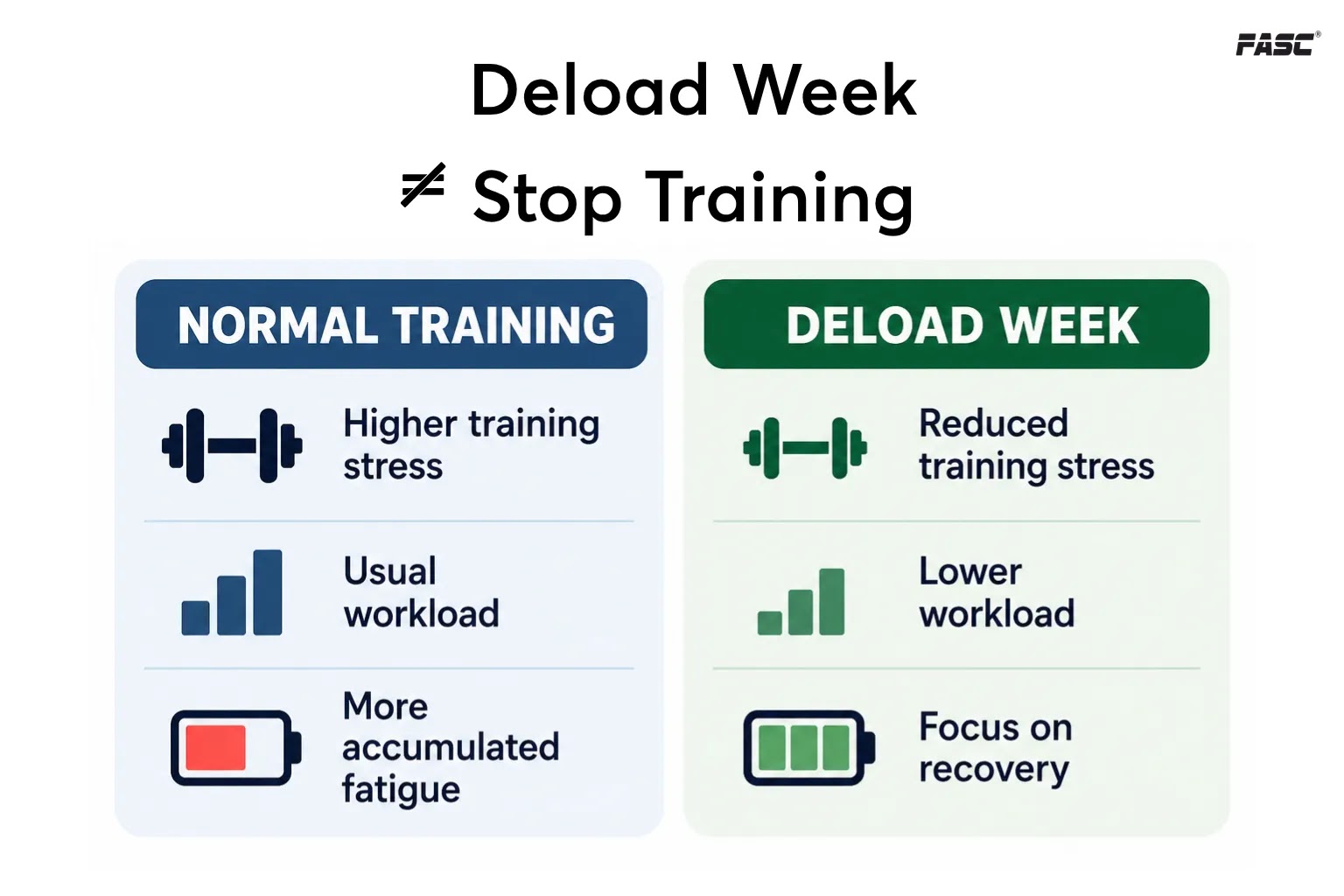
A deload does not mean stopping exercise completely. It is a planned reduction in training stress that gives the body and mind an opportunity to recover while maintaining a training routine.
What Is a Deload Week?
A deload week is a short period, usually around a week, during which you deliberately reduce your normal training demands.
This can be done by reducing:
- The amount of weight lifted
- The number of sets or repetitions
- Training frequency
- Overall workout intensity
The purpose is not to become less fit. It is to temporarily reduce accumulated fatigue.
A Deload Is Not the Same as Doing Nothing
One common misunderstanding is that a deload means taking a complete break from exercise.
In most cases, a deload still involves training, but at a lower demand. For example, instead of trying to lift your usual heavy weights, you may use lighter loads or perform fewer sets.
The key difference is intentionality. A deload is planned around recovery rather than being an unplanned break caused by exhaustion, illness or injury. In cases where an injury is involved, approaches such as yoga for injury recovery can be considered for a broader recovery process.
Why Should You Train Less During a Deload?
The central idea behind a deload is simple: fitness and fatigue do not always move in the same direction.
Training can improve your physical capacity, but it also creates short-term fatigue. When fatigue accumulates, it can temporarily hide the progress you have made.
Reducing training stress for a short period may allow some of that fatigue to dissipate.
-
Recovery Can Support Better Training
Training adaptation does not happen simply because you complete difficult workouts. Recovery is part of the process and understanding of the recovery techniques used by pro athletes can offer useful perspectives on how athletes manage the demands of regular training.
A deload may help you return to regular training feeling physically and mentally fresher, particularly after a demanding period of consistent training.
This is especially relevant for people who regularly train with high volume, heavy loads or demanding intensity.
-
It Can Help Manage Mental Fatigue
Training fatigue is not always physical. Repeatedly pushing through difficult workouts can also create mental fatigue. A temporary reduction in training demands can make a routine feel more sustainable, especially when training has started to feel like a constant obligation.
When Should You Take a Deload Week?
There is no universal schedule that works for everyone.
Some structured training programmes include planned deload weeks, while others adjust training based on the individual's recovery and performance.
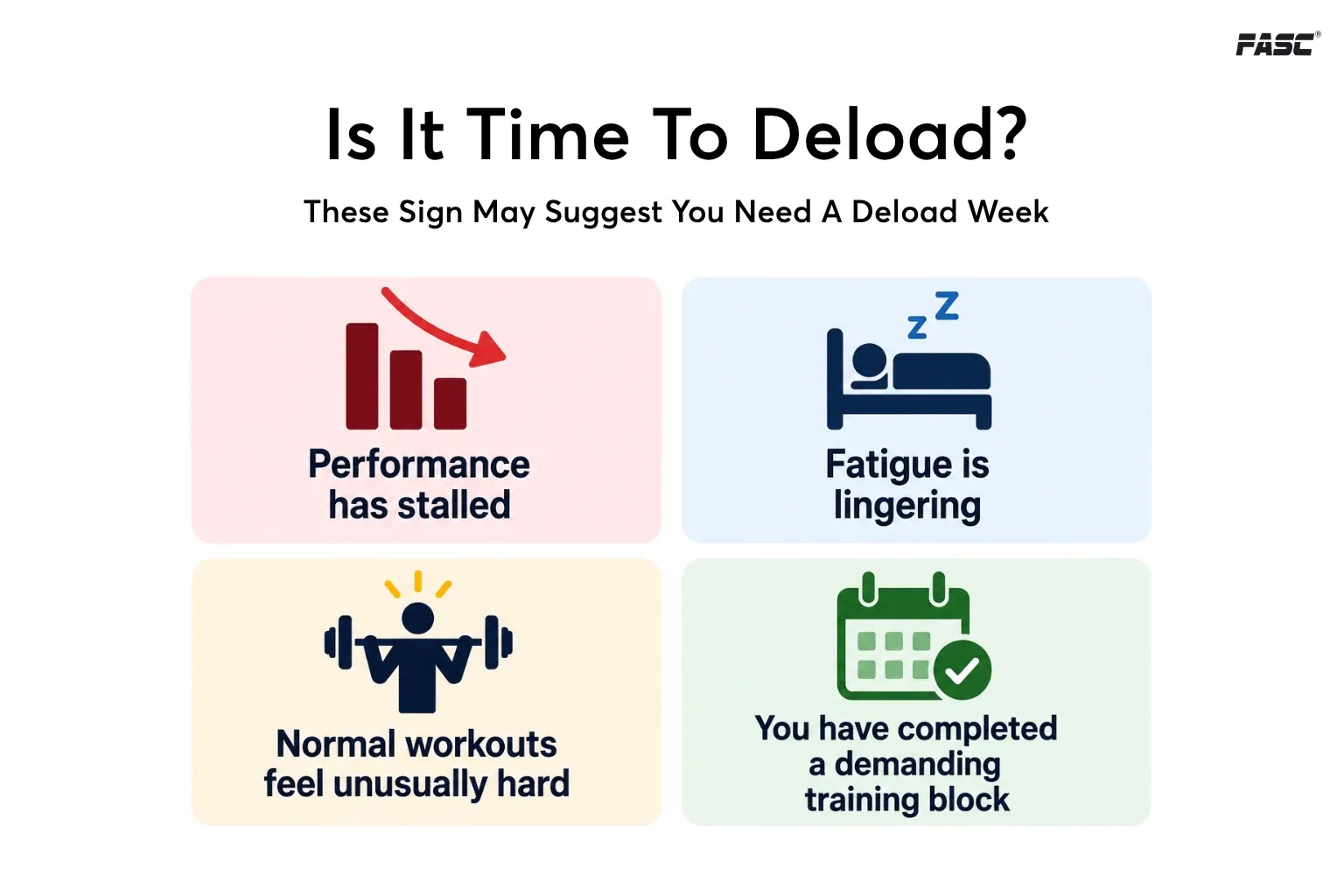
Your Performance Has Stalled
A temporary drop in performance can have several causes. Accumulated fatigue may be one of them, particularly if you have been training consistently at a high level.
A deload can provide an opportunity to reduce fatigue before deciding whether your training programme needs bigger changes.
You Feel Unusually Fatigued
Feeling tired after a hard workout is normal.
However, persistent fatigue that continues across several sessions, despite reasonable sleep and recovery, may be a sign that your current training demands need adjustment.
Training Feels Harder Than Usual
If weights, paces or workouts that normally feel manageable suddenly feel disproportionately difficult, accumulated fatigue may be affecting performance.
This does not automatically mean you need a deload, but it can be a reason to reassess your training load and recovery.
You Have Completed a Demanding Training Block
A deload can also be planned rather than reactive.
After several weeks of progressively challenging training, temporarily reducing the workload can help create a transition before starting the next training phase.
How Should You Deload?
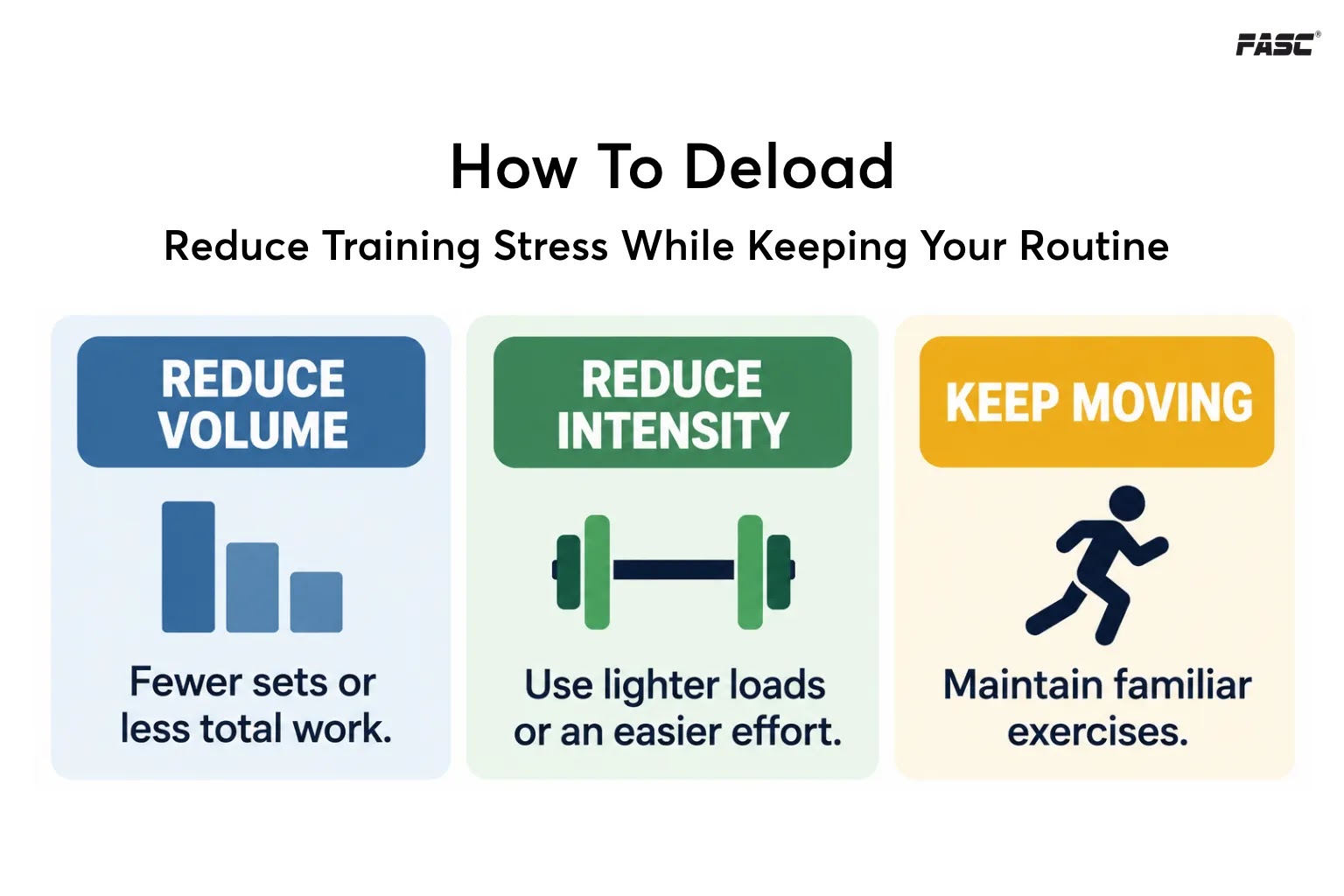
A deload should reduce training stress without completely changing your routine.
-
Reduce Volume
One approach is to perform fewer sets or reduce the total amount of work you normally complete.
This allows you to continue practising movements while lowering overall fatigue.
-
Reduce Intensity
You can also use lighter weights, lower resistance or an easier pace.
For example, instead of pushing close to your maximum effort, you could perform the same movement with a comfortable load.
-
Keep the Routine Familiar
A deload usually does not require replacing your entire workout programme. Keeping familiar exercises can make the transition back to regular training easier.
The goal is simple: maintain movement while reducing the stress created by training.
Do You Always Need a Deload Week?
No. Your need for a deload depends on factors such as:
- Training volume and intensity
- Training experience
- Recovery between sessions
- Sleep and lifestyle demands
- Your current performance and fatigue levels
The more demanding your overall training becomes, the more important recovery management tends to be.
Conclusion
A deload week is not about losing momentum. It is about recognising that productive training includes periods of lower stress.
By temporarily reducing volume, intensity or overall workload, you can manage accumulated fatigue while continuing to move.
The goal is not to train less forever.
It is to train less for a short period so you can return to meaningful training with greater readiness.
Recommended Products From Fitness Coach
Frequently Asked Questions
1. How long should a deload week last?
A deload commonly lasts around one week, although the appropriate duration depends on your training demands and recovery.
2. Should I stop training completely during a deload?
Not necessarily. Most deloads involve continuing to train while reducing volume, intensity or overall workload.
3. Will I lose progress during a deload week?
A short, planned reduction in training is generally different from prolonged inactivity. The purpose of a deload is to manage fatigue while maintaining a training routine.
4. How often should I take a deload week?
There is no fixed schedule for everyone. Some people plan deloads after demanding training blocks, while others adjust based on performance and accumulated fatigue
Share :
Recent Blog

- Sep 04, 2026