- Fitness
Sleep Optimization: How Better Sleep Improves Productivity, Fat Loss & Mental Performance
- May 05, 2026
- 4 min
Key Takeaways
- Better sleep directly improves productivity, focus, and decision-making
- Sleep quality plays a major role in fat loss and hormonal balance
- Proper sleep enhances mental clarity and emotional resilience
- Recovery, muscle growth, and fitness progress depend heavily on sleep
- Consistent sleep habits are essential for long-term performance
Modern professionals are constantly looking for ways to improve performance. They focus on productivity hacks, better diets, workout plans, and time management systems. But one of the most important factors is often ignored, and that is sleep.
Late nights, irregular schedules and chronic stress have made poor sleep a common lifestyle issue. Many people accept fatigue as normal, relying on caffeine and willpower to get through the day.
The reality is much different. Poor sleep silently reduces your productivity, slows fat loss, weakens recovery, and impacts mental performance. On the other hand,better sleep can dramatically improve the way you think, work, and function every day.
Sleep is not passive recovery. It is an active performance enhancement.
Why Sleep Directly Impacts Productivity
Productivity is not just about how many hours you have worked, it’s how efficiently your brain performs during those hours.
When you sleep properly, your brain processes information, consolidates memory, and restores cognitive function. This improves focus, problem solving, creativity and decision making. You are able to concentrate better and maintain performance for longer periods.
Lack of sleep, however, reduces alertness and mental clarity. Tasks take longer, concentration drops, and mistakes become more frequent. Even if you are physically present, your efficiency suffers.
For working professionals, sleep optimization may be one of the most underrated ways to improve daily performance.

The Link Between Sleep and Fat Loss
Many people think fat loss is only about workouts and calorie intake, but sleep plays a major role in body composition.
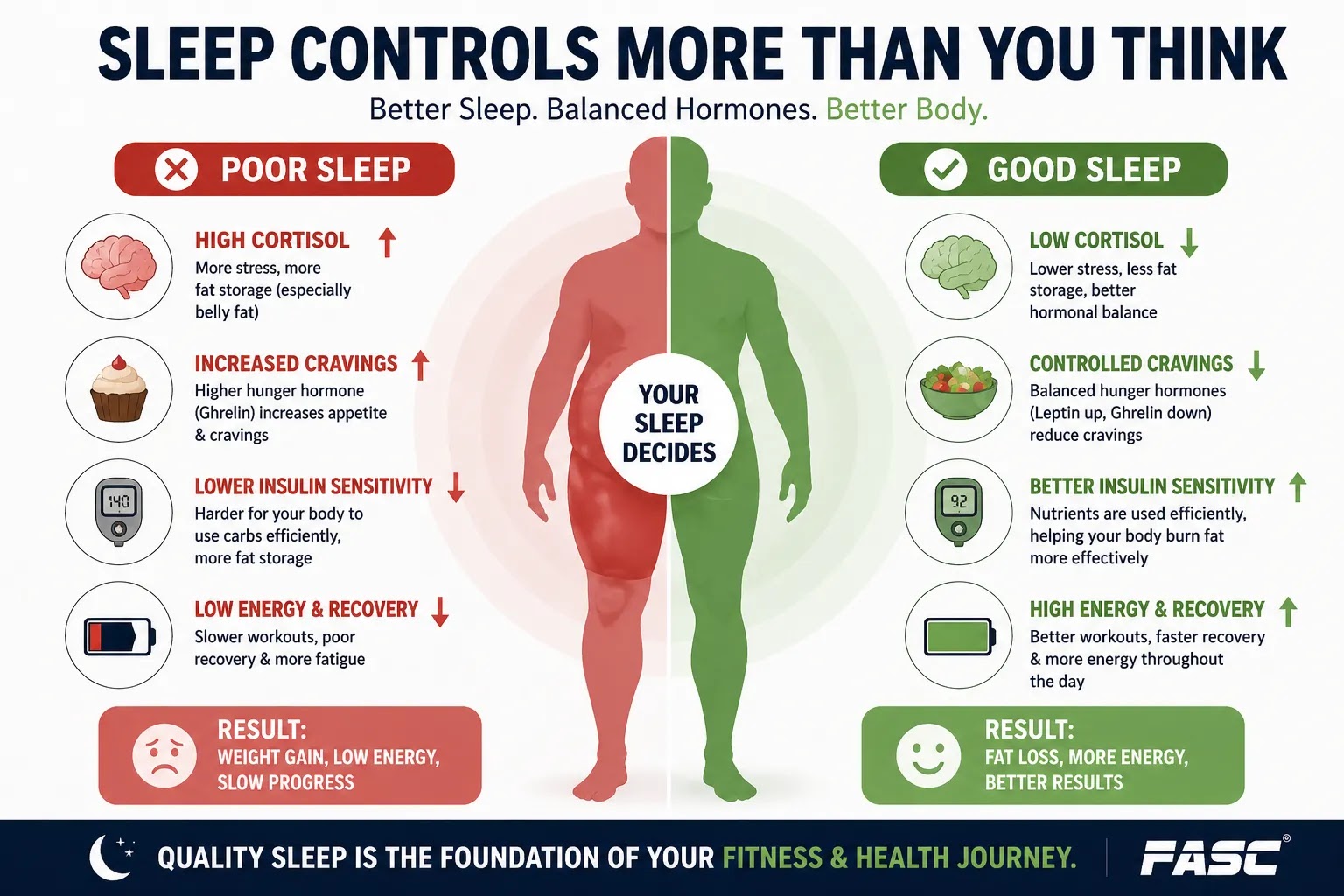
Poor sleep disrupts hormones that regulate hunger and appetite, often increasing cravings for sugar, processed foods, and unnecessary calories. It also affects insulin sensitivity, which can make fat loss more difficult over time.
Inadequate sleep increases cortisol levels, the body’s primary stress hormone, which may encourage fat storage, especially around the abdominal area.
This is why sleep and recovery science is such an important part of any fitness or fat loss journey. Without proper sleep, even a good diet and workout routine can deliver slower results.
Mental Performance and Emotional Stability
Sleep doesn’t just affect physical energy, it heavily influences emotional regulation and mental health.
When sleep quality is poor, stress tolerance decreases. You become more irritable, anxious, and mentally drained. This can impact workspace relationships, personal motivation and mental well being.
Good sleep improves emotional balance, reaction speed and mental resilience. It allows you to handle pressure better, think more clearly, and avoid the cognitive fog that often comes with sleep deprivation.
In a world where mental sharpness is increasingly valuable, sleep becomes a competitive advantage.
How Sleep Supports Muscle Recovery & Fitness Progress
If you are working out regularly, sleep becomes even more important.
During sleep, your body repairs muscle, stores energy, regulates hormones, and supports physical adaptation.This means your workouts only reach full potential when your sleep is strong.
Without enough rest:
- Muscle recovery slows
- Strength performance declines
- Fatigue increases
- Injury risk rises
Many people focus heavily on exercise while ignoring recovery,but true progress happens when both training and sleep are optimized together.
The Role of Nighttime Habits in Sleep Quality
Sleep optimization is not just about sleeping longer, it’s about improving sleep quality.
Small habits can significantly improve rest:
- Reducing screen time before bed
- Keeping a consistent sleep schedule
- Managing caffeine intake
- Creating a dark, cool sleeping environment
- Practicing relaxation techniques
For many people, incorporating practices like yoga for better sleep can also help calm the nervous system and improve nighttime recovery naturally.
The goal is to create an environment where deep, uninterrupted sleep becomes easier.

Common Sleep Mistakes Professionals Make
One of the biggest mistakes is sacrificing sleep for productivity. Many professionals stay up late believing extra hours equal better results.
In reality, poor sleep reduces next-day efficiency so much that the trade-off often becomes negative.
Other common mistakes include:
- Irregular sleep timing
- Late-night device use
- High caffeine dependence
- Stress overload without recovery
These habits gradually reduce performance while making fatigue feel “normal.”
Practical Sleep Optimization Strategies
Improving sleep does not require extreme lifestyle changes. Consistency is often more powerful than complexity.
Focus on:
- Sleeping 7–9 hours consistently
- Going to bed at the same time daily
- Limiting blue light exposure
- Exercising regularly
- Managing stress through movement or mindfulness
Better sleep is often built through routine, not shortcuts.
Conclusion
Sleep is not wasted time, it is one of the highest-return investments for your health, career, and physical performance.
Whether your goal is better productivity, improved fat loss, stronger workouts, or sharper mental performance, sleep optimization should be a priority.
In today’s high-pressure world, people often search for advanced solutions while neglecting the basics.
But sometimes, the most powerful upgrade is simply better sleep.
Recommended products from FASC Coach
Frequently Asked Questions (FAQs)
1. How many hours of sleep do professionals need?
Most adults perform best with 7–9 hours of quality sleep per night.
2. Can poor sleep affect fat loss?
Yes, poor sleep disrupts hormones, increases cravings, and slows metabolism.
3. Does sleep really improve productivity?
Absolutely. Better sleep improves concentration, cognitive function, and overall work performance.
4. Is exercise enough if sleep is poor?
No. Exercise helps, but without quality sleep, recovery and progress are limited.
5. What is the fastest way to improve sleep quality?
Maintain a consistent schedule, reduce screen time, and create a calming bedtime routine.
Share :