- Sports
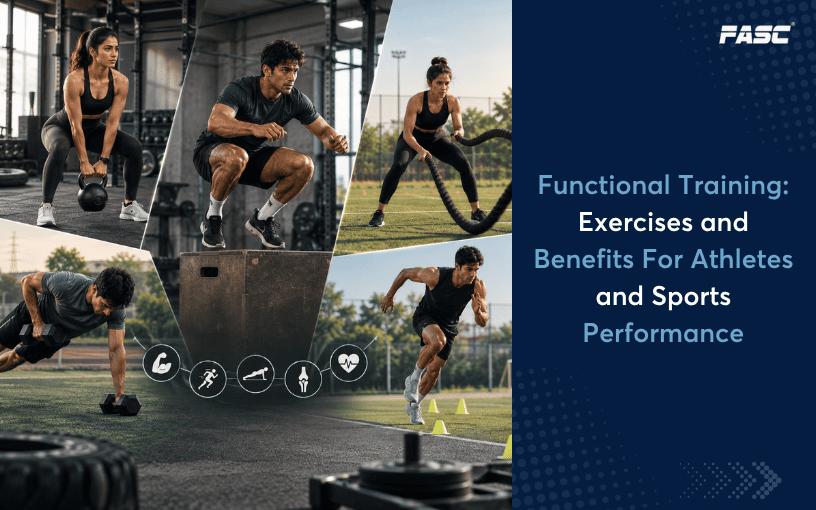
Functional Training: Exercises and Benefits For Athletes and Sports Performance
- Sep 22, 2026
- 5 min
Key Takeaways
- Functional training develops movement qualities that athletes use in sport.
- Exercises should match the athlete’s sport, position, ability and training goals.
- Squats, lunges, pushes, pulls, carries and rotational movements are useful foundations.
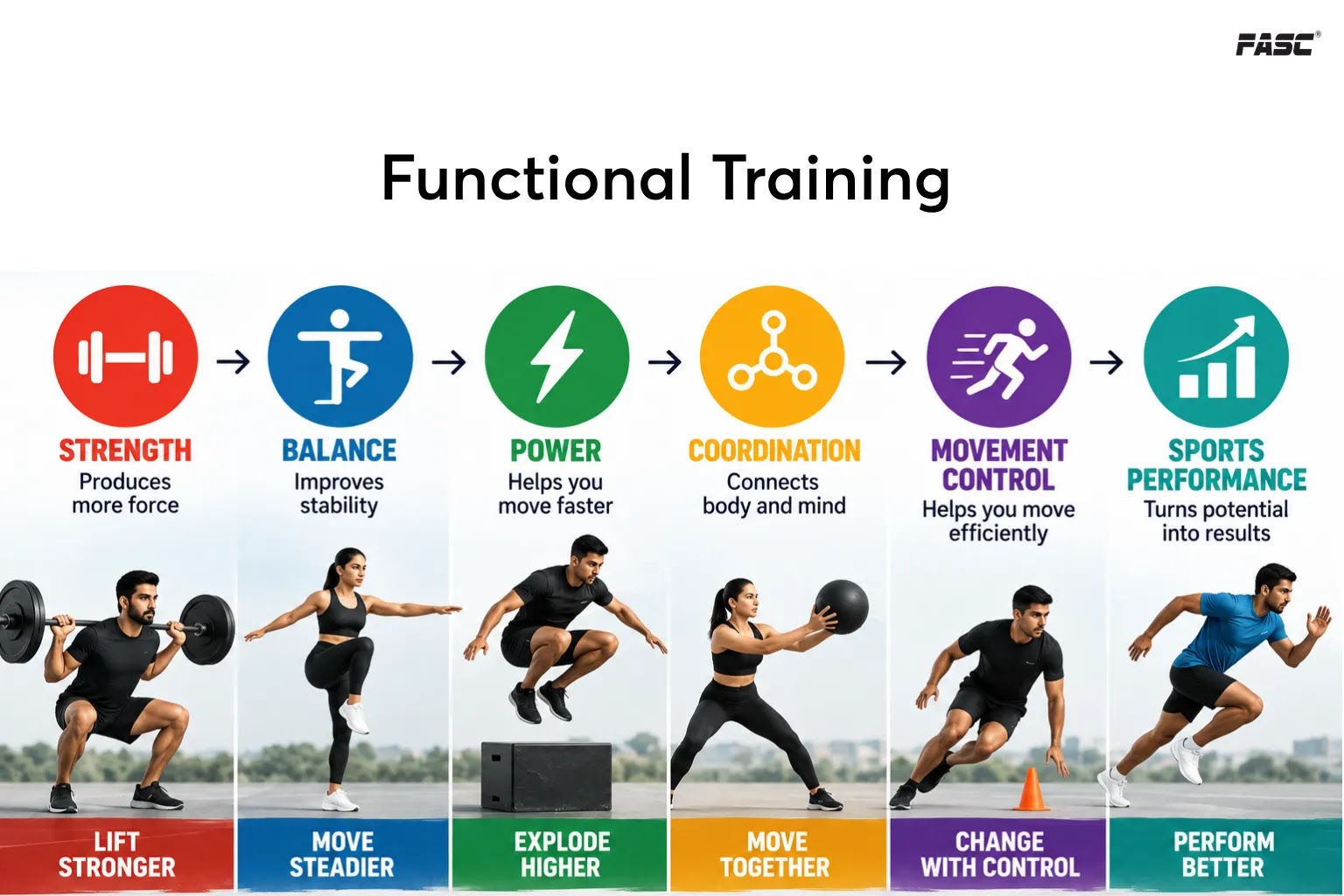
- Functional training can support strength, power, balance, coordination and movement control.
- It works best alongside sport-specific practice, conditioning and recovery.
Athletes rarely move in just one direction. A footballer accelerates, changes direction and strikes the ball. A sprinter produces force rapidly while maintaining posture. A basketball player jumps, lands and reacts within seconds.
That is where functional training becomes useful. Instead of training muscles in isolation, it develops movement patterns and physical qualities that have practical value during sport. The American College of Sports Medicine also highlights strength, power, physical function and neuromotor qualities such as balance and coordination as important components of physical performance.
What Is Functional Training for Athletes?
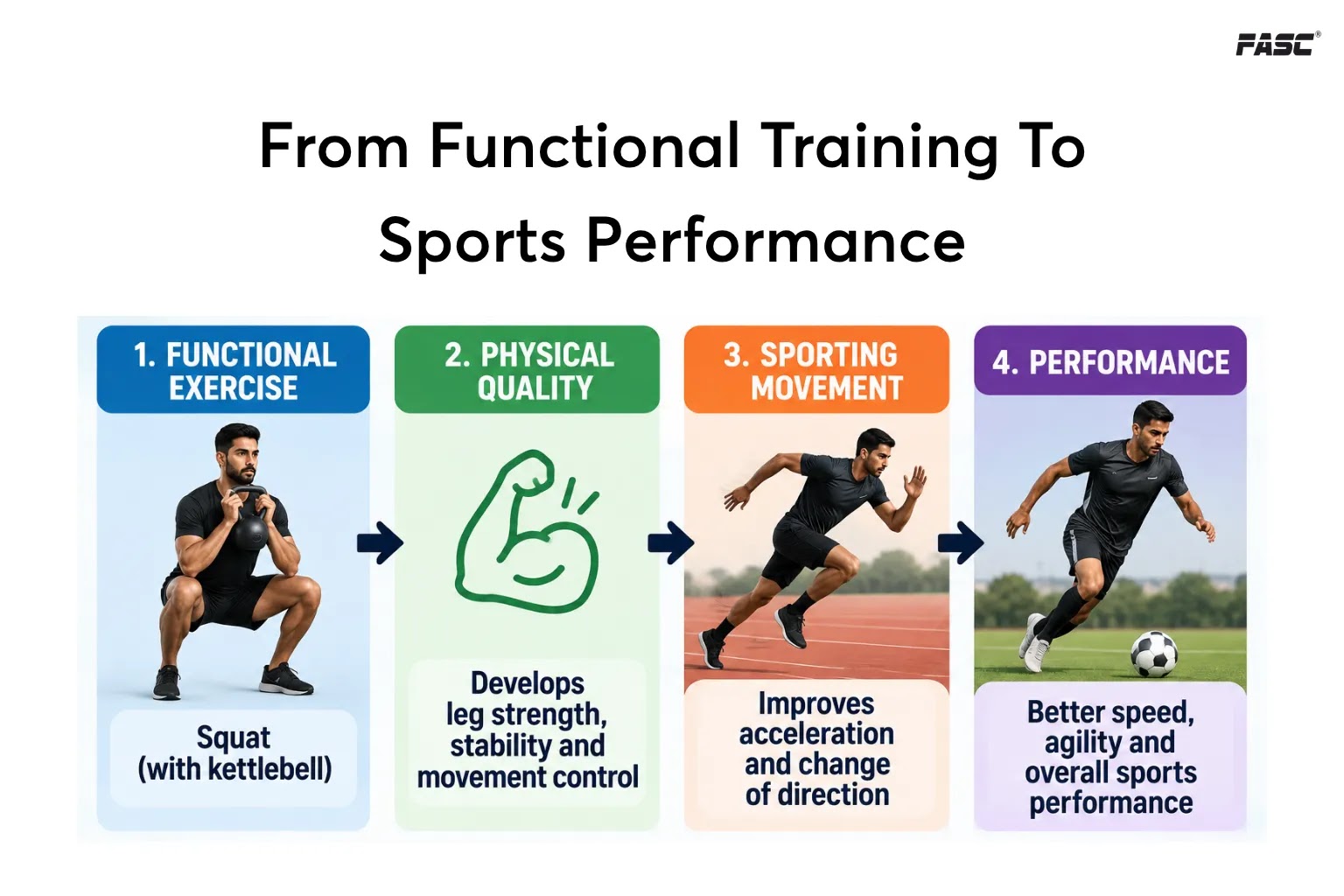
Functional training uses exercises that develop strength and control through movements relevant to an athlete's physical demands.
The goal is not to copy every sporting movement in the gym. Rather, training should develop qualities that support those movements: force production, stability, coordination, balance, power and the ability to control the body.
This makes functional training different from simply exercising for general fitness. A programme for an athlete should consider their sport, position, competition level, injury history and current training load.
Best Functional Training Exercises for Athletes
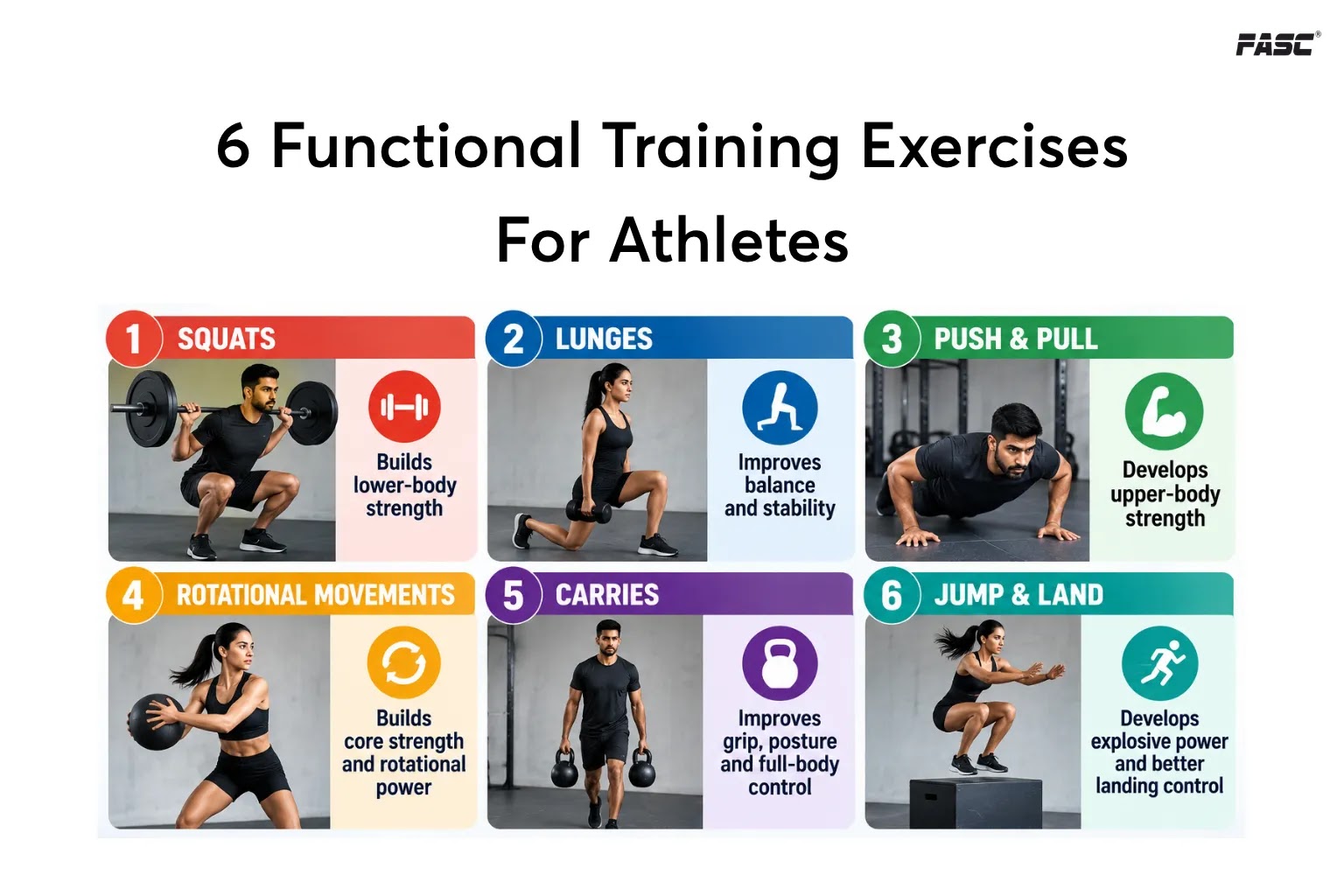
1. Squats and Split Squats
Squats develop lower-body strength, while split squats add a unilateral element that challenges balance and control.
They can help athletes develop the strength required for running, jumping, decelerating and changing direction.
2. Lunges
Forward, reverse and lateral lunges challenge the legs while requiring the athlete to control body position.
Lateral variations are particularly useful when a sport involves movement across different planes.
3. Push and Pull Exercises
Push-ups, rows, presses and pull-ups develop upper body strength while requiring control through the trunk and shoulders.
This strength can contribute to forceful movements, physical contact and overall body control.
4. Rotational Exercises
Medicine ball throws and controlled cable rotations train the athlete to produce and transfer force through the trunk.
Rotational strength can be valuable in sports where the hips, trunk and upper body work together, such as cricket, tennis, hockey and throwing events.
5. Carries
Farmer's carries and similar loaded carries challenge grip, trunk stability, posture and whole-body coordination.
They are simple exercises, but they require the athlete to maintain control while moving under load.
6. Jumping and Landing Drills
Jump variations can develop explosive movement, while landing drills teach athletes to absorb and control force.
These exercises should be progressed according to training age and technical ability rather than simply adding more intensity.
Benefits of Functional Training for Sports Performance
Research supports the use of functional training in athletic populations. A systematic review covering 28 studies and 819 athletes across 14 sports found that functional training can improve physical and technical performance, although the researchers noted differences in training methods and study quality.
1. Builds Strength That Supports Movement
Functional exercises can develop strength through movements involving multiple joints and muscle groups.
2. Improves Balance and Coordination
Athletes need to control their bodies while moving, stopping, landing or reacting. Single-leg exercises, carries and controlled movement drills can challenge these qualities.
3. Supports Power Development
Strength is useful, but many sports also require athletes to produce force quickly. Jumping, medicine-ball throws and appropriately prescribed resistance exercises can help develop power.
3. Helps Develop Better Movement Control
Functional training can teach athletes to maintain posture and control while producing or absorbing force. This becomes particularly important when movements become faster or more complex.
4. Complements Sport-Specific Training
Functional training should not replace practice. A footballer still needs football skills, while a sprinter needs sprint training.
Instead, it can provide physical qualities that support those sporting activities. For example, athletes working on speed, agility and acceleration need a combination of technical practice and physical preparation rather than relying on one type of training alone.
How to Use Functional Training in an Athlete's Programme
The right approach depends on the athlete and the sport.
A beginner may start with bodyweight squats, lunges, push-ups, rows and basic balance exercises. More experienced athletes can progress towards loaded movements, explosive exercises and sport specific combinations.
Training should also complement the athlete's existing workload. A footballer, for example, may already accumulate substantial running and change-of-direction work during practice. Adding more high-intensity exercises without considering that workload may not be useful.
This is why functional training works best as part of a broader performance programme. The fundamentals of athletics as the foundation of sports performance, running, jumping, throwing and coordinated movement can provide a useful base before more specialized demands are added.
Conclusion
Functional training for athletes is not about making every gym exercise look like a sporting movement. Its value comes from developing physical qualities that athletes repeatedly need: strength, power, balance, coordination, stability and movement control.
The most effective exercises are therefore not necessarily the most complicated. Squats, lunges, pushes, pulls, carries, rotational exercises and jumping drills can all have a place when selected and progressed according to the athlete's needs.
The key is simple: train the qualities the sport demands, then transfer them through sport-specific practice.
Recommended Products From FASC Coach
FAQs
1. Is functional training good for athletes?
Yes. It can develop strength, power, balance, coordination and movement control that support sporting performance.
2. Can functional training replace strength training?
Not necessarily. Functional training often includes resistance exercises, but athletes may still need dedicated strength work based on their sport and performance goals.
3. How often should athletes do functional training?
Frequency depends on the athlete's sport, training phase, experience and total workload. A coach or strength-and-conditioning professional should adjust it accordingly.
4. Is functional training suitable for beginners?
Yes. Beginners can start with simple bodyweight movements and gradually progress as technique, strength and control improve.
5. Does functional training improve speed?
It can support physical qualities related to speed, but speed itself also requires specific sprint technique and high-quality sprint practice.
Share :