- Sports
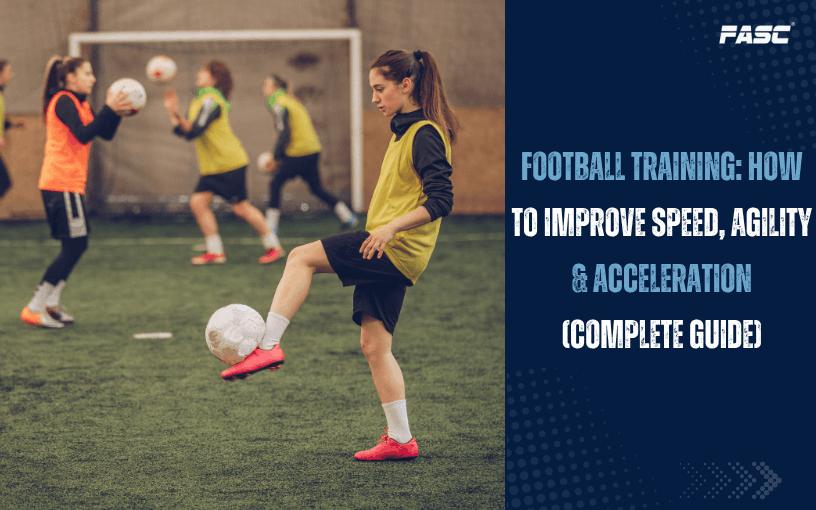
Football Training: How to Improve Speed, Agility & Acceleration
- Apr 21, 2026
- 4 min
Key Takeaways
- Football speed is a combination of acceleration, agility, and control
- Short sprints and explosive drills are more effective than long-distance running
- Strength training improves power, stability, and movement efficiency
- Agility drills enhance coordination and reaction time
- Consistency and recovery are essential for long-term progress
Why Speed and Agility Matter in Football
Football is not played in straight lines. Every moment requires quick reactions, sharp turns, and explosive movements. Whether you’re chasing the ball, defending, or making attacking runs, your ability to move efficiently defines your performance.
Acceleration helps you win the first few steps, agility allows you to change direction smoothly, and speed ensures you can maintain intensity throughout the game. Together, these qualities give you a strong competitive advantage.

The Real Reason Most Players Don’t Improve
Most players lack structured football training, which is why their performance stays the same despite regular effort.
Doing random workouts, repeating the same drills, or only playing matches does not improve performance. Without progression and focused training, your body simply adapts and stops improving.
To get faster, your training must target specific qualities like explosiveness, coordination, strength, and endurance.
Build the Right Foundation First
Before jumping into advanced drills, your body needs a strong base. Mobility, flexibility, and movement control play a major role in how efficiently you move.
If your muscles are tight or your movement is restricted, your speed will always be limited. Including dynamic warm-ups, stretching, and basic movement drills helps your body move freely and efficiently.
When your foundation is strong, everything else, speed, agility, and acceleration, improves naturally.
Acceleration: Winning the First Few Steps
Improving football acceleration is crucial because most game movements happen in short explosive bursts.
To improve acceleration, focus on explosive exercises like short sprints, resisted runs, and hill sprints. These movements train your body to generate force quickly.
Instead of running long distances, prioritize short sprints of 10–20 meters. This improves your ability to react quickly and reach top speed faster during match situations.
Agility: Move Efficiently Under Pressure
Structured agility training for football helps improve balance, coordination, and quick directional changes during matches.
Drills like cone drills, ladder work, and shuttle runs improve coordination and reaction time. The focus should be on staying low, maintaining balance, and avoiding unnecessary movements.
Efficient movement helps you conserve energy and perform better throughout the game.

Strength Training: The Game Changer
One of the biggest reasons players fail to improve speed is ignoring strength training. Strong muscles produce more force, which directly improves acceleration and stability.

Understanding the difference between strength training and hypertrophy becomes important here. Football players don’t just need bigger muscles, they need stronger, more functional muscles that improve performance.
Exercises like squats, lunges, and deadlifts help build lower-body strength, while core training improves balance and control. Stronger muscles allow you to move faster, react quicker, and stay stable during high-intensity situations.
Plyometric Training: Build Explosive Power
Plyometric exercises are essential for developing explosiveness. These movements train your muscles to generate maximum power in a short time.
Exercises like jump squats, box jumps, and bounding improve your ability to sprint, jump, and change direction quickly. This directly translates into better performance on the field.
Focus on controlled and explosive movements rather than doing too many repetitions.
Conditioning: Maintain Speed Throughout the Game
A combination of strength, speed, and endurance is essential to improve football performance on the field.
Fatigue is one of the main reasons players slow down. Proper conditioning helps maintain speed, agility, and performance even in the later stages of the game.
Interval training works best for football. Short bursts of high-intensity effort followed by recovery periods simulate real match conditions and improve overall endurance.
Recovery: Where Real Progress Happens
Most players underestimate recovery, but it plays a crucial role in improvement.
Training breaks your body down, and recovery helps it rebuild stronger. Without proper recovery, your performance drops and the risk of injury increases.
Sleep, hydration, stretching, and rest days are essential. When sleep and recovery science is understood properly, your body becomes stronger, faster, and more efficient.
Consistency: The Real Difference Maker
The biggest difference between players who improve and those who don’t is consistency.
You don’t need complicated routines. Even 20–30 minutes of structured training done regularly can create noticeable improvements over time.
When your football training includes strength, agility, and conditioning, your performance improves consistently over time.
Conclusion
Improving football speed, agility, and acceleration is not about doing more, it’s about doing the right things consistently.
When your training includes strength, explosiveness, agility, and recovery, your performance naturally improves. You move better, react faster, and play with more confidence.
Stay consistent, follow a structured approach, and the results will come.
Recommended products from Football Coach
Frequently Asked Questions (FAQ)
1. How can I improve football speed quickly?
Focus on short sprints, strength training, and plyometric exercises, but improvement takes consistent effort over time.
2. Is running enough to improve speed?
No. Running helps, but without strength and agility training, your speed gains will be limited.
3. How often should I train?
3–4 focused sessions per week along with proper recovery is ideal.
4. Can beginners follow this training?
Yes. Start simple and gradually increase intensity.
5. Why do I feel slow during matches?
Usually due to fatigue, poor conditioning, or lack of structured training.
Share :