- Fitness
How to Build a Fitness Routine That Actually Works: A Science Based Guide
- Aug 18, 2026
- 4 min
Key Takeaways:
- Adults should target 150–300 minutes of moderate activity weekly, strength training twice a week.
- Effective fitness combines cardio, strength, mobility and recovery.
- Progressive overload is what turns exercise into measurable improvement.
- Fitness progress should be measured through performance, not appearance alone.
- More exercise isn't automatically better; training load must be balanced with recovery.
“Get Fit” sounds simple, but fitness is not a single quality.
You can be strong but have poor cardiovascular endurance. You can run long distances but lack strength. Real fitness is multi-dimensional, which means an effective routine needs to develop more than one physical quality.
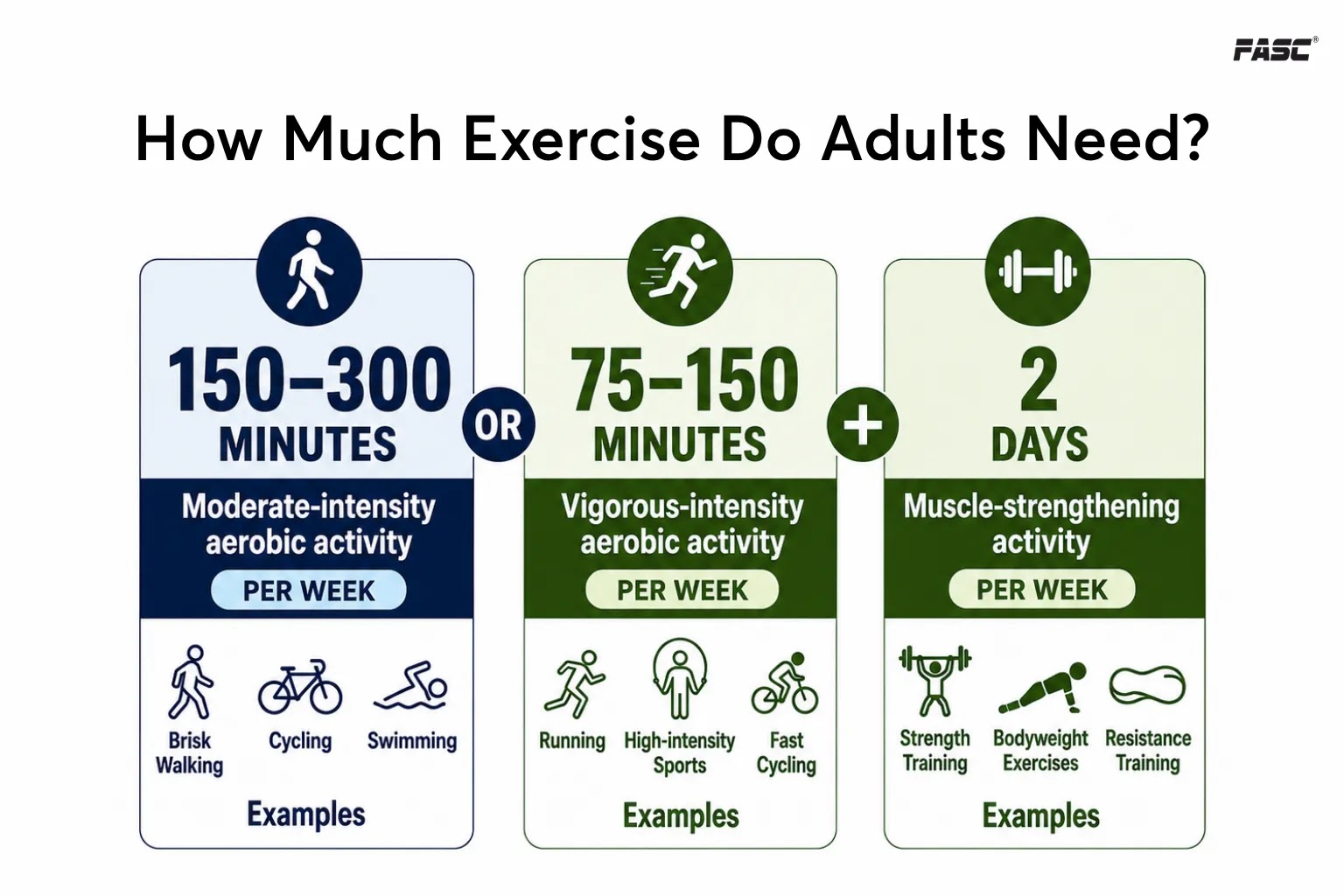
The World Health Organization recommends that adults complete 150-300 minutes of moderate intense aerobic activity or 75-150 minutes of vigorous activity each week, along with muscle strengthening activities involving major muscle groups on at least two days per week.
The important insight is that these are not competing recommendations. They represent different components of fitness.
A useful routine therefore isn’t simply “gym three times a week.” It should answer four questions
-
What are you training?
-
How hard are you training?
-
How are you progressing?
-
How are you recovering?
What Does Being Fit Actually Mean?
Fitness is the ability to perform physical tasks efficiently and tolerate physical demands without excessive fatigue.
It includes several interconnected qualities:
- Cardiorespiratory endurance: how efficiently your heart and lungs support prolonged activity.
- Muscular strength: the ability to produce force.
- Muscular endurance: the ability to repeatedly produce force without excessive fatigue.
- Mobility: the ability to move joints through useful ranges of motion.
- Balance and coordination: the ability to control movement effectively.
This is why fitness should not be judged purely by body weight, appearance or how much someone can lift.
Four Training Components of Fitness
A well rounded fitness routine should develop different aspects of physical capacity rather than focus on just one type of exercise. Each component serves a different purpose, and combining them helps create a more complete approach to fitness.
The four components below work together to improve performance while allowing the body to adapt to training demands.
1. Cardiovascular Training
Cardio develops the body's ability to sustain activity.
Walking, Running, Cycling, Swimming and many sports can provide aerobic training. The goal isn’t simply to burn calories but improving cardiovascular capacity makes sustained physical activity more efficient.
For general health, WHO’s 150-300 minute weekly recommendation provides a useful benchmark.
2. Strength Training
Strength training provides a different stimulus.
Resistance exercises challenge muscles to produce force and can improve strength, muscular endurance and physical function. Squats, presses, rows, lunges and other resistance movements can be selected according to ability and goals.
WHO recommends muscle-strengthening activity involving all major muscle groups on at least two days per week.
The key is not simply performing exercises; it is creating a progressive stimulus. If the same workload becomes easy over time, the training challenge needs to increase appropriately.
3. Mobility and Movement Quality
Mobility is often treated as an optional stretching session, but it has a more practical role.
Good mobility allows you to reach and control useful positions during exercise and everyday movement. A strength programme, for example, is more effective when you can perform its movements with adequate range and control.
Mobility work can include dynamic warm-ups, controlled joint movements, stretching and activities such as yoga.
4. Recovery
Training creates a stimulus. Recovery and sleep allows the body to adapt to it. That makes recovery part of the programme rather than time lost from it.
If training volume continually increases while sleep, nutrition and rest remain inadequate, performance can stagnate. A well-designed routine therefore alternates demanding sessions with sufficient recovery rather than treating every workout as a test of maximum effort.
The Missing Element: Progression
A routine can be perfectly balanced and still stop producing results if there is no progression.
Progression means gradually increasing the challenge as your body adapts. Depending on the activity, that might mean:
- Increasing resistance
- Adding repetitions
- Increasing running or cycling duration
- Improving movement control
- Reducing unnecessary rest
- Increasing training frequency when appropriate
A Better Way to Measure Progress
The weighing scale is only one possible metric, and often a poor measure of overall fitness.
Instead, track outcomes related to the quality you are trying to improve.
For example:
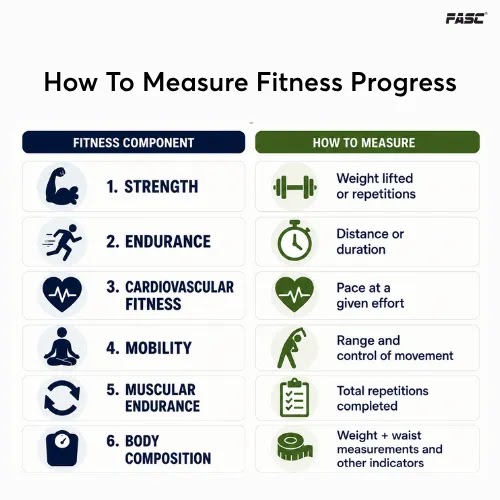
This creates a more meaningful picture of progress.
Someone whose body weight has barely changed but can now squat more, walk further, recover faster and move better may have made substantial improvements in fitness.
Recommended Products From Fitness Coach
Conclusion
Getting fit is less about finding the “perfect workout” and more about building a system that develops multiple physical qualities.
A strong foundation combines aerobic activity, resistance training, mobility and recovery, while progression provides the stimulus for continued adaptation.
The most useful question is therefore not “What is the best exercise?” but “What combination of training can I progressively improve and realistically sustain?”
Frequently Asked Questions
1. How many days a week should I exercise?
For general health, aim for regular aerobic activity throughout the week and muscle-strengthening exercises on at least two days, following WHO guidelines.
2. Is cardio or strength training more important?
Neither replaces the other. Cardio develops endurance, while strength training improves muscular strength and function, so a balanced routine should include both.
3. How long does it take to see fitness results?
Progress varies by training history, consistency, nutrition and recovery. Performance improvements such as increased strength or endurance can often be tracked before visible physical changes.
4. Can I get fit by exercising at home?
Yes. Bodyweight exercises, resistance bands, walking, running and other forms of home-based activity can develop several components of fitness when programmed progressively.
5. Is it necessary to exercise every day?
No. Fitness depends on the overall balance of training and recovery rather than exercising every day. Rest and recovery allow the body to adapt to training
Share :