- Fitness
How to Build Stamina for Swimming (Complete Beginner to Advanced Guide)
.png)
- Apr 14, 2026
- 5 min
Key Takeways
- Swimming stamina relies more on breathing, technique, and energy control than strength.
- Poor breathing and inefficient strokes are the main causes of early fatigue.
- Gradual progression with intervals builds endurance better than long continuous swimming.
- Proper technique and relaxation help conserve energy and improve efficiency.
- Consistency, along with good nutrition and recovery, is key to long-term stamina improvement.
If you are wondering how to build stamina for swimming, the answer isn’t just about swimming longer, it’s about improving breathing, technique, and energy control.
Many people start swimming with good energy but quickly feel exhausted after just a few laps. It’s a common problem, not because you are unfit, but because swimming stamina works differently from other forms of fitness.
In swimming, your breathing, technique, and energy usage play a much bigger role than raw strength. That’s why even physically fit people can struggle in the water.
The good news is that stamina in swimming can be improved with the right approach. You don’t need to swim longer from day one, you need to swim smarter.
What Swimming Stamina Actually Means
Swimming stamina is your ability to sustain movement in water without feeling fatigued too quickly. It depends on how efficiently your body uses oxygen, how well your muscles handle continuous movement, and how effectively you control your breathing.
Unlike running or gym workouts, swimming adds resistance from water, which makes every movement more demanding. At the same time, improper breathing can quickly lead to fatigue.
This is why stamina in swimming is not just about fitness, it’s about coordination between breathing, technique, and effort.
Why Most People Get Tired Quickly
One of the biggest reasons people lose stamina in swimming is poor breathing control. Holding your breath or breathing irregularly causes your body to run out of oxygen faster, leading to early fatigue.
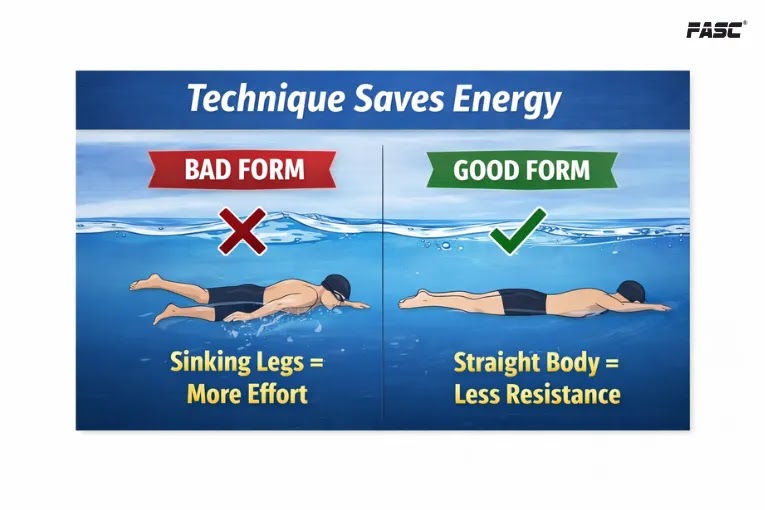
Another common issue is inefficient technique. When your body position is not streamlined or your strokes are not smooth, you waste energy with every movement.
Understanding different strokes and when to use them can also make a difference. For example, learning about various swimming styles helps you switch techniques based on comfort and efficiency, which can significantly reduce fatigue during longer sessions.
Build a Base Before Increasing Intensity
Just like any other form of fitness, stamina in swimming starts with building a strong base.
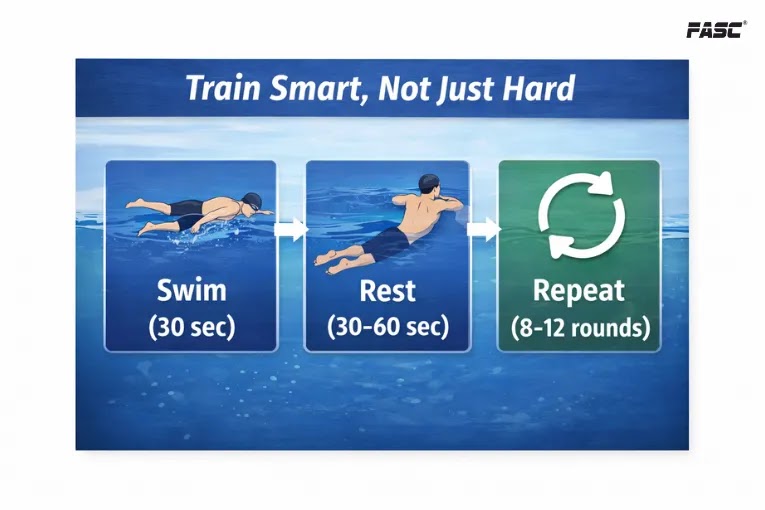
Instead of pushing yourself to swim continuously for long durations, begin with shorter intervals. Swim for a few laps, take controlled rest, and repeat. This allows your body to gradually adapt without overwhelming it.
Over time, you can reduce rest intervals and increase swimming duration. This progressive approach is what builds real endurance.
If you’ve worked on endurance training outside the pool, you’ll notice a similar pattern. Concepts like those explained in improving stamina apply here as well, consistency and gradual progression always deliver better results than sudden intensity.
This gradual approach is one of the most effective ways to understand how to build stamina for swimming without exhausting yourself too early.
Focus on Breathing Technique
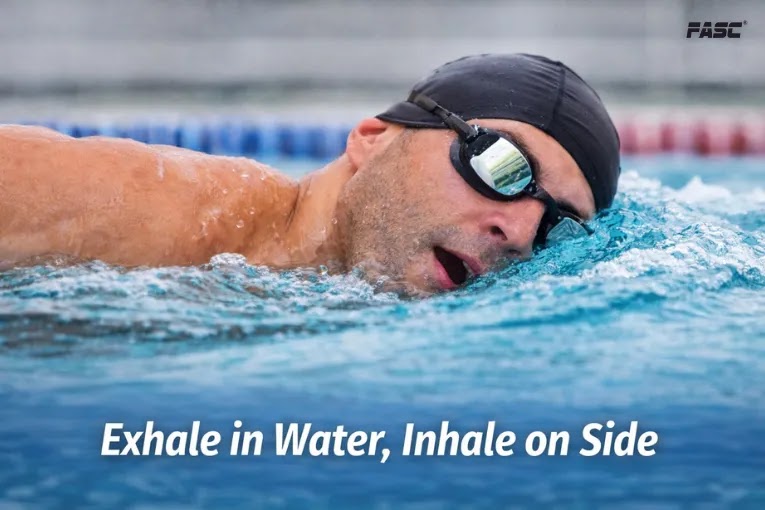
Breathing is the most critical factor in swimming stamina. Without proper breathing, even the strongest swimmer will struggle.
The key is to maintain a steady breathing rhythm. Instead of holding your breath, exhale underwater and inhale quickly when you turn your head. This keeps oxygen flowing continuously and prevents early fatigue.
Practicing breathing drills separately can make a huge difference. Once your breathing becomes controlled and natural, your stamina will automatically improve.
Improve Technique to Save Energy
Good technique is one of the biggest advantages in swimming, as it allows you to move through water with far less effort. Maintaining a streamlined body position reduces resistance, while smooth and controlled strokes help conserve energy.
Even small adjustments in technique can lead to significant improvements in stamina. Understanding different styles in swimming and when to use them can further enhance your efficiency, which is why swimmers who focus on technique often outperform those who rely only on strength.
Interval Training: The Game Changer
One of the most effective ways to improve swimming stamina is interval training.
Instead of swimming continuously, you alternate between effort and rest. For example, swim one lap at a moderate pace, rest briefly, and repeat.
This method trains your body to recover faster and handle repeated effort, which is exactly what stamina is about.
Over time, your recovery improves, your breathing becomes more stable, and your overall endurance increases.
Interval training plays a key role in learning how to build stamina for swimming, as it improves both recovery and endurance together.
The Role of Relaxation in Swimming
Many beginners try too hard in the water. They use excessive force, which leads to quicker fatigue.
Swimming is as much about relaxation as it is about effort. Staying calm in the water helps you conserve energy and maintain better control over your movements.
When your body is relaxed, your strokes become smoother, your breathing becomes easier, and your stamina improves naturally.
Nutrition and Hydration Matter
Even though swimming doesn’t feel as exhausting as running or gym workouts, your body still uses a significant amount of energy.
Proper nutrition ensures that your muscles have enough fuel to perform. Hydration is equally important, especially during longer sessions.
Without proper fueling, your stamina will always be limited, no matter how well you train.
Recovery and Consistency
Improving stamina is not about one intense session, it’s about consistent effort over time.
Your body needs time to adapt, recover, and improve. Regular practice combined with proper rest is what leads to long-term progress.
Skipping sessions or training randomly will slow down your improvement. A consistent routine, even if it’s short, is far more effective.
Common Mistakes to Avoid
Many swimmers try to push too hard too soon. This often leads to fatigue and discouragement.
Ignoring breathing technique is another major mistake. Without proper breathing, stamina cannot improve.
Once you understand how to build stamina for swimming, your performance becomes more efficient, controlled, and less tiring over time.
Focusing only on speed instead of efficiency also limits progress. Swimming faster without proper control only drains energy faster.
Avoiding these mistakes can significantly speed up your progress.
Recommended products from FASC Coach
2. Swim Shorts
Conclusion
Improving swimming stamina is not about swimming longer from the start, it’s about building efficiency step by step.
When you focus on breathing, technique, and consistency, your endurance naturally improves.
Over time, what once felt exhausting becomes manageable, and your performance in the water improves significantly.
The key is simple, train smart, stay consistent, and let your body adapt.
Frequently Asked Questions (FAQs)
1. How long does it take to improve swimming stamina?
With consistent practice, you can see noticeable improvement within 3–4 weeks.
2. Why do I get tired so quickly while swimming?
Usually due to poor breathing technique, inefficient strokes, or lack of endurance training.
3. Is swimming enough to build stamina?
Yes, but combining it with general fitness training can speed up results.
4. How often should I swim to improve stamina?
3–4 sessions per week is ideal for steady improvement.
5. Can beginners improve stamina quickly?
Yes, beginners often see faster progress when they focus on technique and breathing.
Share :