- Gym
Why Most People Stay Consistent in the Gym for Only 3 Weeks

- May 29, 2026
- 5 min
Key Takeaways
- Motivation alone cannot sustain long-term fitness.
- Unrealistic expectations cause early frustration.
- Recovery and sleep directly affect gym consistency.
- Lack of structure leads to workout confusion.
- Sustainable habits outperform extreme routines.
- Fitness success depends more on consistency than intensity.
Every January, gyms are packed.
New memberships rise, workout selfies flood social media, and motivation levels seem sky-high. But within a few weeks, many people slowly disappear from the gym floor.
For most beginners, the problem is not starting.
The real challenge is staying consistent.
Studies and industry observations suggest that a large percentage of people stop following fitness routines within the first few months, with the biggest drop often happening in the first few weeks.
So why does this happen?
Why do people begin with excitement but struggle to maintain momentum after only 2–3 weeks?
The answer has less to do with laziness and more to do with unrealistic expectations, poor recovery, lack of structure, mental burnout, and lifestyle imbalance.
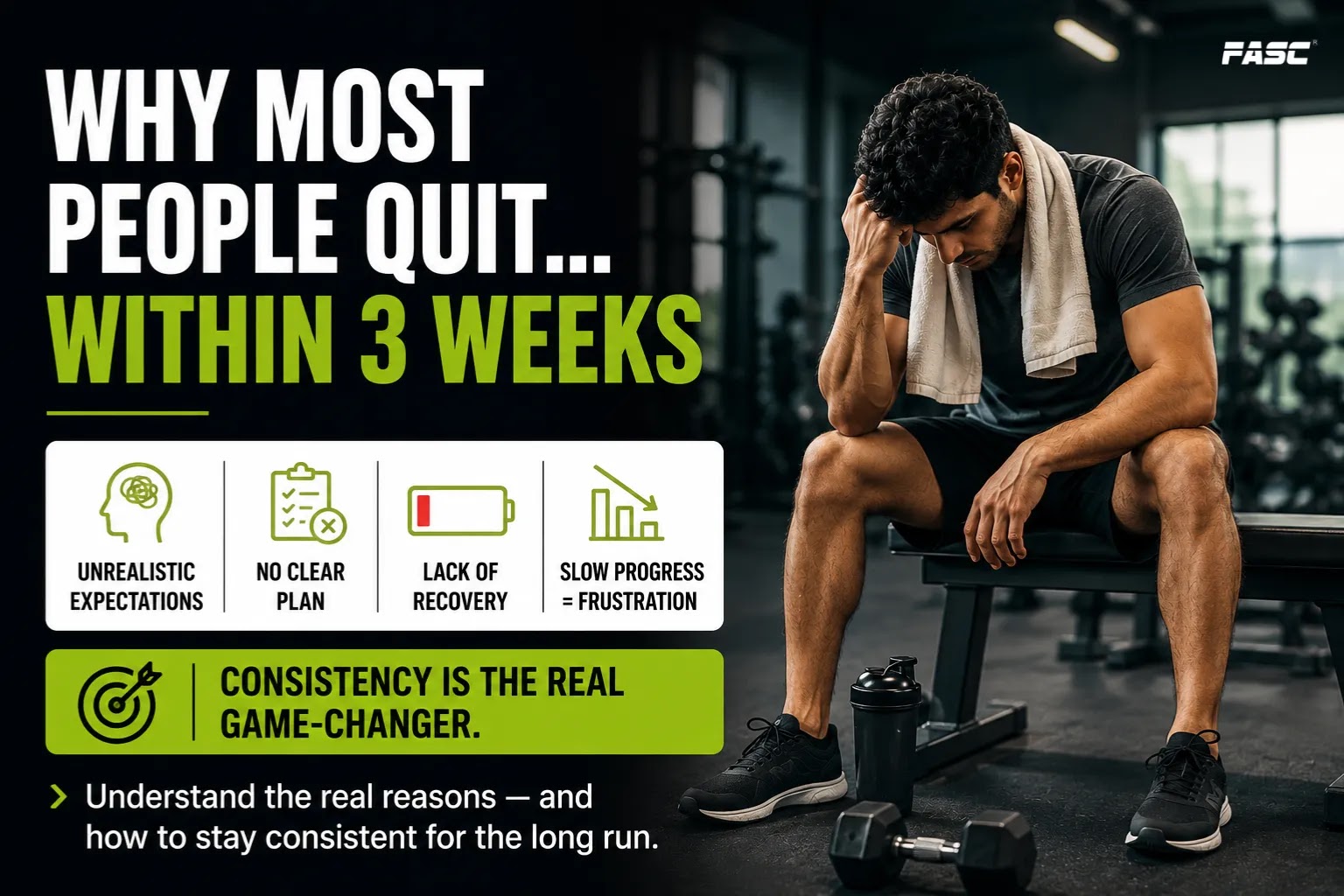
The “Motivation Phase” Doesn’t Last Long
Most people begin their fitness journey emotionally.
They feel inspired after:
- watching transformation videos
- buying new gym clothes
- setting New Year goals
- comparing themselves on social media
This creates a temporary motivation spike.
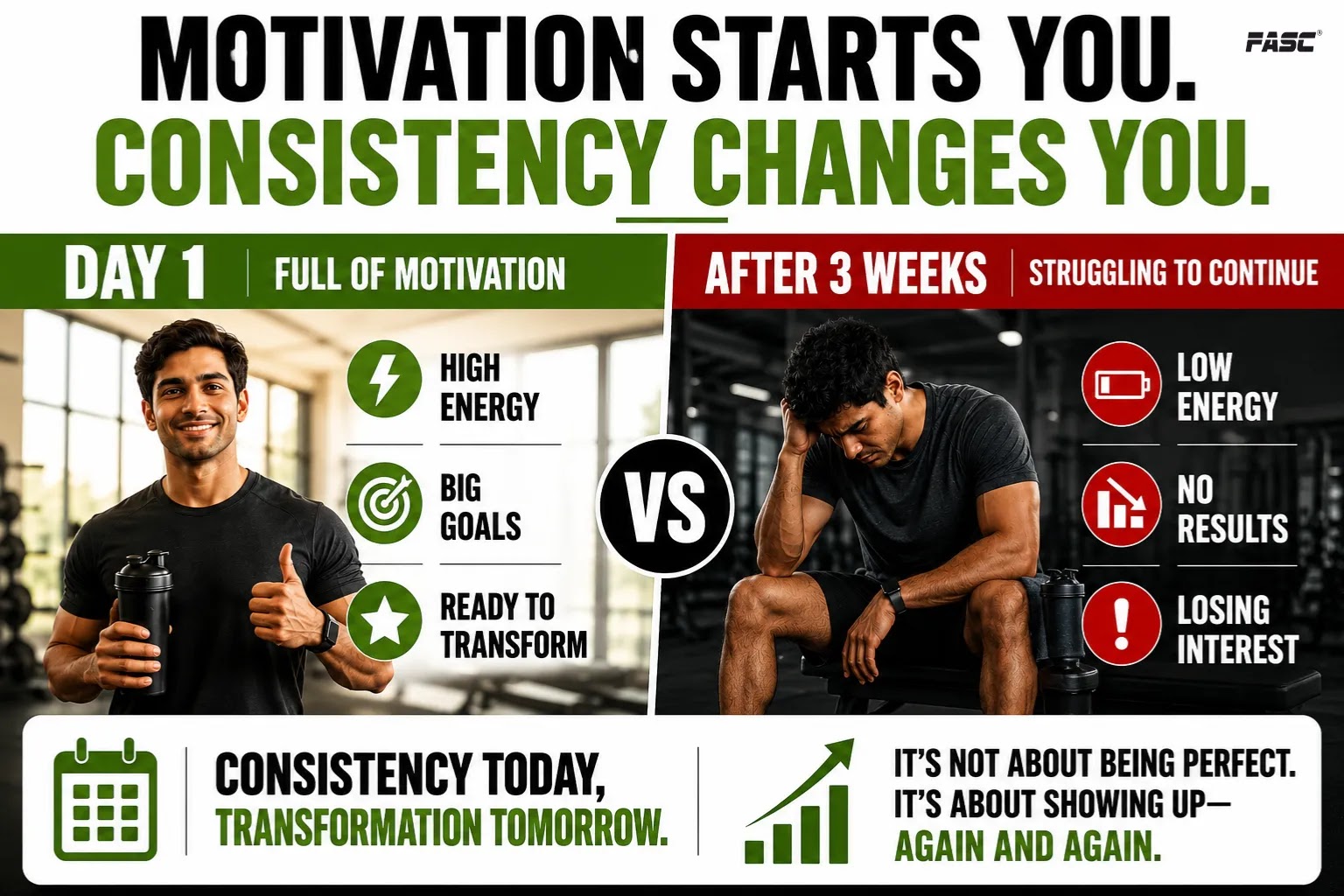
But motivation is emotional and emotions fluctuate.
Once soreness, work pressure, fatigue, or slow progress appears, that excitement starts fading quickly. Experts increasingly emphasize that long-term fitness success depends more on consistency and repeatable habits than short-term motivation.
That’s why many people stop going to the gym after only a few weeks.
Unrealistic Expectations Destroy Consistency
One of the biggest reasons people quit early is unrealistic expectations.
Many beginners expect:
- visible abs in 30 days
- rapid fat loss
- dramatic body transformations
- instant strength gains
But real fitness progress takes time.
Experts note that visible physical changes usually take several weeks or months, while many people mentally give up before meaningful progress becomes noticeable.
When expectations don’t match reality, frustration replaces motivation.
And frustration often leads to inconsistency.
Most People Start Too Aggressively
Another common mistake is going “all in” immediately.
Many beginners suddenly attempt:
- 6 workout days per week
- strict diets
- intense cardio sessions
- extreme calorie deficits
The result?
Physical exhaustion and mental burnout.
Research and fitness coaches repeatedly highlight that unsustainable intensity often causes people to quit before their body fully adapts to training.
Sustainable Fitness Always Wins
A simple routine followed consistently for 6 months is far more effective than an extreme routine followed for 3 weeks.
Fitness should fit your lifestyle, not completely destroy it.
Lack of Structure Creates Confusion
Many gym beginners walk into a fitness center without a clear plan.
They try random exercises, copy social media workouts, or switch routines every few days.
This creates:
- confusion
- inconsistency
- lack of measurable progress
- decision fatigue
Industry coaches consistently identify “lack of structure” as one of the biggest reasons people stop going to the gym early.
Having a Simple Plan Matters
When people know:
- what to train
- when to train
- how to progress
- what results to expect
it becomes easier to stay committed.
Structure reduces mental resistance.
Recovery Is the Most Ignored Part of Fitness
Many people think consistency is only about workouts.
But recovery is equally important.
Poor sleep, stress, overtraining, and lack of recovery often reduce:
- energy levels
- workout performance
- motivation
- muscle recovery
- mental focus
This is why understanding sleep & recovery science is critical for long-term fitness progress.
Without proper recovery, workouts start feeling exhausting instead of energizing.
And once exercise begins feeling like punishment, consistency becomes difficult.
Busy Work Life Makes Consistency Harder
Modern lifestyles are heavily work-focused.
Long office hours, screen fatigue, stress, commuting, and irregular schedules often make workouts feel impossible to maintain.
This is especially true for working professionals trying to balance:
- careers
- family responsibilities
- health goals
- social life
That’s why fitness for working professionals has become more important than ever today.
Fitness is no longer only about aesthetics.
It is increasingly connected with:
- energy
- productivity
- mental health
- posture
- stress management
- long-term wellness
Social Media Has Changed Fitness Psychology
Fitness content online can sometimes create unrealistic standards.
People constantly see:
- edited transformations
- advanced workouts
- unrealistic body expectations
- extreme routines
- “30-day challenge” culture
This creates comparison pressure.
Instead of focusing on personal progress, many beginners feel discouraged because they don’t see immediate transformation.
Fitness Is a Long-Term Process
Real fitness is usually slow, repetitive, and sometimes boring.
And that’s completely normal.
The people who succeed long-term are not always the most motivated.
They are usually the most consistent.
The Real Secret Build Identity, Not Just Goals

Most people focus only on outcomes:
-
lose weight
-
build muscle
-
get abs
But sustainable fitness comes from identity change.
Instead of saying:
“I want to lose weight.”
Successful people begin thinking:
“I’m someone who trains consistently.”
This mindset shift changes behavior long-term.
Consistency becomes part of lifestyle instead of temporary motivation.
Conclusion
Most people don’t quit the gym because they are lazy.
They quit because:
- expectations are unrealistic
- routines are unsustainable
- recovery is ignored
- life becomes overwhelming
- motivation fades faster than habits are built
The truth is simple:
Fitness is less about intensity and more about consistency.
The people who succeed long-term are not necessarily the ones doing the hardest workouts.
They are the ones who keep showing up even on average days.
Because lasting fitness results are not built in 3 weeks.
They are built through small, repeatable habits practiced consistently over time.
Recommended products from Fitness Coach
FAQ’s
1. Why do most people quit the gym after a few weeks?
Most people quit due to unrealistic expectations, lack of structure, poor recovery, busy schedules, and motivation loss.
2. How long does it take to build gym consistency?
Building a sustainable fitness habit usually takes several weeks or months of regular practice and routine-building.
3. Is motivation enough for long-term fitness success?
No. Motivation helps people start, but consistency and habits are what sustain long-term fitness progress.
4. How many days should beginners work out?
Most beginners can start with 3–4 manageable workout sessions per week instead of extreme schedules.
5. Why is recovery important for consistency?
Proper recovery improves energy, performance, sleep, and motivation while reducing burnout and fatigue.
Share :
Recent Blog



- Sep 04, 2026