- Sports
Pickleball in India: Are We Building Enough Quality Courts for Future Professionals?
- May 15, 2026
- 4 min
Key Takeaways
- Pickleball courts in India have grown nearly 6x in two years.
- Most existing courts are recreational rather than professional-grade.
- India still lacks a strong coaching and ranking ecosystem.
- Serious players face limited access to quality infrastructure.
- India may require 2,500+ courts by 2030 to meet demand.
- The opportunity for athletes, investors, and brands is still massive.
Pickleball is quickly becoming one of India’s fastest growing sports. From residential societies to sports clubs to fitness centers, courts are appearing across major cities at an impressive pace. The sport’s easy learning curve and social appeal have attracted players of all age groups.
But while participation is increasing rapidly, an important question remains unanswered: is India truly developing a professional pickleball ecosystem, or are we simply creating more recreational playing spaces?
The growth is exciting, but professional athlete development requires much more than just court numbers.
The Rapid Rise of Pickleball in India
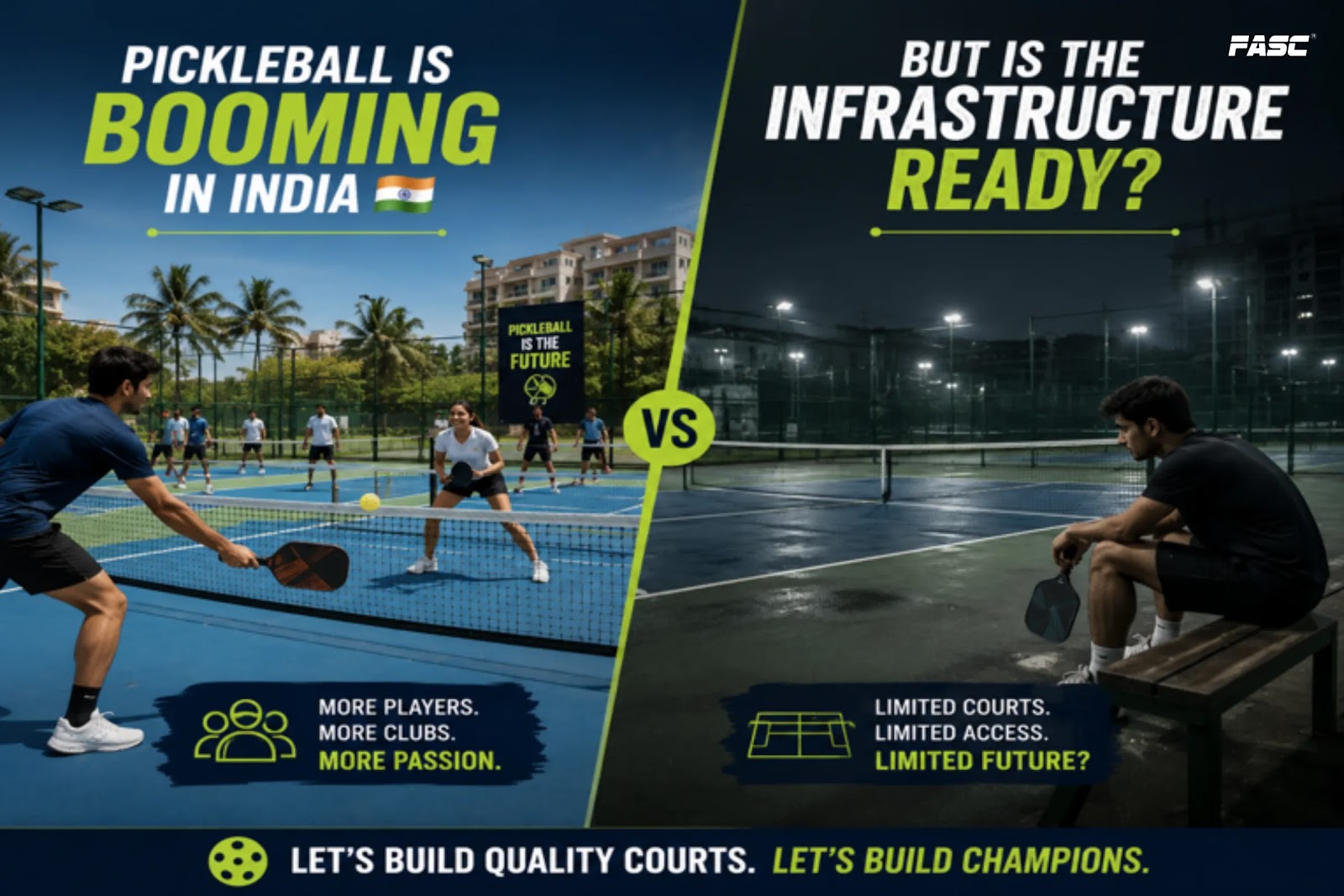
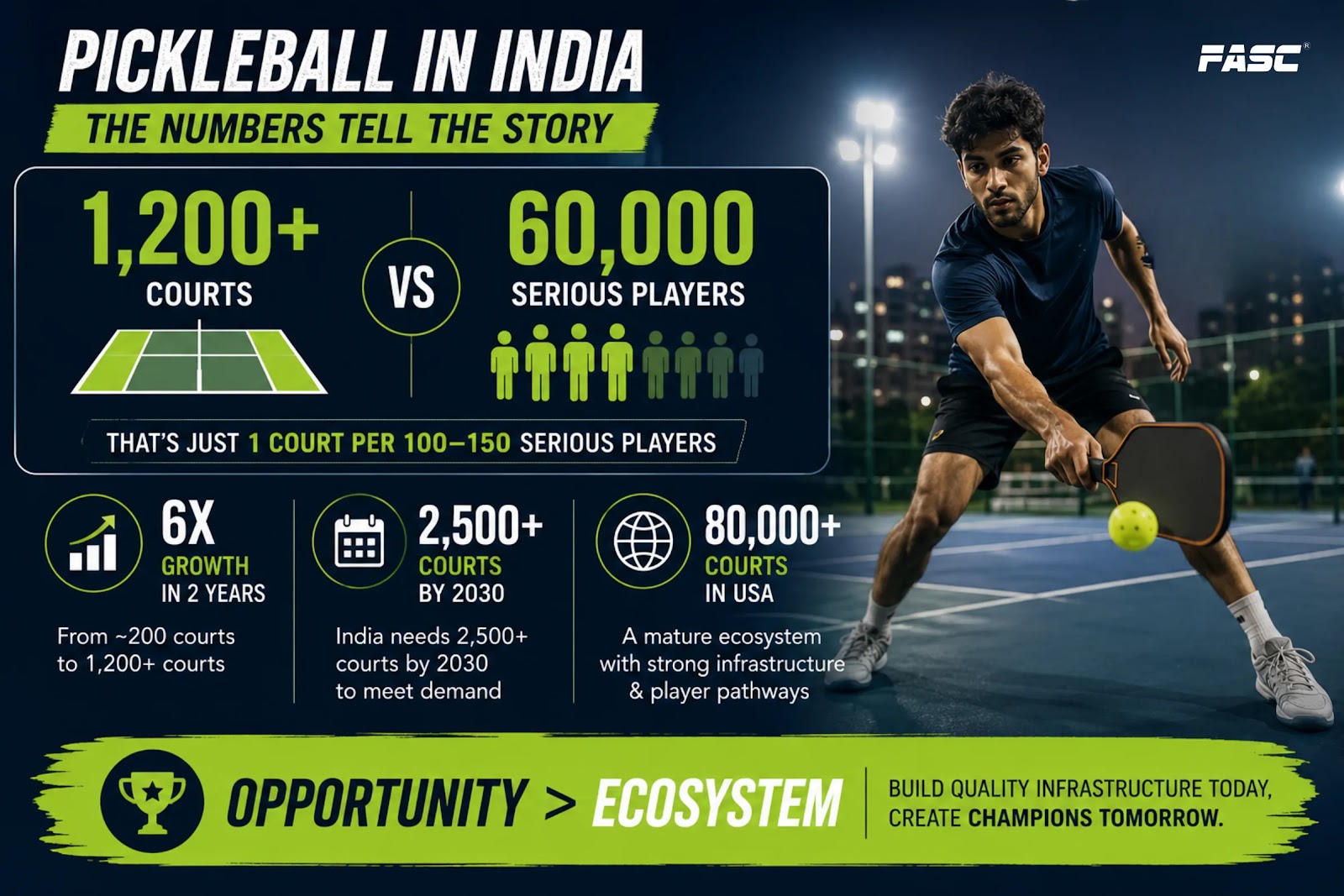
India’s pickleball ecosystem has seen explosive growth in recent years. Around 2 years ago, the country had approximately 200 pickleball courts. Today, that number has increased to nearly 1000-1200 courts.
This growth clearly indicates rising interest in the sport.
The current player base in India is estimated at:
-
1–2 lakh active players
-
Around 30,000–60,000 serious or competitive players
At first glance, these numbers seem highly promising. However, when infrastructure is compared with serious participation, the gap becomes more visible.
The Infrastructure Gap Nobody Talks About
Despite the increasing number of courts and Pickleball being the most rapidly growing sport, India still faces a major infrastructure challenge.
Currently, there is roughly:
1 Court for Every 100–150 Serious Players
This imbalance creates several issues:
- Limited practice availability
- Difficulty in booking quality courts
- Lack of consistent training environments
- Reduced opportunities for competitive development
Most importantly, the majority of courts being built today are designed for recreational play rather than professional athlete training.
Recreational Courts vs Professional Infrastructure
One of the biggest misconceptions in India’s pickleball boom is assuming every court contributes equally to athlete development.
In reality, many courts are:
- Converted multi-purpose surfaces
- Temporary setups in societies
- Poorly lit facilities
- Non-standard playing dimensions
Very few facilities currently provide:
International-Standard Playing Conditions
Professional-level development requires:
- Standardized court dimensions
- Quality flooring and surfaces
- Proper lighting systems
- Structured coaching programs
- Tournament-ready facilities
- Recovery and fitness support systems
Without these essentials, transitioning from recreational player to professional athlete becomes extremely difficult.
Why the USA Is Far Ahead
The United States currently has more than 80,000 pickleball courts supported by a mature sports ecosystem.
The difference is not just infrastructure quantity but ecosystem quality.
The US has:
- Professional leagues
- Ranking systems
- Structured academies
- Certified coaching programs
- Sponsorship opportunities
- Grassroots talent development
India, on the other hand, is still in the early stages and remains heavily metro-centric.
The Biggest Challenge for Indian Athletes
Starting pickleball in India is relatively easy today. The sport is beginner-friendly, social, and accessible.
However, becoming a professional athlete remains challenging because of:
Limited Elite Development Pathways
Indian players currently face:
- Fewer competitive tournaments
- Limited coaching exposure
- Inconsistent training standards
- Lack of long-term athlete development programs
As a result, many talented players struggle to transition into elite-level competition despite strong interest in the sport.
Why India Needs Better Pickleball Infrastructure by 2030
If participation continues growing at the current pace, India may require over 2,500 quality pickleball courts by 2030 to meet player demand effectively.
But the future depends on building the right kind of infrastructure.
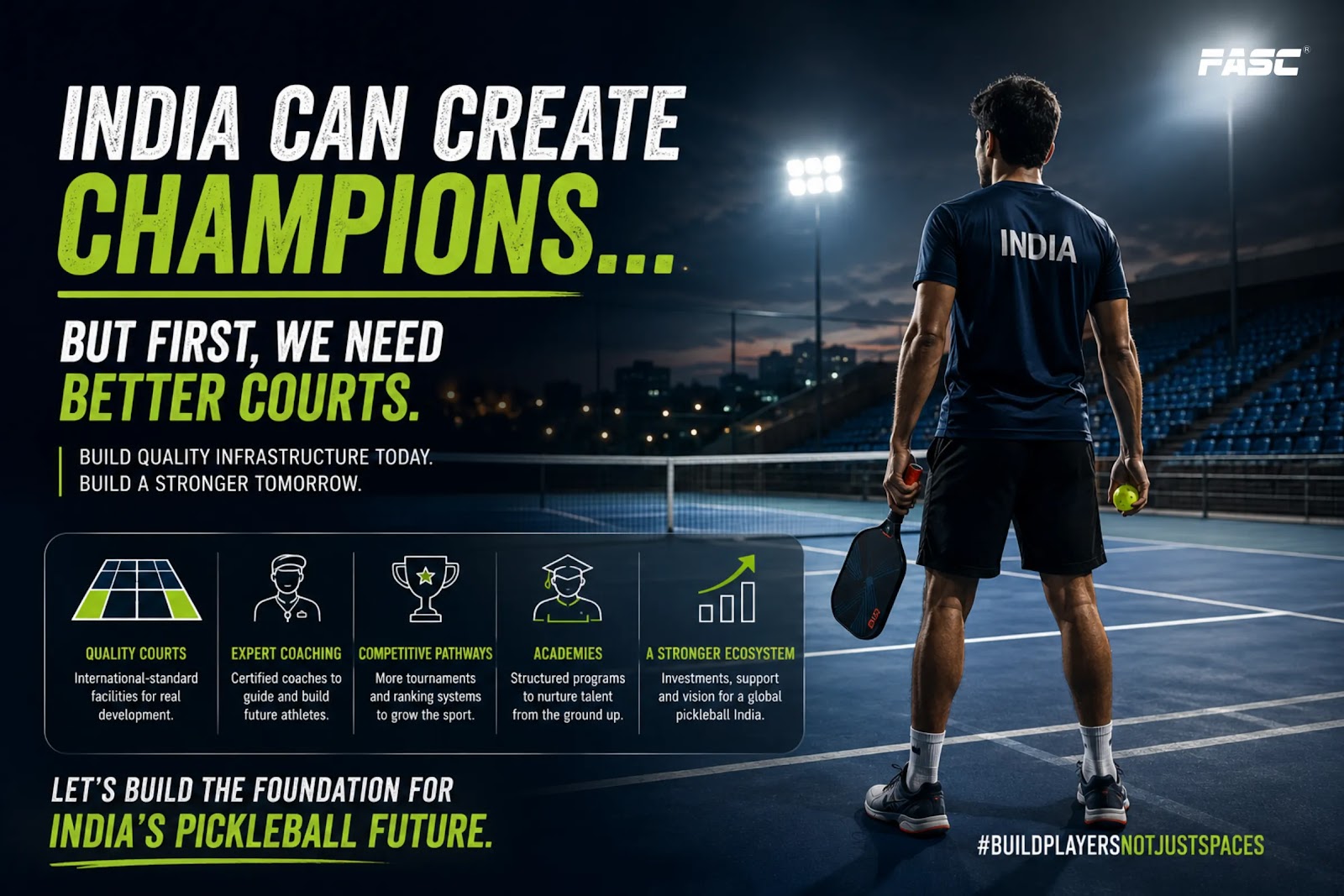
India needs:
- Dedicated pickleball academies
- Certified coaching systems
- Better tournament structures
- High-quality professional courts
- Development programs for young athletes
- Expansion beyond metro cities
The next phase of growth should focus less on quantity and more on long-term sustainability.
A Huge Opportunity for Investors, Brands & Athletes
Despite current challenges, pickleball still represents one of India’s biggest emerging sports opportunities.
For Athletes
Starting early can provide a competitive advantage in a rapidly developing sport.
For Investors
There is growing demand for premium sports infrastructure and organized pickleball facilities.
For Brands
The market is still unsaturated, creating strong opportunities for early positioning and community building.
Conclusion
Pickleball’s rise in India is undeniably real. Participation is increasing, awareness is growing, and infrastructure investment has already begun. However, building a successful professional sports ecosystem requires more than recreational enthusiasm.
The real focus now should be on creating quality courts, standardized facilities, coaching pathways, and athlete development systems.
At present, India’s pickleball ecosystem can be summarized in one simple line:
Opportunity > Ecosystem
The coming years will determine whether India becomes a true competitive pickleball nation or remains largely recreational.
The bigger question is no longer whether pickleball will grow in India.
The real question is:
Are we building future professional players or simply more playing spaces?
Recommended products from FASC Coach
FAQ’s
1. Why is pickleball becoming popular in India?
Pickleball is easy to learn, socially engaging, and suitable for all age groups, making it one of the fastest-growing sports in India.
2. How many pickleball courts are currently available in India?
India currently has approximately 1,000–1,200 pickleball courts.
3. What is the biggest challenge in India’s pickleball ecosystem?
The biggest challenge is the lack of professional-grade infrastructure, standardized courts, and structured athlete development pathways.
4. Are most pickleball courts in India professional-level facilities?
No, many existing courts are recreational or society-based setups rather than international-standard professional facilities.
5. Why is quality infrastructure important in pickleball?
Quality infrastructure helps athletes train consistently, compete professionally, and improve performance at higher competitive levels.
6. What does India need to become a strong pickleball nation?
India needs better coaching systems, standardized courts, tournaments, academies, and athlete development programs to build a strong competitive ecosystem.
Share :
Recent Blog



- Sep 04, 2026