- Sports
Fitness Testing: 7 Tests That Reveal How Fit You Really Are

- Oct 23, 2026
- 6 min
Key Takeaways
- Fitness testing can help you to find out what your strengths are and what areas require improvement.
- Various tests assess different aspects, such as stamina, muscular endurance, power, flexibility, and balance.
- It is more important to have good technique than to pursue impressive figures.
- To fairly assess progress, carry out further tests under the same conditions.
- Instead, use your results to make adjustments to your training rather than comparing yourself to everybody else.
You might exercise regularly, walk every day or spend several hours a week at the gym. But how do you know whether your fitness is actually improving?
Fitness testing gives you a clearer picture. Instead of relying only on how you feel during a workout, you can use simple tests to check your stamina, strength, flexibility and other aspects of physical fitness.
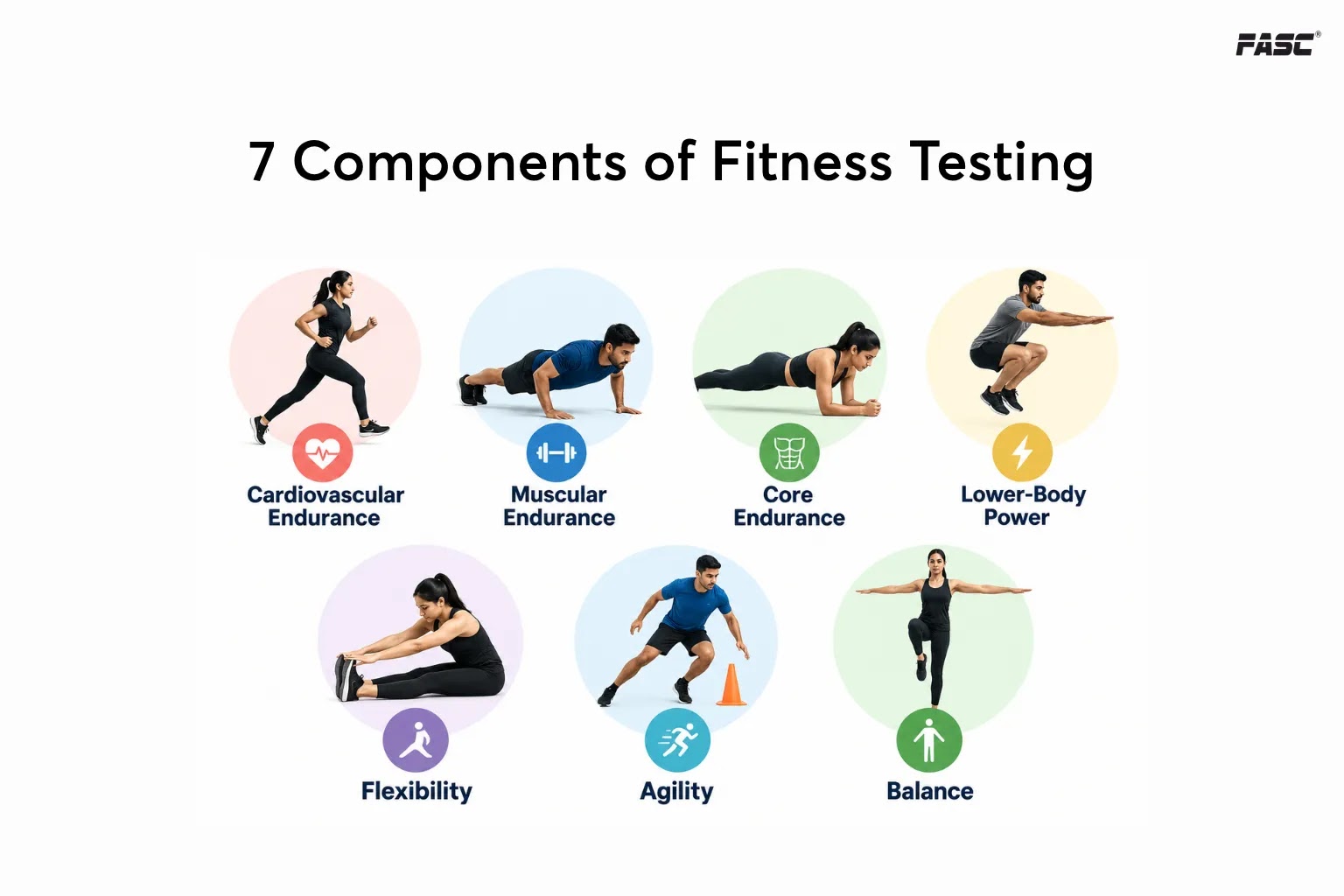
According to the American College of Sports Medicine (ACSM), fitness assessments cover several areas, including cardiovascular fitness, muscular fitness, flexibility and body composition. Understanding the meaning and importance of fitness makes it easier to see why testing different aspects of fitness gives you a more complete picture of your physical health.
Here are seven fitness tests worth knowing about, along with what each one tells you.
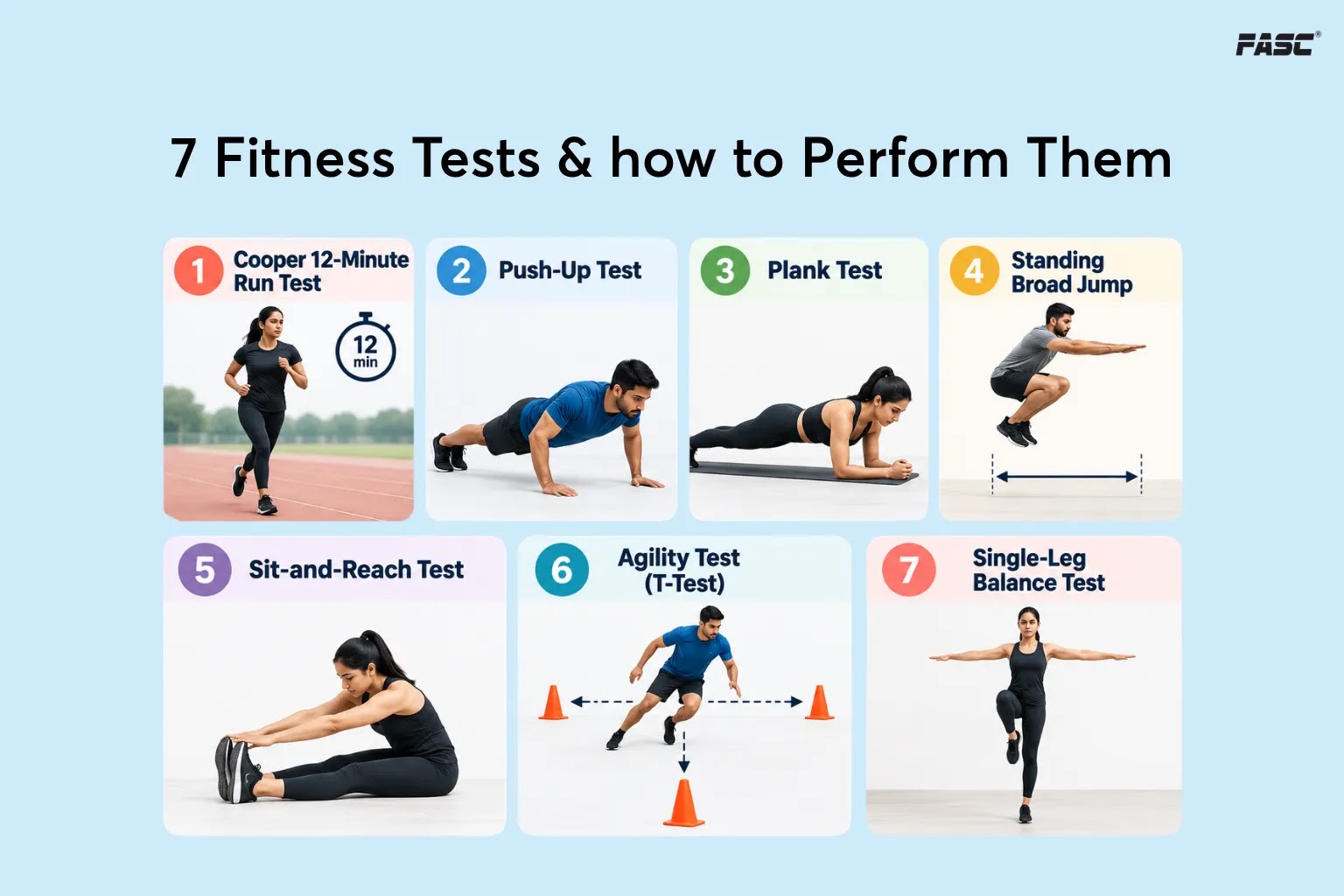
1. Cooper 12-Minute Run Test
What it measures: Cardiovascular endurance
Can you keep moving at a steady pace without getting exhausted too quickly? The Cooper test offers one way to assess your aerobic fitness.
The idea is simple: cover as much distance as you comfortably can in 12 minutes, usually by running on a measured track. The distance covered gives an indication of your cardiovascular endurance.
It's particularly useful for runners and athletes who need to maintain their effort over longer periods. If running isn't suitable for you, a walking-based assessment may be a better option. Don't push yourself to exhaustion just to achieve a higher score.
2. Push-Up Test
What it measures: Upper body muscular endurance
It may seem simple to do push-ups, but it takes strength and control to keep proper form through a number of repetitions.
In this test you should count the number of push-ups you are able to do using correct technique before your form starts to break down; make sure that your body remains aligned and lower yourself in a controlled way. If standard push-ups are finding you too difficult, then you can use a modified version.
The figure by itself doesn't tell the entire story; useful indication of progress is that you're able to do more repetitions with the same good technique after a few weeks of training.
3. Plank Test
What it measures: Core endurance
Your core has a function that goes beyond assisting you with abdominal exercises since it also supports your body when you are lifting, running, bending or changing direction.
For the plank test, hold a forearm plank and keep your body in a straight line. Note how long you can stay in this position without your hips saggling or your back arching too much. Stop when you can no longer hold the position correctly.
That doesn't mean that a longer hold is better just because your technique has deteriorated. What you should aim for is to keep control, not merely to break your previous record.
4. Standing Broad Jump
What it measures: Lower-body explosive power
Strength and power are connected, but they are not exactly the same; power refers to applying force rapidly, a factor that is important in activities such as sprinting, jumping and various field sports.
Stand back from the marked line, move your arms and jump as far as you are able, landing on both feet, then measure the distance from the starting line to the closest point at which you land.
After warming up, carry out a number of jumps and then note your best valid one. Although the test can be useful for athletes who depend on explosive movements, landing ability and technique also have an effect on the result.
5. Sit-and-Reach Test
What it measures: Flexibility
The sit-and-reach test will provide you with a rough idea of your flexibility in the hamstrings and lower back if you have difficulty reaching towards your toes.
With your legs stretched out, sit on the floor and reach forward slowly, making sure that your knees remain straight. Then work out how far you can reach without bouncing or forcing the movement.
You should remember that this test does not assess the flexibility of every part of your body, and a good score here does not necessarily indicate that your shoulders, hips or ankles have a full range of motion.
6. Agility Test
What it measures: Ability to change direction
In sports including football, badminton, basketball and tennis, agility is important because players have to continually change direction in response to what is going on around them.
A way of doing it is to carry out a T-test, this consisting of sprinting forward, moving sideways in each direction and then running backwards along a marked-off route; the time it takes to finish the course gives an indication of an athlete's ability to change direction.
The test is more beneficial for individuals who take part in sports or activities that require rapid changes of direction. Instead, people who are just starting out should learn the movements before concentrating on speed.
7. Single-Leg Balance Test
What it measures: Static balance
When people are considering fitness, balance is often neglected even though it is important for everyday movements and for sports.
Balance yourself by standing on one leg, making sure that your eyes are open and not holding on to anything; time how long you can remain steady and then carry out the same procedure on the other leg.
If you need it, have a stable support nearby and use a clear area. You may find it easier to notice the differences by comparing both sides, though this test on its own is not capable of identifying the cause of any imbalance.
How frequently should fitness tests be repeated?
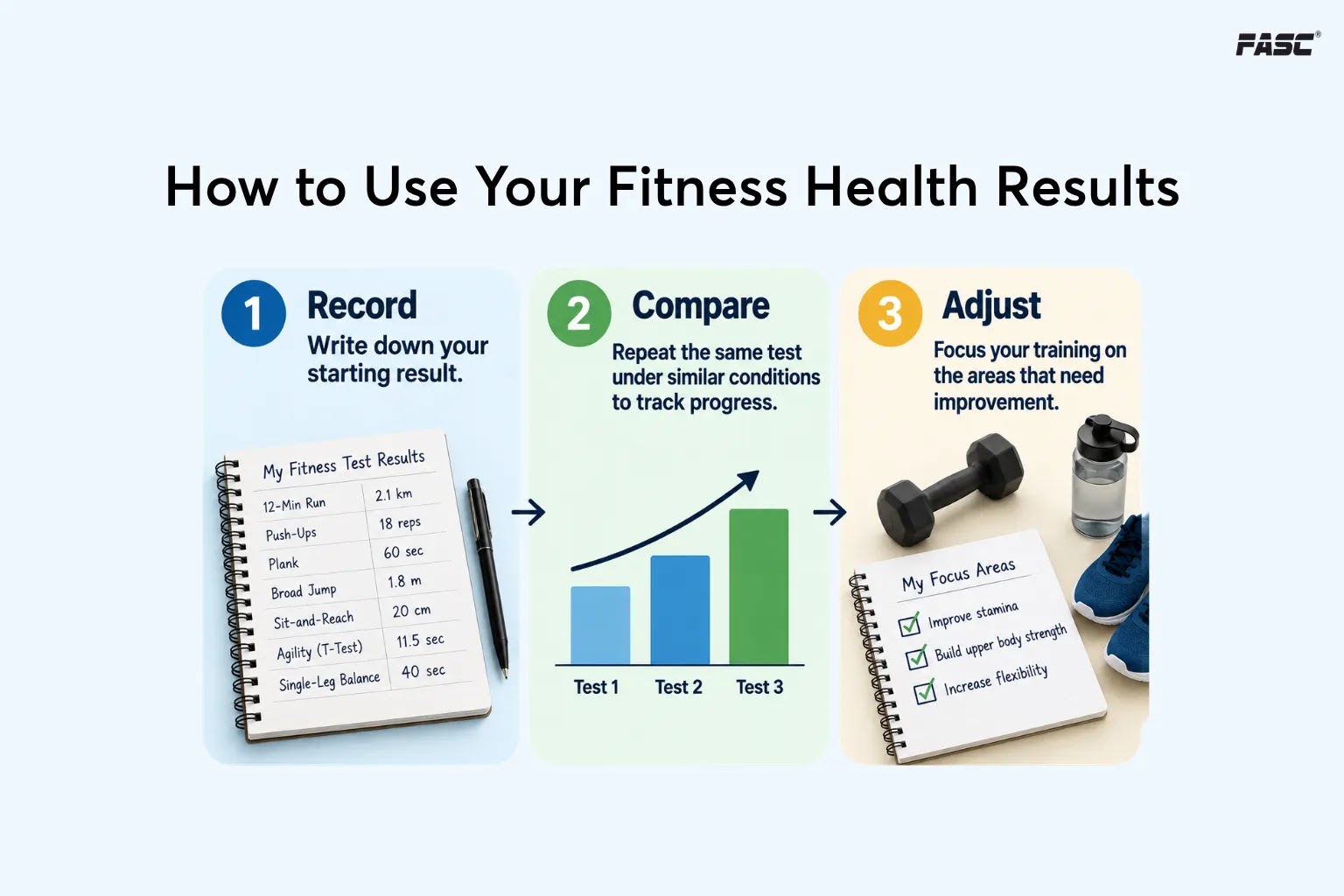
You needn't take the test every few days; for most people it is reasonable to repeat a simple assessment every four to eight weeks in order to check on your progress, according to their training plan.
Make sure that the conditions are as similar each time by using the same test procedure, equipment, and warm-up, and do not compare the results from completely different setups.
Your results will enable you to decide on your next area of focus. For instance, if your stamina requires improving, you should gradually increase the time you spend walking, cycling or running. If strength is your weakness, then you should concentrate on basic resistance exercises. The important point is to adopt changes that you can maintain, just as a fitness coach's advice on how to get fit can help you establish a routine which suits your present level and goals.
Recommended Products From Fitness Coach
Conclusion
You don't need to be an athlete to benefit from fitness testing. Even a few simple checks can help you understand your current abilities and see whether your training is making a difference. Start with tests that suit your fitness level, note your results and work on the areas that need attention. Over time, those small improvements can add up.
Frequently Asked Questions
1. Can I do fitness testing at home?
Yes. Tests such as the plank, push-up, sit-and-reach and single-leg balance can be done at home with little or no equipment. More demanding tests may require extra space or professional supervision.
2. Do I need to pass all seven fitness tests?
No. There isn't one universal score that defines fitness for everyone. Your results depend on factors such as age, training experience, health and the activity you're preparing for.
3. Are fitness tests suitable for beginners?
Many basic tests can be adapted for beginners. Start at a comfortable level, and seek professional advice before attempting demanding tests if you're inactive, have a medical condition or have concerns about exercising.
4. What should I do after a fitness test?
Look at which areas need the most attention and make a realistic plan. You don't need to improve everything at once. Choose one or two priorities, train consistently and reassess after a few weeks.
Share :