- Fitness
Walking vs Running: Which Is Better for Weight Loss?

- Aug 11, 2026
- 7 min
Key Takeaways
- Running burns more calories, but walking is easier to sustain for the long term.
- Weight loss depends on a consistent calorie deficit, not just the exercise.
- Walking is ideal for beginners and those with joint concerns.
- Combining walking and running offers the best of both worlds.
- Consistency matters more than workout intensity.
When it comes to losing weight, one question consistently comes up: Should you walk or run?
Both are simple, affordable, and require little more than a comfortable pair of shoes. Yet opinions are divided. Some believe running is the fastest way to burn fat, while others argue that walking is more sustainable and just as effective in the long run.
The truth is, there's no one-size-fits-all answer.
According to the World Health Organization (WHO), physical inactivity is one of the leading risk factors for non-communicable diseases worldwide, and adults should aim for 150–300 minutes of moderate-intensity activity or 75–150 minutes of vigorous-intensity activity every week. Both walking and running contribute towards these recommendations while improving overall health, fitness, and weight management.
Research from the American College of Sports Medicine (ACSM) also highlights that regular physical activity, combined with a balanced diet, is one of the most effective strategies for achieving and maintaining a healthy weight.
Whether you're just beginning your fitness journey or looking to maximise calorie burn, understanding the differences between walking and running can help you make a smarter choice.
Walking vs Running: What's the Difference?
At first glance, walking and running may seem similar because both involve moving your body forward using the same muscles. However, the intensity, energy expenditure, and impact on the body are quite different.
Walking is generally classified as a moderate-intensity exercise, making it suitable for people of almost every age and fitness level. Running, on the other hand, is considered a vigorous-intensity activity, requiring greater effort from the heart, lungs, and muscles.
The biggest difference isn't simply speed, it's how your body responds to each activity.
Walking places less stress on the joints, making it easier to perform consistently. Running demands more energy, burns calories faster, and improves cardiovascular fitness more quickly, but it also places greater impact on the knees, ankles, and hips.
Rather than asking which exercise is "better," it's more useful to ask which one aligns with your current fitness level, goals, and ability to stay consistent. If you're new to exercise, it's also worth understanding the broader meaning and importance of fitness, as weight loss is only one part of building a healthier lifestyle.
Which Burns More Calories?
If calorie burn is your only measure, running is the clear winner. Because it requires greater effort, your body uses more energy over the same amount of time.
According to a study, a 70 kg adult can burn approximately:
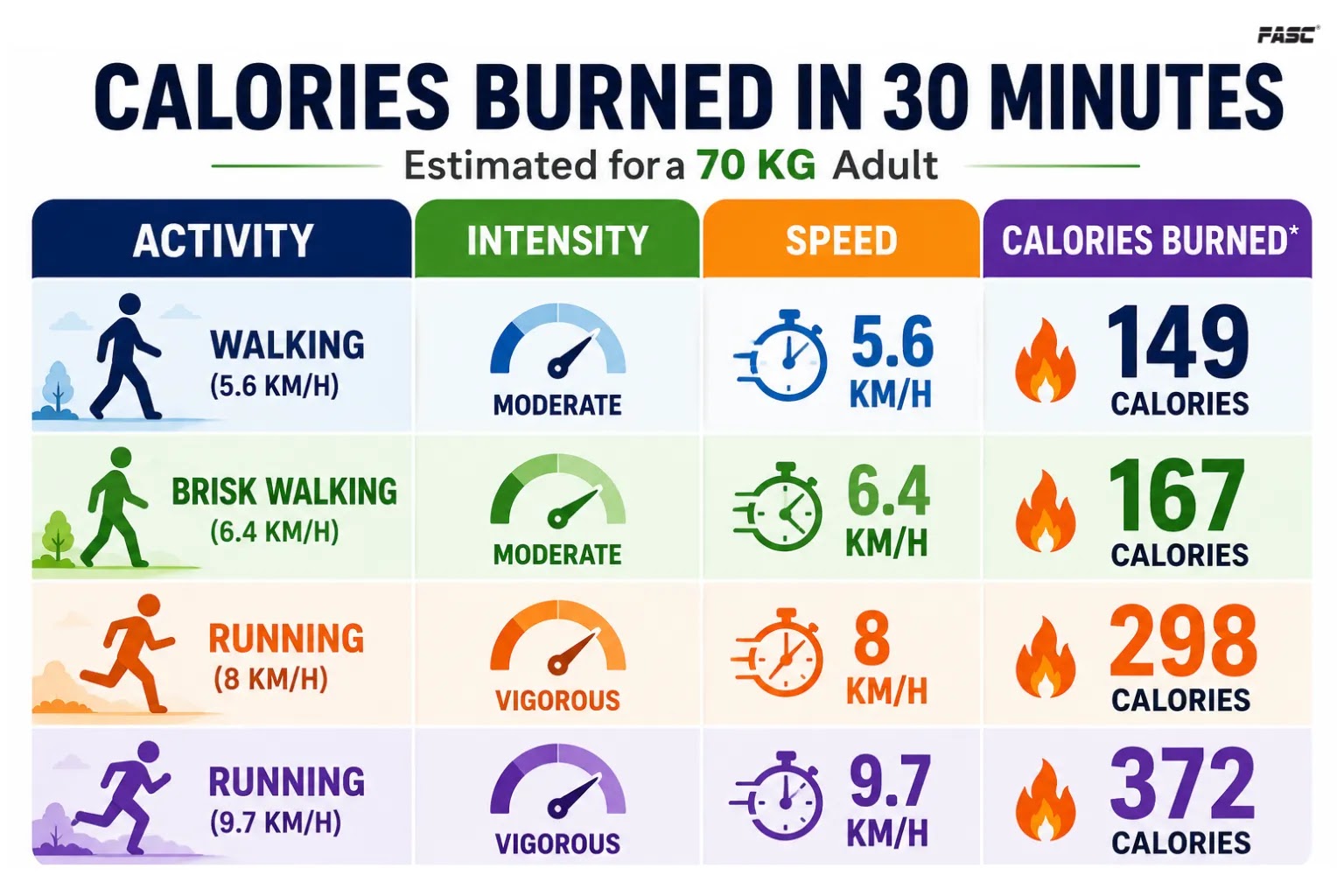
Actual calorie expenditure varies depending on body weight, pace, terrain, age, and fitness level.
Looking purely at numbers, running burns almost twice as many calories as walking during the same duration.
However, calorie burn alone doesn't determine long-term weight loss.
Someone who runs for 20 minutes twice a week may burn fewer calories overall than someone who walks briskly for 45 minutes every day.
Consistency often outweighs intensity.
Does Running Burn More Fat Than Walking?
One of the biggest fitness myths is that running automatically burns more fat than walking.
In reality, weight loss depends on maintaining a calorie deficit, meaning you burn more calories than you consume over time.
Walking tends to use a higher percentage of fat as a fuel source because it is performed at a lower intensity. Running relies more heavily on carbohydrates during the workout itself due to its higher intensity.
However, because running burns significantly more total calories, the overall fat loss over weeks or months can be similar when calorie intake is controlled.
The key takeaway is simple:
Neither walking nor running magically burns fat. A consistent calorie deficit, combined with regular exercise and healthy eating, is what drives sustainable weight loss.
Why Walking Works for Weight Loss
Walking is often underestimated because it doesn't leave you breathless or drenched in sweat. Yet, it's one of the most sustainable forms of exercise and an excellent choice for beginners.
For people who are overweight, older adults, or returning to exercise after a long break, walking offers a low-impact way to increase daily activity without placing excessive stress on the body.
One of walking's biggest strengths is consistency.
Because it is easier on the joints and requires less recovery, most people can walk almost every day. Over weeks and months, these regular sessions contribute to significant calorie expenditure while improving heart health, stamina, and overall fitness.
Walking also fits naturally into everyday life. Choosing the stairs, walking to nearby shops, taking short breaks during office hours, or going for an evening walk after dinner can all increase your daily energy expenditure without feeling like a structured workout.
For beginners, building this habit is often more valuable than attempting intense workouts that are difficult to sustain.
Running for Weight Loss
Running is one of the most efficient ways to burn calories in a shorter period. If your goal is to maximise calorie expenditure and improve cardiovascular endurance, running has a clear advantage.
However, higher intensity also means greater physical demand.
When Running Is the Better Choice
Running may be the right option if you:
- If you already have a basic fitness level.
- Have healthy joints with no existing injuries.
- Prefer shorter but more intense workouts.
- If you want to improve both endurance and cardiovascular fitness while losing weight.
That said, beginners shouldn't feel pressured to run immediately. Starting with brisk walking and gradually introducing short jogging intervals is often a safer and more sustainable approach.
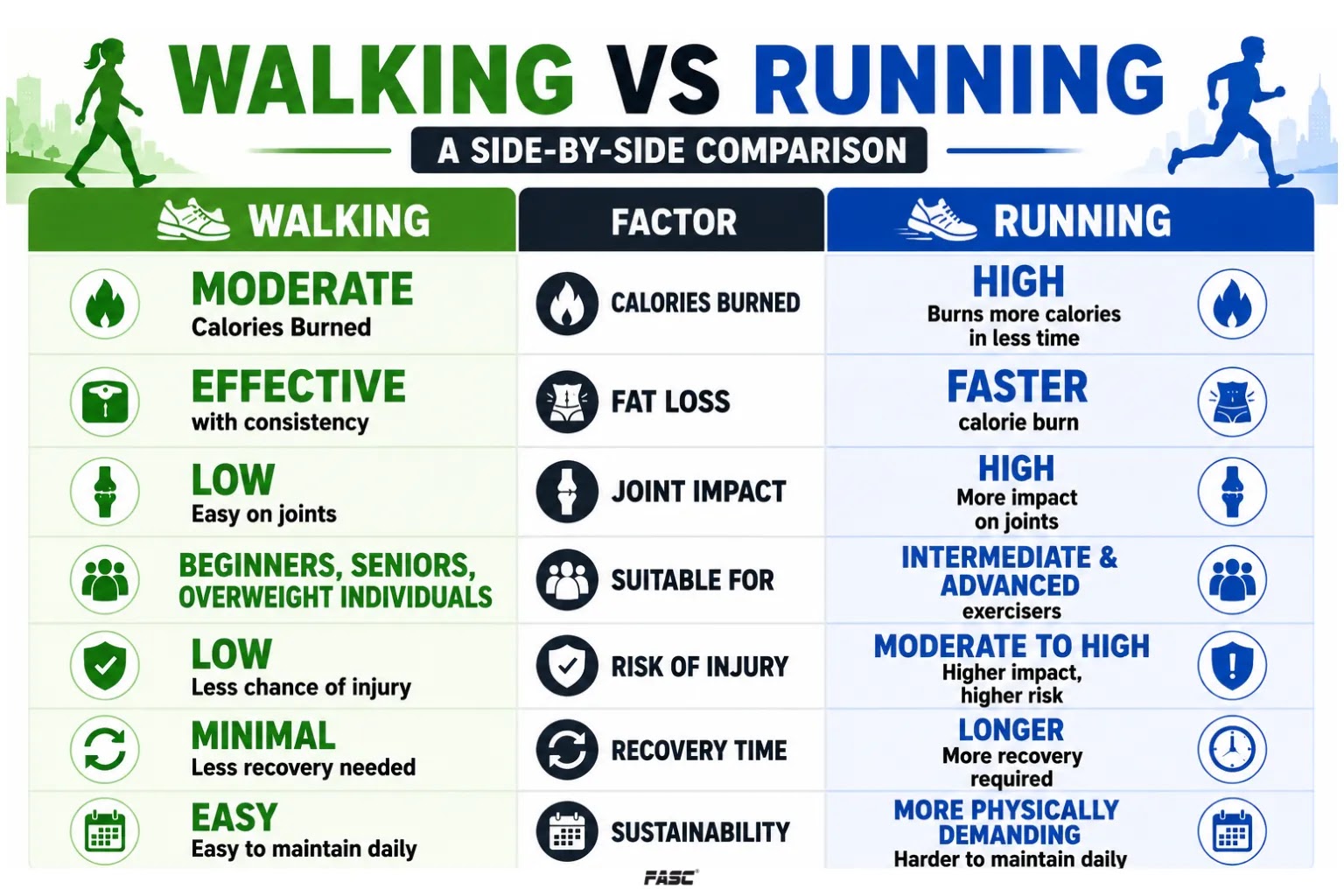
Walking vs Running: A Side-by-Side Comparison
Both walking and running can support weight loss, but the right choice depends on your fitness level, health condition, and long-term consistency. Rather than asking which exercise is "better," it's more useful to understand where each one performs best.
Is Walking Better Than Running for Beginners?
For someone just starting their fitness journey, walking is often the smarter choice.
Many beginners feel motivated to start running immediately because they believe it burns more calories. However, jumping into a high-impact exercise without proper conditioning can lead to soreness, fatigue, or even injuries that make people stop exercising altogether.
Why Walking Is a Better Starting Point
Walking allows your body to gradually adapt to physical activity. It improves cardiovascular health, strengthens muscles, and increases daily calorie expenditure without placing excessive stress on your knees, ankles, or lower back.
Another advantage is consistency. Since walking feels less exhausting, it's easier to make it a daily habit. Over time, this consistency plays a much bigger role in weight loss than occasional intense workouts.
Once your endurance improves, you can gradually include short jogging intervals or alternate between walking and running.
When Running Makes Sense
Running is a good option if you:
- Already exercise regularly.
- Have healthy joints.
- Want to maximize calorie burn.
- Enjoy higher-intensity workouts.
- Are preparing for races or endurance events.
However, more isn't always better.
Running every day without proper recovery may increase the risk of overuse injuries such as shin splints, plantar fasciitis, or runner's knee. Including rest days or low-impact activities like walking can help reduce these risks.
Can You Combine Walking and Running?
Absolutely. In fact, combining both exercises is often one of the most effective strategies for sustainable weight loss.
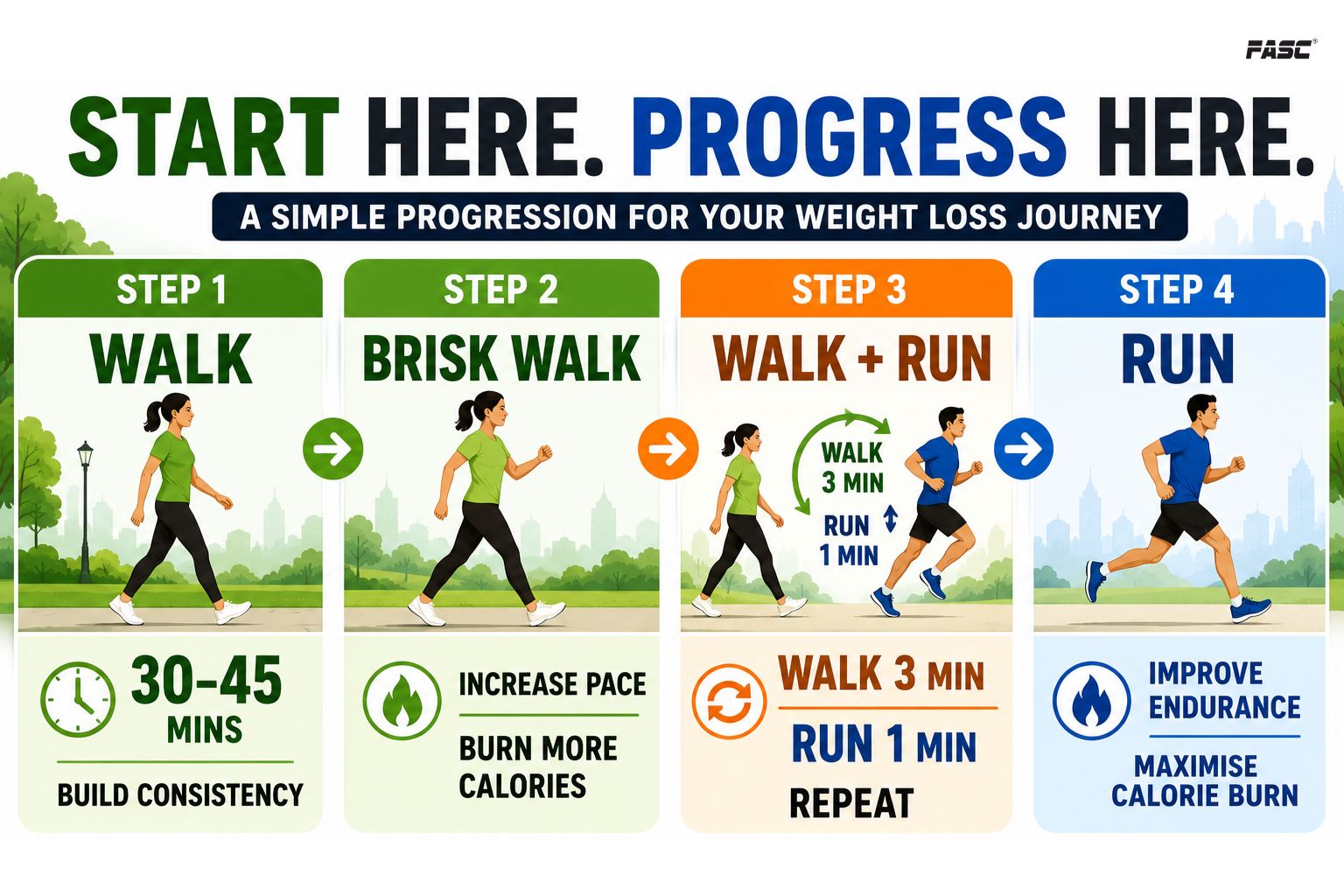
Many fitness coaches recommend walk-run intervals, where periods of jogging are alternated with brisk walking. This approach allows beginners to improve stamina while reducing fatigue and lowering the impact on the joints.
A simple example looks like this:
- Walk briskly for 3 minutes.
- Jog for 1 minute.
- Repeat for 30–40 minutes.
As your fitness improves, you can gradually increase the running intervals and reduce the walking time.
This progressive approach is safer than trying to run continuously from day one.
Conclusion
So, walking or running, which is better for weight loss? The answer depends on your goals, fitness level, and ability to stay consistent.
If your priority is burning the maximum number of calories in less time, running has the advantage. It is more intense, improves cardiovascular fitness quickly, and can accelerate calorie expenditure.
However, if you're looking for an exercise that is easy to maintain, gentle on the joints, and suitable for almost everyone, walking is an excellent choice. Its low-impact nature makes it easier to perform regularly, which is often the key to long-term weight loss success.
Ultimately, the best approach isn't choosing one over the other, t's finding a routine you genuinely enjoy and can stick with for months, not just weeks. Whether you walk, run, or combine both, pairing regular physical activity with balanced nutrition and healthy lifestyle habits will always deliver the best results.
Recommended Products from FASC Coach
Frequently Asked Questions
1. Is walking enough to lose weight?
Yes. Walking can support weight loss when combined with a calorie-controlled diet and performed consistently over time.
2. Does running burn more calories than walking?
Yes. Running generally burns significantly more calories per minute, but walking may be easier to maintain consistently, making it equally effective for many people over the long term.
3. How long should I walk to lose weight?
Most adults can benefit from 30–60 minutes of brisk walking on most days of the week, depending on their fitness level and weight-loss goals.
4. Should beginners walk or run?
Walking is usually the better starting point because it is low-impact, easier on the joints, and more sustainable while building fitness.
5. Can I combine walking and running?
Yes. Alternating between walking and running is an excellent way to improve endurance, burn calories, and reduce the risk of injury, especially for beginners.
Share :