- Sports
What India Can Learn From FIFA World Cup Nations Beyond Football
- Jun 16, 2026
- 5 min
Key Takeaways
- Successful sports nations focus on systems, not just athletes.
- Grassroots development is the foundation of long-term success.
- Coaching quality plays a critical role in talent development.
- Sports infrastructure creates opportunities for participation.
- Youth pathways help athletes progress systematically.
- India can accelerate growth by strengthening its sports ecosystem.
Every four years, the FIFA World Cup captures the attention of billions of people around the globe. Fans celebrate the brilliance of players from countries like Argentina, France, Germany, Spain, Brazil, and England.
But what often goes unnoticed is that these nations did not become football powerhouses overnight.
Their success is the result of decades of investment in:
- Youth development
- Coaching education
- Community sports programs
- Infrastructure
- Talent identification
- Sports culture
The biggest lesson for India is that great sporting nations are not built by chance. They are built through systems.
World Cup Success Starts Long Before The World Cup
When people watch elite football players perform on the world stage, they are seeing the final result of a development process that often begins at the age of six or seven.
Countries that consistently perform well in international tournaments invest heavily in:
- Local academies
- School sports
- Community clubs
- Youth leagues
- Coach development
By the time a player reaches the national team, they may have spent over a decade progressing through a structured pathway.
India can benefit from creating similar long-term development systems across multiple sports.
Grassroots Development Is The Real Game Changer
One common factor among successful football nations is a strong grassroots ecosystem.
Children have easy access to:
- Playing fields
- Community clubs
- Trained coaches
- Competitive leagues
This creates a large participation base from which talent naturally emerges.
Why Grassroots Sports Matter
The larger the participation pool, the greater the chances of identifying elite athletes.
Grassroots development helps:
- Increase participation
- Improve talent identification
- Promote healthier communities
- Build sports culture
India's future sporting success may depend more on grassroots participation than elite programs alone.
Coaching Is One Of The Most Important Investments
Many World Cup nations place enormous importance on coach education.
In countries such as Germany, Spain, and France, coaches undergo extensive certification programs before working with young athletes.
Great Coaches Create Great Athletes
Quality coaching helps athletes:
- Develop proper techniques
- Avoid injuries
- Improve decision-making
- Build confidence
The success of a sports ecosystem is often directly linked to the quality of its coaches.
This is why investing in coach education can create long-term benefits for an entire generation of athletes.
Infrastructure Creates Opportunity
World Cup nations understand that participation becomes easier when quality infrastructure is accessible.
This includes:
- Community grounds
- Training facilities
- Sports academies
- Indoor facilities
- Public sports spaces
Infrastructure is not simply about building stadiums.
It is about creating opportunities for people to play regularly.
India's Infrastructure Opportunity
Across India, new investments in sports infrastructure are becoming increasingly visible.
Cities are developing:
- Sports complexes
- Football grounds
- Multi-sport facilities
- High-performance centers
These developments can play a major role in expanding participation and talent development.
Sports Culture Matters As Much As Talent
One reason football thrives in countries like Argentina and Brazil is because the sport is deeply embedded in everyday life. Children grow up surrounded by sports. Families encourage participation. Communities support local clubs. Sports become part of the culture.
Building A Sports Culture In India
India has already begun experiencing this shift.
Today, people are engaging with:
- Football
- Badminton
- Running
- Pickleball
- Cycling
- Marathon events
The growth of sports communities and fitness culture is helping create a stronger foundation for the future.
Talent Identification Needs Structure
World Cup nations do not wait for talent to find them.
They actively search for it.
Scouting systems operate at multiple levels:
- Schools
- Local leagues
- Academies
- Regional competitions
This ensures that talented athletes are identified early and provided with development opportunities.
India has tremendous athletic potential, but systematic talent identification can help unlock it more effectively.
Sports Science Is Becoming A Competitive Advantage
Modern football success depends on much more than technical skill.
Leading nations invest heavily in:
- Sports science
- Recovery systems
- Performance analysis
- Nutrition
- Injury prevention
Elite athletes today are supported by entire teams of specialists.
The Future Of Indian Sports
As Indian sports continue evolving, demand will likely increase for:
- Physiotherapists
- Strength & conditioning coaches
- Sports nutritionists
- Performance analysts
These professions are becoming essential parts of the modern sports ecosystem.
The Biggest Lesson Is That Sports Is An Ecosystem
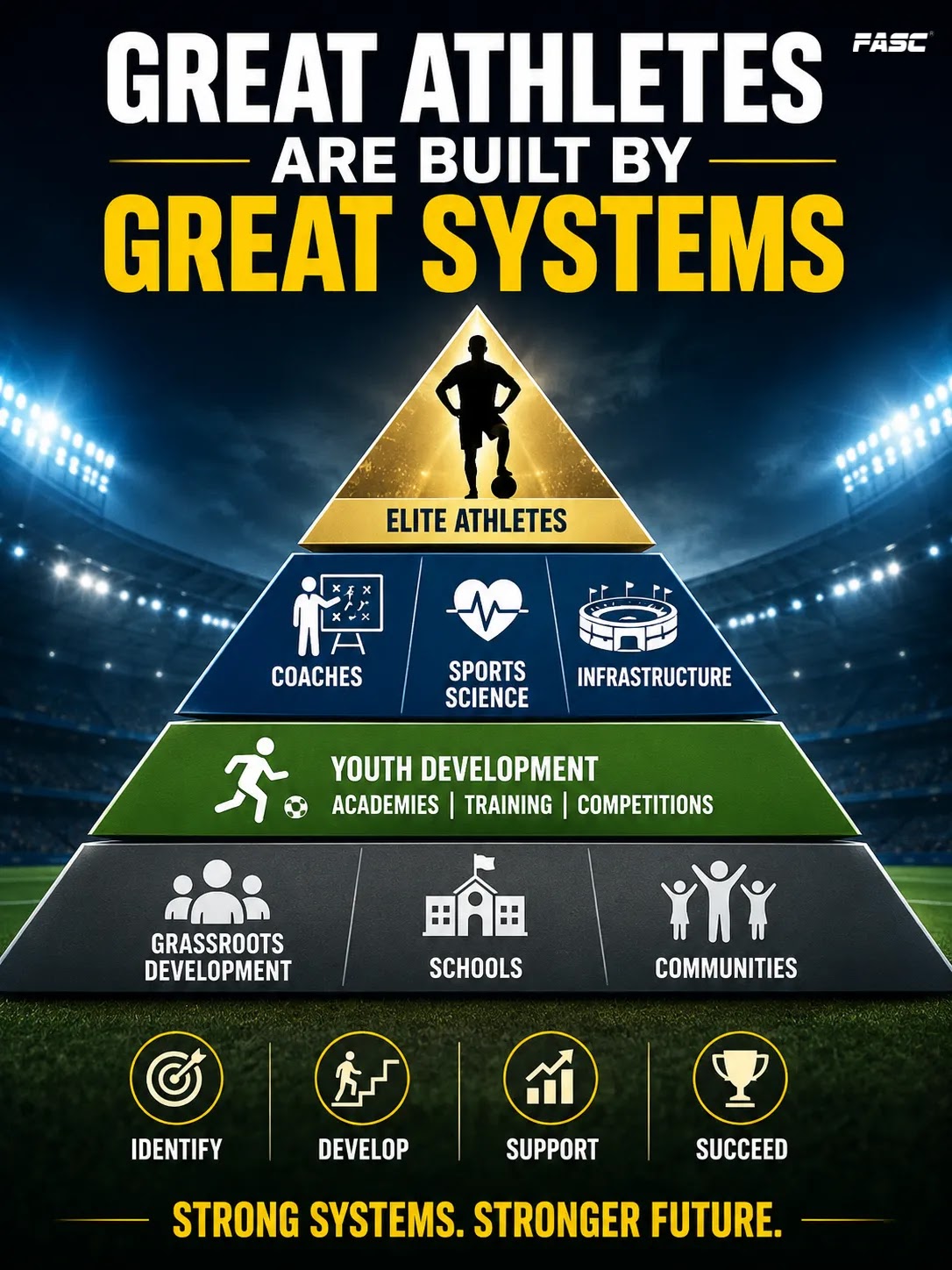
Perhaps the most important lesson from FIFA World Cup nations is that success is never built by athletes alone.
Behind every successful player are:
- Coaches
- Academies
- Infrastructure
- Sports scientists
- Communities
- Families
- Organizations
The athlete may be the most visible part of the journey, but the ecosystem makes the journey possible.
What This Means For India
India is currently experiencing a significant shift in sports participation and investment.
We are seeing growth in:
- Private academies
- Sports startups
- Coaching ecosystems
- Fitness communities
- Infrastructure development
- Youth participation

This is encouraging because it indicates that India is slowly building the foundations required for long-term sporting success.
The future of Indian sports may not only be determined by how many talented athletes we produce.
It may be determined by how strong the ecosystem around them becomes.
Conclusion
The FIFA World Cup offers much more than entertainment.
It provides a blueprint for how successful sporting nations are built.
Countries that consistently perform at the highest level invest in:
- Grassroots development
- Coaching
- Infrastructure
- Talent pathways
- Sports science
For India, the opportunity is not simply to produce more athletes.
It is to create an ecosystem that helps athletes thrive.
Because in the end, great sporting nations do not just develop players.
They build systems that continuously create them.
Recommended Products From Football Coach
FAQs
1. What can India learn from FIFA World Cup nations?
India can learn the importance of grassroots development, coaching education, sports infrastructure, talent identification, and long-term planning.
2. Why is grassroots development important in sports?
Grassroots development increases participation, improves talent discovery, and creates a stronger foundation for future elite athletes.
3. How does infrastructure impact sports development?
Infrastructure provides access to facilities and opportunities, making sports participation easier and more consistent.
4. Why is coaching important in athlete development?
Quality coaching helps athletes improve skills, reduce injuries, and reach their full potential.
5. What role does sports science play in modern sports?
Sports science supports performance, recovery, nutrition, injury prevention, and long-term athlete development.
Share :