- Fitness
What Is Aerobic Training? Benefits, Types and How to Get Started

- Aug 21, 2026
- 5 min
Key Takeaways
- Aerobic training improves the body's ability to sustain physical activity.
- Walking, cycling, swimming and running can all be effective forms of aerobic exercise.
- Adults should aim for 150–300 minutes of moderate or 75–150 minutes of vigorous aerobic activity weekly.
- Beginners should start with easy sessions and gradually increase duration and intensity.
- Aerobic training works best when combined with strength training and adequate recovery.
The term Aerobic simply refers simply to exercise that uses oxygen as part of the process of producing energy. Think about a brisk walk, a long bike ride or a steady swim. These activities can usually be continued for a period of time, unlike short bursts of maximum efforts.
Aerobic training can help improve cardiovascular fitness, endurance and the body’s capacity for physical activity efficiently. This makes it relevant not only for athletes but also for everyday activities such as walking longer distances, climbing stairs or participating in recreational sports.
What is Aerobic Training?
Aerobic training is any sustained activity that gets your heart and breathing rate up while your body continues using oxygen to support the work your muscles are doing.
Your heart pumps blood, your lungs bring oxygen into the body and your muscles use that oxygen to keep you moving. The longer you can comfortably sustain that process, the more your aerobic system is challenged
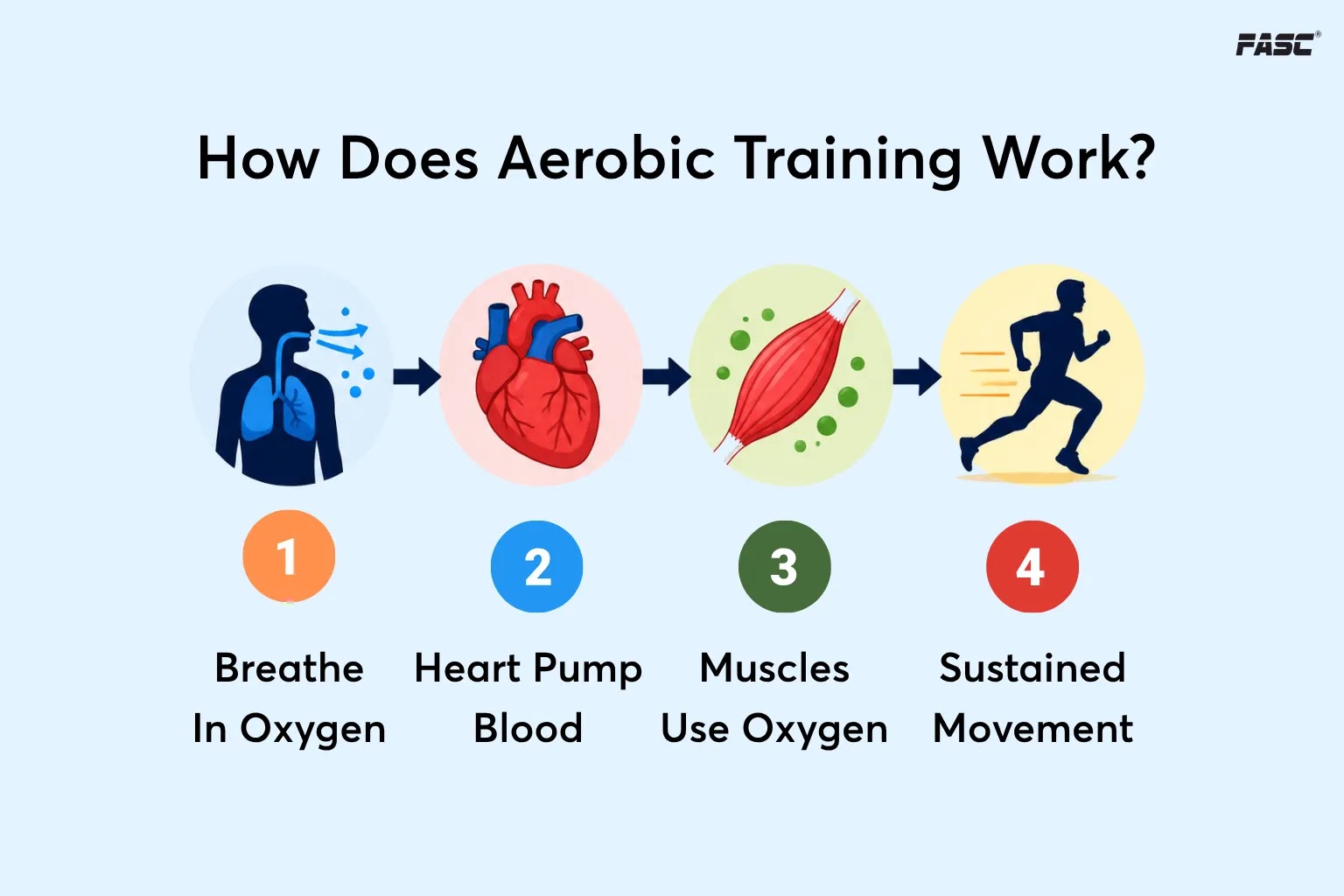
As aerobic exercise continues, your heart rate and breathing increase to meet the body's higher demand for oxygen. With regular training, the body can become more efficient at supporting sustained activity.
This is why a person who initially finds a 20-minute brisk walk tiring may gradually be able to walk for longer or at a faster pace with the same perceived effort.
You do not need to finish every session completely exhausted. A better sign of progress is when activities that once felt demanding gradually becomes easier, or when you can do more before fatigue sets in,
Benefits of Aerobic Training
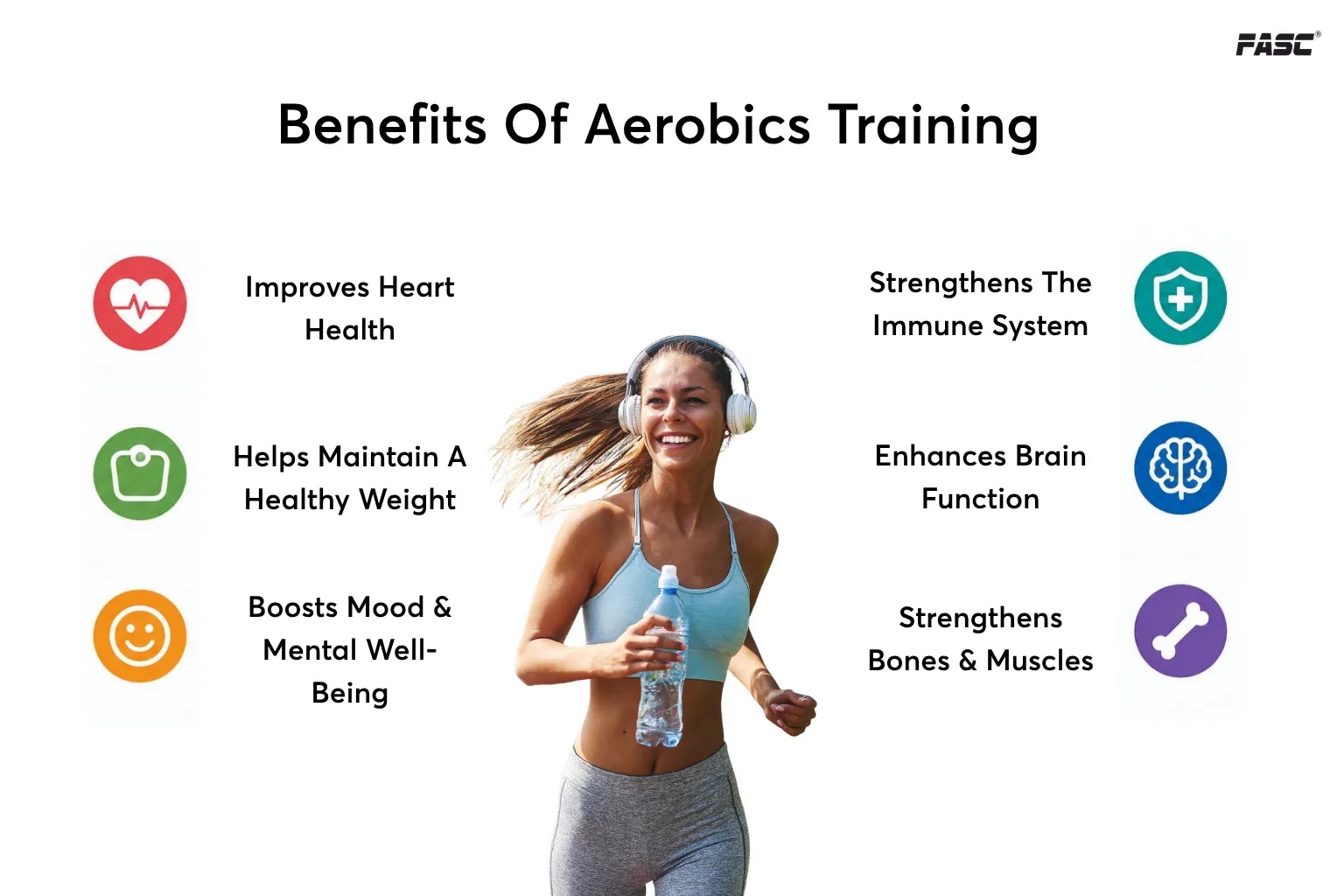
Aerobic training can provide benefits beyond improving running or cycling performance.
Improves Cardiovascular Fitness
One of the biggest reasons people do aerobic exercise is to improve how well the heart and lungs cope with sustained activity. Over time, everyday tasks such as climbing stairs, walking uphill or playing a sport may feel less demanding.
The World Health Organization recommends that adults complete 150–300 minutes of moderate-intensity aerobic activity or 75–150 minutes of vigorous-intensity activity each week, or an equivalent combination.
Builds Endurance
Endurance is basically your ability to keep going. It affects everything from finishing a long walk comfortably to maintaining your pace during a run or a game.
Regular aerobic exercises can gradually improve that capacity, provided that the training is consistent and the workload increases at a sensible pace.
Supports Overall Health
Regular physical activity is associated with important physical and mental health benefits. WHO notes that physical activity can help reduce the risk of several noncommunicable diseases while also benefiting mental health and wellbeing.
Aerobic training should therefore be viewed as one part of a broader fitness system rather than simply a way to burn calories.
Common Types of Aerobic Exercise
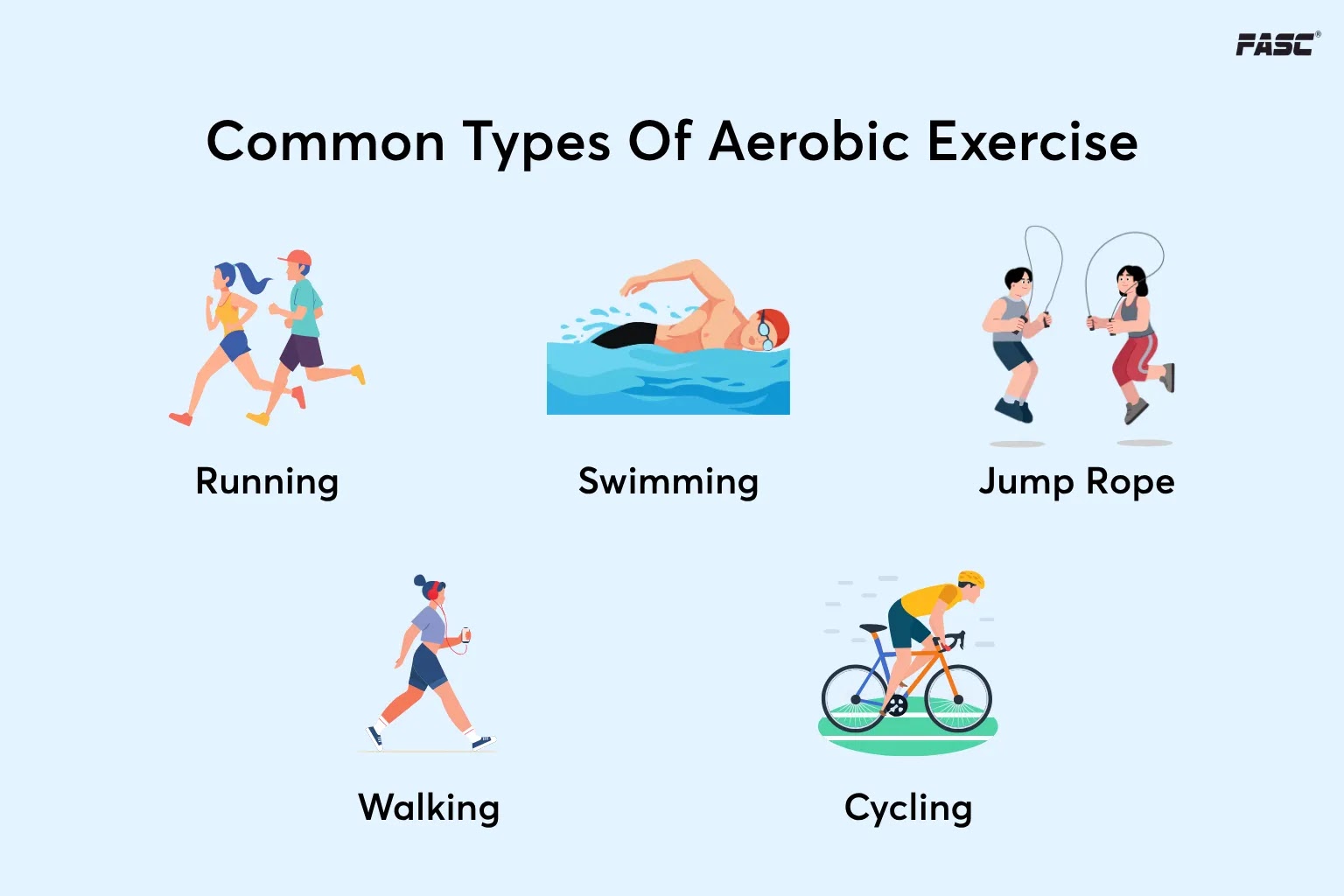
Many activities can become aerobic exercise when performed continuously at an appropriate intensity.
1. Walking
Walking is one of the most accessible ways to begin aerobic training. Speed, duration and terrain can all be adjusted as fitness improves.
For beginners, brisk walking can provide a practical starting point without requiring specialised equipment.
2. Running and Jogging
Running and jogging create a greater cardiovascular demand than walking. Beginners can use a walk-run approach and gradually increase the amount of time spent jogging.
Increasing training too quickly is rarely necessary. The goal should be to build capacity progressively.
3. Cycling
Cycling can be performed outdoors or on a stationary bike, with intensity adjusted through speed, resistance or terrain.
It is also a useful option for people looking for a lower-impact alternative to running.
4. Swimming and Other Activities
Swimming, dancing, rowing and group fitness classes can also provide aerobic benefits.
The best activity is not necessarily the one that burns the most calories. It is often the one you can perform consistently enough to improve over time.
How to Get Started With Aerobic Training
You do not need a demanding training plan to begin improving your aerobic fitness.
Start with an activity that naturally fits into your week. If walking is convenient, begin there. If you enjoy cycling, swimming, use that instead. The activity matters less than your ability to do it consistently.
Start Small and Build Gradually
If you are currently inactive, even 15 20 minutes of walking can be a sensible starting point. You do not need to begin with running unless you already feel comfortable doing it. Over time, you can gradually increase duration, frequency or intensity.
Avoid increasing everything at once. For example, increase either distance, pace or training frequency rather than making several major changes simultaneously.
Make Progress Measurable
Progress is not always obvious when you look in the mirror or step on a weighing scale. Sometimes the clearest changes show up in what you can actually do.
You might track:
- Distance covered in a fixed time
- Time required to complete a fixed distance
- Exercise duration
- Pace at a similar effort
- How quickly you recover after activity
If you can cover more distance, maintain the same pace with less effort or recover faster than before, your aerobic fitness is probably moving in the right direction.
Recommended Products From FASC Coach
Conclusion
Aerobic training does not have to mean long runs or intense cardio sessions. Walking, cycling, swimming and other activities can all improve aerobic fitness when done regularly.
Start with something you can fit into your daily routine, then gradually do a little more as your fitness improves. Over time the changes can be seen not only in your workouts but also how comfortably you handle everyday physical activity.
The aim is not to make every session harder than the last. It is to keep building the capacity to move for longer and with less effort.
Frequently Asked Questions
1. What is the difference between aerobic and anaerobic exercise?
Aerobic exercise involves sustained activity that primarily uses oxygen to support energy production, while anaerobic exercise generally involves shorter, higher intensity efforts where the demand for energy is more immediate.
2. How long does it take to improve aerobic fitness?
It varies depending on your starting fitness level, training , consistency, exercise intensity, and recovery. Focus on gradual improvements in endurance, pace and how comfortably you can sustain activity.
3. How often should beginners do aerobic training?
Beginners can spread manageable sessions across the week and gradually increase duration or intensity as fitness improves.
4. Can aerobic training help with weight loss?
Aerobic exercise increases energy expenditure and can support weight management, but body weight is influenced by diet, overall activity and other lifestyle factors.
5. Is aerobic training the same as cardio?
The terms are often used interchangeably because both generally refer to activities that increase heart rate and breathing for a sustained period
Share :