What is Yoga Therapy: Benefits, Treatment, & How It Can Heal You

- Nov 26, 2024
Yoga is often seen as a way to stay fit and relaxed, but it can also be much more. When yoga is used as therapy, it becomes a powerful tool to help people heal from physical pain, stress, and even serious health problems. Yoga therapy goes beyond regular yoga by focusing on personal needs and specific conditions, making it a life-changing practice for many. Whether it’s dealing with chronic pain, mental health challenges, or recovery after an injury, yoga therapy combines the power of movement, breath, and mindfulness to support healing and well-being.
How Regular Yoga Works
Regular practice of yoga brings together body movements, breathing exercises, and meditation to improve overall well-being. It focuses on physical fitness, flexibility, relaxation, and mindfulness. People usually join group classes or follow set routines like Hatha or Vinyasa yoga, which involve a series of poses to stretch and strengthen the body. These sessions are excellent for reducing stress, improving posture, and maintaining a healthy lifestyle. Regular yoga is like a general workout that keeps your mind and body in harmony.
Why People Need Yoga Therapy
While regular yoga is great for general health, some people face specific conditions where they need extra care and attention. This is where yoga therapy comes in. It is specially designed for people dealing with particular challenges like:
-
Chronic pain (back pain, joint problems)
-
Mental health issues (anxiety, depression, PTSD)
-
Post-injury recovery (after surgeries or accidents)
-
Respiratory problems (asthma, bronchitis)
-
Lifestyle diseases (diabetes, hypertension)
-
Neurological conditions (Parkinson’s disease, multiple sclerosis)
For these situations, regular yoga might not be enough. Yoga therapy focuses on healing these problems by combining yoga with medical knowledge, making it safer and more effective.
How Yoga Therapy Heals
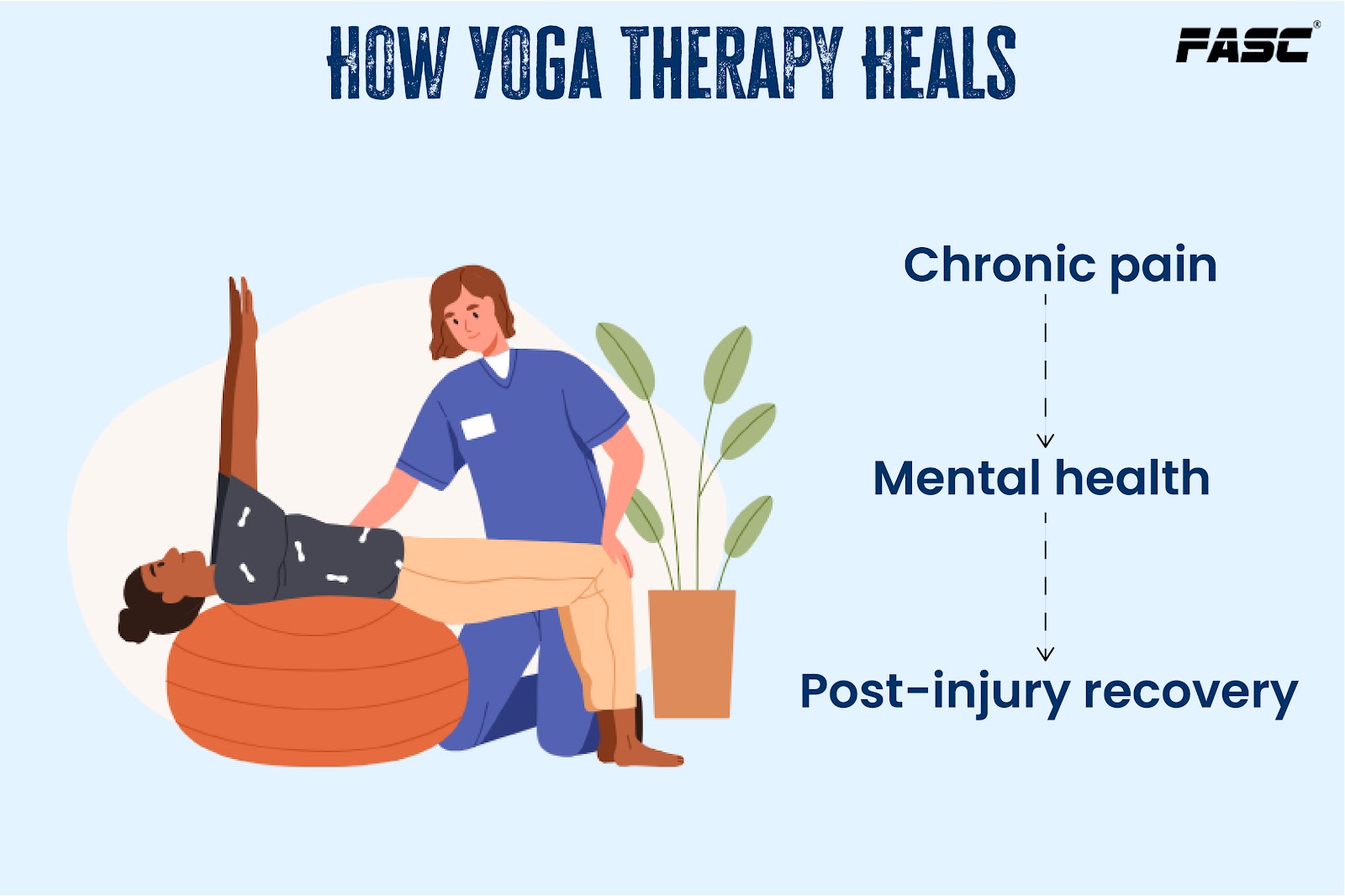
Yoga therapy helps heal the body and mind in ways regular yoga can’t. It creates a personalized plan for each person, using gentle yoga poses, breathing techniques, and relaxation exercises made for their specific needs.
-
Chronic pain: It reduces pain through slow movements and stretches.
-
Mental health: Deep breathing and meditation lower stress and improve mood.
-
Post-injury recovery: Gentle exercises improve mobility and rebuild strength safely.
By targeting both the body and mind, yoga therapy doesn’t just treat symptoms; it works on the root cause of the problem. Over time, this detailed approach promotes complete healing and long-term well-being. It’s like a special kind of yoga that acts as medicine for your whole self!
Benefits of Yoga Therapy
The therapeutic benefits of yoga are vast, offering relief and healing across multiple dimensions:

1. Physical Benefits
-
Improves flexibility, strength, and posture, making daily movements easier.
-
Aids recovery from injuries through yoga physiotherapy techniques that target specific muscle groups.
-
Combines yoga & massage to relieve muscular tension and improve circulation.
-
Improves balance and coordination, reducing the risk of falls or injuries.
-
Promotes better digestion and reduces physical fatigue.
2. Mental Benefits
-
Reduces stress and anxiety through mindful breathing and relaxation techniques.
-
Enhances focus, mental clarity, and emotional resilience.
-
Improves sleep quality by soothing the nervous system.
-
Reduces symptoms of depression through mindfulness and movement.
-
In such cases, yoga therapists may recommend you to go for sound healing and mantra healing as well
3. Chronic Illness Management
-
Helps manage conditions like arthritis, diabetes, hypertension, and asthma.
-
Supports recovery from surgeries or chronic pain with therapeutic yoga practices that are gentle and effective.
-
Improves lung capacity and breathing patterns for those with respiratory issues.
-
Assists in weight management through low-impact exercises tailored to the individual.
-
Eases symptoms of autoimmune diseases by reducing inflammation and stress.
4. Emotional Healing
-
Encourages self-awareness and emotional balance through guided meditations and breathing exercises.
-
Blends yoga and physical therapy to address trauma, anxiety, and mental blocks.
-
Develops a safe space for processing emotions and developing inner strength.
-
Helps reduce feelings of isolation by improving self-connection and confidence.
-
Strengthens the mind-body connection, leading to improved emotional well-being.
The therapeutic value of yoga lies in its ability to address multiple dimensions of health, offering both immediate benefits and long-term healing potential.
How is Yoga Therapy Different from Regular Yoga?
Although both yoga therapy and regular yoga stem from the same ancient practices, they differ significantly in purpose, approach, and application. Here’s a detailed breakdown of how yoga therapy stands apart from other types of yoga:
|
Basis |
Yoga Therapy |
Regular Yoga |
|
1. Purpose |
Focuses on healing specific physical or mental conditions. |
Aims at general fitness and relaxation. |
|
2. Personalized Plan |
Creates plans based on individual health needs. |
Follows a general routine for everyone in the group. |
|
3. Guidance |
Led by a yoga therapist with special training. |
Taught by a yoga instructor with basic yoga knowledge. |
|
4. Techniques |
Combines yoga with simple medical knowledge for healing. |
Focuses on yoga poses and breathing exercises. |
|
5. Target Audience |
Helps people with injuries or ongoing health issues. |
Good for people looking to stay fit or reduce stress. |
|
6. Flexibility |
Adjusted to what your body can do and your recovery needs. |
May not suit people with specific health conditions. |
|
7. Goals |
Aims to fix health problems and support recovery. |
Focuses on building fitness and improving lifestyle. |
|
8. Approach |
Uses breathing, movement, and mindfulness for healing. |
Sticks to traditional yoga practices for relaxation. |
|
9. Frequency |
Sessions are planned based on personal health needs. |
Can be practiced daily or in group classes. |
|
10. Tools Used |
May include yoga props, breathing exercises, and lifestyle tips. |
Mostly uses yoga mats and standard yoga techniques. |
How Does Yoga Therapy Work?
Think of yoga therapy as having a special coach who helps you feel better using yoga in a way that’s just right for you. Here’s how it works, step by step:
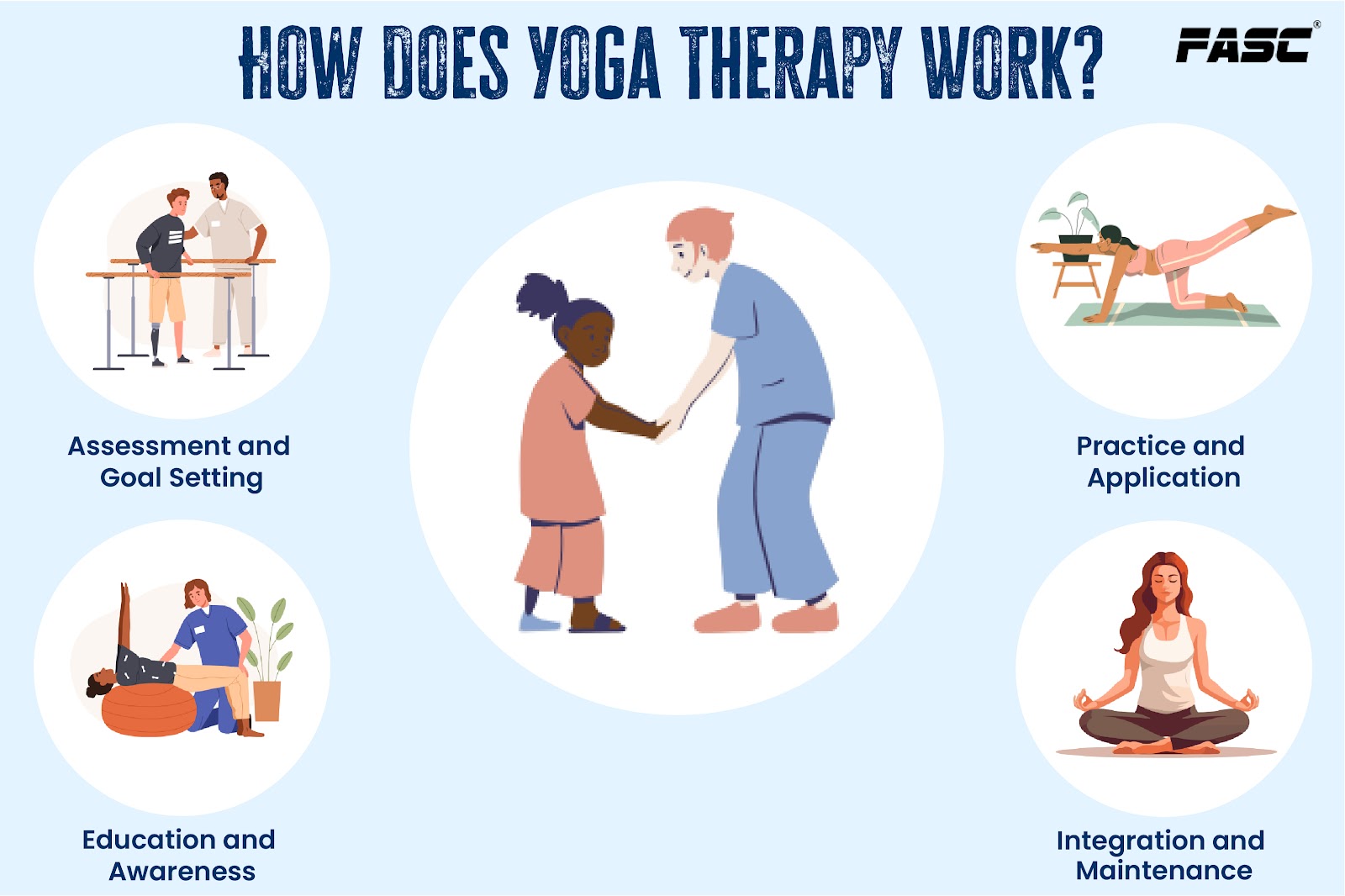
Stage 1: Assessment and Goal Setting
In this initial stage, the yoga therapist assesses the client's physical, emotional, and mental well-being. This involves:
Intake & Assessment: Assess physical, emotional, and mental well-being.
Physical Observation: Observe posture, movement, and breathing.
Identify Needs: Pinpoint tension, pain, or dysfunction.
Goal Setting: Develop SMART goals for the yoga therapy program.
Stage 2: Education and Awareness
In this stage, the yoga therapist educates the client about their condition, the benefits of yoga therapy, and the specific practices that will be used to address their needs. This involves:
Condition Explanation: Explain root causes.
Yoga Principles: Introduce breath, alignment, and relaxation.
Body Awareness: Teach body awareness and limits.
Active Participation: Encourage client engagement in healing.
Stage 3: Practice and Application
In this stage, the yoga therapist guides the client in practicing specific yoga techniques, such as postures, breathing practices, and relaxation methods. This involves:
Personalized Practice: Design tailored yoga practice.
Modification Guidance: Teach modifications for specific conditions.
Regular Practice: Encourage 2-3 sessions per week.
Feedback & Adjustments: Provide feedback for refinement.
Stage 4: Integration and Maintenance
In this final stage, the yoga therapist helps the client integrate the practices they've learned into their daily life, intending to maintain progress and prevent future episodes. This involves:
Daily Practice: Integrate yoga into your daily routine.
Adaptability: Learn to adapt practice to various situations.
Ongoing Support: Receive continuous guidance and support.
Celebrate Progress: Acknowledge achievements, big or small.
Yoga therapy is like a kind friend that uses yoga to help your body and mind feel strong and happy again. It’s safe, gentle, and perfect for all ages!
Conclusion
Yoga therapy is more than just a practice; it’s a complete solution for physical, emotional, and mental health. Whether you're seeking relief from chronic pain, managing stress, or exploring the therapeutic benefits of yoga, this holistic approach offers immense value.
Start your journey to healing by exploring options like yoga treatment, yoga massage, or a specialized yoga therapy program. With the right guidance, the therapeutic value of yoga can transform your life.
Frequently Asked Questions (FAQs)
1. Is yoga therapy suitable for children or seniors?
Yes, yoga therapy is tailored to individual needs, making it safe and effective for all age groups, including children and seniors.
2. How long does it take to see results from yoga therapy?
The results vary by person and condition. Some may feel better after a few sessions, while others might take weeks or months.
3. Can yoga therapy be done online?
Yes, many therapists offer online sessions, allowing you to practice from the comfort of your home with personalized guidance.
4. Are yoga therapy programs expensive?
The cost varies, but many programs offer packages or sliding scales to make it more accessible.
5. Is there a certain time to practice yoga therapy?
No, yoga therapy may be conducted at any time throughout the day, unlike normal yoga, which is performed in the morning by 41% of the population and at night by 42% of people worldwide.
Share :
Recent Blog



- Sep 04, 2026