- Sports
Why Every Indian City Needs A Sports Ecosystem, Not Just Stadiums
- Jun 19, 2026
- 4 min
Key Takeaways
- Stadiums are important but not sufficient for sports development.
- Sports ecosystems create long-term participation and growth.
- Coaches, academies, and communities are essential.
- Grassroots sports build future talent pipelines.
- Sports ecosystems create economic opportunities.
- Indian cities can accelerate growth through ecosystem development.
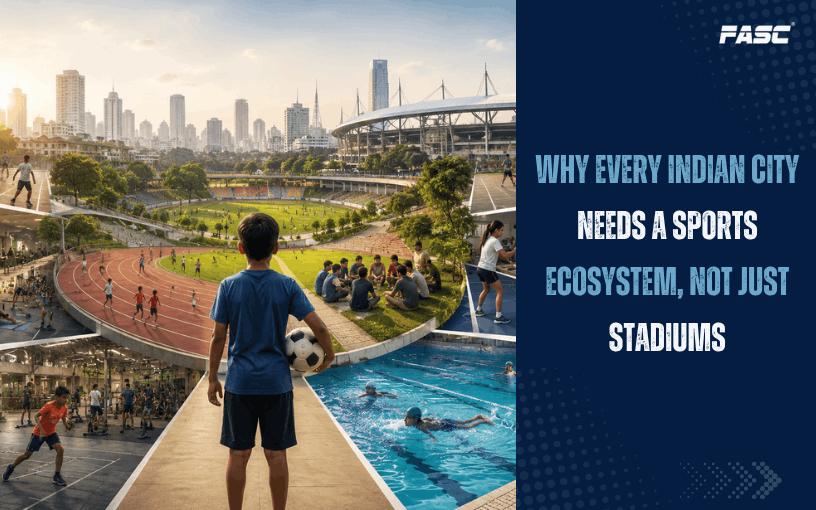
Across India, cities are investing heavily in sports infrastructure. New stadiums, sports complexes, and multi-purpose venues are being developed at an unprecedented pace.
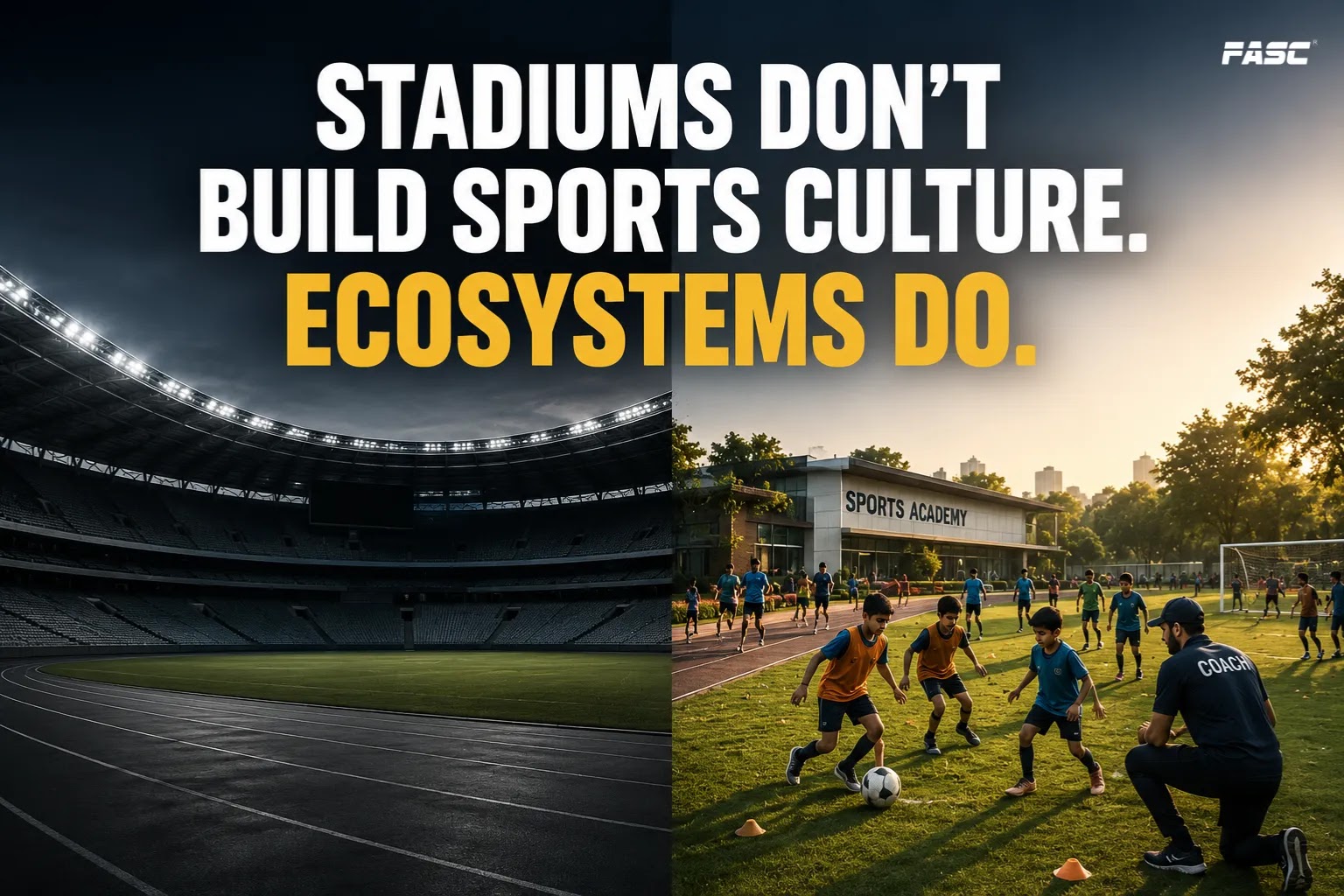
While these investments are important, a stadium alone does not create a sports culture. A city may have world-class facilities, but without athletes, coaches, academies, leagues, and communities, those facilities often remain underutilized.
The world's leading sporting cities are successful not because they have stadiums. They are successful because they have ecosystems.
As India's sports industry continues to grow, cities must shift their focus from building venues to building complete sports ecosystems.
What Is A Sports Ecosystem?
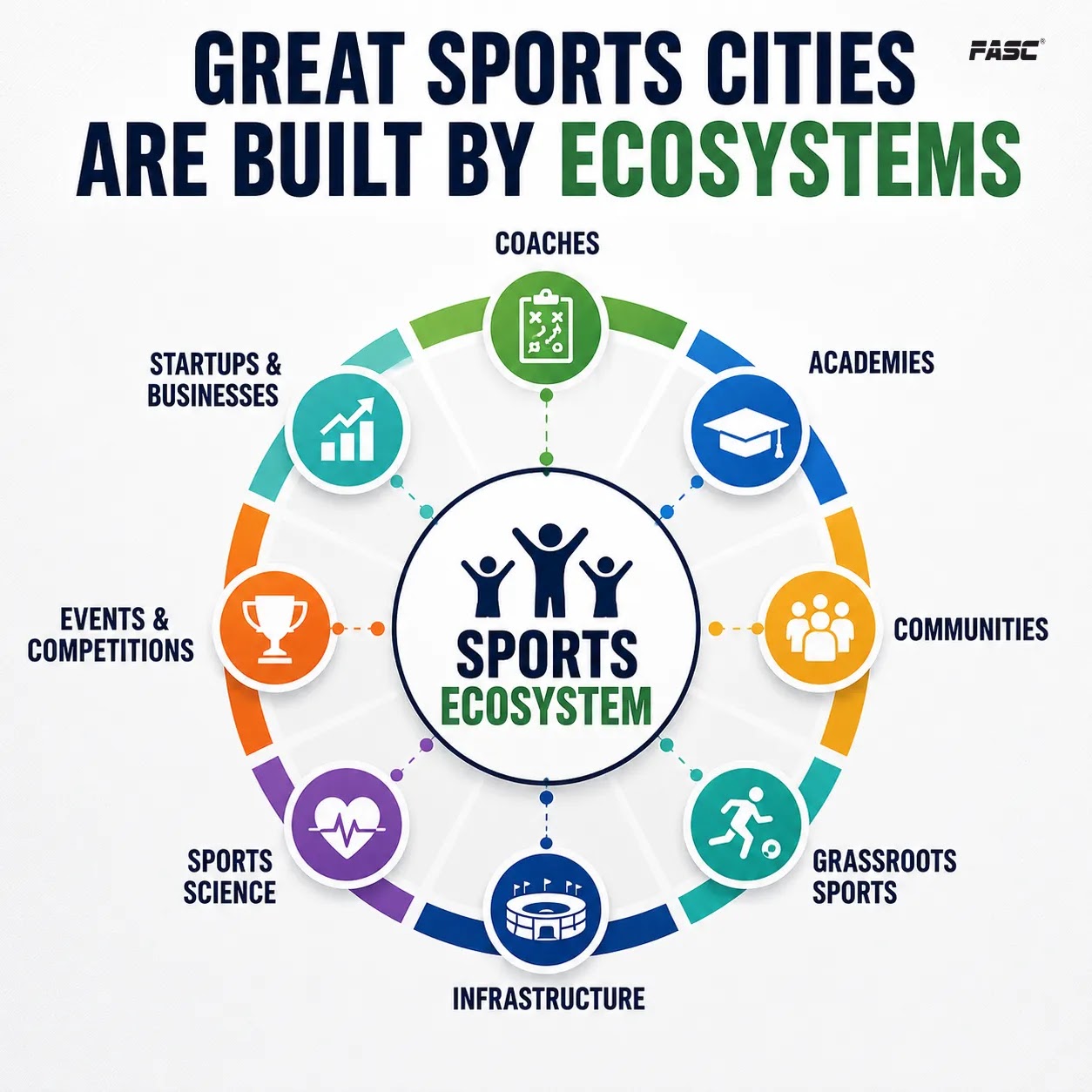
A sports ecosystem is the network of people, organizations, facilities, and opportunities that support sports participation and development.
It includes:
- Athletes
- Coaches
- Academies
- Sports Facilities
- Community Groups
- Schools
- Event Organizers
- Sports Businesses
- Sports Science Professionals
When all these elements work together, sports can thrive sustainably.
Why Stadiums Alone Are Not Enough
Many cities invest heavily in large sporting venues.
While stadiums can host major events, they often have limited impact on daily sports participation.
A stadium may attract spectators occasionally, but it does not automatically create:
- New athletes
- Better coaching
- Youth development programs
- Local competitions
- Community engagement
Sports participation grows when people have regular opportunities to play, learn, and compete.
Grassroots Participation Is The Foundation
Every successful sports ecosystem begins at the grassroots level.
Children need access to:
- Local grounds
- Community sports programs
- School competitions
- Affordable training opportunities
Why Grassroots Sports Matter
Grassroots participation helps:
- Increase sports engagement
- Identify talent early
- Build healthier communities
- Create future athletes
Without grassroots participation, even the best infrastructure struggles to achieve its full potential.
Coaches Are The Backbone Of Sports Development
Facilities do not develop athletes. Coaches do.
Quality coaching helps athletes:
- Learn proper techniques
- Improve performance
- Build discipline
- Avoid injuries
The Need For More Coaches
As sports participation increases, cities will need:
- Certified coaches
- Youth development specialists
- Strength and conditioning professionals
- Sports educators
Investing in coach development may be one of the most impactful decisions a city can make.
Sports Academies Create Structured Pathways
One of the biggest advantages of a sports ecosystem is that it creates progression pathways.
Sports academies help athletes move from:
-
Beginner level
-
Competitive level
-
Elite performance level
Without structured pathways, many talented athletes struggle to reach their potential.
Communities Drive Long-Term Participation
One trend shaping modern sports is the growth of sports communities.
Across India, participation is increasing through:
- Running clubs
- Cycling groups
- Football communities
- Pickleball groups
- Fitness communities
Why Communities Matter
Communities help people:
- Stay motivated
- Play regularly
- Meet like-minded individuals
- Build lifelong sporting habits
A strong community often creates more sports participation than infrastructure alone.
Sports Ecosystems Create Economic Opportunities
Sports development is not only about athletes.
It also creates opportunities for:
- Coaches
- Physiotherapists
- Sports startups
- Event organizers
- Equipment businesses
- Content creators
- Facility operators
The Business Side Of Sports
Cities with strong sports ecosystems often experience growth in:
-
Local employment
-
Sports tourism
-
Entrepreneurship
-
Health and wellness industries
Sports can become an economic driver as well as a social one.
Learning From Global Sports Cities
Cities known for sporting excellence typically invest beyond infrastructure.
They focus on:
- Community engagement
- Youth programs
- Coach development
- Accessible facilities
- Talent pathways
These elements work together to create long-term sporting success.
What This Means For Indian Cities
Indian cities have a significant opportunity.
Instead of measuring success by the number of stadiums built, cities can focus on:
- Increasing participation
- Developing coaches
- Supporting academies
- Building sports communities
- Creating grassroots programs
This approach can create sustainable growth across multiple sports.
The Ahmedabad Opportunity
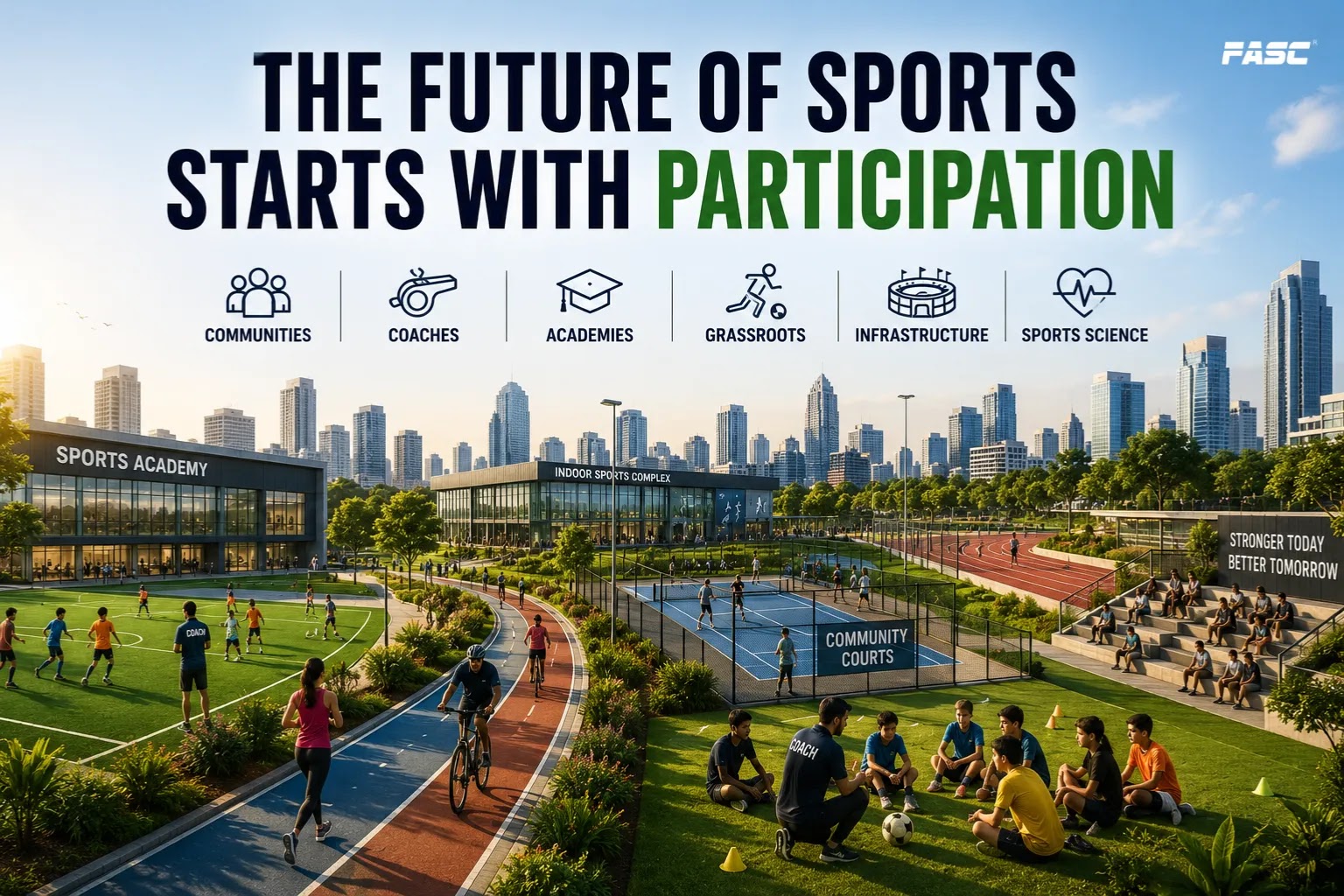
Cities like Ahmedabad are already witnessing increased investment in:
- Sports infrastructure
- Private academies
- Community sports
- Multi-sport facilities
If these developments are supported by strong ecosystems, Ahmedabad could emerge as one of India's leading sports cities over the next decade.
The Future Belongs To Ecosystems
The future of sports development is not about bigger stadiums.
It is about stronger ecosystems.
Cities that successfully combine:
- Infrastructure
- Coaching
- Participation
- Communities
- Academies
- Business opportunities
will be the cities that lead India's sports growth story.
Conclusion
Stadiums are important symbols of sporting ambition. But they are only one piece of the puzzle.
True sports development happens when cities create ecosystems that encourage participation, nurture talent, support professionals, and engage communities.
As India's sports industry continues to evolve, the cities that invest in complete sports ecosystems, not just infrastructure will be best positioned to shape the future of Indian sports.
FAQs
1. What is a sports ecosystem?
A sports ecosystem is a network of facilities, coaches, academies, communities, organizations, and opportunities that support sports participation and development.
2. Why are stadiums alone not enough?
Stadiums provide venues for events, but they do not automatically create athletes, coaches, or regular participation opportunities.
3. How do sports ecosystems benefit cities?
Sports ecosystems increase participation, create jobs, support businesses, and improve community health and engagement.
4. Why is grassroots development important?
Grassroots sports help identify talent, increase participation, and build long-term foundations for sporting success.
5. How can Indian cities improve sports development?
By investing in coaches, academies, community programs, talent pathways, and accessible infrastructure alongside stadium development.
Share :