- Sports
Women’s Asia Cup 2026: The Rise of Women’s Cricket in Asia
- Aug 14, 2026
- 6 min
Key Takeaways
- Women's Cricket Week 2026 engaged more than 13,000 girls across 55 ICC Members.
- 2026 Women's T20 World Cup attracted more than 125,000 spectators, showing growing interest in women's cricket.
- Professional leagues are creating more career opportunities for women in cricket.
- Grassroots programmes are helping create a stronger pathway from participation to professional cricket.
- Better fitness, sports science and athlete support are becoming increasingly important as women's cricket professionalises.
Women's cricket in Asia has changed considerably over the past few years. What was once followed by a relatively smaller audience is now attracting larger crowds, greater media attention, professional investment and a growing generation of young players.
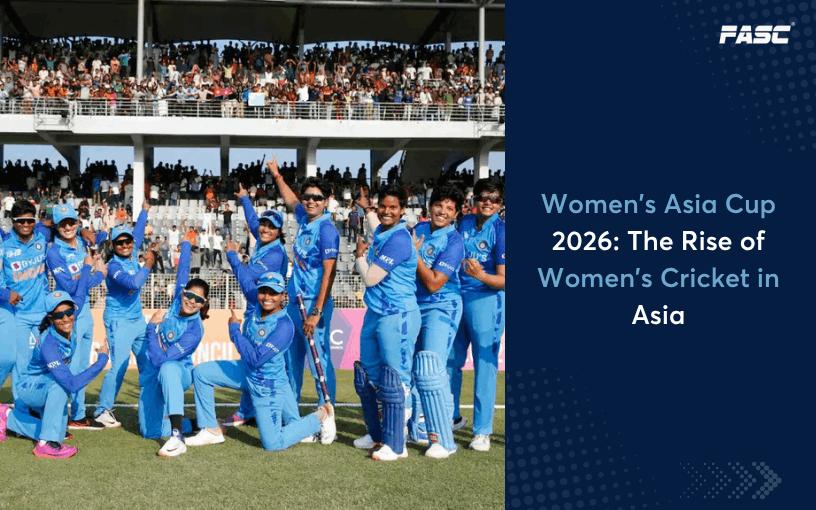
The Women's Asia Cup 2026 scheduled to begin on 28 August 2026, the tournament brings together leading women's cricket teams from the region and provides another stage for players to compete at the international level.
But the significance of the tournament goes beyond the matches themselves.
The broader growth of women's cricket can be seen in participation as well as viewership. In 2026, the ICC Women's Cricket Week involved 55 ICC Members and more than 13,000 women and girls, while more than 3.2 million video views were generated through content around the initiative.
The numbers around elite women's cricket are also moving in the same direction. The 2026 ICC Women's T20 World Cup recorded 44,844 spectators during its opening 3 days, the biggest opening weekend attendance for an ICC women's event at that point. The tournament later crossed 125,000 spectators, becoming the highest-attended edition in its history.
What Is the Women's Asia Cup?
The Women's Asia Cup is a regional cricket competition that gives Asian women's teams an opportunity to compete against one another at the international level.
For established teams, it provides another competitive tournament in which players can test themselves against familiar regional opponents. For developing cricket nations, it can offer valuable international experience and exposure.
Why Regional Tournaments Matters
International cricket needs regular competitive opportunities to develop players.
A World Cup may happen only periodically, but regional competitions create additional opportunities for athletes to gain experience, coaches to assess talent and teams to improve their performance.
They also help keep women's cricket visible between major global tournaments.
For young fans, that visibility matters. Seeing women's cricket regularly on television, streaming platforms and social media makes the sport feel more accessible and creates more opportunities for aspiring players to imagine themselves competing at the highest level.
Why Is Women's Cricket Growing Across Asia?
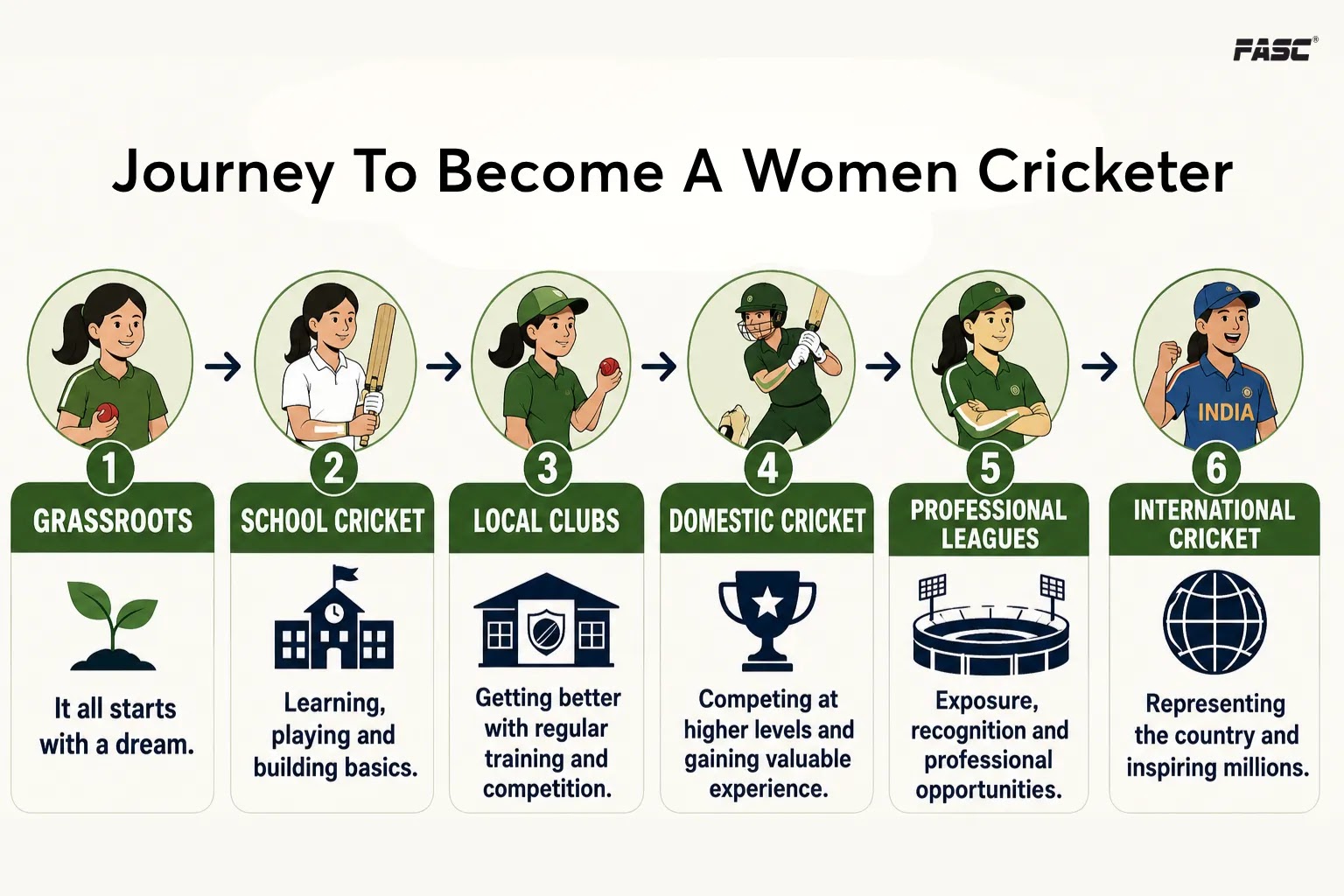
The growth of women's cricket isn't being driven by one tournament or one country. Several developments are happening simultaneously.
Professional leagues are creating more playing opportunities, grassroots initiatives are bringing more girls into cricket, audiences are becoming larger and organisations are investing more attention in the women's game.
Professional Leagues Are Changing the Pathway
One of the biggest developments has been the emergence of professional women's cricket leagues.
In India, the Women's Premier League has created a high-profile platform where domestic and international players can compete together. It has also helped create a clearer pathway between domestic cricket and professional cricket.
Professional leagues don't only create opportunities for players. They also create demand for coaches, physiotherapists, strength and conditioning professionals, sports nutritionists, analysts, content creators, broadcasters and team-management professionals. For those looking to enter this expanding ecosystem, learning how to build a career as a cricket coach in India can be one practical pathway into the growing sports industry.
That means the growth of women's cricket is also contributing to the growth of the wider sports industry.
More Girls Are Getting Opportunities to Play
Professional cricket needs a strong grassroots system behind it. If young girls don't have access to coaching, facilities and competitions, there will eventually be fewer players entering the professional pathway.
This is why grassroots initiatives are so important.
From Watching Cricket to Playing Cricket
The ICC Women's Cricket Week provides a useful example. In 2026, activities organised by 55 ICC Members engaged more than 13,000 women and girls around the world. These activities included cricket festivals, coaching sessions, watch parties and community programmes.
The important part isn't simply the number of participants. It's the pathway that participation can create.
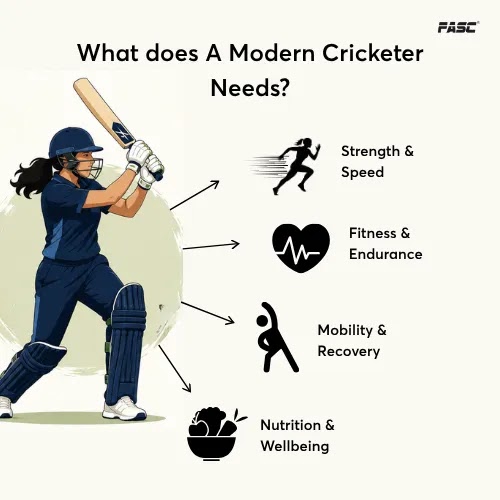
A young girl may first discover cricket by watching an international match. She may then attend a coaching session, join a school team, play at a local club and eventually enter competitive cricket.
Major tournaments can therefore become more than entertainment. They can become a starting point for participation.
Bigger Audiences Are Creating Bigger Opportunities
Another major sign of women's cricket's growth is the increasing number of people willing to watch it.
The 2026 Women's T20 World Cup demonstrated this particularly well. The opening three days attracted 44,844 fans, while total attendance later crossed 125,000. An India-Pakistan group-stage match also sold out and set a record for attendance at a group-stage match in the ICC Women's T20 World Cup.
Why Audience Growth Matters
Larger audiences make women's cricket increasingly attractive to broadcasters, sponsors and commercial partners.
That can create a positive cycle:
More viewers → greater commercial interest → more investment → better opportunities → stronger competitions → more viewers.
The impact can extend beyond international matches.
Greater investment can support player development, coaching, training facilities, grassroots programmes, media production and sports science.
Fitness Is Becoming a Bigger Part of Women's Cricket
Players need to sprint between wickets, field for long periods, bowl repeated spells, generate power while batting and react quickly to changing situations.
As the women's game becomes increasingly professional, fitness and athlete preparation are becoming more important parts of the performance environment.
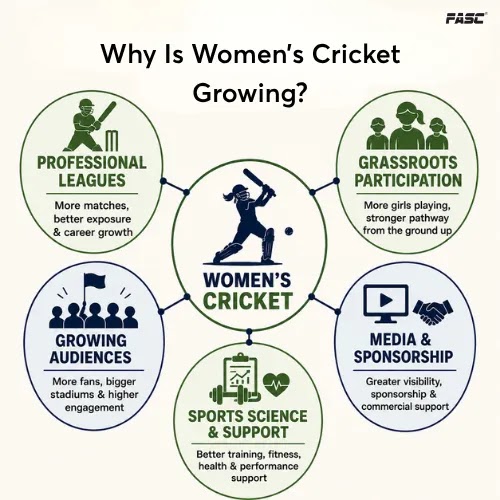
A modern cricketer may work with strength and conditioning coaches, physiotherapists and sports nutritionists alongside the traditional coaching staff.
Training can focus on strength, speed, mobility, endurance and recovery depending on the player's role.
Understanding the meaning, importance and benefits of fitness also helps explain why physical preparation matters beyond simply looking athletic. Fitness supports an athlete's ability to perform, recover and handle the demands of regular training and competition.
India's Role in the Growth of Women's Cricket
India has become one of the most important markets in women's cricket because of its enormous cricket audience and rapidly developing professional ecosystem.
The growth of the Women's Premier League has provided Indian players with a high-profile domestic competition, while the national team's performances have created additional visibility.
India's influence also extends beyond its own borders.
From Domestic Cricket to International Opportunity
When women's cricket attracts large audiences in India, it creates greater commercial and media interest in the women's game more broadly.
That can encourage investment in domestic competitions, academies, coaching and player development.
The ICC has also highlighted India's influence on the wider global game, particularly following India's 2025 Women's Cricket World Cup triumph and the strong engagement surrounding women's cricket.
The Women's Asia Cup adds another layer to this ecosystem by giving Asian teams a regular regional stage.
Women's Cricket Is Becoming a Wider Sporting Ecosystem
The biggest change may be that women's cricket is no longer developing around players alone.
It is developing around an ecosystem of athletes, coaches, leagues, academies, sponsors, broadcasters, analysts, medical professionals, fans and administrators.
When these elements develop together, the sport becomes more sustainable.
The ICC's recent initiatives reflect this broader approach. Its Women's Cricket Week, for example, connected major women's cricket events with grassroots activities in dozens of member countries.
The ICC has also introduced initiatives around player wellbeing, including its 2026 Return to Play Post-Pregnancy Guidelines, which provide a framework for female cricketers returning to the sport after pregnancy.
Developments like these show that the conversation around women's cricket is expanding beyond matches and results to include participation, health, career longevity and athlete welfare.
Recommended products from Cricket Coach
Conclusion
The Women's Asia Cup 2026 is arriving at an exciting point in the development of women's cricket.
Professional leagues are creating new opportunities, audiences are growing, grassroots programmes are reaching more girls and the support systems around female athletes are becoming more sophisticated.
The ICC's recent figures provide evidence of this momentum, from more than 13,000 women and girls engaged through Women's Cricket Week to record attendance figures at the 2026 Women's T20 World Cup.
The Asia Cup is therefore more than another competition on the cricket calendar.
It is another opportunity to showcase talent, inspire participation and strengthen the pathway for the next generation of women's cricketers across Asia.
And perhaps the most important result won't appear on the scoreboard. It will be the young girls watching today who decide that they want to play tomorrow.
Frequently Asked Questions
1. When does the Women's Asia Cup 2026 start?
The Women's Asia Cup 2026 is scheduled to begin on 28 August 2026.
2. Why is women's cricket growing in Asia?
Women's cricket is benefiting from professional leagues, increased media coverage, growing audiences, grassroots programmes and greater investment in player development.
3. How are professional leagues helping women's cricket?
Professional leagues provide players with opportunities while also creating jobs and career opportunities in coaching, sports science, physiotherapy, analytics, broadcasting and team management.
4. Why is fitness important for women's cricketers?
Cricket requires strength, speed, endurance, mobility and recovery. As the sport becomes more professional, fitness and sports science are increasingly important parts of athlete preparation.
5. How can young girls get involved in cricket?
Girls can start through school teams, local clubs, academies, community programmes and grassroots competitions. Watching professional women's cricket can also help them discover role models and opportunities within the sport.
Share :