- Sports
Athletics: The Foundation of All Sports Performance
- Feb 06, 2026
- 5 min
Key Takeaways
- Athletics develops fundamental movement skills like running, jumping, and throwing.
- It forms the physical foundation required for performance in all sports.
- Proper athletics training improves speed, strength, coordination, and injury resistance.
- Structured, age-appropriate training builds long-term athletic development and durability.
- Strong movement fundamentals lead to better performance and longer sporting careers.
Athletics is often viewed narrowly—as a collection of track and field events or a competitive sport limited to stadiums and medals. This perception is incomplete. In reality, athletics represents the fundamental system of human movement. Long before organized sports existed, humans ran to survive, jumped to overcome obstacles, and threw objects to hunt and defend. These movements form the biological and mechanical base of athletic performance.
Every modern sport—whether team-based, combat-oriented, or endurance-driven—depends on the same foundational abilities: running efficiently, producing force, absorbing impact, and sustaining physical effort. Athletics is the structured development of these abilities. Without it, sports performance remains incomplete and fragile.
What Is Athletics?

Athletics is the systematic training and refinement of basic human movement patterns, primarily:
- Running
- Jumping
- Throwing
These movements are trained with the goal of improving speed, strength, endurance, coordination, and efficiency. While athletics exists as a competitive sport in its own right, its deeper value lies in its role as the foundation of physical performance across all sports.
Athletics is not about doing more work—it is about learning how to move correctly, powerfully, and sustainably.
A Brief History of Athletics
Athletics is one of the oldest forms of organized physical activity in human history.
Early Origins
Evidence of running, throwing, and jumping can be traced back to prehistoric civilizations, where survival depended on physical capability. Over time, these movements evolved into structured challenges and competitions.
Ancient Civilizations
Athletics gained formal recognition in ancient Greece, where running races, jumping, and throwing events were central to early sporting festivals. These activities were seen not only as physical contests but also as expressions of discipline, strength, and balance.
Modern Athletics
With the development of modern sports systems, athletics became standardized into track and field disciplines. However, as sports science evolved, coaches and practitioners began to recognize that athletics was not just a sport—it was a training framework applicable to all athletic development.
Today, athletics is widely used as the backbone of youth development programs, elite performance systems, and injury-prevention strategies across sports.
Why Athletics Is the Backbone of Sports Development
Most athletes do not fail because they lack talent. They fail because their bodies are not physically prepared for the demands placed on them.
Common performance limitations include:
- Poor movement mechanics
- Weak conditioning foundations
- Lack of coordination and balance
- Inefficient force production
- Inability to tolerate training load
Athletics directly addresses these limitations by developing the body as a complete system.
Through structured athletics training, athletes improve:
- Speed and acceleration
- Coordination and balance
- Strength through natural movement
- Cardiovascular efficiency
- Injury resistance
Without these qualities, technical skills and tactical knowledge lose their effectiveness over time.
Core Disciplines of Athletics
Athletics is broadly structured around three core performance pillars. These pillars reflect the most important movement categories in sport.
1. Running: Speed, Endurance, and Mechanics
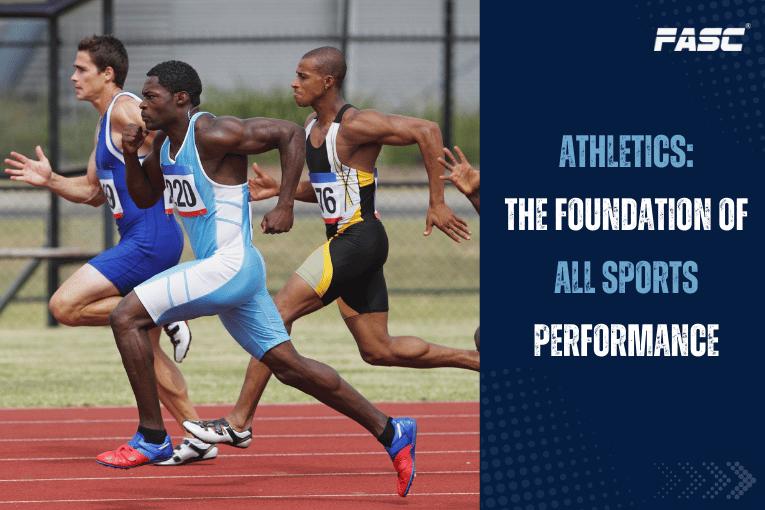
Running is the most frequently used movement pattern across sports—and also one of the most misunderstood.

Athletics training focuses on:
- Sprinting for acceleration and maximal speed
- Middle- and long-distance running for aerobic capacity and pacing
- Mechanical efficiency to reduce energy loss and injury risk
Many athletes run often but run inefficiently. Poor posture, improper foot strike, weak ground contact, and poor coordination increase fatigue and place unnecessary stress on joints.
Correcting running mechanics improves performance immediately and reduces long-term injury risk.
2. Jumping: Explosiveness and Elastic Strength
Jumping develops the ability to produce force rapidly and absorb impact safely.
Athletics jumping disciplines include:
- Long jump
- High jump
- Triple jump
Jump training enhances:
- Explosive power
- Reactive strength
- Tendon elasticity
- Neuromuscular coordination
- Landing control

These qualities transfer directly to sports requiring sprinting, kicking, striking, or rapid changes of direction.
3. Throwing: Power and Kinetic Chain Control
Throwing events such as shot put, discus, and javelin train the body to generate and transfer force efficiently.
Throwing develops:
- Whole-body power
- Ground-to-core-to-limb force transfer
- Core stability under dynamic load
- Timing and sequencing of movement
This is critical for sports where power must be expressed through the entire body, not isolated muscles.
Athletics Training Is Not Just Running Laps
One of the biggest misconceptions is that athletics training simply means running more.
This outdated approach often leads to:
- Overuse injuries
- Poor technique under fatigue
- Early burnout
- Reduced long-term performance
Common training mistakes include:
- No age-appropriate progression
- Excessive training volume for children
- Ignoring strength, mobility, and recovery
- Copying elite-level programs for beginners
Effective athletics training is structured, progressive, and purpose-driven.
Scientific Principles of Athletics Training
Modern athletics training follows evidence-based principles rather than guesswork.
A proper training framework includes:
- Movement assessment before training begins
- Age- and experience-specific programming
- Technique mastery before intensity increases
- Integration of strength, mobility, and conditioning
- Planned recovery and injury-prevention strategies
Performance improvement is a gradual process. Rushing it compromises both results and health.
Athletics for Children and Young Athletes
For children, athletics is not about competition results. It is about developing movement literacy.

Key objectives include:
- Learning fundamental movement patterns
- Improving coordination and balance
- Building confidence and physical awareness
- Establishing a strong base for future specialization
Early overtraining and result-driven coaching often limit long-term potential. Proper athletics training prioritizes health, enjoyment, and gradual development.
Athletics for Competitive and Elite Athletes
As athletes mature, athletics training becomes more specific and performance-oriented.
Advanced training focuses on:
- Speed and power development
- Energy system efficiency
- Sport-specific conditioning
- Training load monitoring and recovery
The goal is not constant fatigue, but consistent progress and durability.
Why Athletics Improves Performance in Every Sport
Athletes with a strong athletics background consistently demonstrate:
- Faster reaction times
- Better balance and body control
- Higher work capacity
- Lower injury rates
This is why athletics is integrated into preparation for:
- Team sports
- Combat sports
- Endurance disciplines
- Strength- and power-based sports
Athletics does not replace sport-specific training—it enhances it.
Long-Term Athlete Development and Sustainability
Athletics plays a critical role in long-term athlete development.
It teaches the body:
- How to move efficiently
- How to tolerate physical stress
- How to adapt and recover over time
Athletes built on strong foundations can train harder, compete longer, and remain healthier throughout their careers.
Conclusion: Master the Basics Before Specializing
Athletics is not about doing more work.
It is about doing the right work, at the right time, in the right way.
Athletics teaches the body how to move efficiently under pressure. Skipping this stage leads to athletes with weak foundations and limited longevity.
Strong fundamentals are not optional.
They are the difference between short-term performance and long-term success.
FAQs
1. What is athletics in fitness and sports development?
Athletics is the structured training of fundamental movements like running, jumping, and throwing to improve overall speed, strength, endurance, and coordination.
2. Why is athletics important for all sports?
Every sport depends on basic movement abilities such as speed, balance, and power. Athletics builds these foundations, improving performance and reducing injury risk.
3. Is athletics only for professional athletes?
No. Athletics training benefits children, beginners, and recreational athletes by improving movement quality, fitness, and overall physical development.
4. How does athletics training prevent injuries?
It improves strength, coordination, and movement mechanics, helping the body handle physical stress more safely and efficiently.
5. At what age should athletics training start?
Basic athletics training can start in childhood with simple movement and coordination exercises, progressing gradually as strength and skills improve.
.png)
.png)
.png)