

Benefits of exercising: The Essential Do's and Don'ts
.png)
- May 09, 2024
Exercise has become a cornerstone of a healthy lifestyle, offering both physical and mental health benefits. Whether you're starting to workout at home or hitting the gym, understanding the dos and don’ts is essential to make the most of your fitness journey. Mastering these can significantly enhance your experience, prevent injuries, and ensure long-term health benefits.
Importance of Exercise in Today's Lifestyle
Regular physical exercise and mental health are the finest combination in this day and age. Their life balance promotes general quality of life, improves mood, and aids in the prevention of chronic diseases.

-
Boosts Mental Health
Exercise and mental health goes hand in hand as it reduces stress, anxiety, and depression.there are a lot of benefits of physical activity too as it stimulates the release of endorphins, improving mood and promoting a sense of well-being, essential in today’s increasingly stressful environment.
-
Supports Long-term Health
Engaging in consistent exercise reduces the risk of chronic diseases such as heart disease, diabetes, and obesity. It strengthens the cardiovascular system, regulates blood sugar levels, and helps maintain a healthy weight, crucial for long-term health.
-
Enhances Daily Functionality
Exercise improves strength, flexibility, and endurance, making daily tasks easier and more efficient. Whether it’s climbing stairs, carrying groceries, or simply walking, staying active boosts overall physical functionality, enabling a more independent and active lifestyle.
Do’s of Exercising
Mastering the do’s of exercising ensures you get the most out of your fitness routine. By focusing on proper techniques and setting realistic goals, you can safely achieve lasting results.
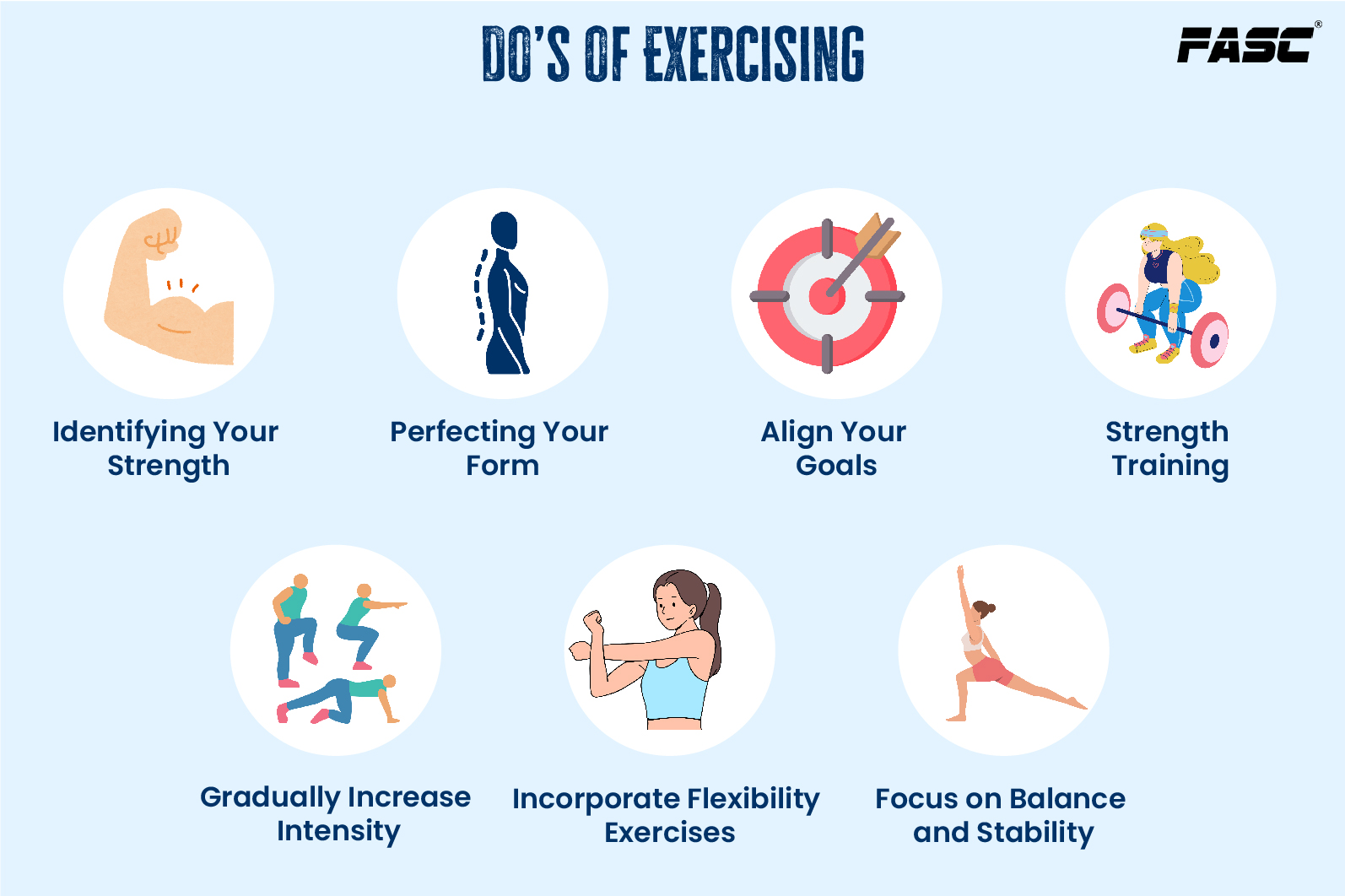
-
Identifying Your Strength
Assess your fitness level to identify your strengths and weaknesses. This helps you tailor your workouts to improve specific areas, enhancing your overall physical fitness and preventing injuries.
-
Perfecting Your Form
Proper form is critical in any exercise routine. Focusing on correct posture and movement reduces the risk of injury and ensures that you’re working the intended muscles effectively.
-
Align Your Goals
Set practical and doable goals that are right for your fitness level and lifestyle. Whether your aim is to improve flexibility, build strength, or enhance cardiovascular health, having clear goals will keep you motivated.
-
Strength Training
Incorporating strength training into your exercise routine is vital for building muscle, boosting metabolism, and supporting bone health. It complements cardiovascular exercises, providing a well-rounded fitness regimen.
-
Gradually Increase Intensity
As you progress, gradually increase the intensity of your workouts. This helps your body adapt without overwhelming it, reducing the risk of injury and ensuring steady improvement.
-
Incorporate Flexibility Exercises
Flexibility exercises, such as stretching, are essential for maintaining a full range of motion in your joints. They help prevent stiffness and improve overall physical performance.
-
Focus on Balance and Stability
Incorporating balance and stability exercises into your routine can prevent falls and improve coordination. These are particularly beneficial as part of a well-rounded fitness plan, especially for older adults.
Don’ts of Exercising
Avoiding the don’ts of exercising is crucial for preventing injuries and burnout. Understanding what to steer clear of helps maintain a balanced and effective fitness routine.
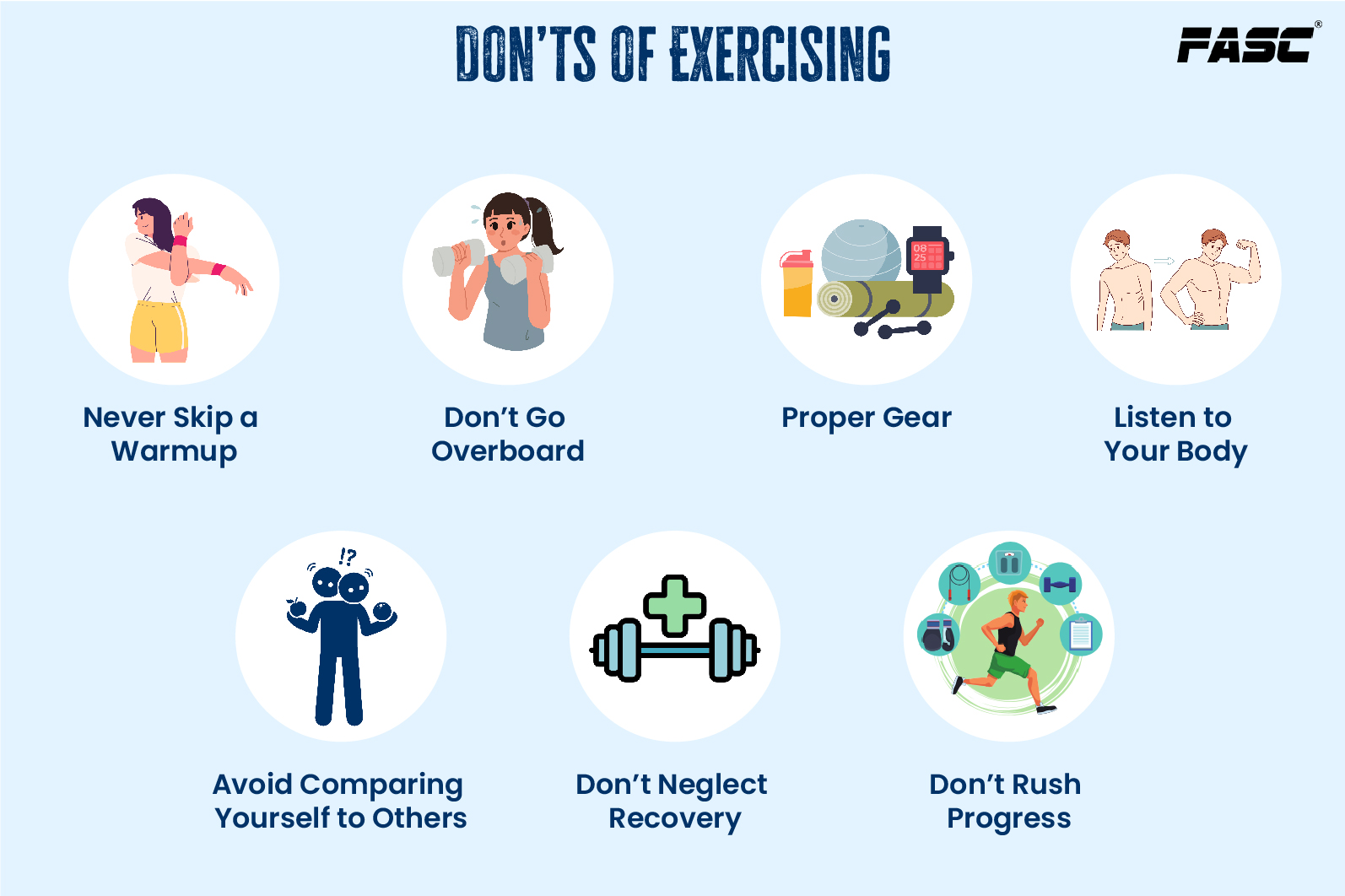
-
Never Skip a Warmup
To get your body ready for exercise, you must warm up. Skipping it can lead to muscle strains and injuries. A good warmup increases blood flow and prepares your muscles for more intense activity.
-
Don’t Go Overboard
Burnout and injuries can result from overtraining. It's needed to give your body enough time to relax and heal. To guarantee long-lasting success, balance your training sessions with rest days.
-
Proper Gear
Never forget to wear appropriate gear for your workouts. This includes supportive footwear, comfortable clothing, and, if needed, protective equipment. Proper gear helps prevent injuries and ensures comfort during exercise.
-
Listen to Your Body
Don’t Ignore the pain or discomfort during exercise because it can lead to serious injuries. Always listen to your body and modify or stop exercises that cause pain. This is extremely important when beginning a new exercise habit.
-
Avoid Comparing Yourself to Others
Everyone’s fitness journey is unique. Comparing yourself to others can lead to discouragement or pushing yourself too hard. No matter how little, take pride in what you've done as you move forward.
-
Don’t Neglect Recovery
Every workout plan must include recovery. Neglecting it can hinder progress and lead to overuse injuries. Incorporate stretching, deep breathing exercises, and adequate sleep into your routine to support recovery.
-
Don’t Rush Progress
Achieving fitness goals takes time. Rushing the process by increasing intensity too quickly can lead to injuries. Stick to a gradual progression to build a solid foundation for long-term success.
Conclusion
Mastering the do’s and don’ts of exercise is key to reaping the benefits of regular exercise . By following these guidelines, you’ll not only improve your physical health but also support your mental well-being, ensuring a balance between fitness and health
Frequently Asked Questions (FAQs)
1.What are the benefits of skipping as a form of exercise?
Skipping improves cardiovascular health, burns calories, and strengthens the lower body. It also enhances coordination and bone density, making it a highly effective and convenient exercise.
2.What are the benefits of walking every day?
You will see a lot of benefits of walking everyday because it improves cardiovascular health, enhances mood, and aids in weight management. People of all fitness levels can benefit from this low-impact activity.
3.How does exercise impact mental health?
Exercise releases endorphins, which are natural mood boosters. It helps reduce stress, anxiety, and depression, contributing to better mental health and overall well-being.
4.How to start exercising for beginners?
Start with simple activities like walking or bodyweight exercises. Gradually increase intensity and incorporate a variety of workouts to build a balanced routine.
Share :
Recent Blog




- Sep 04, 2026
