- Sports
Best Tennis Racquet for Beginners: A Complete Buying Guide (2026)
.png)
- Aug 07, 2026
- 8 min
Key Takeaways
- Always choose a racquet that matches your skill level, not your favourite player's.
- A lightweight racquet with a larger head size is best for beginners.
- The right grip size improves comfort, control, and confidence.
- Budget-friendly racquets are perfect for learning the basics.
- Consistent practice matters more than owning an expensive racquet.
Starting your tennis journey is exciting, but buying your first racquet can be overwhelming. Walk into any sports store or browse online, and you'll find hundreds of models from brands like Wilson, Head, Babolat, Yonex, and Tecnifibre. While having more choices is great, it also makes it difficult to know which racquet is actually suitable for a beginner.
Many new players make the mistake of choosing a racquet based on appearance or by purchasing the same model used by professional players. However, professional racquets are designed for advanced athletes who have refined techniques and years of playing experience. For beginners, the priority should be comfort, forgiveness, and ease of use rather than maximum control or power.
According to the International Tennis Federation (ITF), larger racket head sizes are generally more suitable for beginners because they provide a bigger sweet spot and are more forgiving on off-centre hits.
The United States Tennis Association (USTA) also recommends that beginners choose racquets with larger head sizes, manageable weight, and standard length to make learning easier and more enjoyable.
The right tennis racquet won't instantly make you a better player, but it can certainly make learning easier, reduce unnecessary strain on your arm, and encourage you to keep improving.
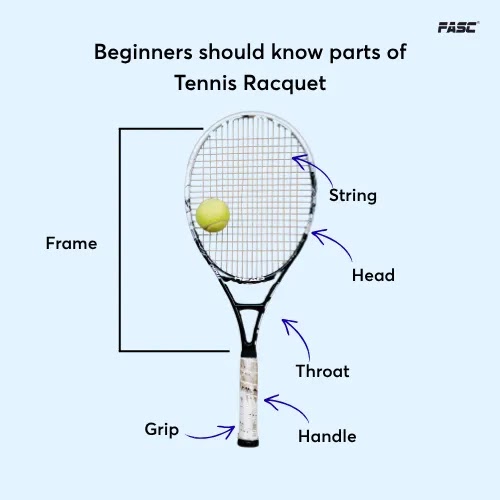
What Makes a Tennis Racquet Good for Beginners?
Not every tennis racquet is built for the same type of player. Some are designed for professionals who generate their own power, while others are specifically created to help new players hit more consistent shots with less effort.
A beginner-friendly racquet should make tennis enjoyable from the very first session. It should offer a forgiving sweet spot, comfortable handling, and enough power to keep rallies going while you learn the fundamentals of the game.
Instead of focusing only on the brand, pay attention to the following features before making your decision.
1. Head Size Matters More Than You Think
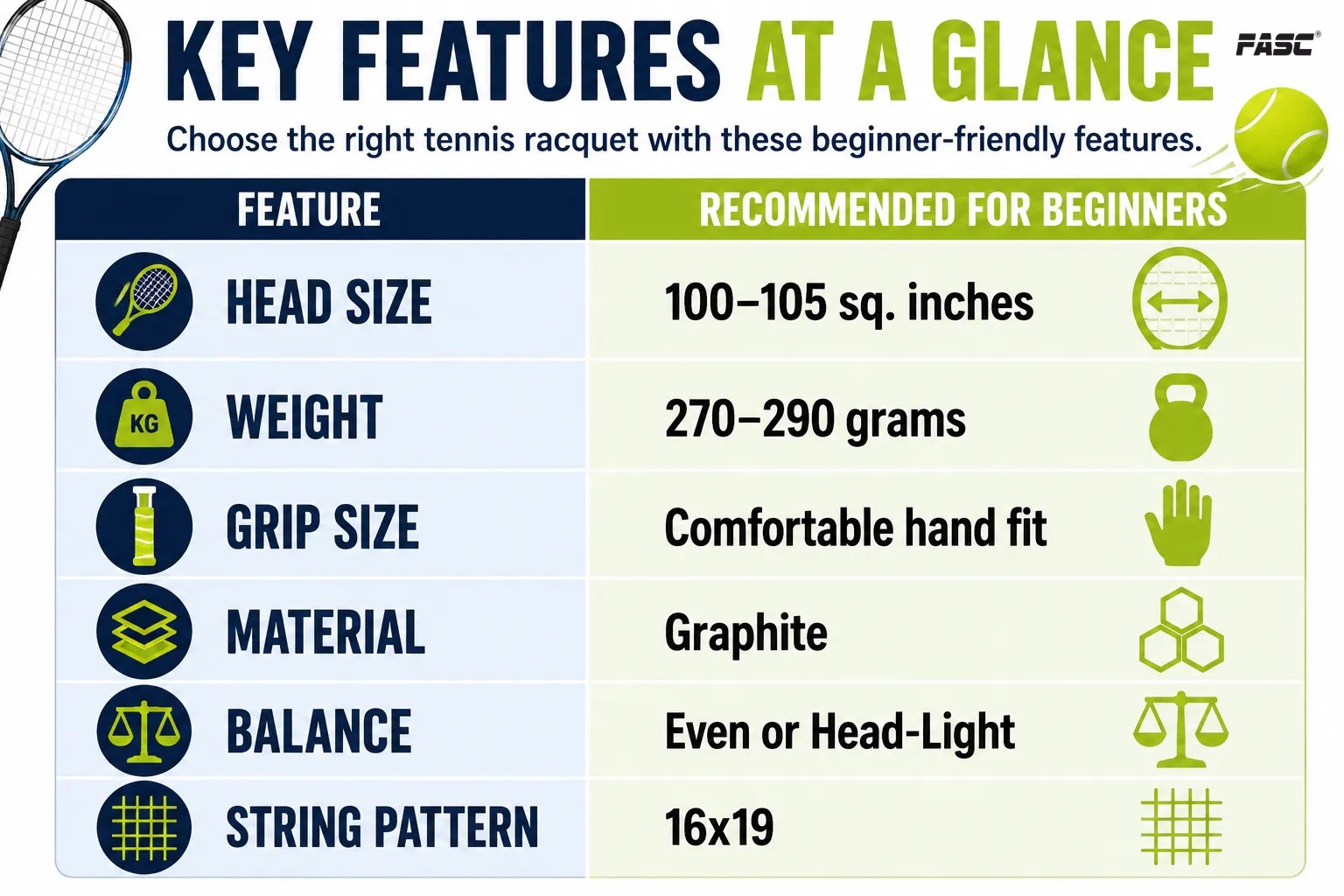
The head size refers to the area of the racquet where the strings are placed. This is one of the most important factors for beginners because it determines the size of the sweet spot.
A larger head size makes it easier to hit the ball cleanly, even if your timing isn't perfect. Since beginners are still developing coordination and consistency, this extra forgiveness can make a noticeable difference during practice.
For most new players, a head size between 100 and 105 square inches provides an ideal balance of power and control.
2. Choose a Comfortable Weight
Another important factor is the weight of the racquet.
Many beginners assume the lightest racquet is always the best option. While lighter racquets are easier to swing, extremely light models can sometimes feel unstable when returning faster shots.
A racquet weighing between 270 and 290 grams (unstrung) is generally recommended for beginners because it offers good manoeuvrability without sacrificing stability.
As you gain more experience and confidence on the court, you can gradually transition to heavier racquets. Pairing the right equipment with proper training is equally important, so learning How to Play Tennis Better will help you build stronger fundamentals and progress faster.
3. Graphite Is Usually Worth It
Beginner racquets are commonly made from aluminium, graphite, or composite materials.
Although aluminium racquets are more affordable, graphite racquets provide better shock absorption, improved stability, and greater durability. They also produce a more comfortable feel during longer practice sessions.
If your budget allows, investing in a graphite racquet is often worthwhile because it can support your development for several years before you need an upgrade.
How to choose the right Tennis Racquet
Understanding the specifications is helpful, but choosing the right racquet also depends on how you plan to play.
Your age, fitness level, playing frequency, and long-term goals all influence which racquet will suit you best.
1. If You're Playing for Fitness or Recreation
Many adults start playing tennis to stay active, improve fitness, or spend time with friends and family.
If that's your goal, prioritise comfort over performance. A lightweight graphite racquet with a larger head size will help you enjoy longer rallies without putting excessive strain on your arm.
There's no need to invest in an expensive professional racquet when you're just starting out.
2. If You Want to Play Competitively
Some beginners plan to participate in local tournaments or join tennis academies after learning the basics.
In this case, you should still begin with a forgiving racquet, but choose one that offers a balance of power and control. This allows you to develop proper stroke mechanics before transitioning to more advanced equipment.
Remember, improving your technique is far more important than buying an expensive racquet early in your journey.
3. Buying Online vs Buying in a Store
Today, many players prefer buying sports equipment online because of the wider selection and competitive pricing.
However, if you're purchasing your first tennis racquet, visiting a physical store can be beneficial. Holding different racquets, checking the grip size, and feeling the weight in your hand often makes the decision much easier.
If you decide to buy online, always review the specifications carefully instead of choosing based only on customer ratings or professional endorsements.
Best Tennis Racquets for Beginners in 2026
Choosing the right tennis racquet doesn't have to mean buying the most expensive one. For beginners, the ideal racquet is one that's lightweight, comfortable to hold, and forgiving enough to help build confidence on the court.
Whether you're learning tennis for fitness, recreation, or planning to play competitively in the future, here are some beginner-friendly racquets that offer excellent value for money.
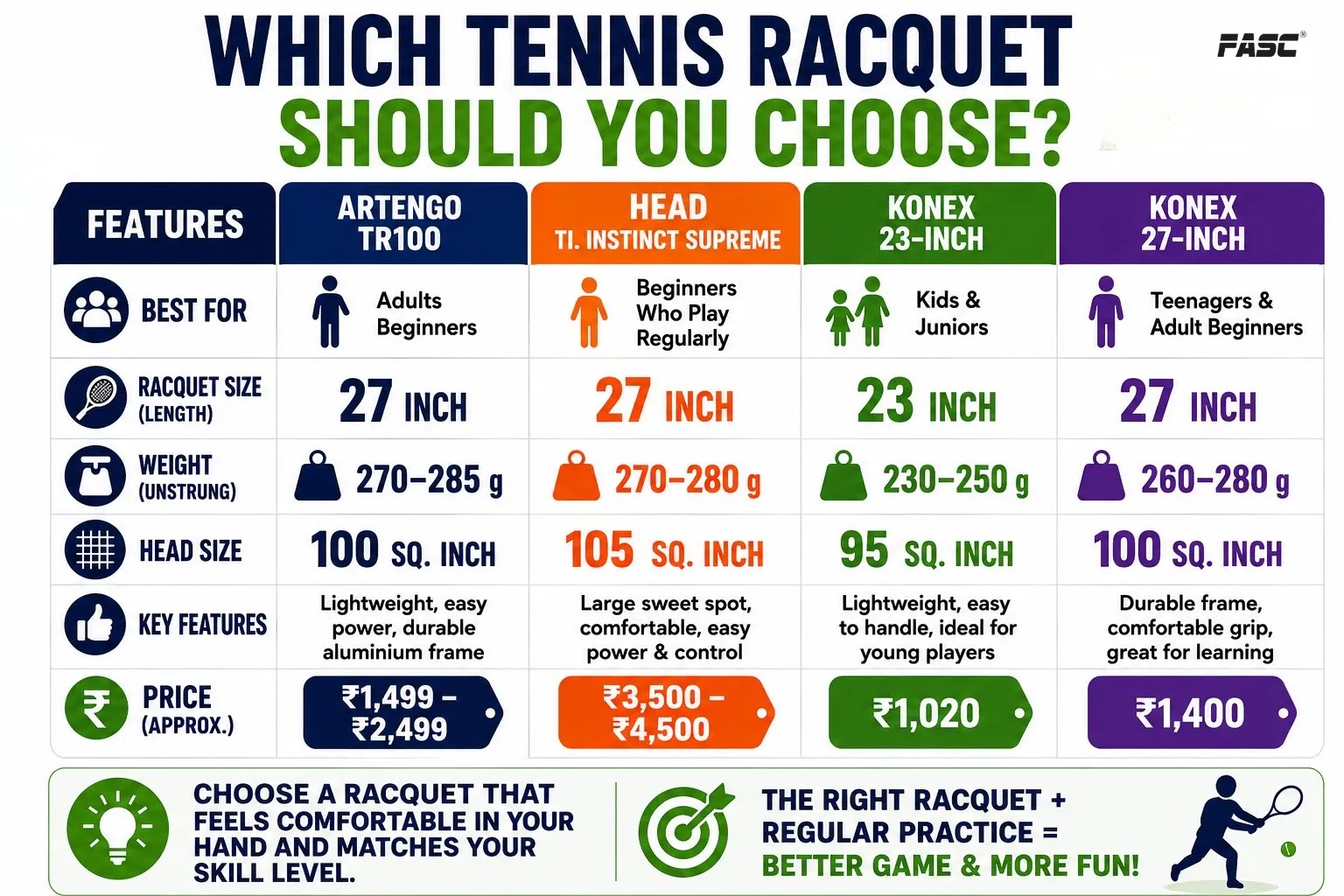
1. Artengo TR100
If you're looking for your first tennis racquet on a budget, the Artengo TR100 is one of the most recommended options.
Designed specifically for recreational players, it features a large sweet spot and lightweight aluminium frame that makes it easy to generate power without putting excessive strain on your arm. It's also one of the most affordable racquets from a globally recognised sports brand.
Best For
- First-time players
- Recreational tennis
- Adults learning the basics
Pros
- Lightweight and easy to swing
- Forgiving sweet spot
- Budget-friendly
- Comfortable for long practice sessions
2. Head Ti. Instinct Supreme
For beginners who can spend a little more, the Head Ti. Instinct Supreme offers an excellent balance of comfort and control.
Its oversized head provides a larger sweet spot, making off-centre shots more forgiving, while the lightweight titanium construction helps players develop proper stroke mechanics.
Best For
- Beginners who play regularly
- Club-level learners
- Fitness enthusiasts
Pros
- Large sweet spot
- Comfortable grip
- Easy power generation
- Trusted international brand
3. KONEX 23-Inch Lawn Tennis Racket
If you're buying a racquet for a child or a young beginner, the KONEX 23-Inch Lawn Tennis Racket is an excellent entry-level choice.
Its lightweight frame allows younger players to swing comfortably while learning correct technique. Built with a carbon-steel frame and alloy steel shaft, it is durable enough for regular practice and school-level coaching sessions.
Best For
- Children (6–10 years)
- Junior beginners
- School sports programmes
Pros
- Lightweight design
- Comfortable grip
- Durable frame
- Excellent value for money
4. KONEX 27-Inch Lawn Tennis Racket
For teenagers and adults starting tennis, the KONEX 27-Inch Lawn Tennis Racket is a practical option.
Its full-size frame makes it suitable for learning serves, forehands, backhands, and volleys, while the comfortable grip and durable construction make it ideal for regular recreational play.
If you're looking for a budget-friendly racquet without compromising on quality, this is a solid choice.
Best For
- Teenagers
- Adult beginners
- Recreational players
Pros
- Full-size adult racquet
- Durable carbon-steel construction
- Comfortable grip
- Beginner-friendly price
Common Mistakes Beginners Make When Buying a Tennis Racquet
Buying your first tennis racquet is exciting, but it's also easy to make decisions based on price, appearance, or brand popularity. A few simple mistakes can make learning more difficult and even affect your confidence on the court.
Here are some of the most common mistakes beginners should avoid.
1. Buying a Professional Racquet Too Early
Many beginners believe using the same racquet as Novak Djokovic or Carlos Alcaraz will improve their game. In reality, professional racquets are designed for advanced players who generate their own power and have excellent technique.
As a beginner, you'll benefit much more from a lightweight, forgiving racquet with a larger sweet spot.
2. Choosing the Wrong Grip Size
Grip size is often ignored, but it directly affects comfort and control.
A grip that's too small can make you hold the racquet too tightly, increasing the risk of wrist or elbow pain. A grip that's too large can reduce manoeuvrability and make it harder to execute proper strokes.
If you're unsure, visit a sports store or consult an experienced coach before making your purchase.
3. Buying Based Only on Price
A higher price doesn't always mean a better racquet.
For beginners, an affordable racquet that suits your playing style is often a better investment than an expensive professional model. Focus on features like weight, head size, and comfort rather than the price tag.
4. Ignoring Build Quality
Even budget racquets should be durable enough to withstand regular practice.
Choose products from trusted brands or reliable sports retailers to ensure you're getting quality equipment that lasts.
Conclusion
Choosing the best tennis racquet for beginners isn't about buying the most expensive model, it's about finding one that helps you learn comfortably and enjoy the game.
For most new players, a racquet with a 100–105 sq. inch head size, 270–290 grams of weight, and a comfortable grip provides the ideal balance of power, control, and forgiveness.
If you're looking for recognised international brands, the Artengo TR100 and Head Ti. Instinct Supreme are excellent beginner-friendly choices. If affordability is your priority, the KONEX 23-Inch and KONEX 27-Inch tennis racquets available at Fettle And Sports offer dependable performance at a budget-friendly price. Remember, your racquet is only a tool. The biggest improvements in your game will come from regular practice, proper coaching, and enjoying every session on the court.
Recommended Products from FASC Coach
Frequently Asked Questions
1. Which tennis racquet is best for beginners?
The best beginner tennis racquet is one that's lightweight, comfortable, and forgiving. Options like the Artengo TR100, Head Ti. Instinct Supreme, KONEX 23-Inch, and KONEX 27-Inch are excellent choices depending on your age and playing level.
2. Should beginners buy a graphite racquet?
Yes, if your budget allows. Graphite racquets absorb vibrations better, feel more comfortable during long practice sessions, and usually last longer than aluminium models.
3. What size tennis racquet should I buy?
Children should use age-appropriate junior racquets, while most adults should choose a standard 27-inch tennis racquet.
4. How much should a beginner spend on a tennis racquet?
Most beginners don't need to spend a premium amount. A budget between ₹1,000 and ₹4,000 is sufficient to buy a reliable racquet that supports skill development and recreational play.
5. How long does a beginner tennis racquet last?
With proper care, a quality beginner racquet can easily last three to five years.
Share :