- Sports
Pro Kabaddi: How The League Changed The Future Of Indian Kabaddi
- Nov 03, 2026
- 5 min
Key Takeaways
- PKL was launched in 2014 and thus provided kabaddi with a prominent professional platform.
- The sport was able to reach a wider audience because of the television coverage.
- New opportunities for players were created by professional teams.
- The commercial potential of kabaddi was increased through sponsorships and broadcasting.
- Grassroots competitions are still key for growing future talent.
- Ongoing growth is due to coaching, inclusion, and access to opportunities.
Traditionally kabaddi has been played in the villages, in schools, in colleges and in local tournaments all over India. For many generations it has put to the test the strength, speed, stamina and teamwork of the players. However, turning this popularity into a professional sporting system needed a larger platform.
The Pro Kabaddi League was launched in 2014, which made this possible. Because of its city-based teams, live broadcasts, professional players, and a well-organized competition format, kabaddi was able to reach audiences who had not previously followed the sport.
The Pro Kabaddi League, as stated on its official website, was established with the aim of introducing a higher degree of professionalism to the sport of kabaddi and of making it more attractive to both players and spectators. The effect of the league extends well beyond mere entertainment, as it has influenced the way the sport is played, promoted, and experienced all over India.
1. Kabaddi Reached a Wider Audience
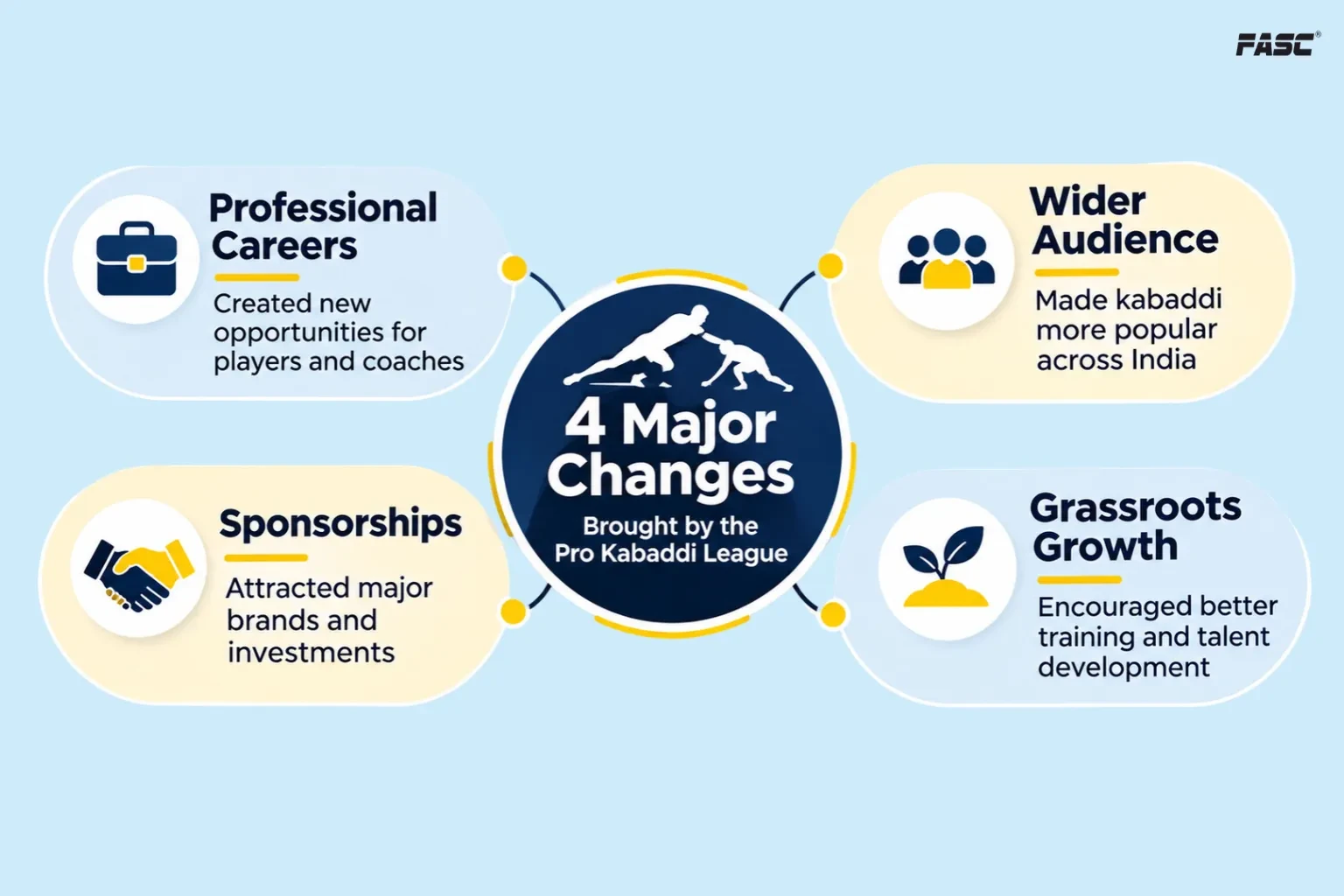
A major achievement of PKL has been in making kabaddi easier for people to watch and follow; television broadcasts brought the matches into homes, and the teams' distinct identities together with the fixed scheduling gave fans more reasons to remain connected over the course of a season.
The league also played a part in getting kabaddi noticed by people in the major cities and in various regions where the sport was not very visible, since the quick-paced games, the clear team rivalries, and the lively commentary made it easier for new viewers to get into the sport.
Although kabaddi has traditional roots which are still an important aspect of its identity, the PKL has demonstrated that the game can also succeed as a modern spectator sport.
2. Players Gained Professional Opportunities
Before professional leagues became prominent, many kabaddi players relied on local tournaments and other sporting opportunities. PKL created another platform where skilled players could compete at a higher level and gain recognition.
Player auctions, team contracts, and structured seasons gave professional kabaddi a more organised framework. For talented athletes, this opened up new possibilities, although opportunities and earnings still vary by performance, experience, and contract terms.
The journeys of India's leading kabaddi stars show how individual talent can influence the sport's popularity. Players featured in our article on kabaddi players who changed the game have helped make raiding, defending, and tactical play major talking points among fans.
3. Teams and Rivalries Made the Sport More Engaging
PKL introduced a franchise-based format in which teams represent different cities and regions. This gave fans a local identity to support and helped create rivalries that continued across seasons.
Supporting a team became about more than watching individual matches. Fans could follow player performances, team strategies, standings, and the race for the title.
The franchise model also created opportunities for team owners, sponsors, broadcasters, and event organisers to participate in the sport's commercial ecosystem.
4. Sponsorship and Sports Business Grew
Professional kabaddi became more visible to businesses looking to connect with sports fans. Team sponsorships, broadcast partnerships, advertising, and merchandise created additional commercial opportunities around the game.
For brands, a league offers a way to reach audiences through team associations and match-day visibility. For the sport, commercial partnerships can help support promotion and professional operations.
However, sponsorship alone does not guarantee long-term success. Consistent audience interest, effective management, competitive matches, and opportunities for emerging players are also important to keeping a league sustainable.
5. The Standard of Competition Evolved
PKL provided players with a platform on which they could regularly compete against strong opponents. The professional atmosphere placed a greater focus on preparation, fitness, tactical decisions, and teamwork.
Fans also acquired a clearer understanding of the various roles in kabaddi, such as the raiders who search for chances to score and the defenders who organise the tackles.
Because of the league's visibility more people have come to appreciate the strategy involved in the sport; although kabaddi appears to be a simple game, proper timing, positioning, anticipation, and communication can still determine the result of a match.
6. The Sport's Traditional Roots Remain Important
The growth of professional kabaddi does not replace the importance of grassroots competitions. Local tournaments, school events, colleges, and state-level competitions remain important places for young players to learn and develop.
India's long history in kabaddi also provides context for understanding the sport's growth. Its journey from traditional play to organised national and international competition is explored in our article on the history, origins, and achievements of Indian kabaddi.
For the next generation to benefit, professional visibility needs to go hand in hand with accessible coaching, quality facilities, and opportunities for players from different backgrounds.
Recommended Products From Kabaddi Coach
Conclusion
PKL has helped to make kabaddi more visible and more properly organised from a commercial point of view, but further growth will depend on the situation that arises outside the professional league.
It is possible to strengthen the sport by investing in grassroots development, by supporting women's kabaddi, by improving coaching, and by establishing clear pathways for young athletes; at the same time, it will be important to reach new audiences without losing kabaddi's identity.
The league has demonstrated what a professional platform is capable of achieving; the next phase will be to make sure that a greater number of players and communities can take advantage of the sport's increasing popularity.
Frequently Asked Questions
1. When did the Pro Kabaddi League start?
The Pro Kabaddi League started in 2014, when eight teams took part in its first season.
2. How did PKL change Indian kabaddi?
It brought more television visibility, introduced a franchise-based competition, created professional playing opportunities, and attracted greater commercial interest.
3. Do kabaddi players earn money through PKL?
Yes, players are able to get paid via their team contracts, the amounts depending on the results of the auctions, the terms of the contracts, their performance, and other factors.
4. Has PKL replaced traditional kabaddi?
Certainly. Professional leagues complement traditional and grassroots competitions since the latter are important for participation and for the development of talent.
5. What can help Indian kabaddi grow further?
All of these factors, grassroots investment, improved coaching, youth development, greater women's participation, and sustainable commercial support can make a contribution to the sport's future.
Share :
Recent Blog


- Oct 30, 2026