- Fitness
Yoga for Hormonal Imbalance: Poses and Benefits
- Oct 30, 2026
- 6 min
Key Takeaways
- Yoga can be of benefit in terms of stress management, flexibility and general well-being.
- Research does suggest some benefit for PCOS and menopausal symptoms
- Gentle poses such as Child's Pose, Cat-Cow and Bound Angle Pose can be used to kickstart your routine.
- No yoga pose has been shown to fix hormonal imbalances.
- Regular practice can be a good adjunct to healthy lifestyle and medical management but should not be used as a substitute for either.
Hormones can have an effect on more than just your period. They can affect your mood, your energy levels, your sleep, your weight and your general sense of well-being. PCOS and menopause are two conditions which can make the hormonal changes particularly apparent.
Yoga won't fix every hormonal imbalance but it may help with some of the symptoms that go with it by promoting relaxation, physical activity and better stress management. The NCCIH (National Center for Complementary and Integrative Health) notes that yoga may be of benefit in relation to stress management and some of the symptoms of menopause.
How Can Yoga Help With Hormonal Imbalance?
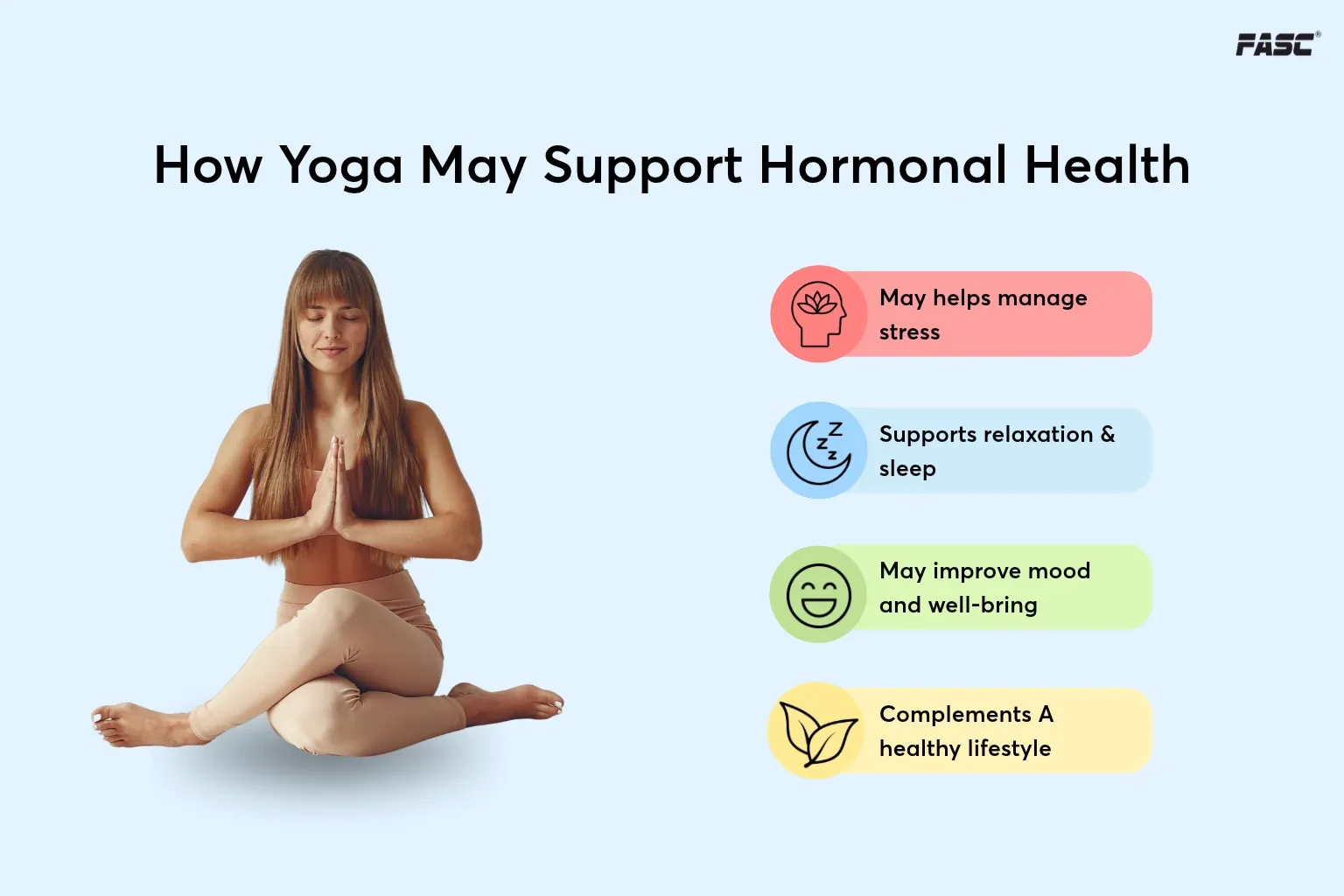
Yoga can be a very effective tool in the management of hormonal imbalance. The various asanas (postures) and pranayama (breathing) techniques involved in yoga can have a profound effect on the endocrine system. The practice of yoga can help to regulate the body's hormones, particularly those associated with the stress response (cortisol), reproductive health (estrogen, progesterone, testosterone) and the thyroid.
Yoga is a combination of physical postures, controlled breathing and relaxation. It can be a very effective way of reducing stress and improving flexibility as well as contributing to general physical and mental well-being.
Stress is obviously pertinent as it can impact sleep, mood and the body's stress response system. Yoga may be of some use in helping people to manage these effects, though the evidence that it actually balances the reproductive hormones is very limited.
Research into yoga for PCOS has also shown some encouraging results with regard to certain menstrual and metabolic parameters. The evidence is still very limited though and we need larger, better designed studies before we can come to any firm conclusions.
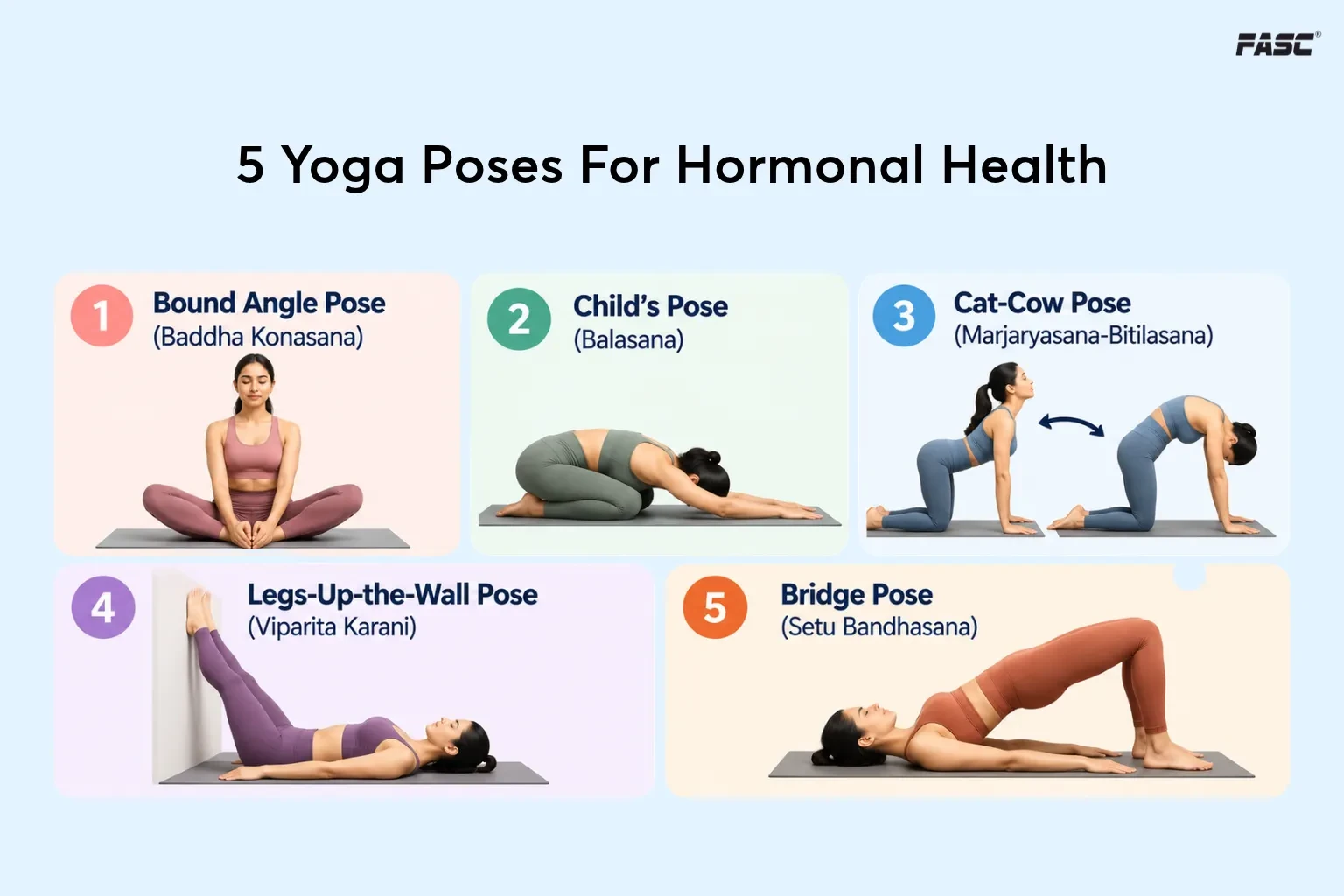
5 Yoga Poses That May Support Hormonal Health
You don't need to perform complicated poses to get started. Gentle movements, comfortable breathing and consistency are more important than achieving a perfect posture.
1. Bound Angle Pose (Baddha Konasana)
Sit with your back upright, bend your knees and bring the soles of your feet together. Just let your knees move down towards the floor, no need to force them.
This pose gently stretches the inner thighs and may help to release some of the tension around the hips. It can be incorporated into a relaxation sequence, especially if you're sitting for long periods.
Tip: If it feels difficult to keep your back straight then just sit on a folded blanket.
2. Child's Pose (Balasana)
Kneel on the floor, bring your hips towards your heels and extend your arms forward. Rest your forehead on the mat or a cushion if that's comfortable.
Child's pose encourages a slower breathing pattern and is a very gentle break from the more demanding movements. Can be particularly useful when you're feeling a bit tense or mentally 'over the top'.
For those of us who struggle with stress, combining some gentle yoga with regular relaxation techniques may be of benefit. The link between yoga and mental well-being is looked at in more detail in our article.
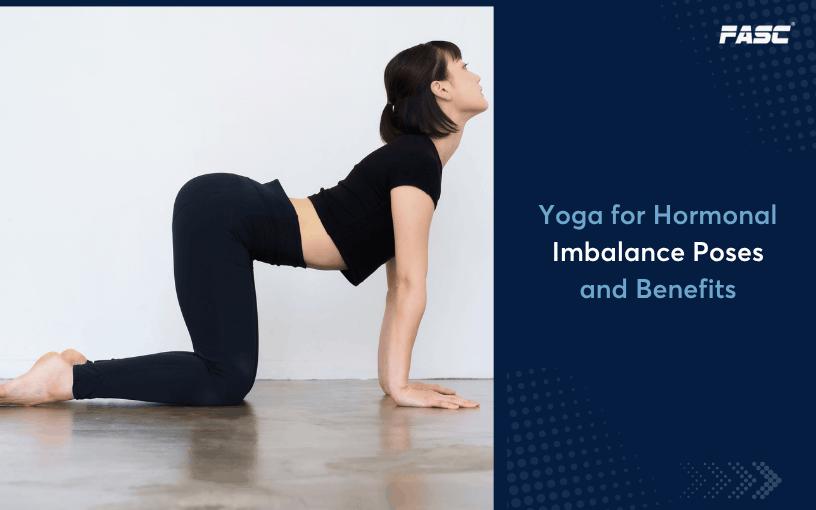
3. Cat-Cow Pose (Marjaryasana-Bitilasana)
Start on your hands and knees with your wrists below your shoulders and your knees below your hips. On the inhale gently lift your chest and tailbone. On the exhale, round your back and tuck your chin slightly.
Cat Cow improves spinal mobility and is a very gentle way to start a yoga class. It is not a proven treatment for any hormonal disorder, though it can be part of a very comfortable movement sequence.
4. Legs-Up-the-Wall Pose (Viparita Karani)
Lie on your back with your legs up against a wall (adjust your distance so the position is comfortable). You can use a small pillow under your head if you like.
Just stay for a few minutes breathing naturally.
This restorative position can be a great way to wind down after a long day and is a useful addition to an evening relaxation routine, especially if you're looking to slow things down prior to going to bed.
5. Bridge Pose (Setu Bandhasana)
Lie on your back with your knees bent and your feet flat on the floor. Keep your arms at your side and gently lift your hips, pressing through your feet. Lower yourself slowly.
Bridge pose works the glutes and the muscles around the hips, whilst very gently opening the front of the body.
It can be of use in a well-rounded yoga practice, though the assertions that it directly stimulates the ovaries or regulates hormones are not well founded.
Yoga for PCOS, Irregular Periods and Menopause
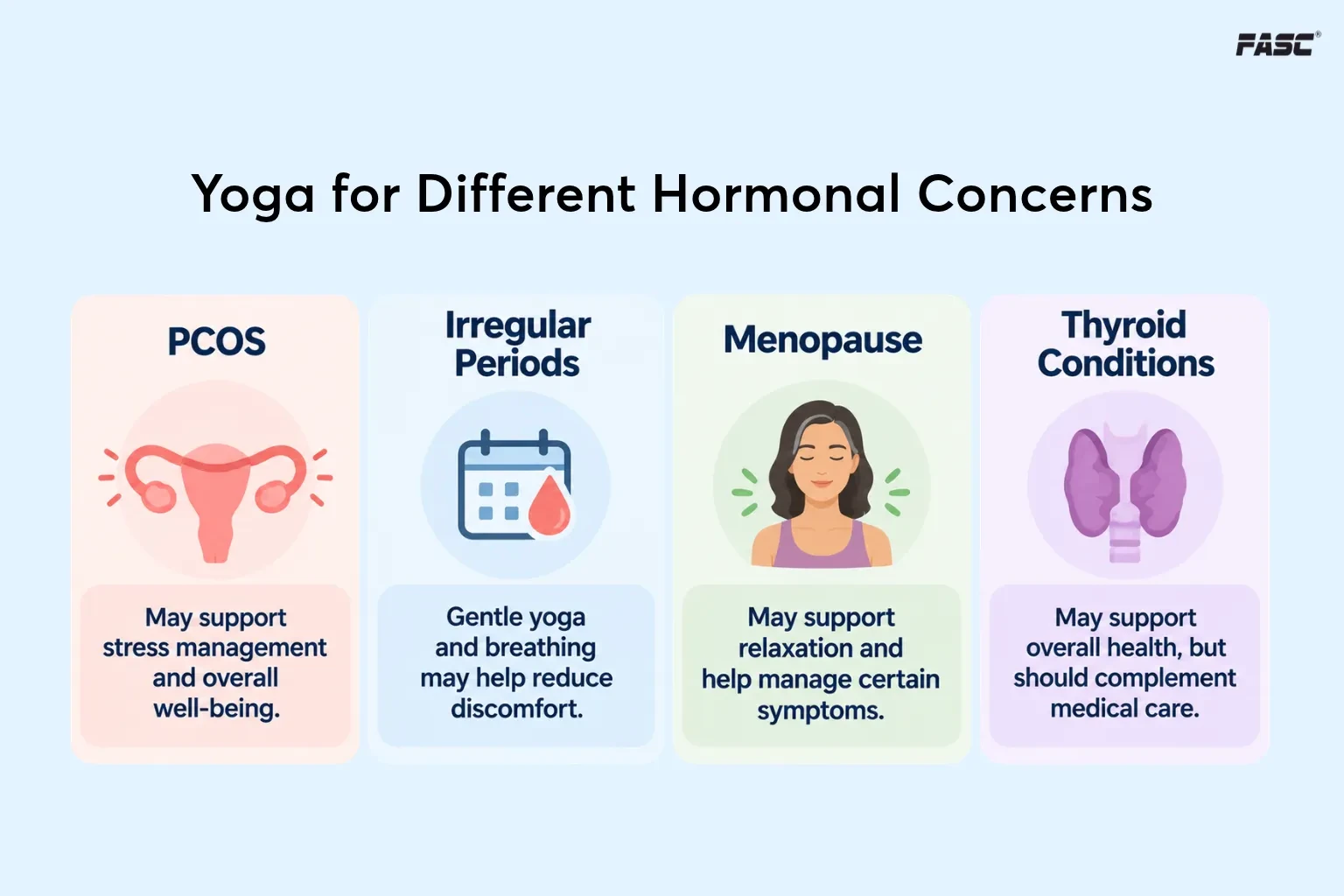
Hormonal issues are different in different people so the approach will have to be dependent on the particular condition in question.
For PCOS: gentle yoga may be of benefit in terms of stress reduction and general physical activity. There is some evidence to suggest it may have a role in both menstrual and metabolic health, though the evidence is very limited. PCOS management may also involve medical treatment, dietary modification, physical activity and medication as appropriate.
For period pain: some people find relaxed breathing and gentle poses can help them feel more comfortable. If you have ongoing pelvic pain or any significant change in your period then it's worth having it checked out by a GP.
For menopause: Yoga may help with general well-being and could be of benefit in relation to some of the symptoms of menopause. There is some research to suggest this, though the effect will vary from person to person.
For thyroid conditions: Yoga may be of benefit in terms of relaxation and general well-being but will not in any way replace your thyroid medication or the monitoring that your doctor will recommend.
If you're after a more individualised approach then yoga therapy can be tailored to your specific health needs, your level of movement and your individual goals. Our guide to yoga therapy and its potential benefits looks at how this is different from a standard yoga class.
Recommended Products From Yoga Coach
Conclusion
Hormonal health can be complicated, and there isn't one solution that works for everyone. Yoga offers a practical way to include movement, breathing and relaxation in your daily routine. Start gently, stay consistent and pay attention to how your body responds.
Most importantly, don't ignore persistent symptoms or rely on yoga alone to treat a hormonal condition. With the right combination of professional guidance and healthy habits, yoga can be one useful part of looking after your overall well-being.
Frequently Asked Questions
1. Can yoga balance hormones naturally?
Yoga may support well-being and stress management, but there is insufficient evidence to conclude that it can reliably balance hormones or treat every hormonal disorder.
2. Which yoga pose is best for hormonal imbalance?
There is no single best pose. Child's Pose, Cat-Cow and Bound Angle Pose are gentle options for beginners, but the right routine depends on your comfort, health and goals.
3. Can yoga help with PCOS?
Yoga may help support physical and mental well-being, and some studies suggest benefits for certain PCOS outcomes. However, it should complement not replace appropriate medical care.
4. How long does yoga take to show results?
It varies from person to person. Some people notice improvements in relaxation or flexibility within a few weeks, while other benefits may take longer. Changes in symptoms or hormone levels are not guaranteed.
Share :
Recent Blog

- Oct 30, 2026