- Gym
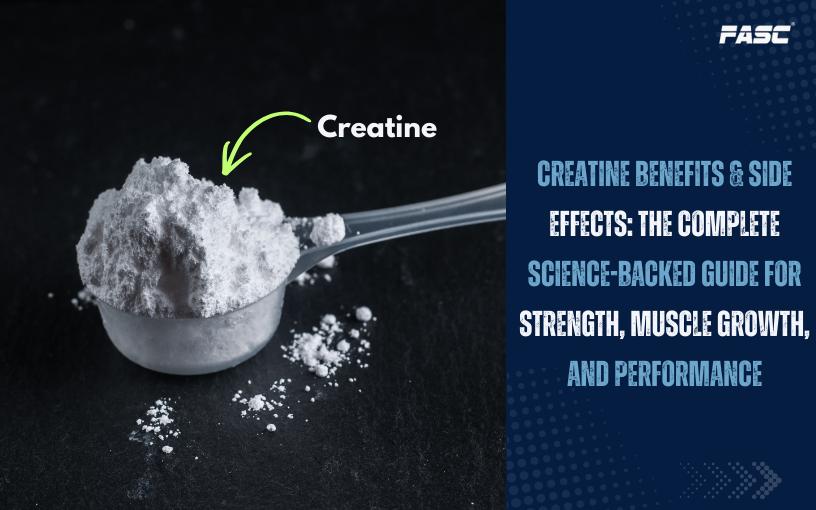
Creatine Benefits & Side Effects: The Complete Science-Backed Guide for Strength, Muscle Growth, and Performance
- Mar 10, 2026
- 5 min
Key Takeaways
- Creatine is one of the most scientifically supported supplements in sports nutrition.
- It improves strength, power, and high-intensity exercise performance.
- Creatine helps regenerate ATP, the body’s main energy molecule.
- It can support muscle growth when combined with resistance training.
- The most effective form is creatine monohydrate.
- Recommended dosage is 3–5 grams per day.
- Minor side effects may include water retention and temporary weight gain.
- Research shows creatine is safe for healthy individuals when used properly.
What Is Creatine?
Creatine is a naturally occurring compound stored mainly in muscle cells. It plays a critical role in energy production during short bursts of intense activity such as weightlifting, sprinting, or jumping.
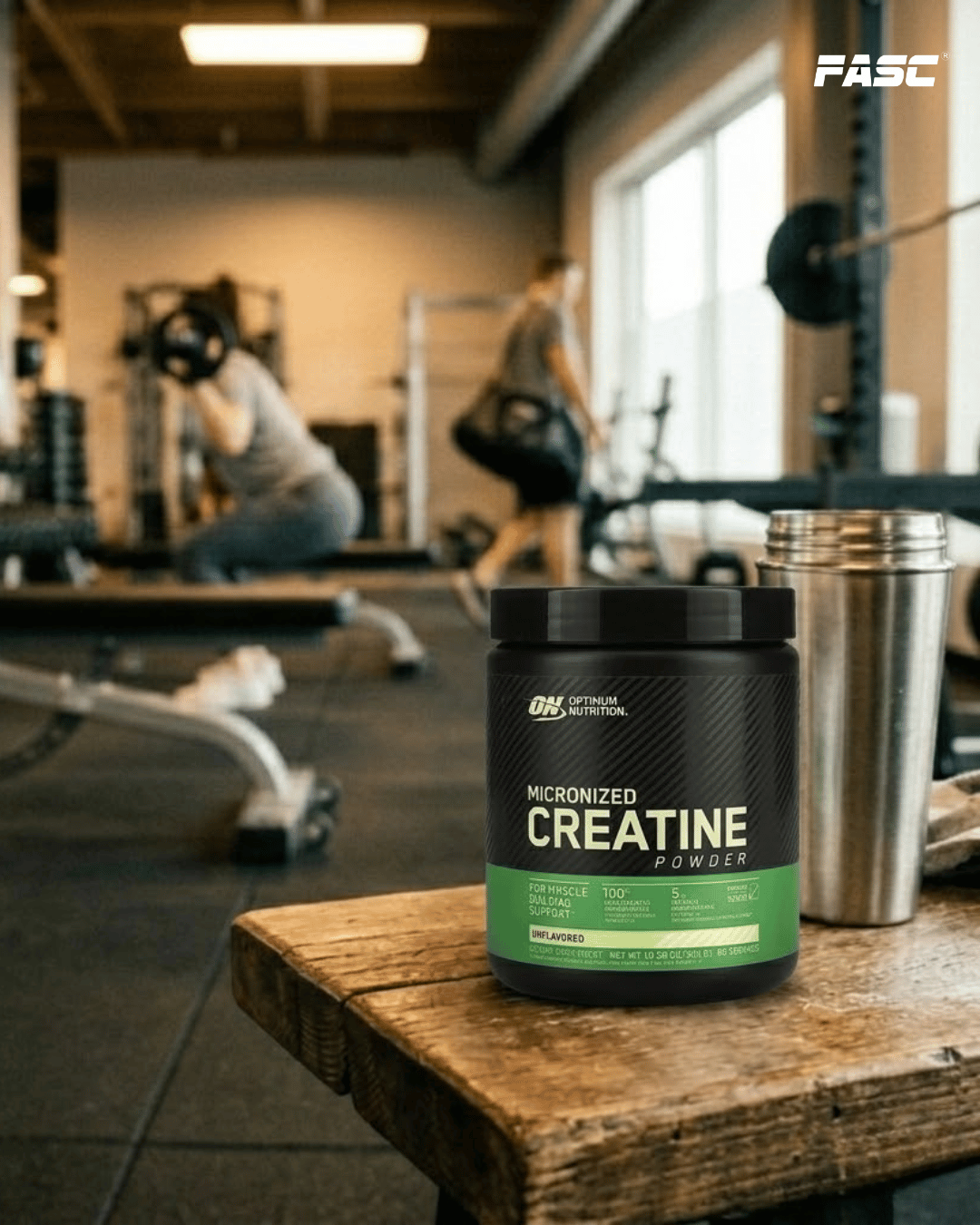
The human body produces creatine from three amino acids:
-
Arginine
-
Glycine
-
Methionine
About 95% of the body’s creatine is stored in skeletal muscles, while the remaining amount is found in the brain and other tissues.
Creatine can also be obtained through certain foods, mainly:
-
Red meat
-
Fish
-
Poultry
However, dietary creatine intake is relatively small. For example, consuming about 1 kilogram of beef provides roughly 5 grams of creatine. Because of this, many athletes and gym-goers choose to use creatine supplements to increase muscle creatine levels.
How Creatine Works in the Body
To understand creatine’s benefits, it is important to understand ATP (adenosine triphosphate), the body’s primary energy molecule.
During high-intensity exercise such as sprinting or lifting heavy weights, ATP stores in muscles are depleted very quickly — usually within a few seconds.
Creatine helps replenish ATP through a compound called phosphocreatine.

The process works like this:
-
ATP breaks down to release energy for muscle contractions.
-
ATP becomes ADP after losing a phosphate molecule.
-
Phosphocreatine donates a phosphate group to ADP.
-
ADP converts back into ATP, restoring energy.
By increasing phosphocreatine levels, creatine allows muscles to produce energy faster during intense exercise, which leads to improved performance.
Benefits of Creatine
Creatine has been studied extensively in sports science. Numerous studies confirm that it can improve physical performance, muscle growth, and recovery when combined with proper training.

1. Increased Muscle Strength
One of the most well-known benefits of creatine is its ability to increase strength and power output.
Research shows that individuals who take creatine often experience 5–15% greater improvements in strength compared to those who rely on training alone.
Athletes may notice improvements in exercises such as:
- Bench press
- Squats
- Deadlifts
- Olympic lifts
Creatine increases ATP availability, allowing muscles to produce more force during intense movements.
2. Improved Muscle Growth
Creatine is widely used by bodybuilders and strength athletes because it supports muscle hypertrophy when combined with resistance training.
It contributes to muscle growth in several ways:
Increased training volume: Creatine allows athletes to perform more repetitions and heavier sets.
Muscle cell hydration: Creatine pulls water into muscle cells, a process called cell volumization, which may support muscle growth.
Improved recovery: Faster energy replenishment allows muscles to train harder and recover more effectively.
Over time, these factors contribute to greater muscle development.
3. Enhanced Athletic Performance
Creatine is particularly beneficial for high-intensity sports and activities that require explosive movements.
Athletes who may benefit include:
- Sprinters
- Weightlifters
- Wrestlers
- Football players
- Rugby athletes
- Combat sport competitors
Creatine supplementation can improve:
- Power output
- Sprint speed
- Explosive strength
- Repeated high-intensity efforts
However, creatine has limited benefits for long-duration endurance sports like marathon running.
4. Faster Recovery Between Sets
Creatine helps restore ATP levels more quickly between bouts of intense exercise.
This leads to:
-
Reduced fatigue during workouts
-
Improved recovery between sets
-
Higher overall training intensity
For individuals performing high-intensity interval training or strength training, this improved recovery can significantly enhance workout performance.
5. Potential Cognitive Benefits
Although creatine is mainly known for its physical performance benefits, it may also support brain energy metabolism.
The brain uses large amounts of energy to support cognitive processes such as memory and concentration.
Some research suggests creatine supplementation may help:
-
Reduce mental fatigue
-
Improve short-term memory
-
Enhance cognitive performance during sleep deprivation
Researchers are also exploring creatine’s potential role in neurological conditions such as Parkinson’s disease and depression, although more research is needed.
Creatine Side Effects
Creatine is generally considered safe for healthy individuals when taken at recommended doses. However, some mild side effects may occur.
Water Retention
Creatine increases water storage inside muscle cells. This can lead to temporary weight gain, usually around 1–2 kilograms during the early stages of supplementation.
This water is stored inside muscle tissue rather than under the skin, so it rarely causes noticeable bloating.
Digestive Discomfort
Some people experience digestive issues such as:
-
Stomach cramps
-
Nausea
-
Diarrhea
This usually occurs when large doses are taken at once, particularly during loading phases.
Taking 3–5 grams per day generally prevents these issues.
Temporary Weight Gain
Because creatine increases muscle hydration and supports muscle growth, some users notice slight weight gain.
For most athletes this is beneficial, though individuals in weight-class sports may need to monitor body weight carefully.
Kidney Concerns
One of the most common myths about creatine is that it damages the kidneys.
Current research shows no harmful effects on kidney function in healthy individuals using recommended doses.
However, people with pre-existing kidney disease should consult a healthcare professional before using creatine supplements.
Recommended Creatine Dosage
The most common and effective dosage is:
3–5 grams per day

There are two main methods for taking creatine.
Loading Phase
Some athletes start with a loading phase:
-
20 grams per day
-
Divided into four doses
-
Taken for 5–7 days
After this period, a maintenance dose of 3–5 grams per day is used.
No-Loading Method
Another option is to take 3–5 grams daily from the start. Muscle creatine levels will reach full saturation within three to four weeks.
Both methods produce the same long-term results.
Best Type of Creatine
The most researched and effective form is creatine monohydrate.
It is:
-
The most studied form
-
The most affordable option
-
Proven effective for strength and performance
Other forms of creatine are often marketed as superior, but scientific evidence shows no clear advantage over creatine monohydrate.
Conclusion
Creatine is one of the most researched supplements in sports nutrition. It helps improve strength, power, and high-intensity exercise performance by supporting faster ATP regeneration. This allows muscles to produce energy more efficiently during intense workouts, helping athletes train harder and improve performance over time.
When taken correctly, creatine monohydrate is safe for healthy individuals. A daily intake of about 3–5 grams, combined with proper training, nutrition, and recovery, can support strength and muscle development. However, it works best as part of a balanced fitness routine, not as a replacement for consistent training.
Frequently Asked Questions (FAQs)
1. Is creatine safe for daily use?
Yes. Research consistently shows creatine is safe for healthy individuals when taken at recommended doses.
2. How long does creatine take to work?
With a loading phase, creatine can start working within about one week. Without loading, full muscle saturation usually occurs in three to four weeks.
3. Does creatine cause hair loss?
There is no strong scientific evidence linking creatine directly to hair loss.
4. When should you take creatine?
Creatine can be taken before or after workouts. The most important factor is taking it consistently every day.
.png)
.png)