- Sports
The Business Side of IPL: Billion Dollar Deals, Team Valuations, and How Cricket Became a Money Machine
- Apr 03, 2026
- 4 min
Key Takeaways
- IPL is now a multi-billion-dollar sports business, not just a cricket league
- Recent deals like RCB (~₹16,660 crore) and RR (~$1.3B) show massive growth
- Revenue comes mainly from media rights, sponsorships, and central sharing
- Team value depends more on brand and fan base than just performance
- IPL is becoming a global sports business powerhouse
How IPL Became a Billion-Dollar Business
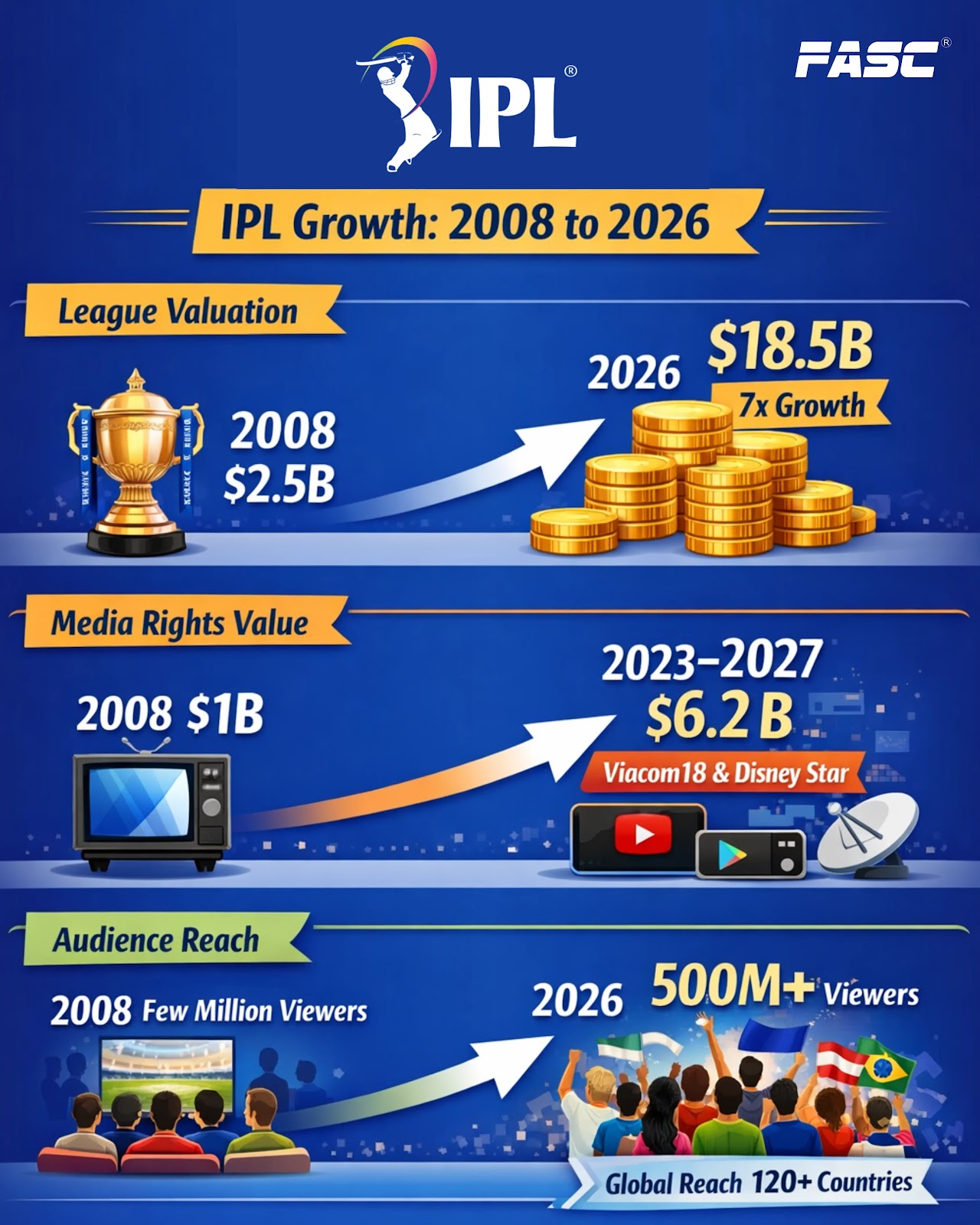
When the IPL started in 2008, it was seen as an innovative cricket format. Today, it is one of the richest sports leagues globally, with its overall value reaching around $18.5 billion.
What makes IPL unique is not just the game, it's the ecosystem around it. Every match is content, every player is a brand, and every team is a business asset. Unlike traditional cricket formats, IPL combines entertainment, marketing, media, and sports into one powerful product.
The biggest turning point came with media rights. The 2023–2027 broadcast deal alone was worth ₹48,000 crore (over $6 billion), making IPL one of the most valuable media properties in the world.
This kind of money flows into franchises, players, sponsors, and even state associations, making IPL a complete economic engine.
The Recent Billion Dollar Deals: RCB and RR
If anyone still had doubts about IPL’s business strength, the recent sales of teams like Royal Challengers Bengaluru and Rajasthan Royals made things very clear.
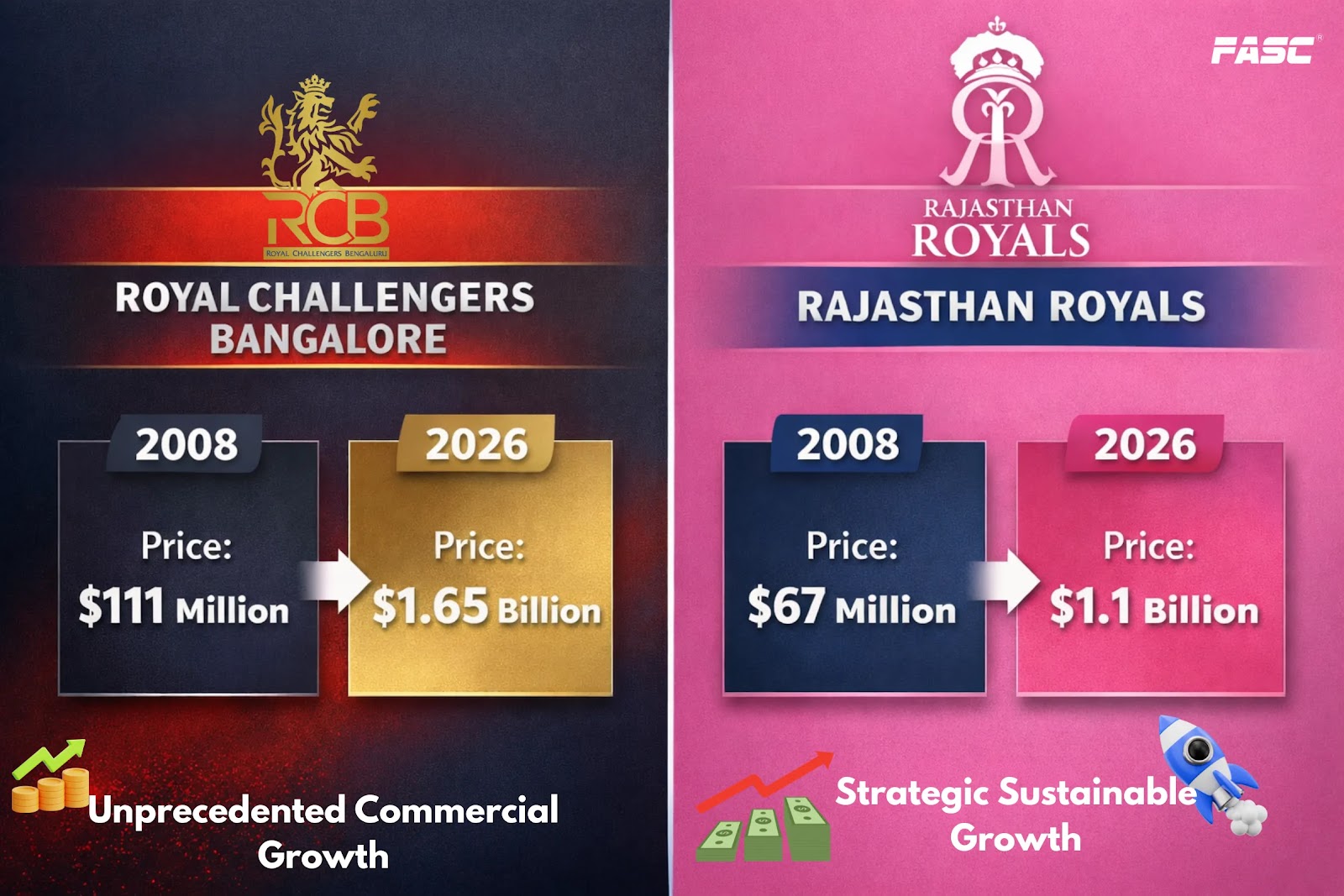
The Royal Challengers Bengaluru (RCB) franchise was sold in 2026 for around ₹16,660 crore ($1.78 billion) making it the most expensive cricket franchise ever.
Similarly, Rajasthan Royals (RR) also attracted massive investor interest, with valuations crossing $1.3 billion.
Why Investors Are Betting Big on IPL
The question is simple: why are billionaires and global firms investing so heavily in IPL?
The answer lies in three key factors.
First is guaranteed revenue sharing. IPL has a centralized model where media rights and sponsorship money are shared among all teams. This ensures financial stability even if a team doesn’t perform well.
Second is massive audience reach. IPL is watched by hundreds of millions of people across India and globally. This makes it extremely attractive for brands.
Third is limited supply. There are only a few IPL teams. This scarcity increases demand and drives valuations higher.
This is why global investors like private equity firms and large corporations are entering the IPL space aggressively.
How IPL Teams Actually Make Money
IPL franchises don’t rely on just one income source. Their revenue comes from multiple streams, which together create a strong business model.
The biggest chunk comes from central revenue sharing, which includes media rights and league sponsorships. In many teams, this accounts for over 70% of total income.
Then comes team sponsorships, where brands pay huge amounts to be associated with teams. For example, some franchises generate over ₹100 crore annually just from sponsorships.
Another major source is matchday revenue, including ticket sales and in-stadium spending. Although smaller compared to media rights, it still contributes significantly during the season.
Merchandising is also growing rapidly. Jerseys, fan gear, and accessories are becoming a strong revenue stream, similar to football clubs.
And of course, there’s prize money but interestingly, it forms only a small part of total earnings. The real money lies in branding, media deals, and the larger ecosystem around the league. This becomes even clearer when you look closely at how IPL player salaries are structured, where earnings extend far beyond just match fees into endorsements and long-term brand value.
Interesting Business Facts About IPL
One of the most fascinating things about IPL is how it blends sport with entertainment and business.
Even teams that haven’t consistently won trophies are among the most valuable. For example, RCB has always been one of the strongest brands despite performance fluctuations, thanks to fan loyalty and marketing.
Another interesting fact is that team value is not directly linked to winning. Instead, it depends more on brand strength, fan base, and sponsorship appeal.
Also, IPL’s per-match value is among the highest globally, competing with leagues like the NFL in terms of revenue efficiency.
This shows that IPL is not just growing, it is competing at a global level.
The Role of Players in the IPL Economy
Players are not just athletes in IPL they are assets. Their performance, personality, and popularity directly impact team value.
Top players bring sponsorships, increase viewership, and boost merchandise sales. That’s why teams invest heavily in auctions.
However, what’s important to understand is that player salaries are just one part of the equation. The real value lies in branding, endorsements, and long-term marketability.
How Big IPL Has Become
IPL has reached a level where it influences not just cricket, but the entire sports industry in India.
In FY2024, IPL alone contributed over ₹5,700 crore to the total income of Indian cricket.
This shows how dependent the cricket ecosystem has become on IPL revenue.
From advertisers to broadcasters, from players to local businesses, everyone benefits during the IPL season.
Even job creation increases, from event management to digital content production.
The Future of IPL Business
Looking ahead, IPL is only expected to grow bigger.
There are already discussions about IPOs for IPL teams, which means franchises could soon become publicly traded companies.
International expansion, digital streaming growth, and new sponsorship models will further increase revenues.
The next phase of IPL will not just be about cricket, it will be about global sports business leadership.
Conclusion
The IPL has redefined what a sports league can be. It is no longer just about matches, it is about media, money, marketing, and massive opportunities.
The recent billion-dollar deals of RCB and Rajasthan Royals are not exceptions, they are indicators of what IPL has become.
For fans, it’s entertainment.
For players, it's an opportunity.
For investors, it’s one of the most exciting business models in the world.
And the biggest takeaway?
IPL is still growing.
FAQs
1. Why are IPL teams so expensive?
Because of high revenue potential from media rights, sponsorships, and massive audience reach.
2. How do IPL teams earn money?
Through central revenue sharing, sponsorships, ticket sales, and merchandise.
3. Is IPL bigger than other cricket leagues?
Yes, IPL is the richest and most valuable cricket league globally.
4. Do teams make profit every year?
Most teams are profitable due to guaranteed revenue sharing, even if performance varies.
5. Will IPL teams become public companies?
There are discussions about IPOs, which could make teams investable assets in the future.
Share :