- Fitness
Digital Burnout and Physical Health: How Screen-Heavy Lifestyles Are Quietly Damaging Your Body

- May 12, 2026
- 5 min
Key Takeaways
- Digital burnout affects both mental and physical health
- Prolonged screen time contributes to poor posture, pain, and fatigue
- Regular movement is essential to offset sedentary lifestyles
- Physical activity provides powerful mental health benefits
- Yoga can effectively reduce stress while improving recovery
- Fitness is essential for modern professionals, not optional
- Small daily lifestyle changes can prevent long-term burnout damage
Technology has completely reshaped modern life. From work meetings and emails to social media and entertainment, screens now dominate much of our daily routine. While digital tools have improved efficiency, they have also created a hidden health crisis digital burnout.
Most people associate burnout with emotional exhaustion, but its physical consequences are often equally damaging. Endless hours on laptops, smartphones, and other devices are creating a sedentary, high-stress lifestyle that negatively impacts posture, energy levels, mobility, and long-term health.
Digital burnout is no longer just a productivity issue. It is a growing physical health challenge that professionals can no longer afford to ignore.

What Is Digital Burnout?
Digital burnout refers to the mental and physical exhaustion caused by excessive digital engagement. Long work hours, remote jobs, constant notifications, social media overstimulation, and poor work-life boundaries all contribute to this condition.
The body often remains inactive for extended periods while the mind stays overstimulated, creating a dangerous imbalance. Over time, this combination leads to persistent fatigue, reduced physical function, poor recovery, and increased stress levels.
The issue is not technology itself, but rather the way excessive screen-heavy lifestyles disrupt natural movement, recovery, and balance.
The Physical Toll of Screen Heavy Living
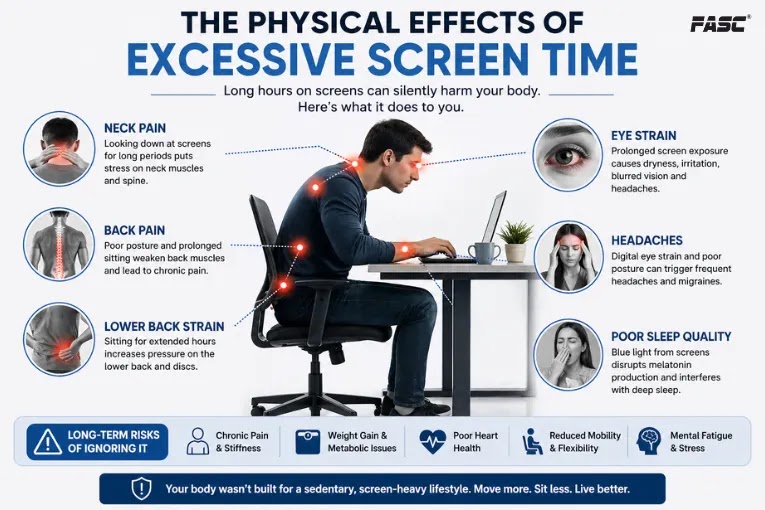
One of the most immediate effects of digital burnout is poor posture. Long hours spent sitting and leaning toward screens often cause forward head posture, rounded shoulders, lower back pain, and muscle imbalances. These issues may seem minor initially, but over time they can lead to chronic pain, limited mobility, and injury.
Sedentary behavior also reduces metabolism and overall physical performance. When daily movement decreases, the body becomes more vulnerable to weight gain, reduced cardiovascular health, weaker muscles, and poor circulation.
Many professionals underestimate the serious sedentary lifestyle health risks, including obesity, metabolic disorders, poor circulation, and reduced physical performance.
The long term screen time health effects of excessive digital exposure include posture damage, eye strain, sleep disruption, and chronic physical fatigue. Blue light exposure, particularly in the evening, interferes with melatonin production and negatively affects sleep quality. Poor sleep further reduces recovery, increases fatigue, and worsens both physical and mental burnout.
Digital Burnout and Mental Wellness
The physical consequences of digital burnout are deeply connected to mental well-being. Constant digital overload increases cortisol levels, contributing to anxiety, poor focus, and emotional exhaustion.
Incorporating physical activity into daily life is essential because movement provides significant mental health benefits, helping reduce stress, improve mood, and restore psychological balance. Regular exercise is not just beneficial for physical health, it is critical for combating the emotional effects of modern digital lifestyles.
Without intentional recovery strategies, digital burnout can quietly erode both mental and physical resilience.
Why Movement Is the Most Effective Countermeasure
The human body is designed for movement, yet modern work culture encourages prolonged stillness. This mismatch is a major reason why digital burnout has become so widespread.
Frequent movement breaks, walking, stretching, strength training, and mobility exercises help restore circulation, improve posture, and reduce the damage caused by extended sitting.
Practices like yoga for stress are especially effective because they combine physical movement with nervous system recovery. Yoga not only improves flexibility and posture but also helps regulate stress, improve breathing, and reduce anxiety, making it one of the most powerful tools for burnout prevention.
Common Warning Signs You Shouldn’t Ignore
Many professionals dismiss symptoms like neck stiffness, shoulder tightness, headaches, fatigue, and poor concentration as normal parts of work life. In reality, these are often early warning signs of digital burnout.
Other indicators may include poor sleep quality, reduced motivation to exercise, frequent body discomfort, and persistent low energy.
Recognizing these signs early is crucial because long-term neglect can lead to more serious physical and mental health issues.
Building a Healthier Digital Lifestyle
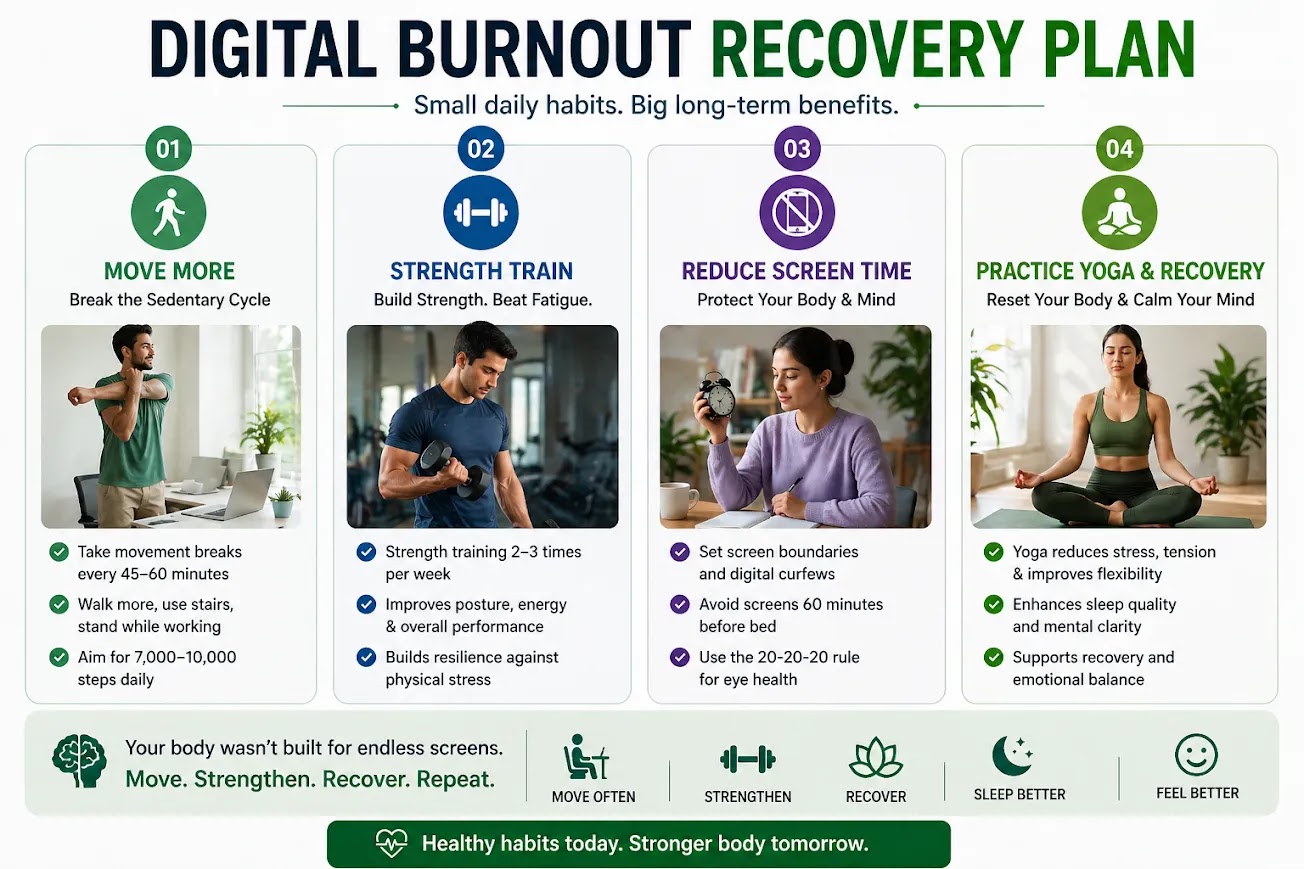
Recovering from digital burnout does not require abandoning technology, it requires creating healthier boundaries.
Effective digital burnout recovery requires consistent movement, better ergonomics, improved fitness habits, and intentional screen boundaries.
Strength training helps reverse muscular imbalances, while cardiovascular activity improves energy and metabolic health. Mobility routines and yoga enhance recovery and reduce physical tension.
Simple habits such as standing more often, limiting screen use before bed, and practicing daily movement can produce major long-term benefits.
Why Fitness Is No Longer Optional for Professionals
For modern professionals, physical fitness is no longer just about aesthetics, it is essential protection against the consequences of sedentary, screen-heavy lifestyles.
Regular exercise improves posture, strengthens muscles, boosts energy, enhances productivity, and protects long-term health.
Professionals who prioritize fitness are better equipped to handle workplace stress, maintain focus, and avoid the chronic health problems increasingly associated with digital burnout.
Long-Term Risks of Ignoring Digital Burnout
Unchecked digital burnout can contribute to chronic pain, obesity, metabolic disorders, cardiovascular issues, reduced physical performance, and serious mental health struggles.
What begins as occasional fatigue or stiffness can gradually evolve into larger health concerns if lifestyle habits remain unchanged.
The longer screen-heavy behaviors continue without intervention, the harder recovery becomes.
Conclusion
Digital burnout is one of the most overlooked physical health threats of modern life. While technology has improved convenience, excessive digital dependence is quietly damaging posture, sleep, energy, and long-term wellness.
Protecting your body in today’s digital world requires intentional movement, fitness, recovery, and healthier daily habits.
Success in modern life is no longer just about productivity, it is about sustaining your physical and mental health while navigating constant digital demands.
Your body was built to move, recover, and perform, not remain trapped behind screens.
Recommended products from FASC Coach
FAQs
1. What is digital burnout?
Digital burnout is mental and physical exhaustion caused by excessive screen time, prolonged digital engagement, and sedentary routines.
2. How does screen time affect physical health?
Excessive screen time can lead to poor posture, chronic pain, fatigue, eye strain, sleep disruption, and reduced physical fitness.
3. Can exercise help reduce digital burnout?
Yes, regular physical activity improves posture, energy, stress management, and overall health, making it one of the best recovery strategies.
4. Why is yoga effective for digital burnout?
Yoga improves flexibility, posture, breathing, and stress regulation, making it highly effective for both physical and mental recovery.
5. How can working professionals prevent digital burnout?
By incorporating movement breaks, exercise, better ergonomics, reduced screen exposure, and consistent recovery practices into daily routines.
Share :
Recent Blog



- Sep 04, 2026