- Gym
Gymnastics: The Foundation of Strength, Flexibility & Athletic Excellence
- Jan 30, 2026
- 3 min
Key Takeaways
- Gymnastics builds strength, flexibility, balance, and coordination using bodyweight movements.
- It develops discipline, confidence, focus, and mental resilience for life.
- Gymnastics forms the foundation for better movement and performance in all sports.
- It supports healthy physical development and confidence in children.
- With proper training, gymnastics is safe and suitable for all age groups.
Gymnastics is not just about flips, handstands, or winning medals. It is about learning how to control your body, move with confidence, and build strength from within. It teaches discipline, patience, and consistency — qualities that stay with you for life.
Many people believe gymnastics is only for professional athletes or young children. In reality, it is one of the best forms of training for people of all ages. Whether your goal is to improve fitness, enhance sports performance, or simply stay active, gymnastics plays a powerful role in shaping both the body and the mind.
What Is Gymnastics?
Gymnastics is a form of physical training that focuses on body movement, strength, flexibility, balance, and coordination. Unlike gym workouts that rely on machines or heavy weights, gymnastics uses your own body weight to build strength naturally and safely.
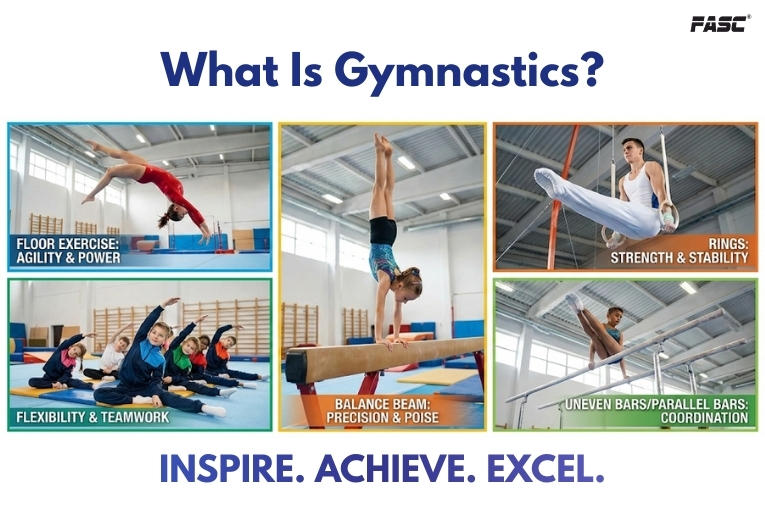
It helps you:
- Control your body better
- Improve balance and posture
- Increase flexibility
- Build strength safely
- Move more efficiently
Because of these benefits, gymnastics is often called the foundation of all sports.
Origin and History of Gymnastics
Gymnastics has a long and rich history that dates back more than 2,000 years to Ancient Greece. The word gymnastics comes from the Greek word “Gymnos, meaning naked, as athletes trained without clothes to allow free movement.

In ancient times, gymnastics was an essential part of:
- Physical education
- Military training
- Olympic competitions
Greek philosophers believed physical fitness was just as important as education and mental development.
During the 18th and 19th centuries, gymnastics evolved into a structured sport in Europe. Modern equipment and training methods were introduced, and in 1896, gymnastics became part of the modern Olympic Games. Women’s gymnastics was later added in 1928.
Today, gymnastics is practiced all over the world and is considered one of the most respected sports disciplines.
Types of Gymnastics
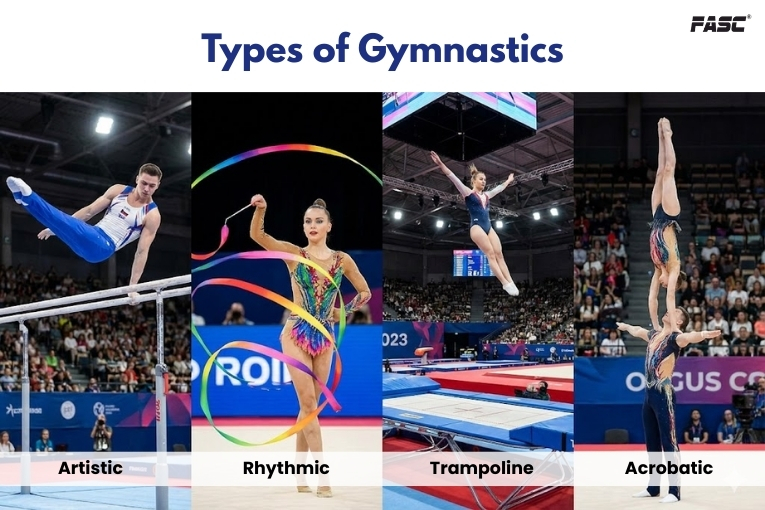
Artistic Gymnastics
The most popular form of gymnastics. It includes floor exercises, vault, rings, parallel bars, and balance beam. This form requires strength, flexibility, balance, and control.
Rhythmic Gymnastics
This style combines dance, flexibility, and coordination using equipment such as ribbons, hoops, balls, and clubs. It focuses on grace, rhythm, and precision.
Trampoline Gymnastics
Athletes perform high jumps, flips, and twists on a trampoline. It requires excellent balance, timing, and body control.
Aerobic Gymnastics
A high-energy form of gymnastics that focuses on endurance, strength, and continuous movement.
Acrobatic Gymnastics
Performed in pairs or groups, this style includes lifts, balances, and synchronized movements that require teamwork and trust.
Why Gymnastics Is So Important
Builds Strength Naturally
Gymnastics develops full-body strength without the need for heavy weights. It strengthens the core, arms, legs, and back while improving joint stability.
Improves Flexibility and Mobility
Regular gymnastics training keeps the body flexible and mobile. It reduces stiffness, improves posture, and lowers the risk of injuries.
Improves Balance and Coordination
Gymnastics teaches better control over body movements, improving balance, coordination, and overall movement quality.
Builds Mental Strength
Gymnastics helps develop discipline, focus, patience, and confidence. Learning new skills teaches perseverance and self-belief.
Benefits of Gymnastics for Children
Gymnastics is one of the best activities for growing children because it supports both physical and mental development.
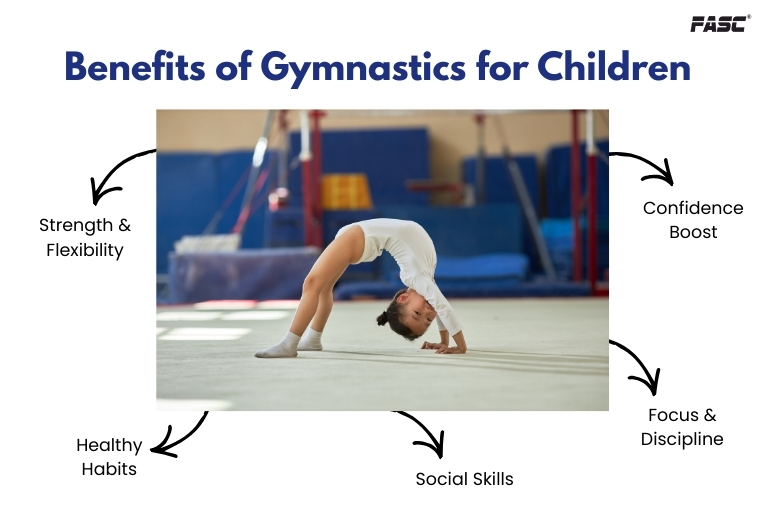
Key benefits include:
- Stronger bones and muscles
- Better posture
- Improved coordination
- Increased confidence
- Better focus and discipline
Children who practice gymnastics often perform better in sports and develop healthy fitness habits early in life.
Gymnastics for Athletes
Many professional athletes include gymnastics in their training because it improves overall performance.
Gymnastics helps athletes develop:
- Speed and agility
- Core strength
- Balance and stability
- Injury prevention
- Better movement control
Sports such as football, boxing, MMA, athletics, swimming, and martial arts benefit greatly from gymnastics training.
Gymnastics for Beginners
Beginners should start with basic movements such as:
- Stretching and mobility exercises
- Balance drills
- Core strengthening
- Simple bodyweight movements
Progress should always be gradual. With regular practice and proper guidance, strength and confidence improve naturally.
Safety and Training Guidelines
To train safely in gymnastics:
- Always warm up before training
- Learn movements step by step
- Focus on correct technique
- Avoid rushing advanced skills
- Train under proper supervision
Safety is essential for long-term success and injury prevention.
Modern Importance of Gymnastics
In today’s lifestyle, many people struggle with poor posture, weak muscles, and lack of physical activity. Gymnastics helps solve these problems by improving mobility, strength, and overall fitness.
It is now widely used in:
- Schools
- Sports academies
- Fitness programs
- Athletic training centers
- Gymnastics helps people stay active, confident, and healthy.
Conclusion
Gymnastics is more than just a sport — it is a way of building a strong body and a strong mind. It improves strength, flexibility, balance, and confidence while teaching discipline and focus.
Whether you are a child, an athlete, or someone who simply wants to stay fit, gymnastics offers lifelong benefits. It lays the foundation for physical excellence and helps you move better, feel stronger, and live healthier.
If you want to build real fitness that lasts a lifetime, gymnastics is the perfect place to begin.
FAQs
1. Is gymnastics only for children?
No. Gymnastics can be practiced at any age. Adults and athletes use it to improve strength, mobility, balance, and overall fitness.
2. Do I need to be flexible to start gymnastics?
No. Flexibility develops gradually with regular training. Beginners start with basic movements and progress over time.
3. Can gymnastics help with overall fitness?
Yes. Gymnastics improves full-body strength, posture, coordination, and endurance while building mental focus and confidence.
4. Is gymnastics safe for beginners?
Gymnastics is safe when taught correctly. Proper warm-ups, step-by-step progress, and supervised training reduce injury risk.
5. How does gymnastics help other sports?
Gymnastics improves core strength, balance, agility, and body control, which enhances performance and reduces injuries in many sports.

.png)
.png)
.png)