- Fitness
Yoga for Burnout Recovery (Especially for Working Professionals)
.png)
- Apr 28, 2026
- 5 min
Key Takeaways
- Burnout is caused by lack of recovery, not just workload.
- Yoga helps shift your body from stress mode to recovery mode.
- Consistent short sessions are more effective than occasional long ones.
- Breathing techniques play a major role in reducing stress and improving focus.
- A sustainable yoga routine improves both mental health and work performance.
Understanding Burnout in Today’s Work Culture
Burnout is not about just feeling tired. It’s a deeper state of physical, mental and emotional exhaustion caused by prolonged stress. You may notice it when you feel constantly drained, lose interest in your work, or struggle to stay focused even on simple tasks.

Modern work environments demand continuous output, often without proper recovery. This imbalance leads to poor sleep, anxiety and reduced productivity. Research shows that yoga can help reduce stress and improve overall well being, making it a valuable tool in managing burnout symptoms.
The key issue is not just workload, it’s the lack of recovery. And that’s exactly where yoga becomes powerful.
Why Yoga Works for Burnout Recovery
Yoga is not just stretching or flexibility. It is a combination of movement, breathing and mindfulness that directly impacts your nervous system.

When you are burned out, your body stays in a constant fight or flight mode. Yoga helps shift your body into a calmer “rest and recover” state. This shift improves mental clarity, reduces fatigue, and helps you feel more in control.
Studies suggest that regular yoga practice can reduce stress levels, improve sleep and enhance emotional stability, all of which are essential for recovering from burnout.
Unlike intense workouts, yoga doesn’t add more stress to your system. Instead, it balances your energy, which is exactly what burnout recovery requires.
Signs You Need Yoga (Not Just Rest)
Many professionals try to fix burnout with short breaks or weekends off. But if the symptoms keep coming back, it means your system needs deeper recovery.
You should consider yoga if:
- You feel tired even after sleeping,
- Your focus and productivity are dropping,
- You experience constant body stiffness or headaches,
- You feel mentally overwhelmed or emotionally drained
Burnout is not solved by doing nothing, it’s solved by doing the right kind of activity. Yoga gives you that balance.
Types of Yoga That Help in Burnout Recovery
Not all yoga styles are the same. When dealing with burnout, the goal is not intensity, but recovery and regulation.
Slow and mindful practices work best because they calm your nervous system instead of overstimulating it.
Practices inspired by spiritual yoga benefits focus on internal awareness. These help you disconnect from constant external pressure and reconnect with yourself.
Choosing the right style is important. If your workouts already feel exhausting, yoga should feel relieving, not draining.
Simple Yoga Routine for Busy Professionals
You don’t need an hour-long session to see results. Even 15–20 minutes of the right routine can make a noticeable difference.
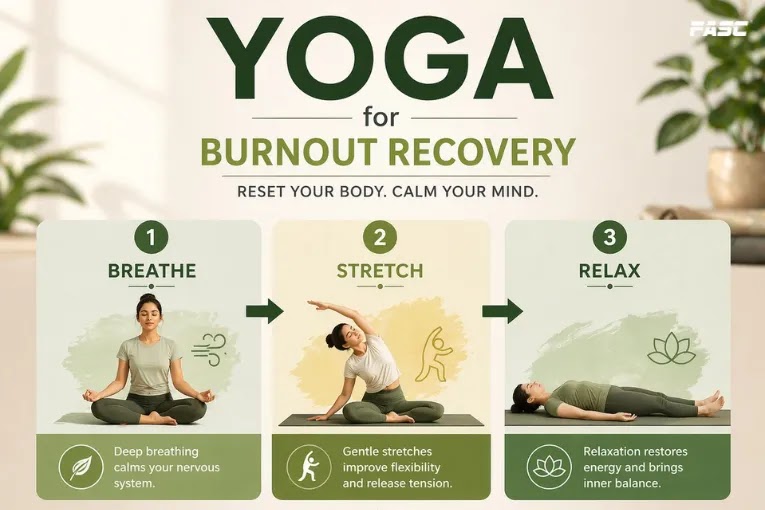
Structured routines like morning yoga routines can help reset your day, giving you clarity, energy, and a sense of control before work even begins.
A simple structure can look like this:
- Begin with deep breathing to calm your mind
- Move into light stretches to release stiffness
- Add a few slow poses to improve circulation
- End with a short relaxation phase
Consistency matters more than duration. Doing this daily is far more effective than doing long sessions occasionally.
Best Yoga Poses for Burnout Recovery
Certain poses are especially effective because they target both physical tension and mental stress.
Restorative poses help your body relax deeply. Forward bends calm the mind and reduce anxiety. Gentle flows improve circulation and release stored tension.
For example, poses that stretch your spine and open your chest can counter the effects of long sitting hours. Relaxation poses help your nervous system slow down, which is essential for recovery.
The focus should always be on how you feel, not how perfectly you perform the pose
Breathing: The Most Powerful Tool You’re Ignoring
One of the biggest benefits of yoga comes from breathing techniques, not just physical movement.
When you’re stressed, your breathing becomes shallow and fast. This signals your body to stay in a stressed state. Controlled breathing does the opposite, it tells your body to relax.
Even taking a few minutes during your workday to focus on your breathing can create a noticeable shift in your energy and mindset.
How Yoga Improves Work Performance
Most professionals look at fitness as something separate from work. But in reality, your physical and mental state directly affects your performance.
Yoga helps you:
- Stay focused for longer periods
- Handle pressure without feeling overwhelmed
- Improve decision-making ability
- Maintain consistent energy throughout the day
This is why many companies are now integrating yoga into workplace wellness programs. It’s not just about health, it’s about productivity.
Building a Sustainable Routine (Without Burnout Again)
The biggest mistake people make is trying to do too much too soon. That’s what causes burnout in the first place.
Your yoga routine should feel sustainable. It should fit into your schedule without adding pressure.
Start small. Even 10-15 mins daily is enough. As your body adapts, you can gradually increase the duration or intensity.
Yoga works best when it becomes a habit, not a temporary solution.
How Long Does It Take to See Results?
Burnout doesn’t happen overnight, and recovery also takes time.
Within 1–2 weeks, you may start feeling calmer and more relaxed. In 3–4 weeks, your energy levels and focus begin to improve. Over time, you’ll notice better emotional control and overall well-being.
The key is staying consistent and not expecting instant transformation.
Conclusion
Burnout is not just about working too much, it’s about not recovering enough.
Yoga doesn’t just help you relax. It teaches your body how to handle stress better, so you don’t reach burnout again.
In a fast-paced world, the real advantage is not working harder, it’s recovering smarter.
Recommended products from Yoga Coach
Frequently Asked Questions (FAQs)
1. Can yoga completely cure burnout?
Yoga helps manage and reduce burnout symptoms, but complete recovery also depends on lifestyle and work environment changes.
2. How often should I do yoga for burnout recovery?
4–6 days per week is ideal, even if sessions are short.
3. Is yoga better than gym workouts for stress?
For burnout recovery, yoga is more effective because it focuses on relaxation and nervous system balance.
4. Can beginners start yoga for burnout?
Yes, beginners can start with simple breathing and basic poses without any prior experience.
5. What is the best time to do yoga?
Morning or evening both work, but consistency matters more than timing.
Share :