- Sports
History of Volleyball: How the Sport Became a Global Athletic Powerhouse

- Nov 18, 2025
- 4 min
Key Takeaways
- The history of volleyball began in 1895, created by William G. Morgan as a low-impact sport suitable for all ages.
- The origin of volleyball was influenced by multiple sports, including basketball.
- Volleyball equipment evolved drastically, from basketball-like balls to modern lightweight volleyballs.
- International expansion shaped world volleyball, with FIVB forming in 1947 and major tournaments like World League Volleyball emerging.
- The nature and background of volleyball highlight teamwork and strategy making it a dynamic global sport today.
History of Volleyball: A Journey Through Time
The history of volleyball is a story of creativity, refinement, and worldwide recognition. Today, volleyball is played in schools, professional leagues, beaches, and Olympic arenas. But its rise began with simple goals: fitness, teamwork, and inclusivity. When you understand the history of volleyball, you appreciate not only the sport but also the values behind it.
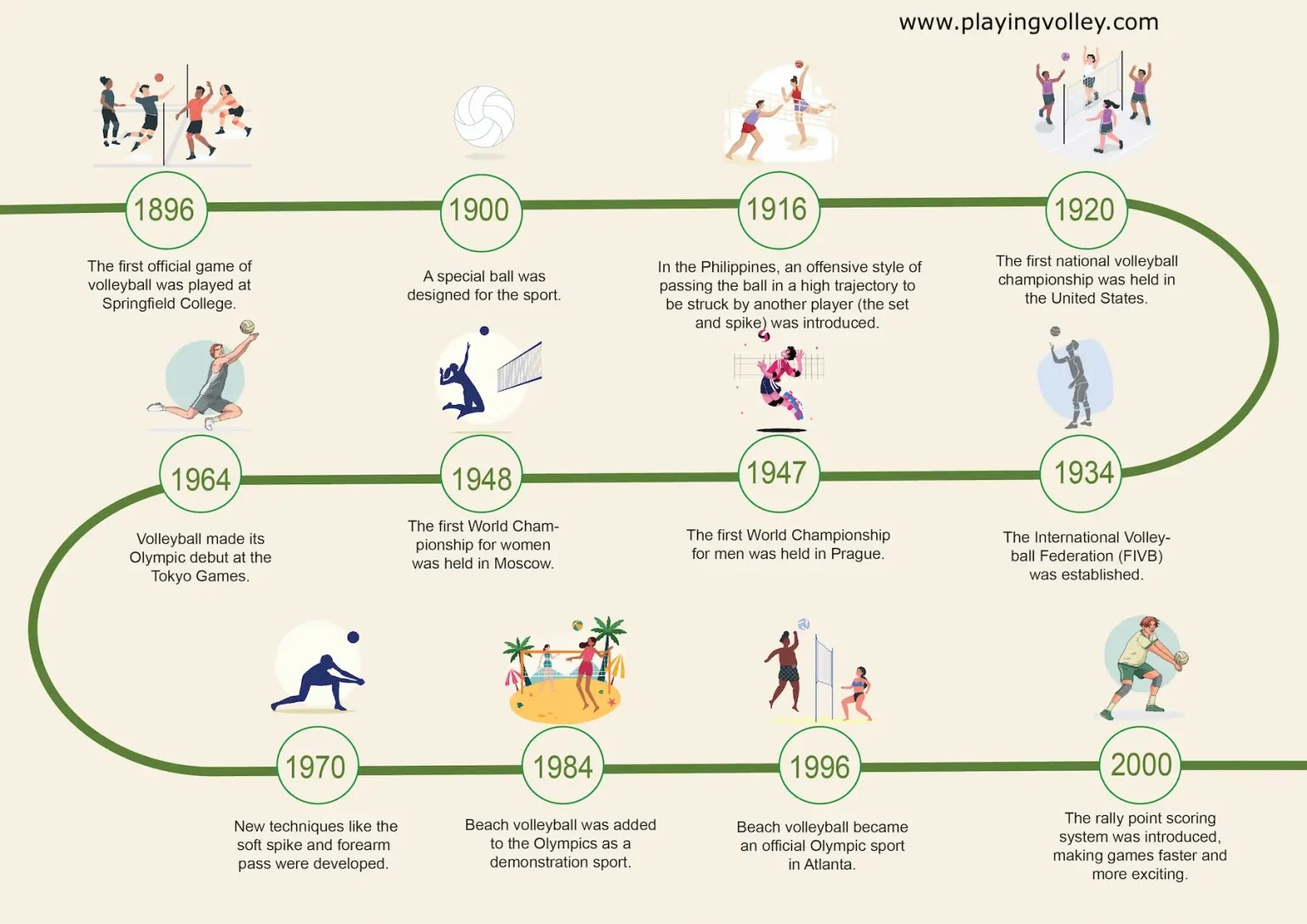
How It All Started
The origin of volleyball traces back to 1895, when William G. Morgan introduced a new activity called “Mintonette” at the YMCA in Holyoke, Massachusetts. Morgan wanted a sport that combined elements of basketball, baseball, and tennis but involved less physical contact. This early concept formed the basic background of volleyball, focusing on coordination, movement, and skill rather than aggression.
In 1896, the sport was renamed “volleyball” after spectators noticed the ball being volleyed back and forth. This moment became a turning point in the history of volleyball, giving the sport a name that perfectly represented its nature.
Nature and Rules of Volleyball
Understanding the nature and background of volleyball requires looking at how the game developed. Early volleyball did not have standardized rules. Over time, net height, court dimensions, scoring systems, and player positions were established.

Understanding the nature and background of volleyball requires looking at how the game developed. Early volleyball did not have standardized rules. Over time, net height, court dimensions, scoring systems, and player positions were established.
Rules of Volleyball
The rules of volleyball are designed to keep the game fast, fair, and skill-focused, ensuring every rally tests teamwork and technique. These guidelines outline how players rotates, and legally handle the ball during play.
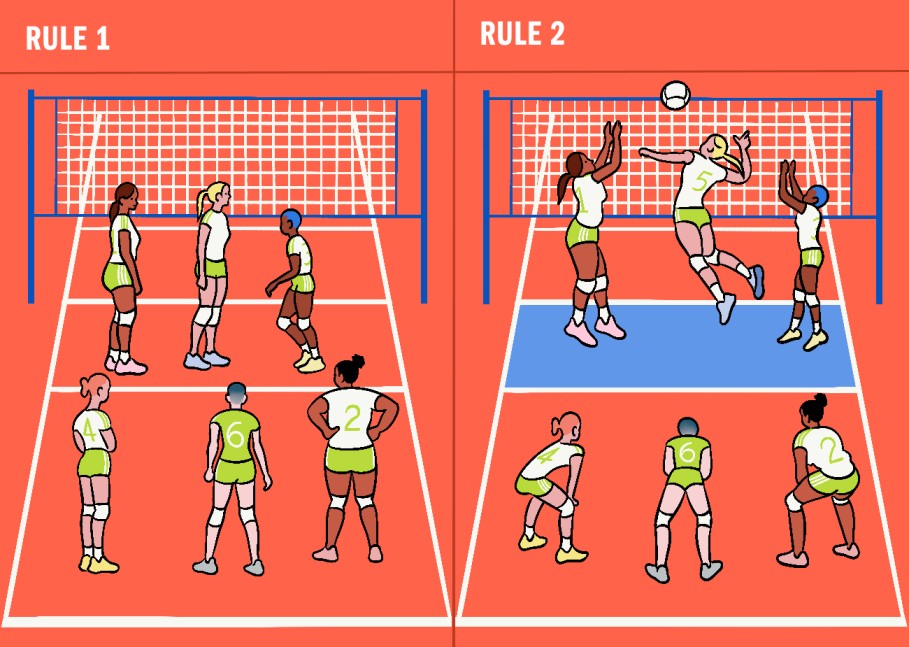
Here are the key rules that shape how volleyball is played:
1. Team Composition
- Each team has 6 players on the court at a time.
- Players rotate clockwise every time their team wins a point on the opponent’s serve.
2. Scoring System
- Matches follow the rally point system.
- A point is scored on every rally, regardless of which team served.
- A team must win by at least 2 points.
3. Hits Per Team
- Each team is allowed a maximum of three touches to return the ball over the net.
- A block does not count as a touch.
4. Legal and Illegal Hits
- Players must strike the ball; they cannot catch, throw, or hold it.
- Double hits (two consecutive contacts by the same player) are not allowed except on a block or the first defensive touch.
5. Serving Rules
- The game starts with a serve behind the end line.
- The ball can touch the net on a serve as long as it goes over.
6. Net Rules
- Players cannot touch the net during play.
- Crossing under the net is allowed as long as it does not interfere with opponents.
- Blocking or attacking a serve is not allowed.
7. Rotation and Positions
- Positions include: Setter, Outside Hitter, Middle Blocker, Opposite Hitter, and Libero.
- The libero is a defensive specialist who cannot serve, block, or attack above the net height.
8. Boundaries
- If the ball lands on any part of the boundary line, it is considered in.
- Players may run outside the court to save the ball.
- Spiking and blocking now key techniques were added years after the sport began.
Equipment of Volleyball
The history and equipment of volleyball also evolved significantly. The first volleyballs were simply basketball bladder-type balls. As the sport grew, manufacturers developed lighter, more durable, and more responsive balls.
Some of the changes are:
- Introduction of leather-covered volleyballs
- Standardization of net height (7 ft 11 ⅝ in for men; 7 ft 4 ¼ in for women)
- Use of kneepads, shoes, and specialized uniforms
- Advanced beach volleyball gear
Rise of World Volleyball
By the 1940s and 50s, volleyball had spread worldwide. The founding of the Fédération Internationale de Volleyball (FIVB) in 1947 officially opened a new chapter in the history of volleyball. The first World Championships were held soon after, giving rise to international competitions and professional teams.

Today, world volleyball includes:
- Olympic Volleyball
- Beach Volleyball World Championships
- Continental leagues
- Youth and professional tournaments
- World League Volleyball (launched in 1990)
Volleyball Coaching Culture
With the sport’s rising popularity, training institutions and academies emerged. Searching for volleyball coaching near me now shows hundreds of options, from local clubs to national-level programs. This growth reflects how deeply the history of volleyball has influenced modern training and athletic development.
Recommended Volleyball Products
Here are some top volleyball items you can buy directly from fettleandsports.com:
-
-
Material: Polypropylene (PP)
-
Use: Training / general play good for both indoor and outdoor soft surfaces.
-
-
GUPTA’S Classic Nylon Net for Volleyball
-
Weather-treated nylon net with reinforced edges, suitable for outdoor courts.
-
Conclusion
The history of volleyball shows how a simple idea grew into a global sport loved across continents. From its early origins to modern international leagues, volleyball continues to evolve with skill, teamwork, and passion. Understanding its journey helps players and fans appreciate the game even more today.
FAQs
1. Who invented volleyball?
William G. Morgan invented the sport in 1895 at the YMCA in Massachusetts.
2. Why was volleyball originally called Mintonette?
It was named Mintonette because it resembled badminton and involved volleying a ball across a net.
3. When did volleyball become an Olympic sport?
Indoor volleyball became an Olympic sport in 1964, while beach volleyball debuted in 1996.
4. What equipment is essential for playing volleyball?
A standard volleyball, knee pads, court shoes, a net system, and proper sportswear.
5. How can beginners start learning volleyball?
Search for volleyball coaching near me, join a local club, or start with basic passing and serving drills at home or school.
.png)
.png)