- Fitness
Skinny Fat Body Type - Causes, Effects & The Right Way to Fix It
- Feb 03, 2026
- 4 min
Key Takeaways
- Being slim does not always mean being fit; body composition matters more than scale weight.
- The skinny fat body type results from low muscle mass and higher body fat despite normal weight.
- Strength training and adequate protein are essential to fix a skinny fat physique.
- Excessive cardio, crash dieting, and poor recovery worsen muscle loss and slow progress.
- Consistent training, balanced nutrition, and proper sleep lead to long-term transformation.
Many people believe that if they are slim, they must be fit. If the weighing scale shows a normal number and clothes fit well, everything seems fine. In reality, this assumption is one of the biggest fitness misconceptions.
A large number of people today struggle with the skinny fat body type. From the outside, the body looks lean, but internally it lacks muscle and carries excess fat—especially around the stomach, chest, and lower back. This leads to low strength, poor stamina, and a body that feels weak despite looking “normal.”
This condition usually develops when people focus only on weight loss and completely ignore strength training, proper nutrition, and recovery. Excessive cardio, low-calorie diets, skipping meals, and avoiding resistance training slowly weaken the body, reduce muscle mass, and slow metabolism.
What Is a Skinny Fat Body Type?
In simple terms, a skinny fat body means your body weight is normal, but your body composition is unhealthy.
Because muscle mass is low, the body lacks structure and strength. Calories consumed are more likely to be stored as fat rather than used to build muscle. This is why arms and legs often appear thin, while fat accumulates around the abdomen and chest.
Common characteristics include:
- Normal or low body weight
- Higher-than-ideal body fat percentage
- Low muscle mass
- Soft, untoned appearance
- Poor strength and endurance
Many people in this situation believe they need to lose more weight. In reality, the solution is not further weight loss but improving body composition by building muscle and reducing fat gradually.
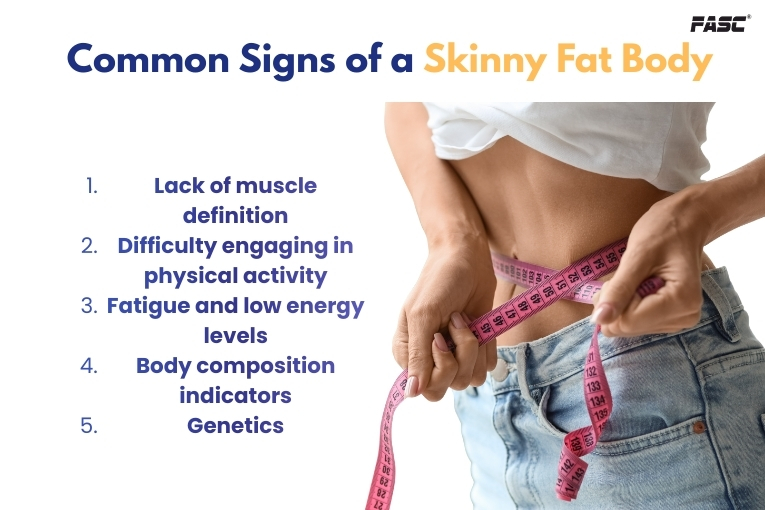
Common Signs of a Skinny Fat Body
If you are unsure whether this applies to you, the following signs are usually clear indicators:
- Thin arms and legs with a protruding belly
- Chest or lower-back fat despite low body weight
- Poor posture and rounded shoulders
- Low energy throughout the day
- Little to no muscle gain despite regular workouts
- Weak strength levels
In such cases, eating less only worsens the problem by causing further muscle loss.
Main Causes of the Skinny Fat Body Type
1. Lack of Strength Training
The most common reason people become skinny fat is avoiding resistance training. Many rely only on walking, jogging, or cardio workouts, assuming these are enough to stay fit.
Without strength training:
- Muscle mass gradually decreases
- Metabolism slows down
- Fat loss becomes more difficult over time

Beginners often feel confused about where to start, which leads to inconsistency or incorrect training. This confusion is addressed clearly in Beginner’s Guide to Strength Training at Home, which explains how to build strength safely and effectively.
2. Low Protein Intake
Protein is essential for muscle repair and growth. When protein intake is consistently low—especially during dieting—the body begins breaking down muscle tissue.
This results in:
- Weak muscles
- Slow recovery
- Poor improvement in body shape
Most skinny fat individuals are not overeating; they are simply eating the wrong types of food. Practical meal planning and protein choices are explained in Best Protein Food & Meals for Muscle Gain, which helps simplify nutrition without extreme dieting.
3. Crash Dieting and Skipping Meals
Crash diets may reduce scale weight quickly, but most of that weight comes from muscle, not fat.
Over time, this leads to:
- A slower metabolism
- Increased muscle loss
- Fat regain once normal eating resumes
This cycle keeps people stuck in the skinny fat phase for years.
4. Excessive Cardio Without Strength Training
Cardio is beneficial for heart health, but when it becomes the only form of exercise, muscle loss increases—especially if calorie and protein intake are low.
The issue is not cardio itself, but an imbalance between cardio and resistance training.
5. Poor Sleep and High Stress
Recovery is often overlooked, but it plays a major role in body transformation. Poor sleep increases stress hormones, slows muscle recovery, and interferes with fat loss.
The importance of rest and recovery is explained in detail in sleep & recovery science, highlighting why training alone is not enough.
Problems Caused by a Skinny Fat Body
The skinny fat condition affects more than appearance:
- Low physical strength
- Poor posture and joint stability
- Reduced stamina
- Low confidence
- Slow metabolic rate
- Increased risk of lifestyle-related diseases
Ignoring this condition can lead to long-term health issues as physical capacity declines with age.
How to Fix the Skinny Fat Body the Right Way
1. Make Strength Training a Priority
Strength training should be performed 4–5 days per week, focusing on compound exercises such as:
- Squats
- Deadlifts
- Push-ups
- Pull-ups
These movements train multiple muscle groups at once and are essential for building overall strength and structure.
2. Maintain Consistent Protein Intake
Protein intake should be approximately 1.6–2 grams per kilogram of body weight.
Good sources include:
- Eggs
- Chicken or fish
- Paneer and dairy products
- Pulses and legumes
Consistency matters more than perfection.
3. Use Cardio Strategically
Limit cardio to 2–3 moderate sessions per week. Use it to support cardiovascular health, not as the primary fat-loss tool.
Excessive cardio without strength training slows progress.
4. Prioritize Sleep and Recovery
Aim for 7–8 hours of quality sleep each night. Muscle growth and fat loss occur during recovery, not during workouts.

How Long Does It Take to See Results?
With consistent effort:
- 3–4 weeks: Strength noticeably improves
- 6–8 weeks: Visible changes in body shape
- 3–6 months: A leaner, stronger, and more athletic physique
There are no shortcuts—only steady, consistent progress.
Conclusion
The skinny fat body type is not permanent. It develops due to:
- Poor training habits
- Low protein intake
- Excessive cardio
- Inadequate recovery
Correct the basics:
- Strength training
- Balanced nutrition
- Proper sleep
- Long-term consistency
When these fundamentals are in place, body composition improves naturally and sustainably.
FAQs
1. What does “skinny fat” actually mean?
Skinny fat refers to having a normal body weight but low muscle mass and higher body fat, often stored around the stomach and chest.
2. Should skinny fat people lose more weight?
No. Further weight loss usually leads to more muscle loss. The focus should be on building muscle and improving body composition.
3. Can cardio alone fix a skinny fat body?
No. Cardio without strength training often worsens the problem by reducing muscle mass and slowing metabolism.
4. How important is protein for fixing a skinny fat physique?
Protein is crucial because it supports muscle repair and growth. Low protein intake makes it harder to build strength and improve body shape.
5. How long does it take to see results when fixing skinny fat?
Strength improvements can appear within weeks, visible changes in 6–8 weeks, and major body transformation in 3–6 months with consistency.
.png)
.png)