- Sports
Sports vs Gym Training: Which One Builds a Stronger Body and a Sharper Mind?

- Jan 16, 2026
- 4 min
Key Takeaways
- Gym training builds strength, muscle balance, and physical structure.
- Sports training improves endurance, coordination, agility, and mental resilience.
- Each approach contributes differently to mental well-being.
- Injury risks exist in both and can be reduced with proper guidance.
- A combination of gym and sports training offers a balanced and sustainable fitness solution.
When people decide to focus on fitness, one of the first questions they face is whether they should join a gym or take up a sport. Both options are popular, both have strong supporters, and both promise better health. Confusion often arises when fitness is judged only by appearance or short-term results.
Some people associate fitness with muscle size and body shape, while others believe true fitness comes from movement, stamina, and mental strength developed through sports. In reality, fitness has many dimensions. Understanding how gym training and sports training affect the body and mind differently can help individuals make choices that support long-term health and overall well-being.
Physical Development: Strength vs Functionality

Gym Training
Gym training is structured and controlled. Exercises focus on specific muscle groups, making it effective for building strength, improving muscle balance, and achieving visible physical changes. When performed correctly, gym training also supports joint health, posture, and overall body stability.
However, gym movements are often repetitive and predictable. While this is beneficial for muscle development, it may not fully challenge the coordination, balance, or adaptability required for everyday physical activities. the coordination,
Sports Training
Sports training emphasises movement, coordination, and adaptability. Activities such as running, jumping, changing direction, and reacting to dynamic situations improve endurance, agility, and functional strength. These movements train the body to work as a complete unit rather than in isolated parts.
Sports-trained bodies are often efficient and responsive. Even if muscle definition is less prominent, the body is conditioned to perform under varied physical demands.
Physical Perspective
Gym training supports physical structure and strength, while sports training improves movement quality and functionality. Both play important roles in overall physical fitness.
Mental Development: Focus vs Resilience

Mental Benefits of Gym Training
Gym training encourages discipline, consistency, and self-awareness. Following routines, tracking progress, and working toward gradual improvement help develop focus and patience. Many individuals also find gym workouts beneficial for stress management and mental clarity.
At the same time, gym environments usually lack external pressure. Since intensity and pace are self-controlled, opportunities to develop quick decision-making under stress are limited.
Mental Benefits of Sports Training
Sports naturally place individuals in challenging situations. Athletes must manage pressure, adapt quickly, and cope with both success and failure. These experiences build emotional control, confidence, and mental resilience.
Team sports improve communication and accountability, while individual sports strengthen concentration and self-belief. These mental skills often extend beyond training into daily life.
Mental Perspective
Gym training supports routine and mental focus, while sports training builds adaptability and resilience. Both contribute positively to mental well-being in different ways.
Injury Risk and Safety
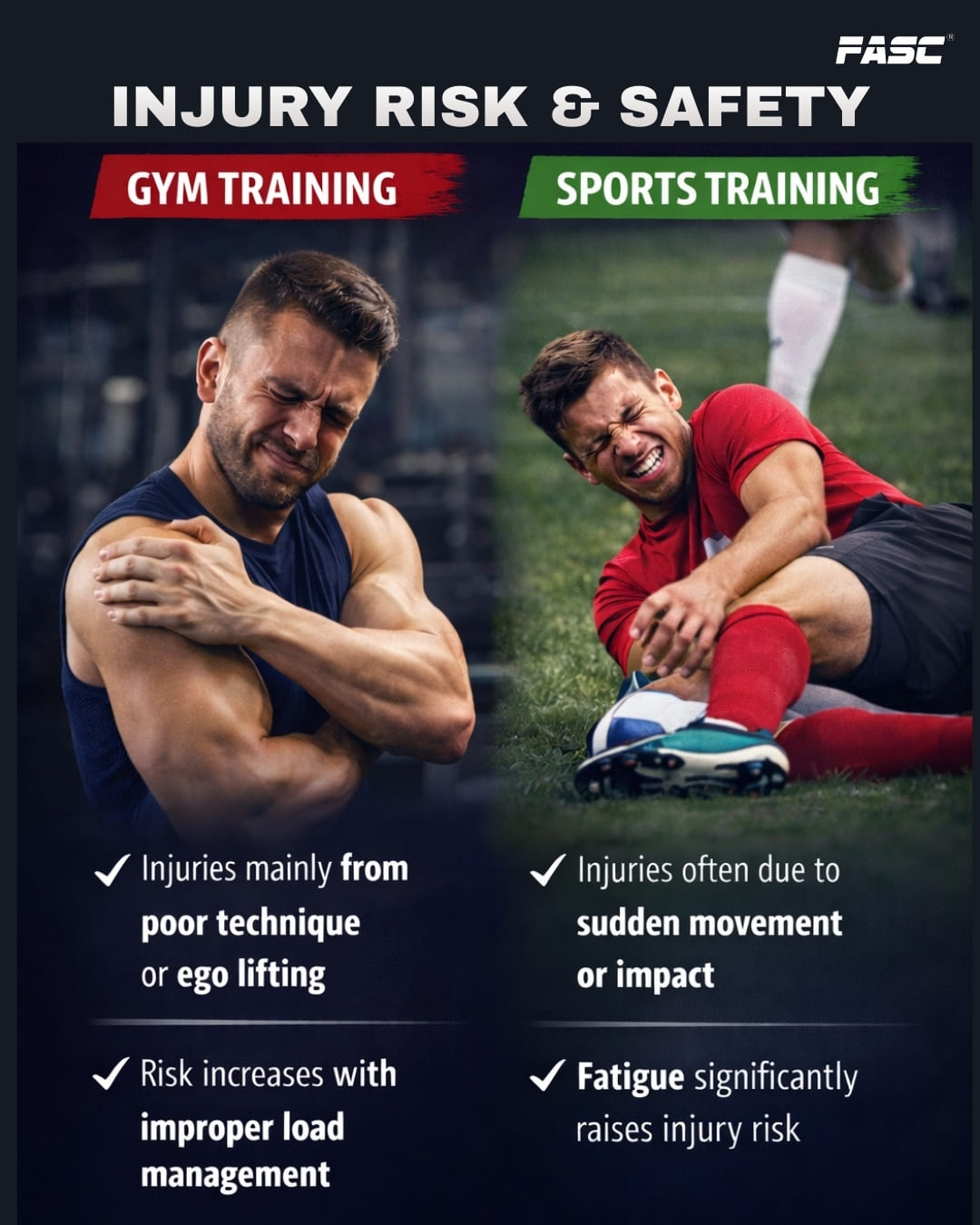
Injuries can occur in both gym and sports training, but the causes often differ. Gym-related injuries are commonly linked to improper technique, excessive loading, or insufficient recovery. With proper guidance and structured progression, many of these risks can be reduced.
Sports injuries may result from sudden movements, fatigue, or contact situations. While some risk is unavoidable, proper conditioning, warm-ups, and recovery practices play a significant role in prevention.
Ultimately, safety depends more on training approach and awareness than on the type of activity itself.
Longevity and Sustainability
Gym training is highly adaptable and can be adjusted for different ages and fitness levels, making it suitable for long-term health goals. Sports training, on the other hand, offers enjoyment and engagement, which helps maintain motivation over time.
As fitness needs change, training intensity and style can be modified. Recreational sports and balanced strength training can remain part of a sustainable lifestyle at any age.
The Value of a Combined Approach
Instead of choosing between gym training and sports training, many individuals benefit most from combining both. Strength training supports sports performance by improving power, balance, and injury resistance. Sports training adds movement variety, endurance, and mental engagement to gym routines.
This integrated approach supports complete physical development, mental strength, and long-term fitness.
Recommended Products
1. KONEX Hand Grip : Great for strengthening grip, forearms, and improving performance in pull-ups, deadlifts, and other strength exercises.
2. KONEX Pushup Bar : Helps improve push-up form, reduces wrist strain, and increases upper-body workout intensity ideal for home workouts with limited equipment.
3. Badminton Shoes with Grip Support – Prevent injuries and improve movement
Conclusion
Gym training and sports training both play valuable roles in building fitness, but they serve different purposes. Gym workouts focus on strength, structure, and controlled progress, while sports develop movement, endurance, coordination, and mental resilience. Relying on only one can limit overall development.
When combined thoughtfully, they support a stronger body, sharper mind, and long-term consistency. The most sustainable fitness approach is one that matches individual goals, adapts with age, and keeps motivation high through variety, balance, and enjoyment.
FAQs
1. Is gym training better than sports for overall fitness?
Neither is better on its own. Gym training improves strength and structure, while sports training develops movement, endurance, and adaptability. Overall fitness benefits most from a balance of both.
2. Can sports training replace gym workouts completely?
Sports training can maintain good fitness, but gym training helps build strength, muscle balance, and injury resistance that sports alone may not fully address.
3. Which option is better for mental health—gym or sports?
Both support mental well-being in different ways. Gym training builds focus and routine, while sports training strengthens resilience, confidence, and stress-handling skills.
4. Is injury risk higher in sports compared to gym training?
Injury risks exist in both. Gym injuries often come from poor technique or overload, while sports injuries result from sudden movements or contact. Proper training and recovery reduce risks in both cases.
5. What is the most sustainable fitness approach long term?
A combined approach works best. Strength training supports physical health, while sports add enjoyment, movement variety, and long-term motivation.
Disclaimer
The information provided in this blog is for educational purposes only and does not replace professional medical or fitness advice. Individual fitness levels and health conditions vary. Always consult a qualified fitness professional, sports consultant, or healthcare provider before starting or modifying any training program.
.png)
.png)