- Sports
The Business Behind Every Major Sporting Event: What Fans Don't See
- Jul 10, 2026
- 5 min
Key Takeaways
- Sporting events are major economic ecosystems.
- Revenue extends far beyond ticket sales.
- Multiple industries benefit from every event.
- Technology is becoming increasingly important in sports operations.
- India's growing sports market presents significant opportunities.
When fans watch a cricket final, a football match, a marathon, or an international tournament, their attention naturally stays on the athletes, the scoreboards, and the celebrations.
What they rarely see is the enormous business operation working behind the scenes.
Every successful sporting event is supported by thousands of professionals, hundreds of businesses, and months sometimes years of planning.
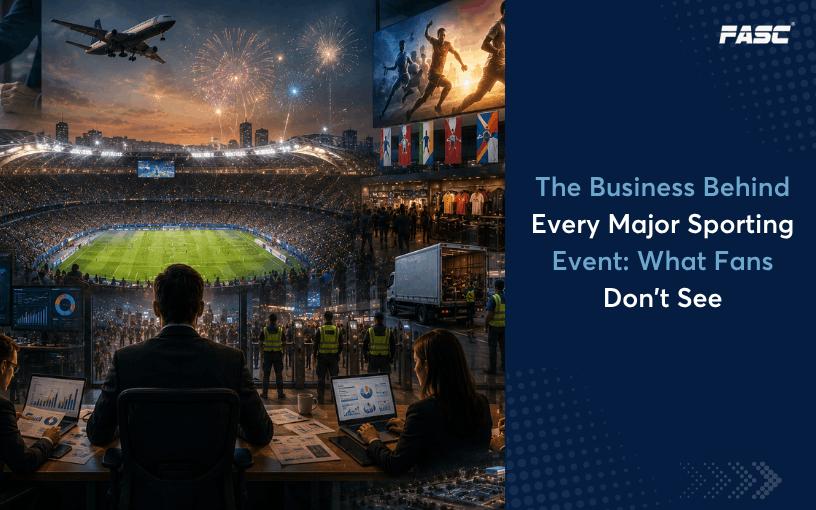
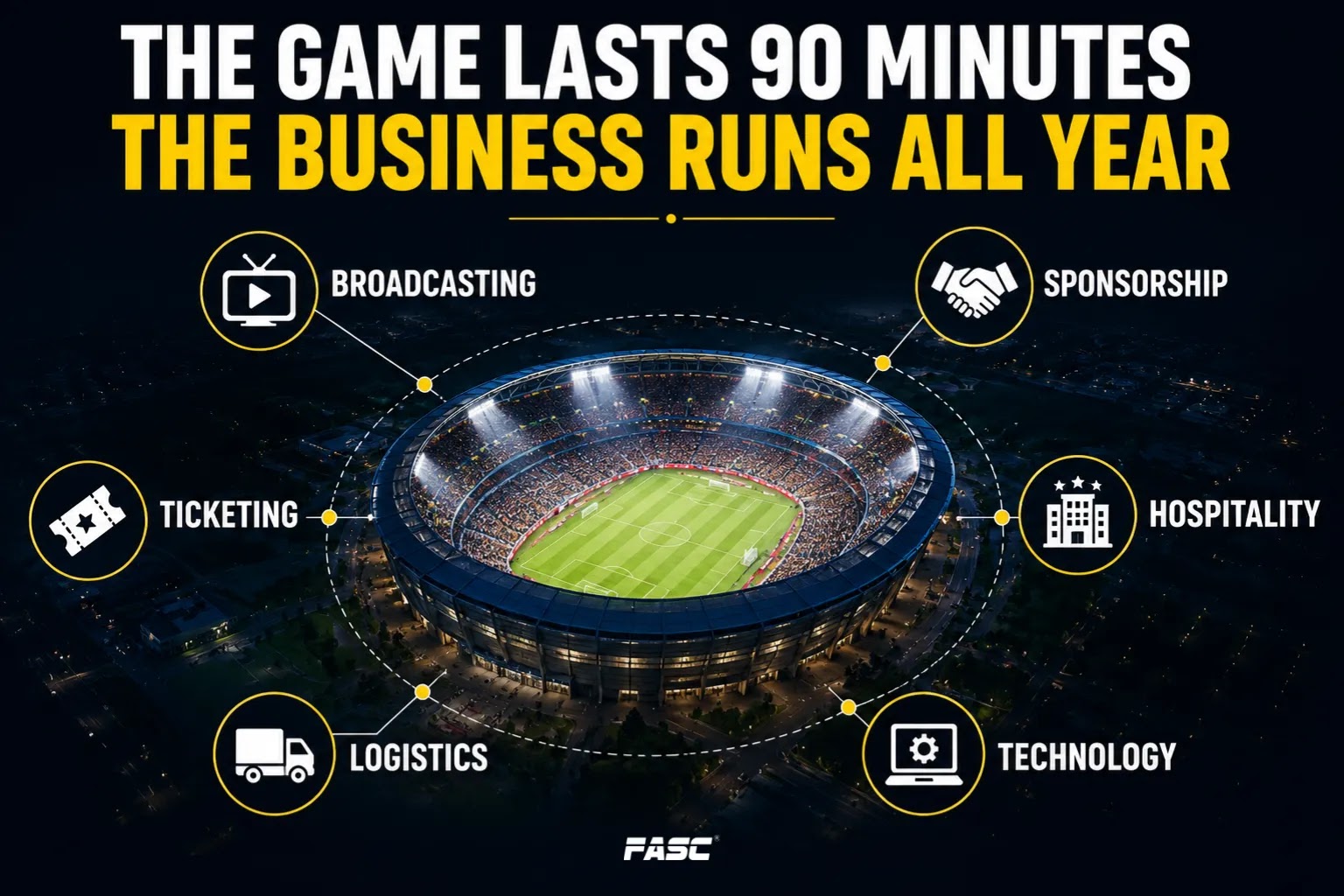
From sponsorship agreements and broadcasting rights to logistics, hospitality, security, merchandise, and digital engagement, sporting events have evolved into sophisticated business ecosystems.
In many cases, the business happening outside the stadium can be just as significant as the competition taking place inside it.
A Sporting Event Is An Entire Economy In Motion
Modern sporting events function much like temporary cities.
For a few hours or sometimes several weeks thousands of people work together to deliver an experience that millions enjoy.
This includes event organisers, venue managers, broadcasters, technology providers, caterers, transportation companies, security personnel, medical teams, volunteers, hospitality partners, and local authorities.
While fans experience a few hours of entertainment, the preparation often begins years in advance.
The larger the event, the larger the ecosystem supporting it.
Sponsorship Is Often The Financial Engine
One of the biggest revenue drivers behind major sporting events is sponsorship.
Brands invest in sports because sporting events deliver something very few platforms can offer: live, emotionally engaged audiences.
Whether it is jersey branding, title sponsorships, digital advertising, stadium naming rights, or fan engagement zones, sponsorship creates visibility while helping organisers fund operations and improve the overall event experience.
For many events, sponsorship revenue can exceed ticket sales.
This is one reason sports partnerships have become a critical part of modern marketing strategies.
Broadcasting Rights Have Changed The Economics Of Sport
For many major sporting events, the largest source of revenue no longer comes from spectators inside the stadium. It comes from viewers watching from home.
Broadcasters pay billions of dollars for the rights to televise tournaments because live sports remain one of the few forms of content that audiences still prefer to watch in real time.
This creates enormous value for leagues, teams, organisers, advertisers, and media companies.
According to the annual sports industry reports published by Deloitte, media rights continue to be one of the largest revenue streams in global sport and are reshaping how sporting events are financed and distributed worldwide.
Technology Has Become A Core Business Function
Technology now plays a central role in almost every aspect of event delivery. Ticketing systems manage attendance.
Artificial intelligence helps improve crowd management.
Data analytics support broadcasting decisions.
Cashless payments improve fan experiences.
Security systems monitor venues in real time.
Performance technology supports athletes and coaching teams.
Even fan engagement has become increasingly digital through mobile apps, interactive content, fantasy sports, and social media integration.
Today's sporting event is as much a technology product as it is a sporting competition.
The Hidden Logistics Behind Every Match
Few fans consider the logistics required to stage a major sporting event.
Teams need accommodation.
Equipment must arrive on time.
Broadcast infrastructure needs installation.
Medical services require planning.
Volunteers need training.
Security operations must be coordinated.
Transport systems need to handle thousands of additional visitors.
Every successful event depends on detailed planning across multiple departments working together seamlessly.
When logistics work perfectly, fans rarely notice them.
When they fail, everyone notices.

Sporting Events Create Opportunities For Local Businesses
The economic impact of sporting events extends far beyond the venue itself.
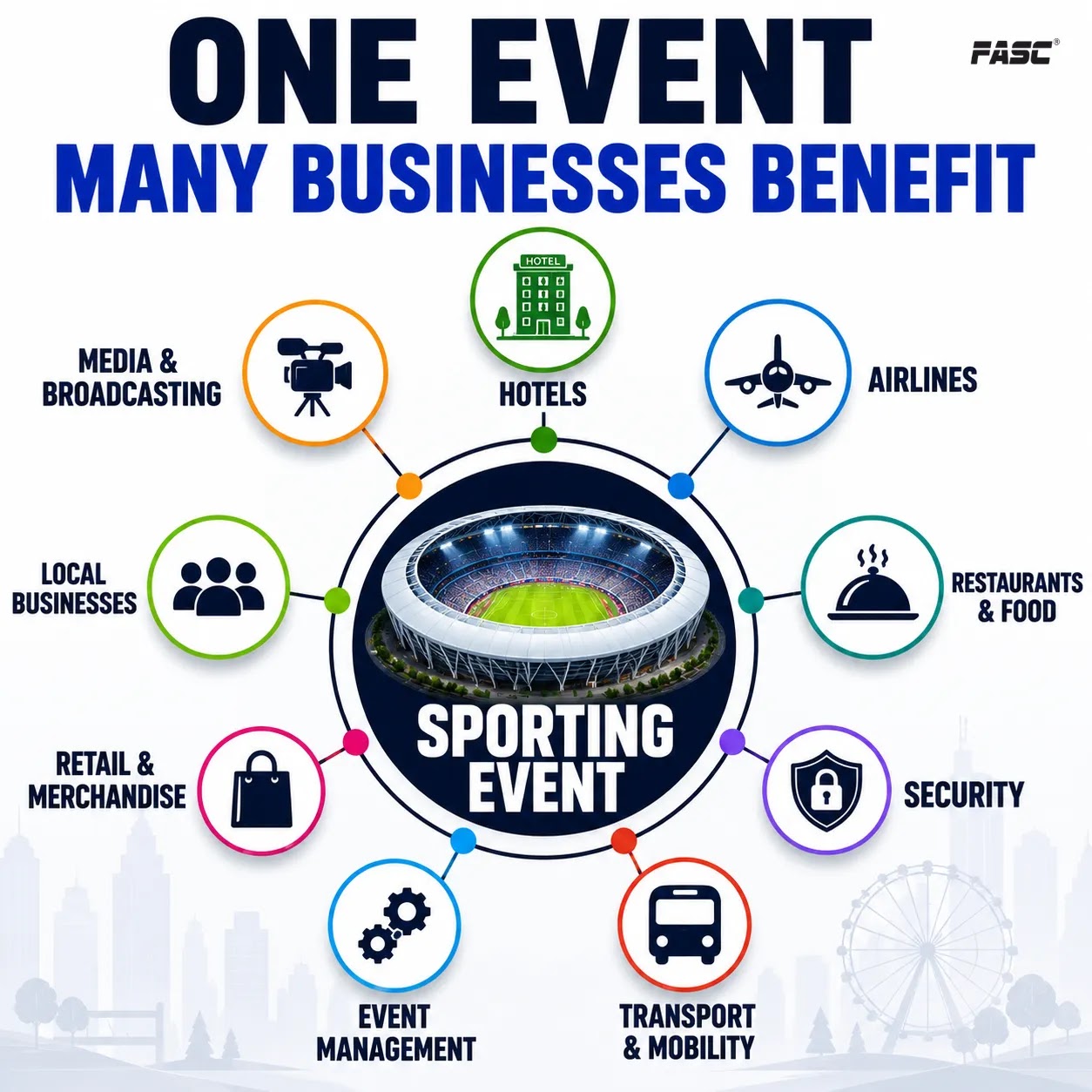
Hotels benefit from increased bookings.
Restaurants experience higher footfall.
Retail businesses see increased sales.
Taxi operators, photographers, local vendors, and tourism companies all benefit from increased visitor numbers.
This economic multiplier effect explains why cities around the world actively compete to host major sporting events.
The value created often extends well beyond the duration of the competition itself.
Sports Tourism Is Becoming A Growth Industry
The relationship between sports and tourism has never been stronger. Fans increasingly travel across cities, countries, and continents to watch events live.
Whether it is the FIFA World Cup, Formula 1, Wimbledon, the Olympics, or the IPL, sporting events attract visitors who spend money across local economies.
For host cities, this creates opportunities in hospitality, transport, retail, and destination branding.
Sport has become one of the world's most powerful tourism drivers.
Sustainability Is Becoming A Business Priority
Modern sporting events are increasingly expected to deliver more than entertainment. They are expected to operate responsibly.
Event organisers are investing in renewable energy, waste reduction, water conservation, sustainable transportation, and environmentally responsible venue management.
Fans, sponsors, and governments increasingly expect sustainability to become part of the event experience.
The future of sports business will likely be measured not only by profitability but also by environmental impact.
Why This Matters For India
India's sports industry is evolving rapidly.
The country already hosts some of the world's largest sporting events and continues to invest heavily in infrastructure, leagues, technology, and grassroots participation.
As India's sports ecosystem expands, opportunities are emerging for entrepreneurs, event organisers, broadcasters, technology companies, facility operators, and sports professionals.
The future growth of Indian sport may be driven as much by business innovation as by athletic performance.
The Future Of Sporting Events
The next generation of sporting events will likely look very different from those of the past.
Artificial intelligence, immersive fan experiences, smart stadiums, digital ticketing, wearable technology, and data-driven decision making are expected to become standard features.
At the same time, fans will continue demanding more personalised, seamless, and engaging experiences. The sporting event of the future will not simply be watched.
It will be experienced.
Conclusion
The next time we watch a sold-out stadium, a record-breaking marathon, or a global tournament, it is worth remembering that sport is only part of the story.
Behind every major sporting event lies a network of businesses, technologies, professionals, and industries working together to create moments that millions remember.
Sport may capture attention on the field. But the business behind it is what makes the spectacle possible.
Recommended products from FASC Coach
FAQs
1. What industries benefit from sporting events?
Hospitality, tourism, broadcasting, technology, transportation, retail, construction, event management, security, and media all benefit from major sporting events.
2. What is the biggest source of revenue in modern sports?
For many major leagues and tournaments, media and broadcasting rights represent one of the largest revenue sources.
3. Why are cities interested in hosting sporting events?
Sporting events attract tourists, create jobs, improve infrastructure, and generate economic activity across multiple sectors.
4. How is technology changing sports events?
Technology improves ticketing, security, broadcasting, fan engagement, athlete performance, and operational efficiency.
5. Why is the sports business growing in India?
Growing participation, infrastructure investment, private capital, technology adoption, and increased fan engagement are driving industry growth.
Share :