- Sports
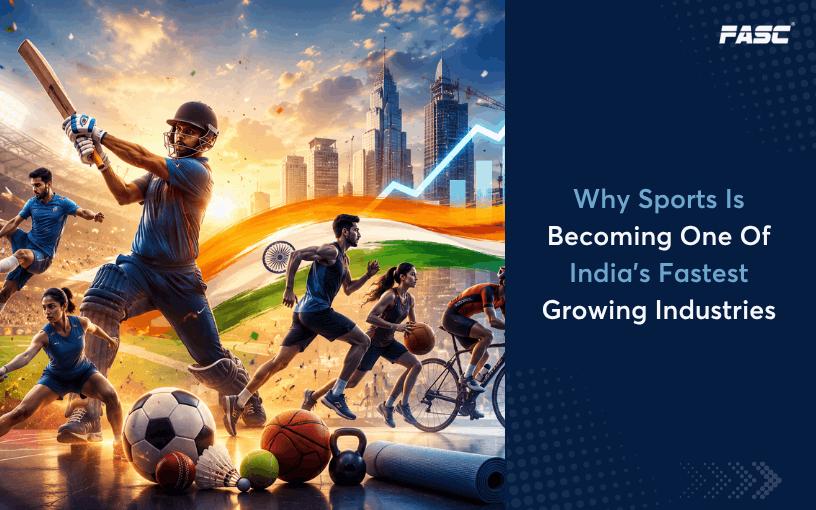
Why Sports Is Becoming One Of India's Fastest Growing Industries
- Jul 03, 2026
- 6 min
Key Takeaways
- Sports has evolved beyond entertainment into a growing business ecosystem.
- Rising participation is creating demand across multiple industries.
- Technology, startups, and infrastructure are accelerating growth.
- Sports now offer career opportunities far beyond professional athletes.
- India's sports economy is still in its early stages with significant long-term potential.
For decades, sports in India were largely associated with a handful of international tournaments, cricket matches, and occasional moments of national celebration. Success was measured through medals, trophies, and championships, while the business side of sports received comparatively little attention.
Today, that narrative is changing.
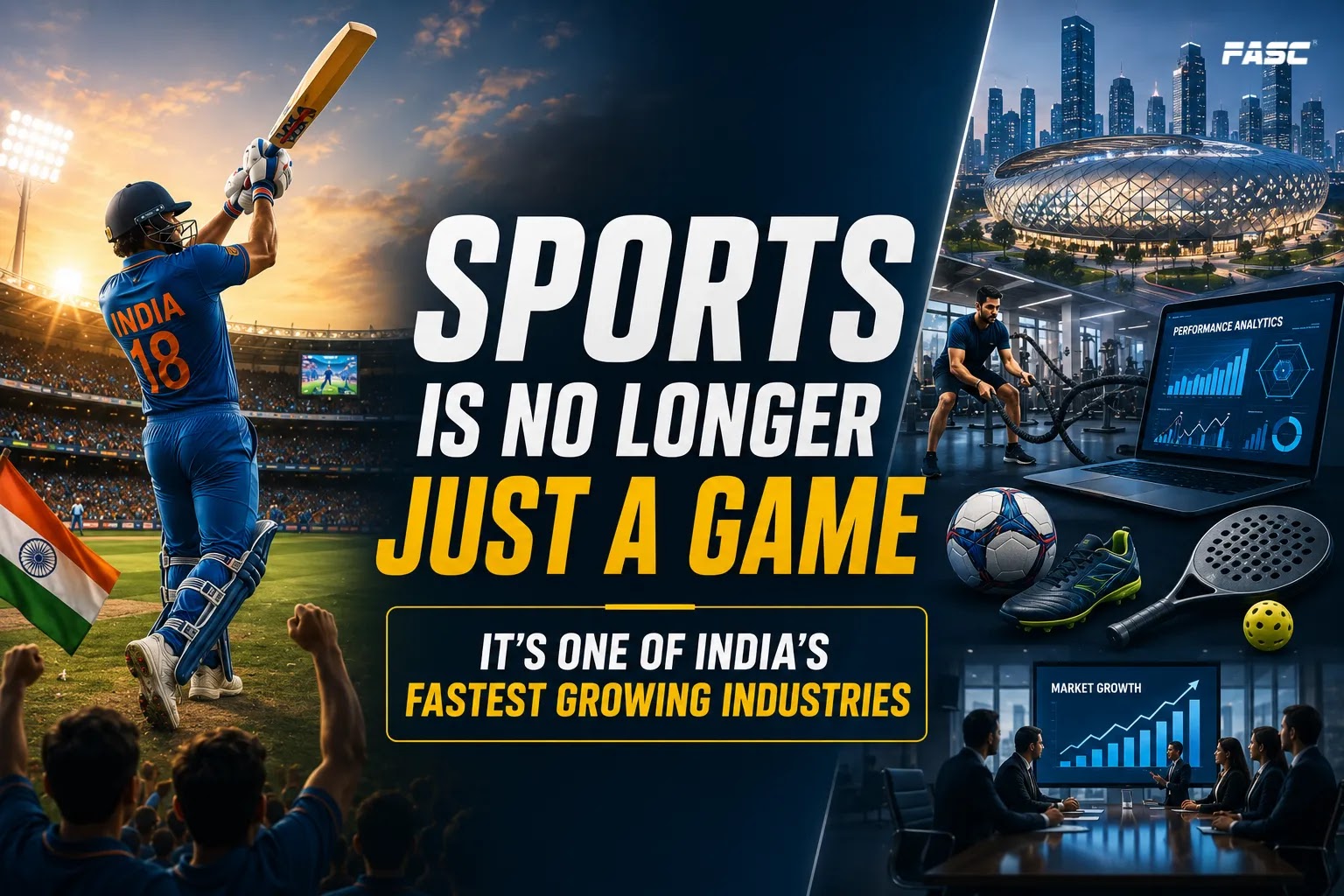
Sports is no longer viewed only as a form of entertainment or competition. It is becoming an industry that influences healthcare, education, tourism, technology, infrastructure, retail, media, and entrepreneurship. Across the country, participation is increasing, investments are rising, and businesses are discovering opportunities that extend far beyond the playing field.
India is witnessing the early stages of a sports economy that has the potential to become one of the country's most dynamic growth sectors.
This momentum is supported by industry research. According to a joint Deloitte–Google report, India's sports ecosystem has the potential to reach $130 billion by 2030, driven by increasing grassroots participation, digital engagement, infrastructure development, and private investment.
A Shift From Spectators To Participants
One of the biggest reasons behind the industry's growth is a noticeable shift in consumer behaviour. Earlier, most people experienced sports as spectators. They watched matches, celebrated victories, and followed their favourite teams from a distance.
Today, participation is becoming just as important as viewership.
Across Indian cities, running clubs, cycling groups, football leagues, badminton academies, pickleball courts, marathons, and recreational sports communities are growing rapidly. More people are choosing to play sports as part of their lifestyle rather than simply watching them.
This growing participation creates demand for coaches, sports facilities, equipment, apparel, nutrition services, physiotherapists, event organisers, and training academies. In many ways, every new participant contributes to the expansion of the sports economy.
Sports Is Creating An Entire Business Ecosystem
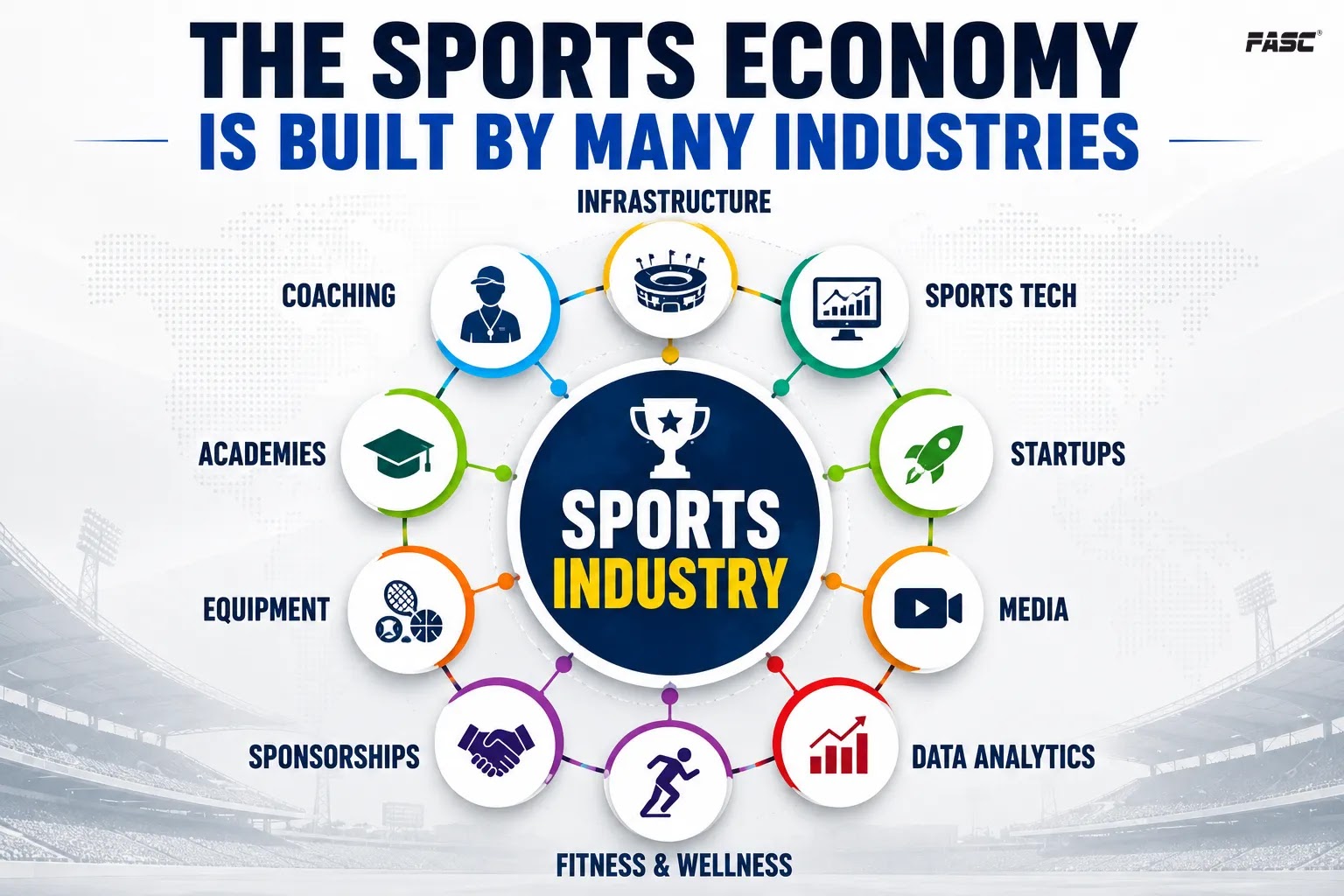
The sports industry today is much larger than athletes competing on the field. Behind every successful sporting event is a network of businesses working together.
Infrastructure developers build stadiums and sports complexes. Event management companies organise tournaments. Sports technology companies develop performance tracking tools. Equipment manufacturers produce specialised gear, while broadcasters, sponsors, photographers, digital creators, and marketing agencies help bring sports closer to millions of fans.
What was once considered a single industry has evolved into an interconnected ecosystem where multiple sectors grow together.
This is one of the strongest indicators that sports is becoming a serious economic contributor.
Private Investment Is Driving The Next Phase Of Growth
Over the past few years, private investment in sports has increased significantly.
Businesses are investing in football turfs, indoor sports arenas, multi-sport facilities, high-performance centres, sports academies, and community-based sporting venues. These investments are not only improving access to sports but are also creating sustainable business models that cater to the growing demand for recreational and competitive sports.
Unlike traditional infrastructure projects, sports facilities often become community hubs where people train, compete, socialise, and stay active throughout the year.
As participation continues to increase, investment in sports infrastructure is expected to play an even bigger role in shaping the industry's future.
Recent industry research also highlights rising investments in grassroots infrastructure, technology, and sports facilities as key drivers of India's evolving sports ecosystem.
Technology Is Changing The Way Sports Operates
Technology has transformed nearly every industry, and sports is no exception.
Athletes today rely on wearable devices, GPS tracking systems, performance analytics, recovery monitoring, and artificial intelligence to improve performance and reduce injuries. At the same time, fans enjoy enhanced viewing experiences through live statistics, interactive content, and digital engagement.
Sports startups are also solving everyday challenges by making it easier to book sports facilities, organise tournaments, connect with coaches, and analyse performance.
Technology is making sports smarter, more accessible, and increasingly data-driven.
New Career Opportunities Are Emerging
Perhaps one of the most significant changes is the growing number of career opportunities available within the sports industry.
A career in sports no longer means becoming a professional athlete.
Today, the industry requires coaches, physiotherapists, sports nutritionists, strength and conditioning specialists, analysts, sports psychologists, event managers, broadcasters, photographers, marketers, content creators, software developers, and facility managers.
As the ecosystem expands, demand for skilled professionals is expected to grow alongside it, making sports an increasingly attractive career option for young Indians.
Businesses Are Looking Beyond Sponsorship
The relationship between businesses and sports has also evolved.
Earlier, companies primarily viewed sports as a branding opportunity through sponsorships and advertising. Today, many organisations are taking a broader approach by investing in grassroots development, community events, sports academies, employee wellness initiatives, and athlete partnerships.
Businesses recognise that sports can strengthen communities, improve public health, and create long-term customer engagement while supporting industry growth.
This shift reflects a growing understanding that sports is not merely an expense—it is an investment.
Government And Private Sector Are Building Together
The growth of India's sports industry is not being driven by one stakeholder alone.
Government initiatives focused on grassroots development, infrastructure, and talent identification are being complemented by private investments in academies, leagues, technology, and facilities.
This collaboration is helping create an environment where more people have access to sports, better coaching, and improved development pathways.
When public policy and private enterprise work together, industries often experience sustainable long-term growth, and sports is increasingly demonstrating that potential.
Why This Matters For India's Future
India has several natural advantages that position it for long-term success in the global sports economy.
A young population, increasing health awareness, rising disposable incomes, rapid urbanisation, entrepreneurial innovation, and growing interest in recreational sports all contribute to a strong foundation for future growth.
Cities like Ahmedabad are already investing in sports infrastructure, private academies, and community sports initiatives, demonstrating how local ecosystems can contribute to national development.
If similar efforts continue across the country, India has the opportunity to become not only a sporting nation but also a global sports business hub.
The Future Of Sports Is Bigger Than The Game
The future of Indian sports will not be measured only by the number of medals won or trophies lifted.
It will also be measured by the strength of the ecosystem supporting athletes, businesses, communities, and innovation.
Countries that lead in sports understand that success is built through participation, infrastructure, education, technology, and long-term investment.
India is steadily moving in that direction.
The opportunity now is to continue building an industry where sports creates value not only on the field but across the entire economy.
Conclusion
The Indian sports industry is undergoing a remarkable transformation.
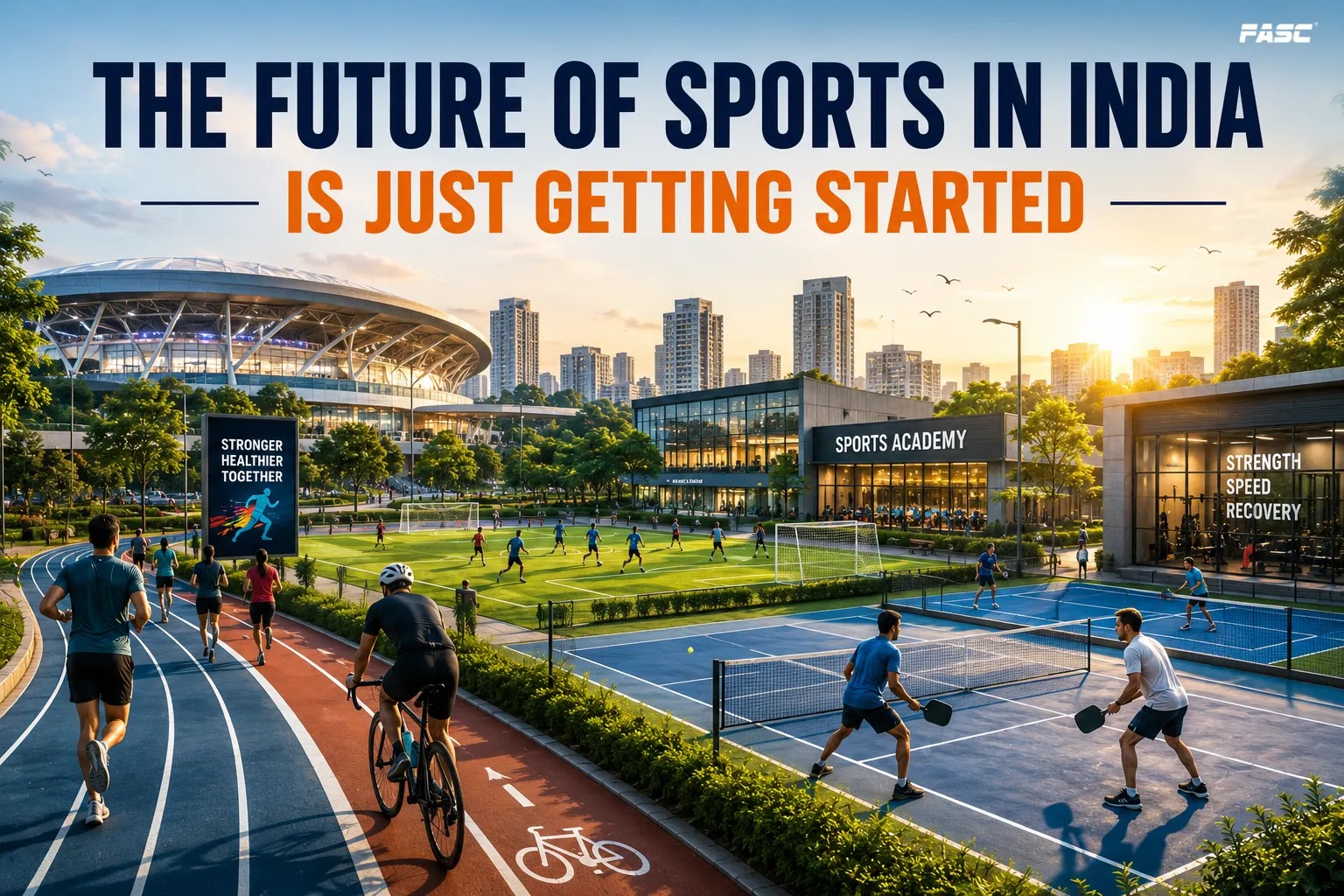
What was once viewed primarily as entertainment has evolved into a rapidly expanding ecosystem that connects infrastructure, technology, business, education, health, tourism, and entrepreneurship.
While the journey is still in its early stages, the momentum is unmistakable.
As more people participate, more businesses invest, and more professionals enter the ecosystem, sports is poised to become one of India's most influential and fastest-growing industries.
The future of Indian sports is no longer just about producing champions.
It is about building an industry that creates opportunities for everyone.
Recommended products from FASC Coach
FAQs
1. Why is the Indian sports industry growing so quickly?
The industry's growth is driven by rising sports participation, private investment, government initiatives, technological advancements, and increasing public interest in health and fitness.
2. Is sports becoming a good business opportunity in India?
Yes. Growing demand for sports infrastructure, technology, coaching, events, equipment, and wellness services is creating significant opportunities for entrepreneurs and investors.
3. What careers are available in the sports industry?
The industry offers careers in coaching, sports science, physiotherapy, nutrition, event management, marketing, analytics, content creation, facility management, and technology.
4. How does sports contribute to the economy?
Sports supports multiple sectors, including tourism, hospitality, retail, media, construction, education, healthcare, and technology, creating employment and business opportunities.
5. What is the future of sports in India?
With increasing participation, stronger infrastructure, innovation, and investment, India's sports industry is expected to become one of the country's fastest-growing economic sectors in the coming years.
Share :