- Fitness
What Is Chair Yoga? A Complete Beginner’s Guide
- Jan 20, 2026
- 3 min
Key Takeaways
- Chair yoga makes yoga accessible by allowing poses to be practiced seated or with chair support.
- It is ideal for seniors, beginners, office workers, and people with limited mobility or injuries.
- Regular practice improves flexibility, posture, balance, circulation, and relaxation.
- Chair yoga is gentle, low impact, and safe when practiced with awareness and consistency.
- Even short, regular sessions can support better mobility and overall well-being.
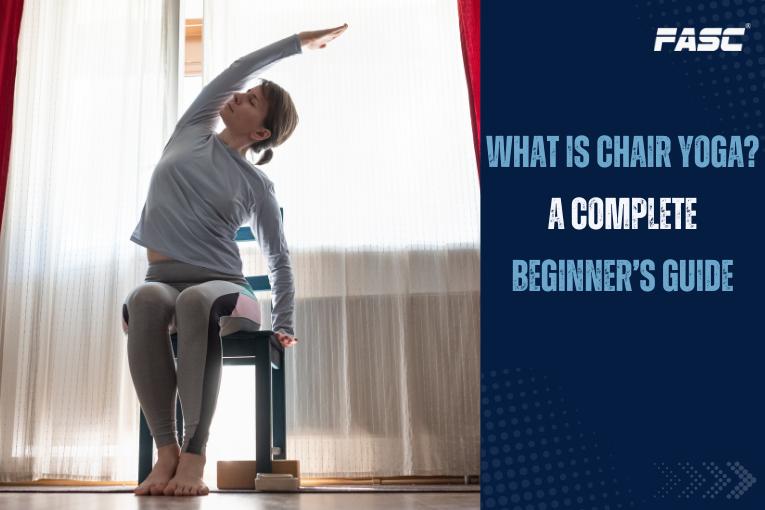
Chair yoga is a gentle form of yoga that is practiced while sitting on a chair or using a chair for support. It is designed to make yoga accessible to people who may find traditional mat-based yoga difficult due to age, mobility issues, injury, or a sedentary lifestyle.
Unlike traditional yoga, chair yoga removes the need to get down on the floor, making it safer and more comfortable—especially for seniors, office workers, and beginners.
What Is Chair Yoga?
Chair yoga adapts classic yoga poses (asanas), breathing techniques (pranayama), and relaxation practices so they can be performed while seated or using a chair for balance.
The chair acts as a support tool, helping practitioners maintain proper posture and stability without strain. Despite its gentle nature, chair yoga still offers physical, mental, and emotional benefits.
Chair yoga is commonly practiced in:
- Senior centers
- Offices and corporate wellness programs
- Rehabilitation settings
- Homes for beginners or people with limited mobility
Who Is Chair Yoga For?
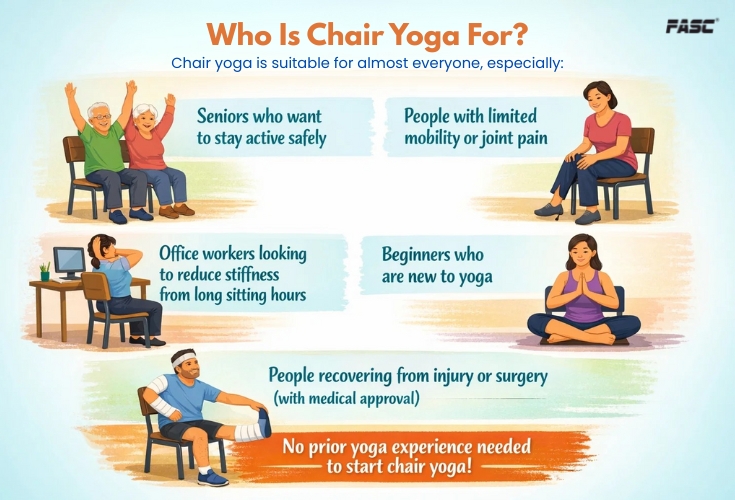
Chair yoga is suitable for almost everyone, especially:
- Seniors who want to stay active safely
- People with limited mobility or joint pain
- Office workers looking to reduce stiffness from long sitting hours
- Beginners who are new to yoga
- People recovering from injury or surgery (with medical approval)
You do not need prior yoga experience to start chair yoga.
Benefits of Chair Yoga
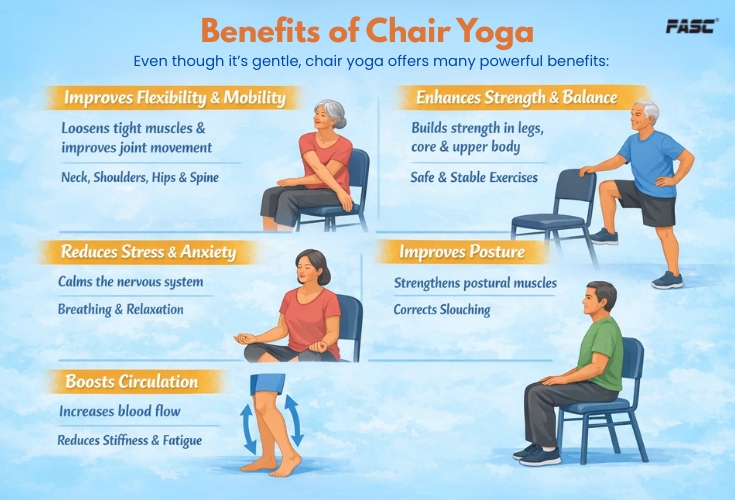
Even though it’s gentle, chair yoga offers many powerful benefits:
1. Improves Flexibility and Mobility
Chair yoga helps loosen tight muscles and improves joint movement, especially in the neck, shoulders, hips, and spine.
2. Enhances Strength and Balance
Using a chair allows you to safely build strength in the legs, core, and upper body without the risk of falling.
3. Reduces Stress and Anxiety
Breathing exercises and slow movements calm the nervous system, helping reduce stress and improve mental clarity.
4. Improves Posture
Regular practice strengthens postural muscles and helps correct slouching, especially for people who sit for long hours.
5. Boosts Circulation
Gentle movements increase blood flow, which can reduce stiffness, swelling, and fatigue.
Common Chair Yoga Poses
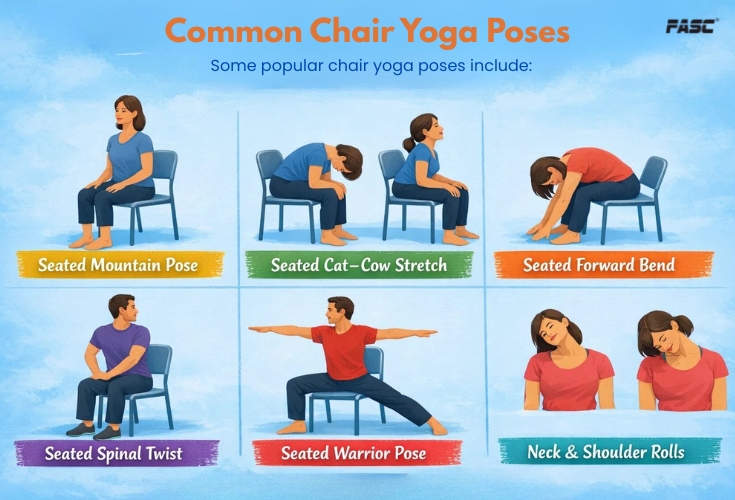
Some popular chair yoga poses include:
- Seated Mountain Pose
- Seated Cat–Cow Stretch
- Seated Forward Bend
- Seated Spinal Twist
- Seated Warrior Pose
- Seated Neck and Shoulder Rolls
These poses are modified to be safe, effective, and comfortable.
Chair Yoga vs Traditional Yoga
|
Chair Yoga |
Traditional Yoga |
|---|---|
|
Performed seated or with chair support |
Mostly practiced on a mat |
|
Low impact and gentle |
Can range from gentle to intense |
|
Ideal for seniors and beginners |
Requires more mobility |
|
Focuses on accessibility |
Focuses on full-body movement |
Both forms aim to improve physical and mental well-being—the difference lies in accessibility.
Can Chair Yoga Help With Weight Loss?
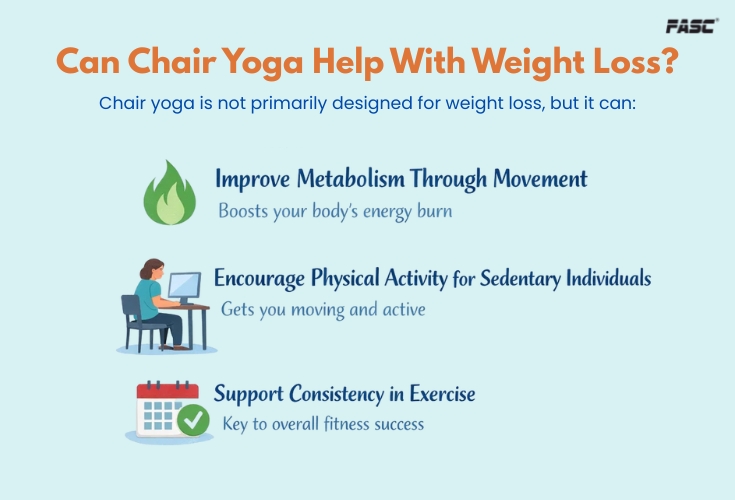
Chair yoga is not primarily designed for weight loss, but it can:
- Improve metabolism through movement
- Encourage physical activity for sedentary individuals
- Support consistency in exercise, which is key to overall fitness
For many people, chair yoga becomes a stepping stone toward more active lifestyles.
How Often Should You Practice Chair Yoga?
For best results:
- Beginners can start with 10–20 minutes per session
- Practice 3–5 times per week
- Even daily short sessions can improve mobility and reduce stiffness
Consistency matters more than intensity.
Is Chair Yoga Safe?
Chair yoga is generally very safe. However:
- Move slowly and listen to your body
- Avoid pain or forced stretches
- Consult a doctor if you have serious medical conditions
Using a sturdy chair without wheels is recommended.
Recommended gears
1. Yoga Blocks: Useful for adding support, improving balance, and reducing strain while performing poses like Low Lunge or Triangle Pose. Great for people with limited flexibility.
2. Thick Yoga Mat: A high-density mat provides extra cushioning and stability, protecting your knees during standing and seated poses. Perfect for those practicing daily knee-friendly yoga routines
3. Yoga Outfit for women: Choosing the right yoga outfit for women is essential for comfort, confidence, and smooth movement during practice.
Conclusion
Chair yoga proves that yoga is truly for everyone. Whether you are a senior, a beginner, or someone with limited mobility, chair yoga offers a safe, effective way to improve flexibility, strength, posture, and mental well-being.
You don’t need fancy equipment or advanced skills—just a chair, a few minutes, and the willingness to move.
FAQs
1. What is chair yoga?
Chair yoga is a gentle form of yoga where poses are performed while sitting on a chair or using it for support, making movement safer and more accessible.
2. Who can practice chair yoga?
Chair yoga is suitable for seniors, beginners, people with limited mobility, office workers, and anyone recovering from injury or looking for low-impact exercise.
3. What are the benefits of chair yoga?
Chair yoga helps improve flexibility, balance, posture, circulation, and relaxation while reducing stress and joint strain.
4. Do I need prior yoga experience for chair yoga?
No. Chair yoga is beginner-friendly and can be practiced without any previous yoga experience.
5. How often should chair yoga be practiced?
Chair yoga can be practiced daily or several times a week, depending on comfort level and individual health needs.
Share :
Recent Blog


- Jul 17, 2026