- Sports
What Is Sports Fabric? Types, Features, and Benefits for Athletes
- Mar 03, 2026
- 6 min
Key Takeaways
- Sports fabrics are designed specifically for athletic performance and active movement.
- Moisture-wicking technology helps move sweat away from the skin.
- Breathable materials improve airflow and temperature control.
- Stretchable fabrics support natural body movement during sports.
- Polyester, nylon, and spandex are widely used in modern sportswear.
- Choosing the right sports fabric improves comfort during workouts.
If you have ever exercised in unsuitable clothing, then you already know how uncomfortable it can feel. During sports or intense workouts, the body constantly generates heat and sweat. When apparels hold onto moisture or limits movement, it quickly becomes distracting and unpleasant.
That’s why modern athletic wear depends on performance-based sports fabrics.
Unlike traditional materials like cotton, these fabrics are engineered specifically for physical activity. They draw moisture away from the skin, promote better ventilation, and move naturally with the body.
Today, such materials are widely used in gym outfits, running apparel, and even professional sports uniforms. Their main goal is to keep athletes cool, dry, and comfortable throughout training and competition.
Knowing how these fabrics function makes it easier to select sportswear that truly enhances comfort and performance.
What Is Sports Fabric?
Sports fabric refers to specially designed materials created for athletic wear and active apparel. These textiles are developed to accommodate body movement while maintaining comfort and long-lasting strength.
Unlike ordinary fabrics used in daily clothing, sports fabrics are built with performance in mind. They assist in moisture management, enhance airflow, and provide flexibility so the body can move comfortably during exercise and sports activities.

Because of these advantages, sports fabrics are commonly used in:
- Sports jerseys
- Gym clothing
- Running gear
- Compression wear
- Training outfits
- Fitness apparel
Advances in textile technology have made it possible to create fabrics that combine durability, comfort, and performance in a single material.
Key Features of Sports Fabric
Moisture-Wicking Technology
One of the key benefits of sports fabrics is their ability to handle perspiration effectively. Rather than soaking up sweat like cotton, these materials draw moisture away from the skin and push it toward the outer layer of the fabric.
As the sweat spreads across the surface, it dries more quickly through evaporation. This process helps athletes remain dry and comfortable, even during high-intensity training sessions.
Breathability
Breathable materials are designed to allow air to pass through the fabric. Proper airflow supports temperature regulation and reduces the risk of overheating during physical activity.
This feature is especially important in sports like running, football, or gym workouts, where the body produces a considerable amount of heat.
Stretch and Flexibility
Sports require constant motion, whether it’s sprinting, jumping, bending, or reaching. Clothing that restricts movement can negatively impact performance and comfort.
Elastic fibers such as spandex enable sportswear to adapt to body movement, allowing a more natural and unrestricted feel during activity.
Lightweight Design
Most athletes prefer apparel that feels light on the body, as it promotes ease of movement. Heavy material can make physical activity feel more exhausting than necessary.
Performance fabrics are created to remain lightweight while still offering the durability needed for rigorous workouts.
Fast Drying Properties
Another major advantage of sports fabrics is their quick-drying nature. Because they don’t retain much moisture, sweat evaporates more efficiently compared to conventional materials.
This prevents clothing from feeling wet or heavy, helping maintain comfort throughout the workout.

Types of Sports Fabrics
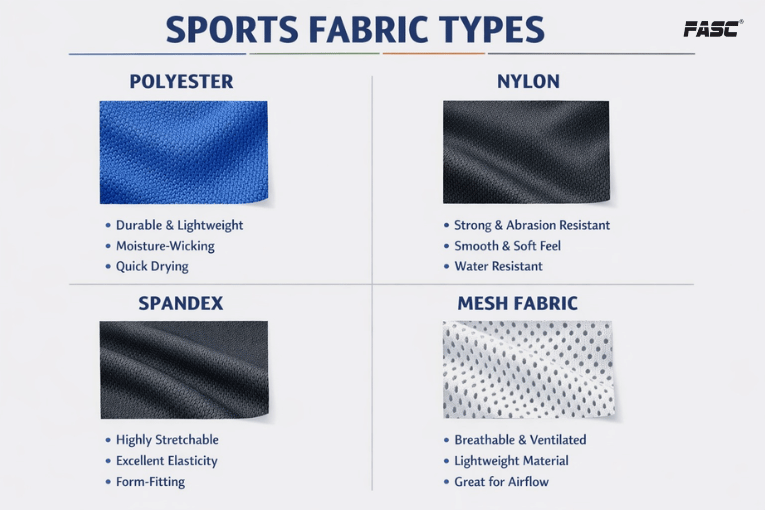
Polyester
Polyester is one of the most widely used materials in sportswear. It is lightweight, durable, and highly effective at managing moisture.
Some reasons why polyester is commonly used include:
- Strong moisture-wicking capability
- Lightweight construction
- Durability
- Quick-dry performance
Because of these qualities, polyester is frequently used in sports jerseys, training shirts, and running apparel.
Spandex (Elastane)
Spandex is well known for its elasticity. It can stretch several times its original length and still return to its original shape.
This flexibility makes it ideal for clothing that needs to adapt to body movement, including:
- Compression wear
- Yoga clothing
- Gym apparel
- Athletic tights
Nylon
Nylon is another synthetic fiber often used in sportswear. It is strong, lightweight, and abrasion-resistant.
Because of its durability, nylon is commonly used in sports clothing designed for outdoor activities or intense training.
Mesh Fabric
Mesh fabric contains small holes that allow air to pass through easily. This improves ventilation and helps release heat from the body.
Many sports jerseys and training shirts include mesh panels to increase airflow and enhance comfort.
Benefits of Sports Fabric
Improved Comfort
Sports fabrics improve comfort by managing sweat and allowing better airflow through the material. By drawing moisture away from the skin, they help keep the body dry even during an intense workout. This reduces irritation, prevents sticky feelings caused by sweat, and minimizes skin discomfort.
Better Athletic Performance
Lightweight and flexible clothing allows athletes to move more freely, which can support better performance during training and competition.
Effective Sweat Management
Moisture-wicking materials help pull sweat away from the skin, reducing irritation during workouts.
Temperature Regulation
Breathable fabrics help maintain body temperature and reduce the risk of overheating.
Durability
Sports fabrics are designed to withstand frequent washing and regular training, making them suitable for long-term use.
Where Sports Fabrics Are Used
Sports fabrics are widely used in different types of athletic clothing, including:
- Sports jerseys
- Gym training shirts
- Running apparel
- Compression wear
- Athletic shorts
- Yoga clothing
Both professional athletes and everyday fitness enthusiasts rely on these materials for comfort and performance.
How to Choose the Best Sports Fabric
When selecting sportswear, the fabric is just as important as the design.
Some important factors to consider include:
Breathability- Helps maintain airflow during workouts.
Moisture management- Keeps sweat away from the skin.
Stretchability- Allows natural movement without restriction.
Durability- Ensures clothing lasts through repeated use.
Comfort- Helps prevent irritation during long training sessions.
Choosing the right sports fabric can make workouts significantly more comfortable.
Recommended Gears by Fettle & Sports Coach
Performance Sports Jerseys
Lightweight polyester jerseys provide breathability and quick-dry performance, making them suitable for sports like cricket, football, and team training.
Moisture-Wicking Training T-Shirts
Training t-shirts made with performance fabrics help control sweat and keep athletes comfortable during workouts.
Compression Shorts (Spandex Blend)
Compression shorts made with spandex provide flexibility and muscle support, making them useful for running and gym training.
Lightweight Training Shorts
Breathable polyester training shorts allow better airflow and unrestricted movement during sports activities.
For customised cricket T-shirts and sports jerseys, you can contact FASC and get yourself ready to perform.
Conclusion
Performance fabrics have transformed the way modern athletic apparel is designed. Materials like polyester, nylon, and spandex are developed to enhance mobility, control moisture, and provide comfort during exercise and sports activities.
Selecting sportswear made from suitable fabrics can greatly impact your workout experience. When clothing feels breathable, flexible, and comfortable, it allows athletes to concentrate entirely on their training and overall performance.
Frequently Asked Questions
1. What are sports fabrics?
Sports fabrics are specially developed materials used in athletic apparel. They are designed to enhance airflow, allow flexibility, and manage perspiration during exercise.
2. Which materials are most suitable for sportswear?
Polyester and spandex are widely preferred as they are lightweight, strong, elastic, and dry quickly after sweating.
3. Why isn’t cotton recommended for workouts?
Cotton tends to absorb and hold sweat, which can leave clothing damp, heavy, and uncomfortable during physical activity.
4. What does moisture wicking mean?
Moisture-wicking fabrics move sweat away from the skin and spread it across the outer layer, allowing it to evaporate faster.
5. Why are synthetic materials common in athletic clothing?
Fabrics like polyester and nylon are popular because they dry rapidly, withstand wear and tear, and perform efficiently during high-intensity activities.
.png)
.png)