- Fitness
Can Yoga Replace The Gym? Here's What You Need To Know

- Aug 04, 2026
- 8 min
Key Takeaways
- Yoga and the gym are designed to achieve different fitness goals.
- Yoga improves flexibility, mobility, balance, and mental well-being.
- The gym remains the better choice for building muscle and strength.
- Combining yoga with strength training offers the most balanced fitness routine.
- The right choice depends on your personal health and fitness goals.
Over the last decade, yoga has evolved from being viewed as a traditional wellness practice to becoming a mainstream form of exercise embraced by millions worldwide. At the same time, strength training and gym-based workouts have gained popularity for improving muscle strength, body composition, and overall fitness.
According to the World Health Organization (WHO), adults should aim for 150–300 minutes of moderate-intensity physical activity every week, along with muscle-strengthening activities on at least two days per week for optimal health.
At the same time, research from National Center for Complementary and Integrative Health (NCCIH) highlights that regular yoga can improve flexibility, balance, mobility, stress management, and overall well-being.
These recommendations highlight an important point, proper fitness is not just about moving more, but also about maintaining muscular strength and overall physical function.
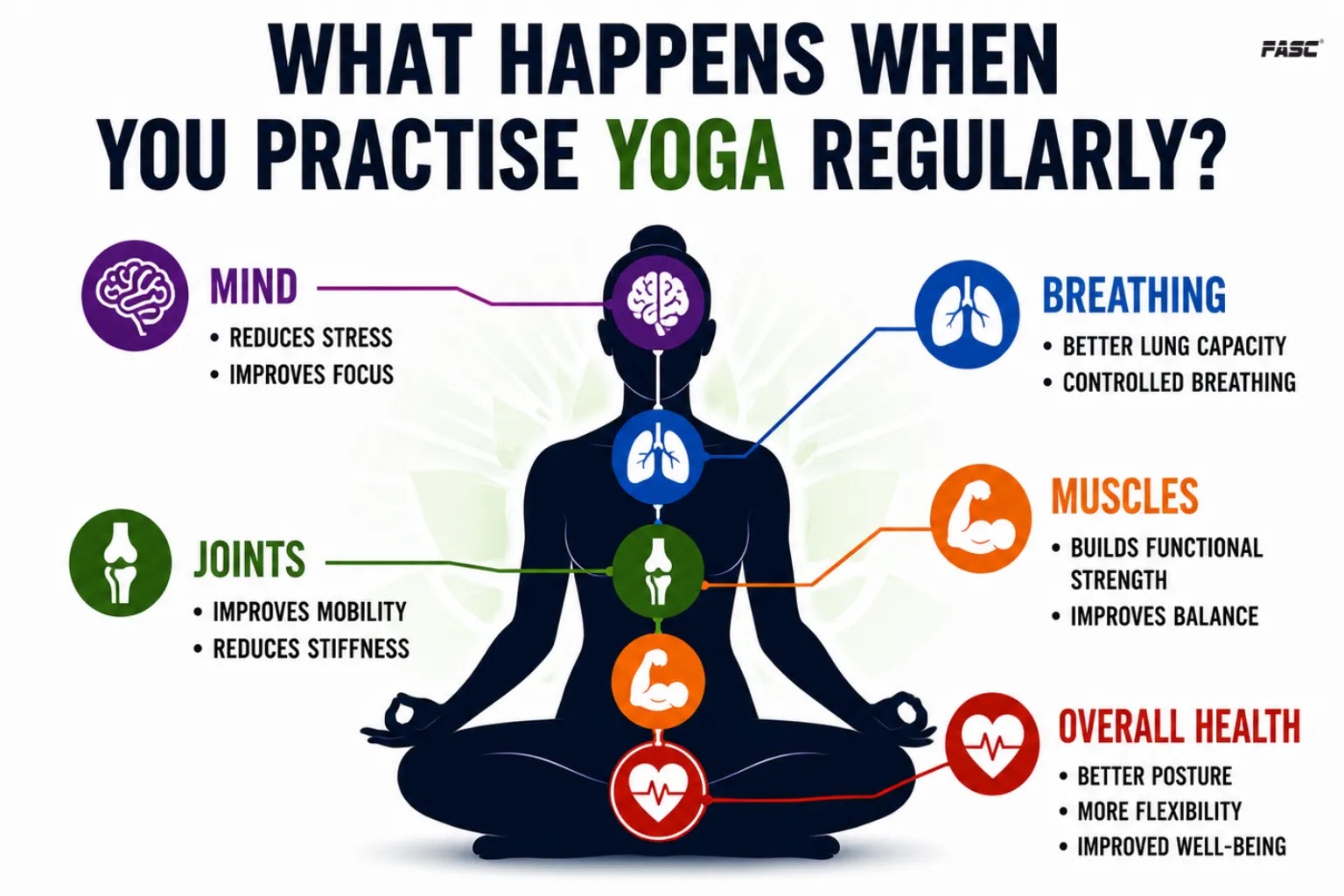
The answer, however, isn't about declaring one better than the other. Yoga and gym workouts are designed to improve different aspects of health. While yoga focuses on mobility, flexibility, breathing, posture, balance, and mind-body awareness, gym workouts primarily develop strength, muscle mass, power, and cardiovascular fitness through progressive overload.
Understanding these differences can help you choose the approach that aligns with your goals instead of simply following fitness trends.
Understanding What Yoga And The Gym Actually Train
One of the biggest reasons people compare yoga with the gym is because both are forms of exercise. However, they are built on very different principles.
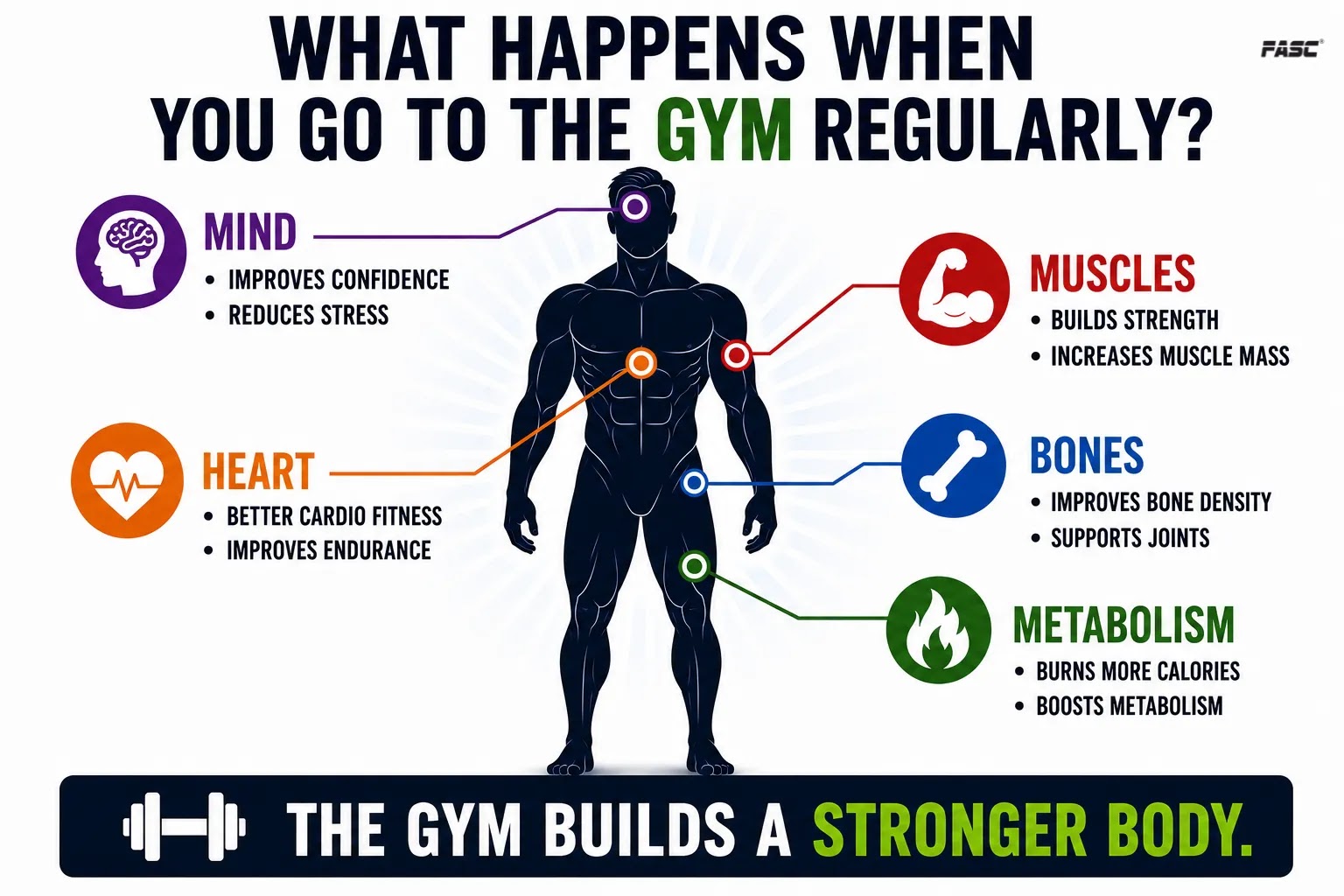
A gym workout is primarily based on resistance and progressive overload. As your body adapts, you gradually increase the weight, repetitions, or training intensity. This progressive challenge stimulates muscle growth, increases strength, improves bone density, and enhances athletic performance over time.
Yoga, on the other hand, follows a different philosophy.
Rather than isolating individual muscles, yoga combines movement, controlled breathing, stability, flexibility, and mindfulness into a single practice. Many yoga poses require you to support your own body weight, helping improve coordination, balance, mobility, and muscular endurance.
This is why two people can both be "fit" while looking completely different. A regular gym goer may have greater muscle mass and lifting strength, while a dedicated yoga practitioner may demonstrate exceptional flexibility, balance, posture, and body control.
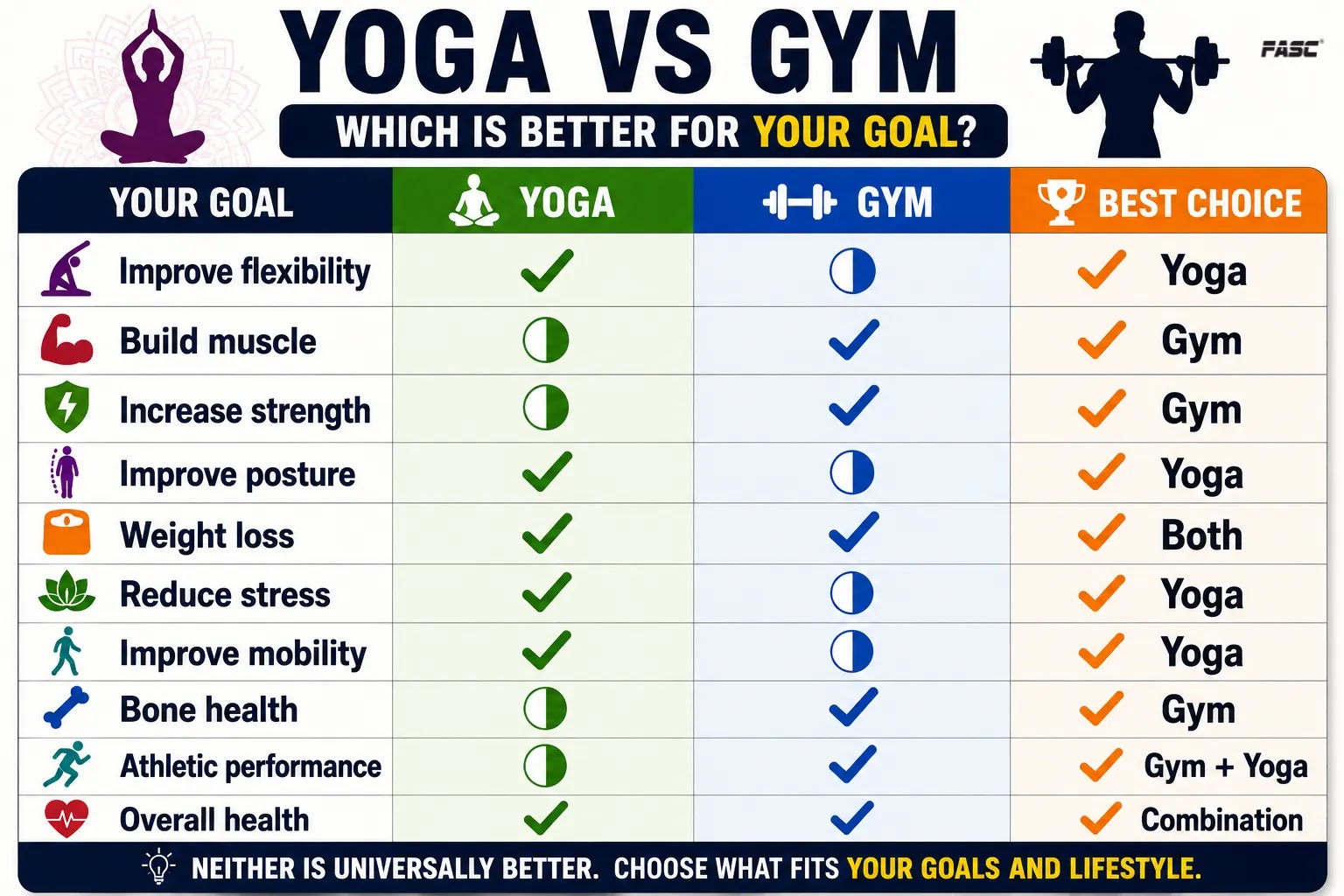
Neither approach is universally better, they simply train different qualities.
Can Yoga Replace The Gym For Everyone?
The simple answer is No.
But it can replace the gym for certain people. Whether yoga is enough for you, it depends entirely on what you're trying to achieve.
For example, if your primary goals are to:
- improve flexibility,
- reduce stress,
- increase mobility,
- improve posture,
- become more active,
- reduce stiffness caused by long hours of sitting,
then yoga alone can provide significant benefits.
Many office workers spend eight to ten hours sitting every day, which often leads to tight hips, rounded shoulders, reduced spinal mobility, and poor posture. In such cases, a regular yoga routine may address the underlying movement limitations more effectively than jumping straight into intense gym workouts.
The same principle applies to people returning to exercise after a long break, older adults, or beginners who want to develop confidence before starting a more demanding fitness programme.
In fact, yoga has also become an effective recovery tool for professionals dealing with chronic work stress. Instead of focusing only on physical movement, it also incorporates breathing exercises and relaxation techniques that help reduce mental fatigue. This is one of the reasons practices discussed in Yoga for Burnout Recovery have become increasingly relevant for people balancing demanding careers with their health.
Where The Gym Has A Clear Advantage
Although yoga offers numerous health benefits, there are areas where the gym has a clear and measurable advantage.
If your objective is to:
- build significant muscle mass,
- increase maximum strength,
- improve explosive power,
- prepare for competitive sports,
- increase bone density,
- or progressively improve athletic performance,
then resistance training remains the more effective approach. The reason is simple.
Your muscles grow when they are challenged beyond their current capacity. In the gym, this is achieved through progressive overload, gradually increasing the weight or resistance over time.
For example, someone who begins by squatting 20 kilograms can progressively work towards lifting 60 or even 100 kilograms over several months. This continuous increase in resistance provides a stimulus that yoga alone cannot consistently replicate.
That doesn't mean yoga cannot build strength.
Many advanced yoga styles require considerable upper-body and core strength. Poses such as Crow Pose, Side Plank, Handstand, and Arm Balances demand excellent body control and muscular endurance. However, the progression is generally limited compared to structured strength training programmes.
This distinction becomes particularly important for athletes. Footballers, cricketers, runners, and other sportspersons often use yoga to improve flexibility, mobility, and recovery, but they still rely on strength training to improve performance, reduce injury risk, and generate power.
For this reason, many elite athletes include both yoga and resistance training in their weekly routine rather than choosing one over the other.
Can Yoga Help You Lose Weight?
One of the biggest reasons people choose either yoga or the gym is weight loss. But this is also where many misconceptions begin.
Some people believe yoga is too gentle to help with weight loss, while others think going to the gym automatically guarantees results. In reality, weight loss depends on maintaining a calorie deficit, which means burning more calories than you consume. Exercise is only one part of that equation.
So, can yoga help you lose weight? The answer is yes, but differently from the gym.
A typical gym workout involving resistance training or high-intensity cardio usually burns more calories during the session than a traditional yoga class. This makes the gym a more effective option if your only goal is to maximise calorie expenditure.
Yoga Trains Your Body And Your Mind
However, yoga contributes to weight management in ways that are often overlooked.
Regular yoga practice can improve body awareness, reduce emotional eating, improve sleep quality, lower stress hormones, and encourage long-term consistency with healthy habits. Research has also shown that chronic stress can influence eating behaviours and weight gain, making stress management an important part of sustainable weight loss.
If your goal is long-term health rather than rapid transformation, yoga can play an important role in maintaining a healthy weight.
The Biggest Myth: Yoga vs Gym
Perhaps the biggest mistake people make is treating yoga and the gym as competitors. They aren't. In fact, they complement each other remarkably well.
A person who only lifts weights may eventually develop tight hips, reduced shoulder mobility, and poor flexibility if mobility work is ignored.
Similarly, someone who only practises yoga may develop excellent flexibility and body control but may not build enough muscular strength to support long-term bone health or maximise athletic performance.
Rather than asking, "Which is better?" a better question is, "Which one helps me achieve my goal?"
Consider two individuals.
The first is a 45-year-old office professional who spends most of the day sitting in front of a computer. Their primary concerns are back stiffness, neck pain, poor posture, and work-related stress. Yoga may offer more immediate benefits because it addresses mobility, breathing, posture, and relaxation.
The second is a 22-year-old football player preparing for a competitive season. While yoga can improve flexibility and recovery, strength training remains essential for improving sprint speed, jumping ability, injury prevention, and overall performance.
Neither person is wrong. They simply have different needs.
When Combining Yoga And Gym Makes The Most Sense
For many people, the best solution isn't choosing between yoga and the gym, it's combining them. This approach allows you to benefit from the strengths of both.
Strength training develops muscle, improves bone density, and increases functional strength. Yoga improves flexibility, joint mobility, breathing efficiency, recovery, posture, and body awareness.
Together, they create a balanced fitness routine that supports both performance and long-term health.
Yoga Doesn't Have To Start On A Mat
One reason many people hesitate to try yoga is the belief that they need to be flexible before they begin. Ironically, flexibility is one of the results of yoga, not a requirement.
Many beginners, older adults, and people recovering from injury start with modified movements before progressing to traditional poses. Seated yoga practices, for example, allow individuals to improve mobility, posture, and circulation without placing excessive stress on the joints. That's exactly why approaches such as Chair Yoga have become increasingly popular, they make yoga accessible to people who may find conventional floor-based sessions intimidating or physically challenging.
The important thing isn't how advanced your first session looks. The important thing is starting.
Conclusion
So, can yoga replace the gym? The honest answer is it depends on what you're trying to achieve.
If your goal is to improve flexibility, posture, mobility, mental well-being, and general fitness, yoga can absolutely become your primary form of exercise.
If your goal is to build significant muscle mass, increase strength, or improve athletic performance, the gym remains the more effective choice because progressive resistance training is difficult to replace.
Yoga helps your body move better. Strength training helps your body become stronger. Together, they create a fitness routine that supports physical health, mental well-being, injury prevention, and healthy ageing.
Recommended Products from FASC Coach
Frequently Asked Questions
1. Can yoga completely replace the gym?
Yes, it can for people whose primary goals are flexibility, mobility, stress reduction, posture, and general health. However, if your goal is significant muscle growth or strength development, resistance training remains important.
2. Is yoga enough to stay fit?
For many people, yes. Yoga improves flexibility, balance, coordination, mobility, and overall well-being. Whether it is "enough" depends on your personal fitness goals.
3. Which burns more calories: yoga or the gym?
Most gym workouts involving strength training or cardio burn more calories per session than traditional yoga. However, yoga supports long-term weight management by improving consistency, reducing stress, and encouraging healthier lifestyle habits.
4. Can I do yoga and gym on the same day?
Yes. Many people perform strength training first and finish with yoga or stretching to improve recovery and mobility. Others prefer yoga on alternate days to allow their muscles to recover.
5. Is yoga better than the gym for beginners?
Not necessarily. Both are suitable for beginners. Yoga may feel less intimidating for people who want to improve mobility and flexibility, while beginners interested in building strength can also benefit from starting with supervised resistance training.
Share :