- Sports
Cricket Fielding: Become a Pro Fielder

- Sep 12, 2025
- 4 min
5 Key Takeaways
- Good fielding saves crucial runs.
- Practice improves reflexes and accuracy.
- Strong throws create run-out chances.
- Teamwork matters for sharp field setups.
- Fitness boosts speed and agility.
When we think about cricket, batting and bowling usually take center stage but cricket fielding is what often turns a match around. A great catch, a direct hit, or a brilliant stop on the boundary can change the course of a game. Whether you are a beginner or an experienced player, improving your fielding can help you become a valuable asset to your team.
In this guide, we’ll explore cricket fielding techniques, cricket fielding positions, and fun drills to sharpen your skills, so you can master the art of fielding and become a pro.
Why Cricket Fielding Matters
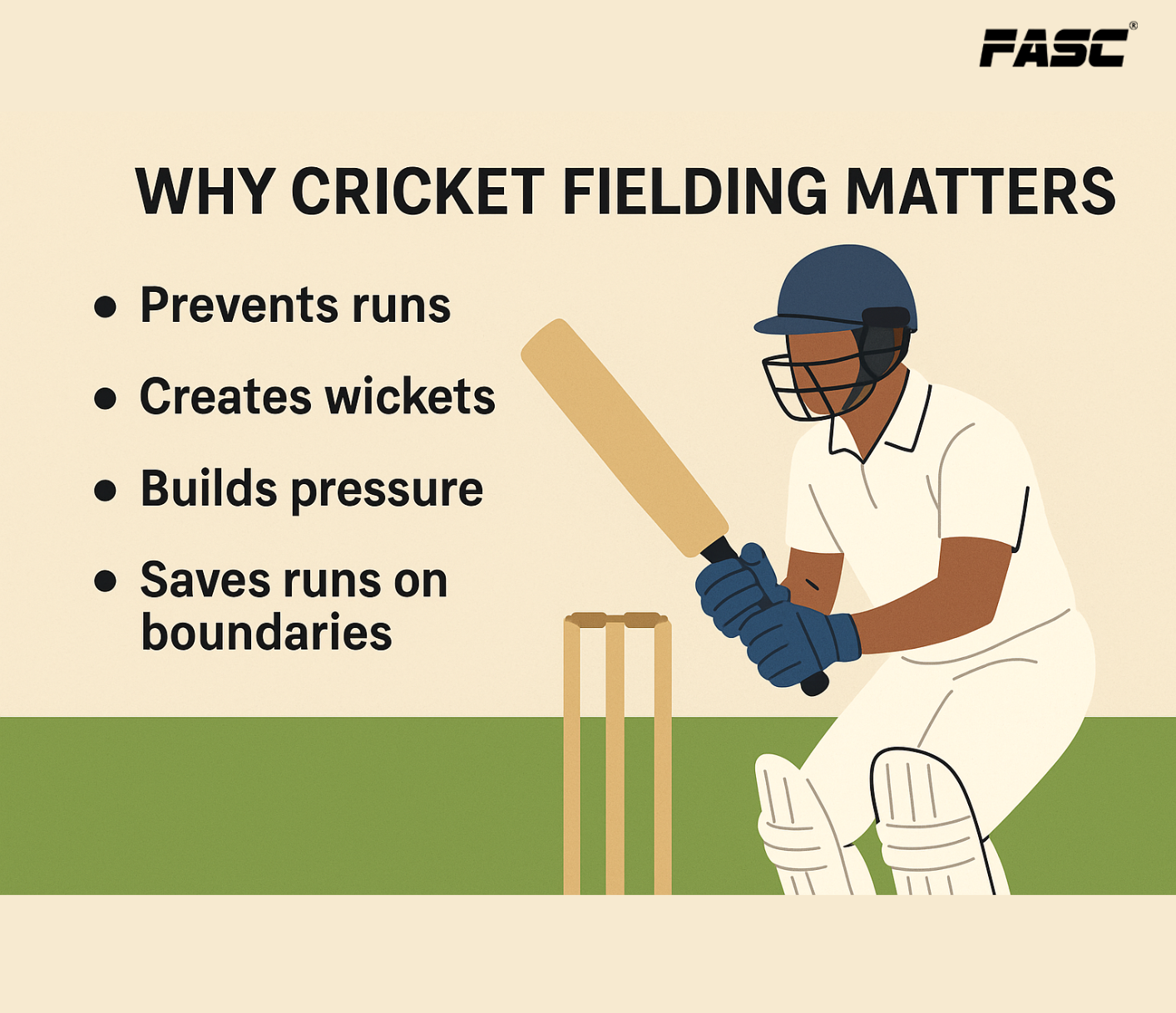
Good cricket fielding saves runs, builds pressure on the batting side, and creates wicket-taking opportunities. In modern cricket, teams with the best cricket fielders often dominate games, especially in shorter formats where every run counts.
Fielding is no longer just about stopping the ball, it’s about attacking the ball, being quick, and creating game-changing moments. Learning the right techniques and practicing consistently is the key to mastering the art of fielding.
Understanding Cricket Fielding Positions
Cricket fielding positions play a very important role in stopping runs and creating wicket-taking opportunities. Understanding these positions helps players and fans appreciate the strategy behind every move on the field.

Knowing cricket fielding positions is essential for every player. These positions, slips, gully, point, covers, mid-wicket, long-on, and others, are strategically placed to cover scoring areas and catch opportunities.
For beginners, it’s important to first learn junior cricket fielding positions, which usually focus on the basics:
- Close-in fielding (slip, short leg, silly point) – for catching edges.
- Inner circle fielding (point, cover, mid-off, mid-on) – to stop quick singles.
- Boundary fielding (long-on, long-off, deep mid-wicket) – to save boundaries and take high catches.
Understanding these positions improves your awareness on the field and helps you anticipate where the ball might go.
Essential Cricket Fielding Techniques
Mastering cricket fielding techniques is key to improving overall team performance. From catching and throwing to diving and backing up, each skill can save runs and create match-winning moments.
Becoming a top fielder requires mastering a few key skills:

1. Catching Techniques
-
High catches: Keep your hands soft, fingers pointing up, and cushion the ball into your palms. Maintain steady footwork and balance to stay under the ball, and keep your eyes focused until it lands safely
-
Slip catches: Use both hands, stay low, and watch the ball until it reaches you. Keep your hands relaxed and be ready to react quickly to sharp edges coming off the bat.
2. Ground Fielding
-
Approach the ball quickly, get low, and use the long barrier technique to stop it safely. Always stay on your toes for quick recovery and make a fast throw to keep pressure on the batters.
3. Throwing
-
Use a strong, overarm throw for distance and accuracy. Practice hitting the stumps regularly and work on quick release to save valuable seconds in the field.
4. Diving & Sliding
-
Learn safe diving techniques to stop boundaries. Sliding on one side helps you cover more ground while protecting your body, and allows you to get up quickly for a follow-up throw.
Learn from the Best
If you want inspiration, study some of the best fielders in cricket history Jonty Rhodes, AB de Villiers, Ravindra Jadeja, and Suresh Raina are known for their brilliant fielding. Watch how they position themselves, anticipate the ball, and execute perfect throws and catches.
Recommended Products:
Cricket Shoes: Cricket shoes provide grip and stability on the field, helping players run, stop, and change direction quickly as they are designed with spikes or rubber soles to suit different pitch conditions
Cricket Jersey: Improves performance with its lightweight, breathable fabric that keeps you cool even during intense fielding sessions. Offers superior comfort and flexibility, allowing free movement for dives, throws, and catches.
Hand Gloves: Cricket gloves provide better grip and protect your hands from impact injuries during catches and fielding drills. They also boost confidence and comfort, especially in long practice sessions.
Conclusion
Improving cricket fielding takes dedication, regular practice, and a willingness to push yourself physically. Learn cricket fielding positions, use a cricket fielding bat for effective practice, and try fun cricket fielding games to keep training engaging.
Master the art of fielding, and you’ll not only save runs but also inspire your team. With consistent practice, you could soon be counted among the best cricket fielders in your club or school team.
FAQ's
Q1: What is cricket fielding?
Fielding is stopping runs and taking catches.
Q2: How can I improve fielding skills?
Practice catching, throwing, and ground fielding daily.
Q3: Which is the toughest fielding position?
Short leg and slips are among the toughest.
Q4:What are the main fielding positions in cricket?
Key positions include slips, point, covers, mid-wicket, long-on, long-off, third man, and fine leg each with a specific role.
Q5: Who are the best cricket fielders?
Players like Jonty Rhodes and Ravindra Jadeja.

.png)
.png)
.png)