- Sports
How to Improve Stamina for Any Sport

- Mar 20, 2026
- 8 min
Key Takeaways
- Stamina is about sustaining performance, not just lasting longer
- You need cardio, strength, and conditioning together
- Building a strong aerobic base and adding interval training are key to improving endurance efficiently.
- Strength training and proper recovery help reduce fatigue and support long-term progress.
- Nutrition and consistency play a major role—results depend more on regular effort than extreme intensity.
Stamina refers to your body’s ability to maintain physical and mental effort over a longer period without quickly getting tired. It’s not just about how long you can keep going, but how efficiently your body performs during that time
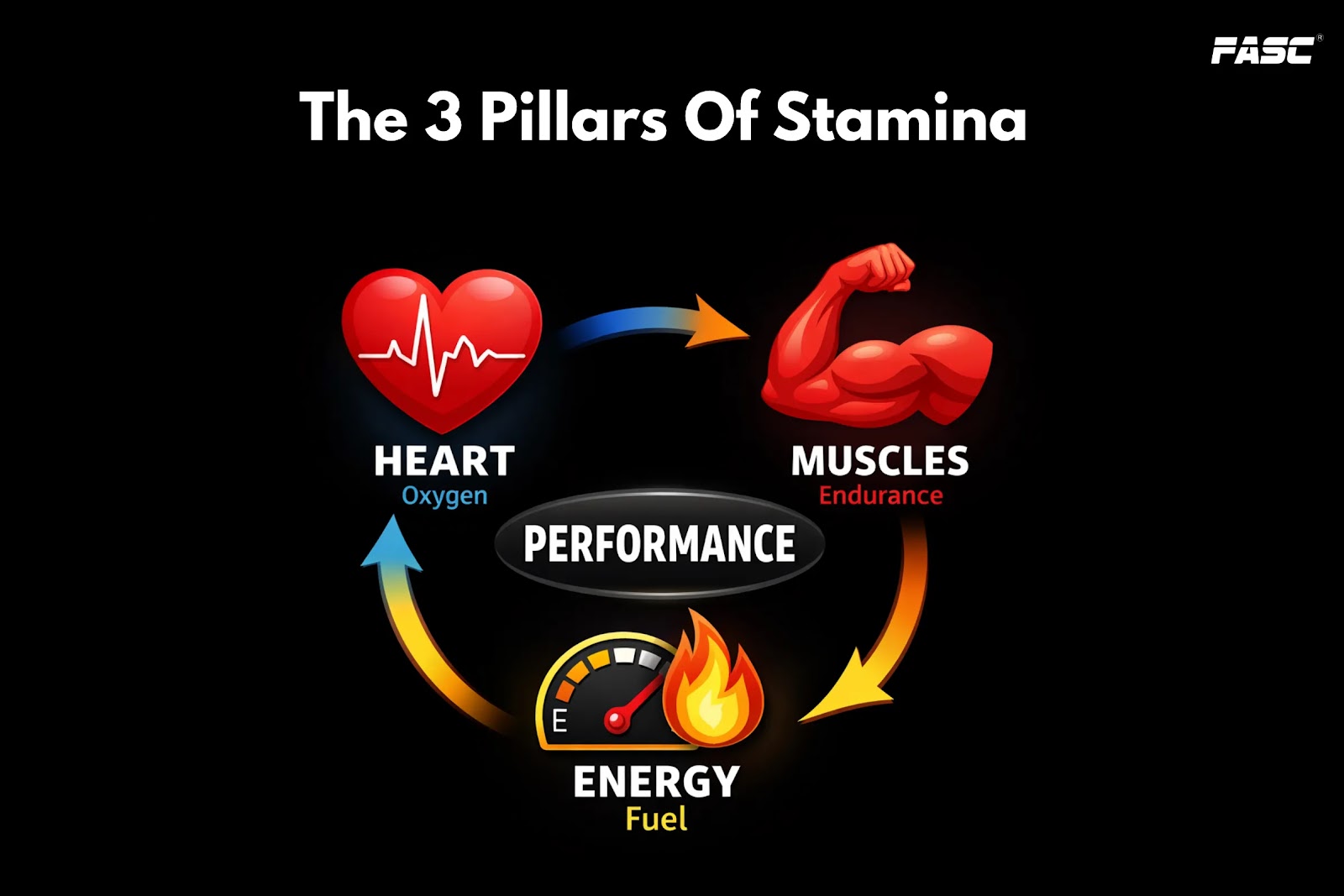
It depends on three things:
- How efficiently your heart and lungs deliver oxygen
- How long can your muscles keep working without fatigue?
- How well your body manages and uses energy
If even one of these areas is weak, your overall performance can drop quickly, whether you are working out, playing a sport, or doing daily activities.
That’s why focusing only on cardio or only on strength training is not enough. Building real stamina requires a balanced approach that improves endurance, strength, and energy efficiency together.
Why Your Stamina Isn’t Improving
Let’s not pretend it’s bad luck. Most people struggle to improve because their training lacks structure and purpose. Instead of following a plan, they fall into habits like:
- Same workout every day
- Random cardio sessions
- No progression
- Skipping workouts
- Ignoring recovery
The result? You are actually not building stamina; you are just staying somewhat active.
Real progress happens when your body is challenged in a structured way and then given enough time to recover and adapt. If your routine stays the same, your results will stay the same, too, not random. This is the same pattern seen in beginners who train without direction, something we’ve already broken down in detail in our common gym mistakes beginners make guide.
Stamina improves when there is progression, consistency, and balance.
The System That Actually Builds Stamina
You don’t need complicated techniques or fancy methods to build stamina. What you really need is a structured approach and the right sequence of training. When done correctly, each step supports the next, making your progress smoother and more sustainable. The key is to follow a system that gradually challenges your body while allowing it to adapt and recover. Instead of doing random workouts, each phase of training should have a clear purpose whether it’s building a base, increasing intensity, or improving strength.
1. Build an Aerobic Base First
This is the most overlooked step, and the main reason why many people struggle later on.
Your aerobic base is the foundation that helps you:
- Last longer
- Recover faster
- Handle harder workouts
Start with simple, accessible activities:
- Jogging
- Cycling
- Brisk walking
- Skipping
Keep the intensity controlled. You should be able to talk while doing it.
Structure:
-
30–45 minutes
-
3–4 times per week
If you skip or rush this phase, everything that follows will feel unnecessarily difficult. A strong base makes everything else easier.
2. Add Interval Training
Once your base is built, it’s time to introduce intensity. This is where our stamina starts improving noticeably. Interval training works because it forces your body to handle short bursts of high effort followed by recovery. This push and recover pattern improves both your cardiovascular capacity and muscular endurance.
It also trains your body to clear fatigue faster, which is especially important in sports where performance depends on repeated efforts. Over time, you will find that the same intensity feels easier, and you are able to sustain higher effort for longer durations.

Basic setup:
- 30-second sprint (or high-intensity effort)
- 60 seconds walk or slow pace
- Repeat for 8–12 rounds
This type of training will feel uncomfortable, and that’s a good sign. It means your body is being pushed to adapt.
Over time, you’ll notice:
- Faster recovery between efforts
- Better breathing control
- Increased tolerance to fatigue
If your workouts always feel easy, your stamina won’t improve.
3. Strength Training (Don’t Ignore This)
Many people focus only on cardio, but weak muscles fatigue quickly. Strength training helps your body handle effort more efficiently. It also improves joint stability, posture, and overall movement quality, which reduces the risk of injury during training or sports. Stronger muscles mean you can sustain effort for longer without breaking down.
Focus on basic movements:
- Squats
- Lunges
- Push-ups
- Pull-ups
You don’t need complicated exercises, just consistency. A simple, structured routine (like an upper-lower split) is enough to build strength without overtraining. If you’re unsure how to structure this properly, refer to our beginner strength training plan for athletes to avoid wasting time on random workouts.
Stronger muscles mean better endurance and improved overall performance.
4. Conditioning (Where Real Stamina Is Built)
This is the phase that feels closest to actual sports performance. It combines strength, speed, and endurance into one intense workout. This type of training pushes your body to perform under fatigue, which is exactly what happens in real sports situations. It improves your ability to keep moving even when you’re tired and builds both physical and mental endurance.

Example circuit:
- Jump squats
- Burpees
- Mountain climbers
- High knees
- Plank
Perform them back-to-back with minimal rest.
This type of training:
- Builds endurance under fatigue
- Improves coordination
- Pushes your physical limits
If you are just starting, begin with shorter sessions (15–20 minutes) and gradually increase intensity.
5. Fix Your Breathing
This is one of the most ignored aspects of stamina training. Most people breathe shallow and fast, especially when tired, which actually makes fatigue worse. Proper breathing also helps regulate your heart rate and keeps your body more relaxed during effort. When your breathing is controlled, you use energy more efficiently and delay the onset of fatigue.
Instead, focus on:
-
Deep, controlled breathing
-
Maintaining a steady rhythm
-
Breathing through your nose when possible
Better breathing improves oxygen delivery, reduces fatigue, and helps you stay in control during intense workouts. With practice, you will notice that you recover faster between sets and feel less exhausted during longer sessions. Breathing may seem simple, but improving it can make a noticeable difference in your overall stamina and performance.
Weekly Training Structure
Building stamina does not require a complicated plan; it requires a simple, consistent, and repeatable routine. A well-balanced weekly structure helps your body train hard while also allowing enough time to recover and adapt.
A typical week can include a mix of cardio, strength training, interval sessions, and conditioning, along with lighter activity days and proper rest. For example, you might begin the week with cardio and core work, then follow with strength training, and finally move into interval training. Mid-week can be used for active recovery, while later sessions can focus on conditioning and light sports activity. One full rest day is essential to reset the body.
This balance ensures you avoid burnout while still making steady progress.
Recovery (This Is Where Most People Mess Up)
Building stamina does not require a complicated plan—it requires a routine that is simple, consistent, and repeatable. A well-balanced weekly structure helps your body train hard while also allowing enough time to recover and adapt.
A typical week can include a mix of cardio, strength training, interval sessions, and conditioning, along with lighter activity days and proper rest. For example, you might begin the week with cardio and core work, then follow with strength training, and finally move into interval training. Mid-week can be used for active recovery, while later sessions can focus on conditioning and light sports activity. One full rest day is essential to reset the body.
This balance ensures you avoid burnout while still making steady progress.
Nutrition for Stamina
You don’t need a complicated diet plan to build stamina, but you do need a functional and consistent one. Your body requires the right balance of nutrients to perform well and recover properly.
Carbohydrates act as your primary source of energy, while protein supports muscle repair and recovery. Along with this, consuming enough overall calories is important; under-eating can quickly reduce your energy levels and stamina.
Simple habits like drinking enough water, limiting junk food, and maintaining regular meal timings can have a significant impact. If your diet is inconsistent, no training system will save you which is why we’ve explained the basics clearly in our sports nutrition fundamentals for performance guide.
How Long Does It Take?
Be realistic.
- 2–3 weeks → breathing feels easier
- 4–6 weeks → noticeable improvement
- 8–12 weeks → strong endurance gains
If nothing changes in this time, your routine needs fixing.
Common Mistakes
One of the biggest reasons people fail to build stamina is that they follow an unstructured approach. Relying only on cardio, ignoring strength training, pushing hard every day without proper rest, or not progressing over time can limit results.
Inconsistency also plays a major role. Many people start strong but fail to maintain a routine, which prevents long-term improvement. These patterns are similar to the mistakes beginners often make in the gym. Effort is there, but direction is missing.
Mental Side of Stamina
Stamina is not just physical; it is also mental. At some point during training, your mind tells you to stop before your body actually reaches its limit.
Improvement happens when you learn to push slightly beyond that point without overdoing it. Staying consistent, pushing through controlled discomfort, and avoiding the habit of quitting early all contribute to better stamina.
This does not mean overtraining; it simply means building the discipline to continue when things start to feel challenging.
Recommended products from Fitness Coach
Conclusion
If your stamina is not improving, the issue is usually not effort; it's the system you’re following. Focus on building a strong base, adding intensity gradually, improving strength, and allowing proper recovery.
When you follow a structured approach consistently, stamina will improve across any sport or activity. There are no shortcuts, only the right process done consistently.
Frequently Asked Questions (FAQ)
1. How can I improve my stamina effectively?
Stamina improves when you combine interval training, steady cardio, and strength training. There are no quick fixes—it takes a few weeks of consistent effort to see real results.
2. Is running or HIIT alone enough?
No. While running and HIIT help improve endurance, they are not enough on their own. A complete approach that includes strength training, conditioning, and recovery is necessary for better performance.
3. Can I build stamina without a gym?
Yes. Activities like running, skipping, and bodyweight exercises can effectively improve stamina if done regularly and with proper structure.
4. Why do I feel tired quickly during workouts?
This usually happens due to a weak aerobic base, poor breathing habits, low strength, improper nutrition, or inconsistent training. Improving just one area is not enough—you need a balanced approach.
5. How long does it take to see results?
You may notice small improvements within 2–3 weeks, visible changes in 4–6 weeks, and strong endurance gains in 8–12 weeks. If progress is missing, your training structure likely needs adjustment.

.png)
.png)
.png)