- Gym
Progressive Overload Explained: How to Build Strength and Muscle (Beginner to Advanced Guide)
.png)
- Feb 27, 2026
- 5 min
Key Takeaways
- Progressive overload is the foundation of all strength and muscle development.
- The body adapts only when training demand gradually increases.
- Adding weight is just one of many ways to create progression.
- Recovery determines whether overload leads to growth or fatigue.
- Consistent tracking turns effort into measurable progress.
If you train consistently but your strength, muscle size, or performance has stalled, the problem is rarely effort.
It's a progression.
Many people train hard but repeat the same weights, reps, and routines for months. The body adapts quickly, and once adaptation occurs, improvement stops unless the stimulus increases.
This principle is called progressive overload.
It is the foundation of strength development, hypertrophy, and athletic performance. Without it, training becomes maintenance. With it, improvement becomes measurable and predictable.
If you want consistent results, this principle is non-negotiable.
What Is Progressive Overload?
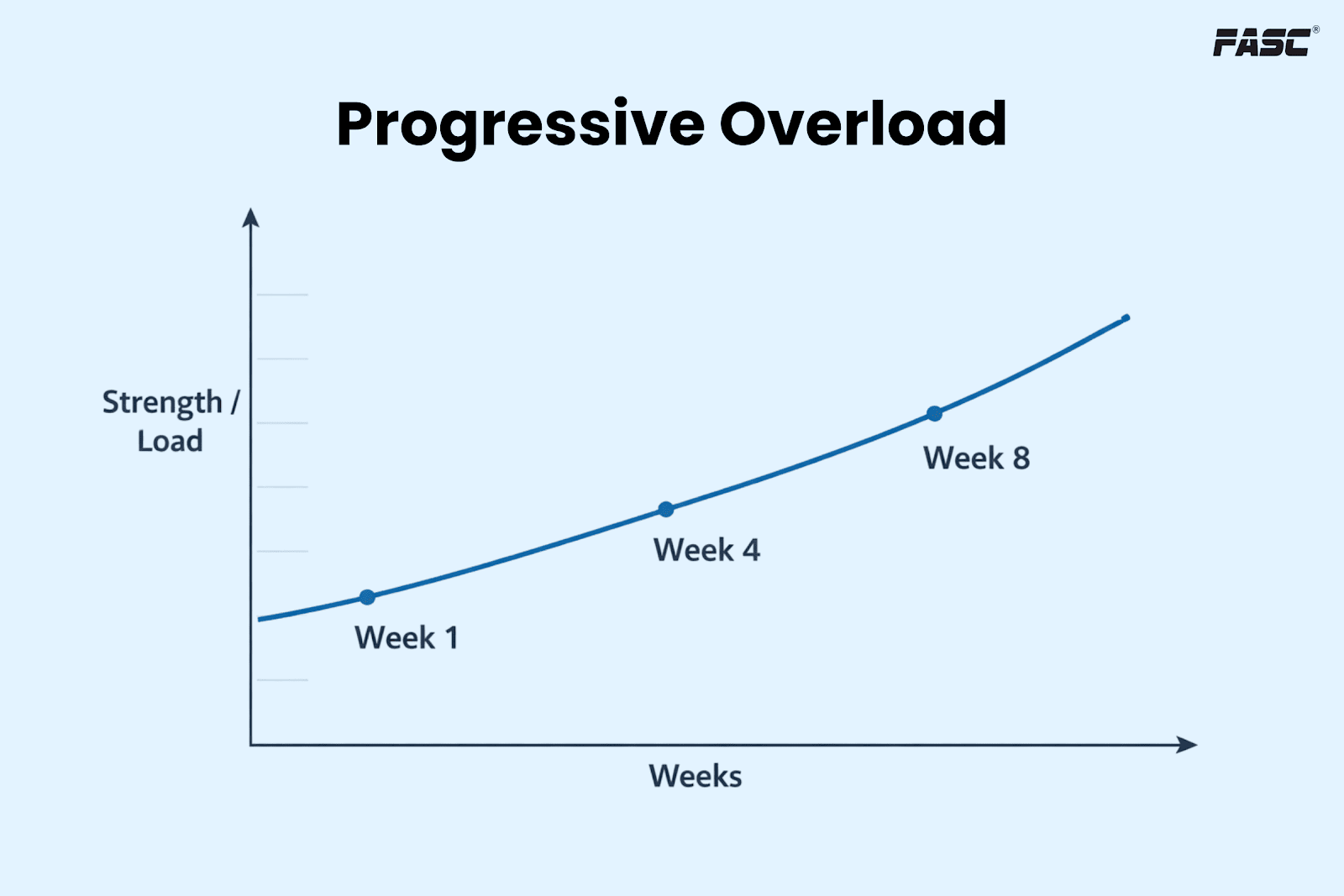
Progressive overload is the gradual increase of stress placed on the body during training in order to stimulate adaptation.
This aligns with the SAID principle — Specific Adaptation to Imposed Demands — meaning the body adapts specifically to the stress it experiences.
If demand increases, the body becomes stronger and more efficient. If demand remains constant, the body maintains its current capacity.
That is why lifting the same weight for the same repetitions every week eventually stops producing results. Adaptation requires escalation.
Why Progressive Overload Works (The Science Behind It)
When resistance training reaches sufficient intensity, muscle fibers experience mechanical tension, microtrauma stimulates repair processes, the nervous system improves motor unit recruitment, muscle protein synthesis increases, and connective tissues strengthen over time.
With adequate recovery and nutrition, the body rebuilds stronger than before.
However, this process depends heavily on sufficient daily protein intake, proper calorie balance, hydration, and sleep quality. In fact, without structured nutrition, progressive overload cannot translate effectively into muscle growth, which is why understanding proper fueling strategies through Sports Nutrition for Athletes becomes essential for maximizing adaptation.
Training creates the stimulus, but recovery creates the adaptation.
Without proper recovery, overload leads to fatigue instead of progress.
Progressive Overload for Beginners
Beginners progress rapidly, primarily due to neurological adaptations rather than immediate muscle growth. Early strength gains come from improved coordination, better movement efficiency, and increased motor unit recruitment.
A simple beginner progression model might look like this:
Week 1: 40 kg × 8
Week 2: 42.5 kg × 8
Week 3: 45 kg × 8
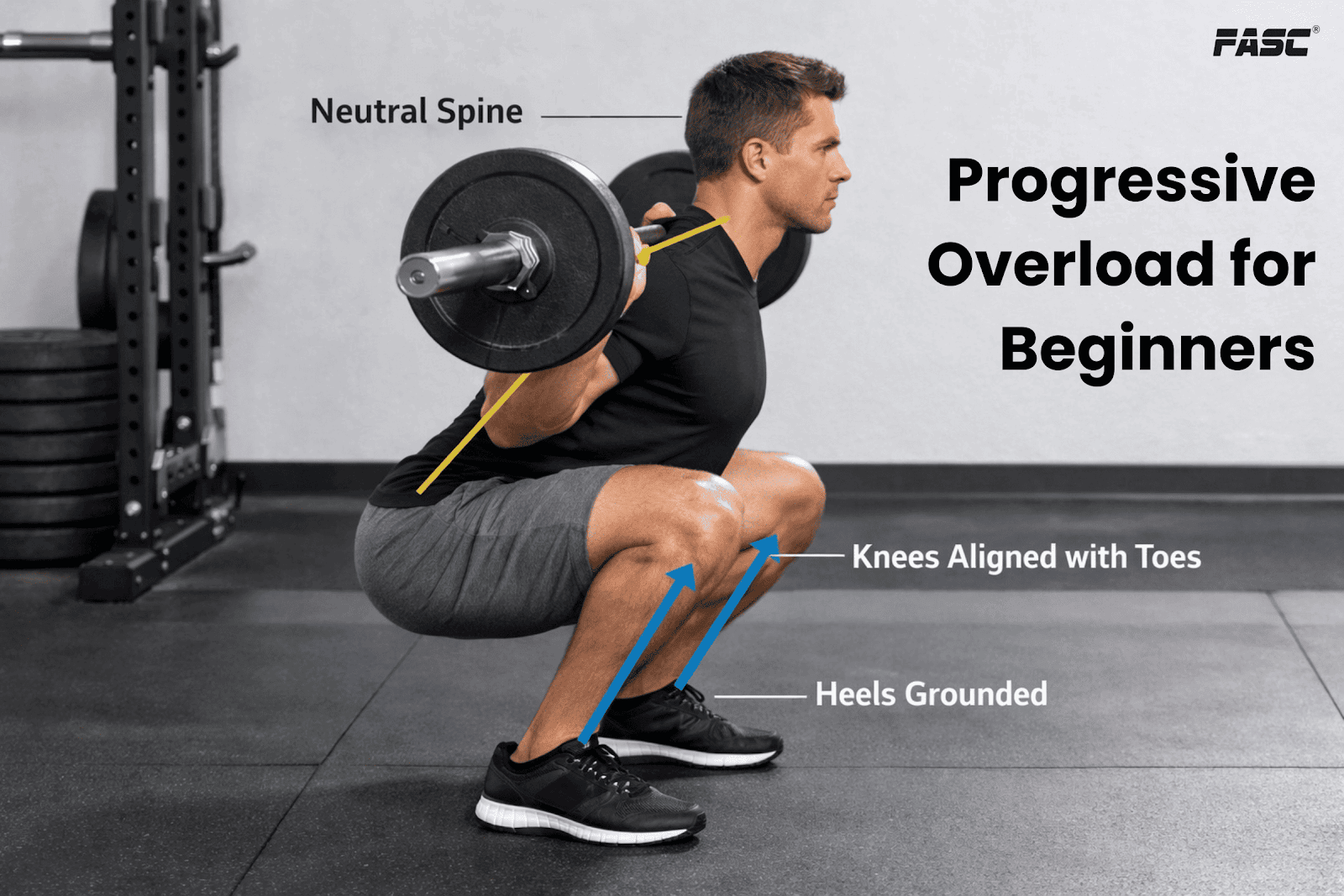
Progression can also be achieved by adding 1–2 repetitions per set, adding an extra set, improving range of motion, or refining technical execution.
The biggest beginner mistake is increasing weight before mastering proper form. Poor mechanics under load increase injury risk and limit long-term development. This is why following a structured plan like Beginner Workout Structure ensures that progression is built on technique, not ego.
Small, consistent increases outperform aggressive weight jumps every time.
Progressive Overload for Intermediate and Advanced Athletes
As training age increases, the rate of adaptation slows, and linear progression cannot continue indefinitely.
At this stage, progression must become structured and strategic through methods such as periodization, undulating loading patterns, rest interval manipulation, tempo control, volume cycling, and planned deload phases.
For advanced lifters, adding even 1–2 kg to a lift over several weeks represents meaningful progress. The margin between optimal overload and excessive fatigue becomes smaller, which means recovery capacity ultimately determines how much stress the body can tolerate. This is where a deeper understanding of regeneration strategies discussed in Recovery and Performance Optimization becomes critical for sustained performance.
Precision replaces aggression at this level.
Methods of Progressive Overload
Adding weight is only one variable.
True progression can be achieved by manipulating load, repetitions, total weekly volume, time under tension, training frequency, rest intervals, exercise complexity, or range of motion.
If you are not tracking sets, repetitions, and loads, you are guessing — not progressing. Measurement is mandatory.
Practical Examples of Overload
In the bench press, progression may look like this:
Week 1: 70 kg × 8
Week 2: 70 kg × 10
Week 3: 72.5 kg × 8
Notice that weight is not increased immediately. Increasing repetitions first is often a smarter and safer approach.
For bodyweight push-ups, progression can include increasing repetitions, slowing the eccentric phase to three seconds, adding pauses at the bottom, elevating the feet, or using a weighted vest.
The principle remains identical: gradual, measurable increases in demand.
Common Mistakes That Kill Progress
Ego lifting, increasing load before mastering technique, ignoring recovery, never implementing deload phases, failing to track workouts, and training harder instead of smarter are the primary reasons progress stalls.
Plateaus are rarely caused by a lack of effort. They are usually the result of poor progression structure or insufficient recovery.
The Critical Role of Recovery
Progressive overload only works if recovery matches stress.
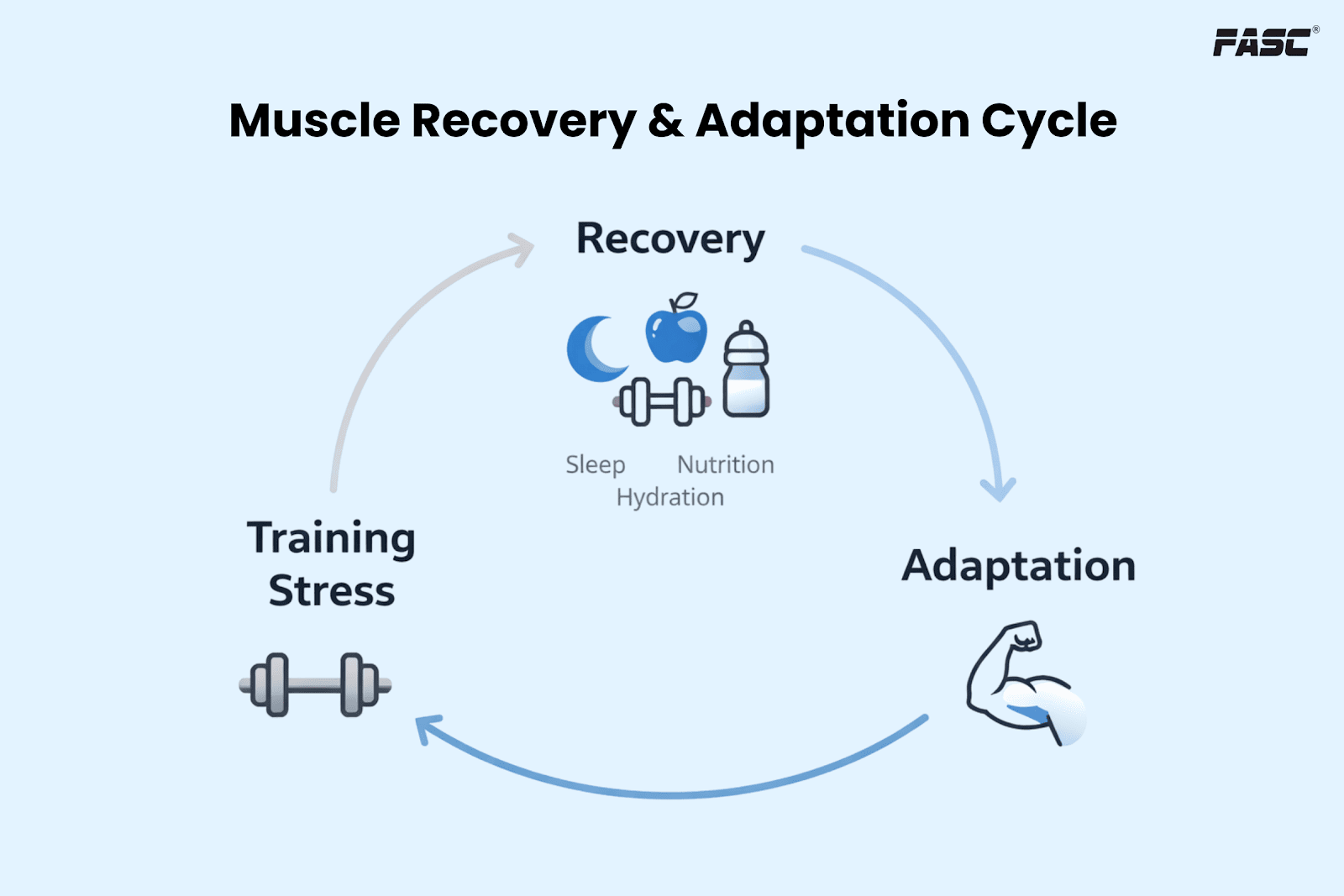
Core recovery pillars include 7–9 hours of quality sleep, adequate protein intake, proper calorie consumption, hydration, and stress management.
Warning signs of excessive overload include persistent fatigue, declining strength, chronic soreness, poor sleep quality, irritability, and frequent minor injuries.
If performance declines despite high effort, recovery is the bottleneck. Increasing training volume is not the solution.
How Fast Should You Progress?
There is no universal timeline.
Beginners often progress weekly. Intermediate lifters typically progress every few weeks. Advanced athletes may see measurable improvement monthly.
Attempting to increase intensity every session is unsustainable. Long-term progress is built through consistency, not constant escalation.
Progressive Overload in Bodyweight and Endurance Training
Progressive overload is not limited to weight training.
In bodyweight training, progression can be achieved by increasing repetitions, slowing tempo, adding pauses, modifying leverage, advancing exercise variations, or adding external resistance.
Endurance athletes apply overload by gradually increasing distance, speed, intensity, or training density.
The method varies, but the principle remains the same.
Recommended Gears by Fitness Coach
Conclusion
Progressive overload is not a tactic; it is the foundation of effective training.
Without progression, effort is maintained. With reckless progression, injury risk increases. With intelligent progression, improvement becomes predictable.
Training is not about doing more.
It is about doing slightly more than your current capacity — and then allowing the body to adapt.
That is how real progress is built.
Frequently Asked Questions (FAQs)
1. What is progressive overload in simple terms?
Progressive overload is gradually increasing training stress so the body is forced to adapt and become stronger or more capable.
2. Do I need to add weight every workout?
No. Progression can also come from adding reps, sets, improving technique, slowing tempo, or increasing total weekly volume.
3. How fast should I increase weights?
Beginners may progress weekly, intermediates every few weeks, and advanced lifters more gradually depending on recovery capacity.
4. Can progressive overload cause injury?
Yes, if increases are too aggressive or recovery is insufficient. Smart, gradual progression minimizes injury risk.
5. Does progressive overload apply to bodyweight and endurance training?
Yes. Increasing reps, difficulty, pace, distance, or intensity are all forms of overload.

.png)
.png)
.png)